
 EN
What Is an Automatic Voltage Regulator for a Generator
Every time a generator starts or a heavy load connects, output voltage shifts. Left unchecked, those fluctuations damage connected equipment and reduce alternator lifespan. An automatic voltage regulator for a generator is the electronic component that prevents this. Understanding how it works determines whether you source the right one for a given application.
How an Automatic Voltage Regulator Works in a Generator
An automatic voltage regulator for generator applications is a control circuit installed between the alternator's sensing winding and the exciter field winding. Its job is to maintain output voltage at a preset level — typically within ±1% — regardless of changes in load, speed, or temperature.
In operation, the AVR samples output voltage through its sensing input, compares that reading to a reference set point, and adjusts field winding current accordingly. If voltage drops because a motor load connects, the AVR increases excitation. If output rises above the set point, it reduces field current. This closed feedback loop runs continuously.
The sensing input range determines what voltage signal the automatic voltage regulator expects to receive from the generator windings. Simpler version: if the winding output does not match what the AVR is designed to read, voltage regulation will be off — sometimes enough to trip the load or damage connected equipment.
Most generator AVRs in service today are half-wave phase-controlled thyristor types with a self-excited design, drawing power directly from the generator terminals — no external supply required. The Stamford AVR SX460, for example, operates on 170–250 VAC at 50/60 Hz and delivers up to 3.0 A of field current continuously, with 7.5 A short-term capacity for 10 seconds during load transients.
Common AVR Models and Their Applications
Choosing the right automatic voltage regulator for generator applications starts with knowing the available model families and which alternator types they are designed for.
The market for automatic voltage regulators for generators is organized around a small number of widely adopted models, each suited to specific alternator families and power ranges. Knowing which automatic voltage regulator fits which generator type prevents costly mismatches.
- Stamford AVR SX460 — Designed for Stamford-type brushless alternators in small to mid-sized gensets. Single-phase sensing, input range 190–264 VAC. The SX460 remains one of the most sourced replacement AVRs globally for residential backup and commercial standby systems.
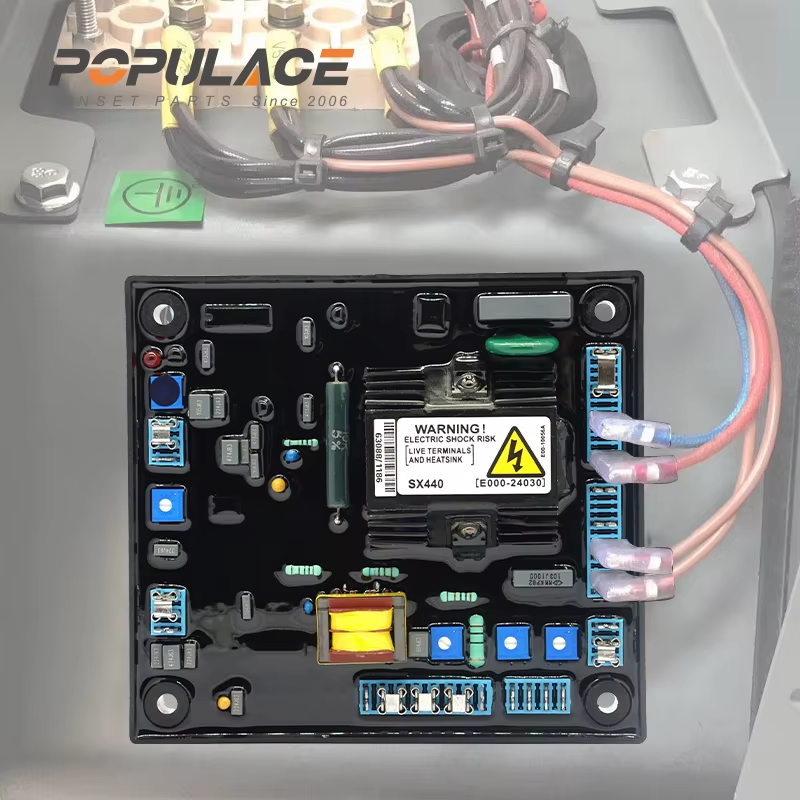
- SX440 — Earlier Stamford series with single-phase sensing and under-frequency protection rated down to 30 Hz. Common in portable and light commercial sets. Requires approximately 4 V residual magnetism voltage to initiate build-up.
- AS440 — Stamford's higher-capacity option, supporting a sensing voltage range of 100–264 VAC and DC output up to 82 V. Better suited for mid-to-large power applications with variable load profiles.
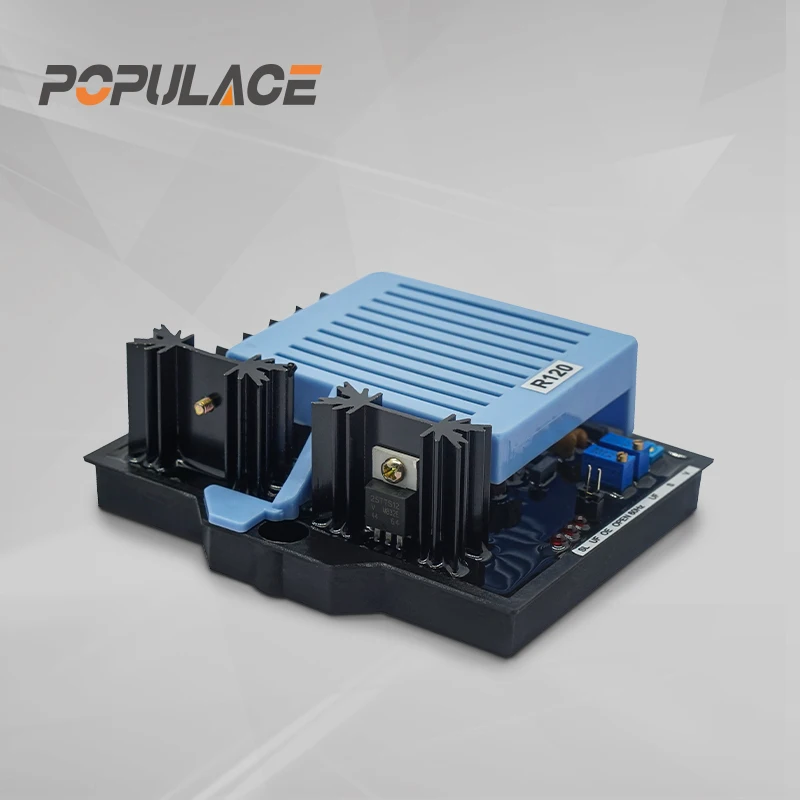
- R120 — Designed for Leroy Somer diesel generators. Power input 35–109 VAC at 50/60 Hz, continuous current 8 A, AVR response approximately 500 ms. Standard replacement for Leroy Somer gensets in the 10–60 kVA range.
- R450 — Leroy Somer's higher-power variant for industrial diesel gensets where field current demands exceed R120 capacity.
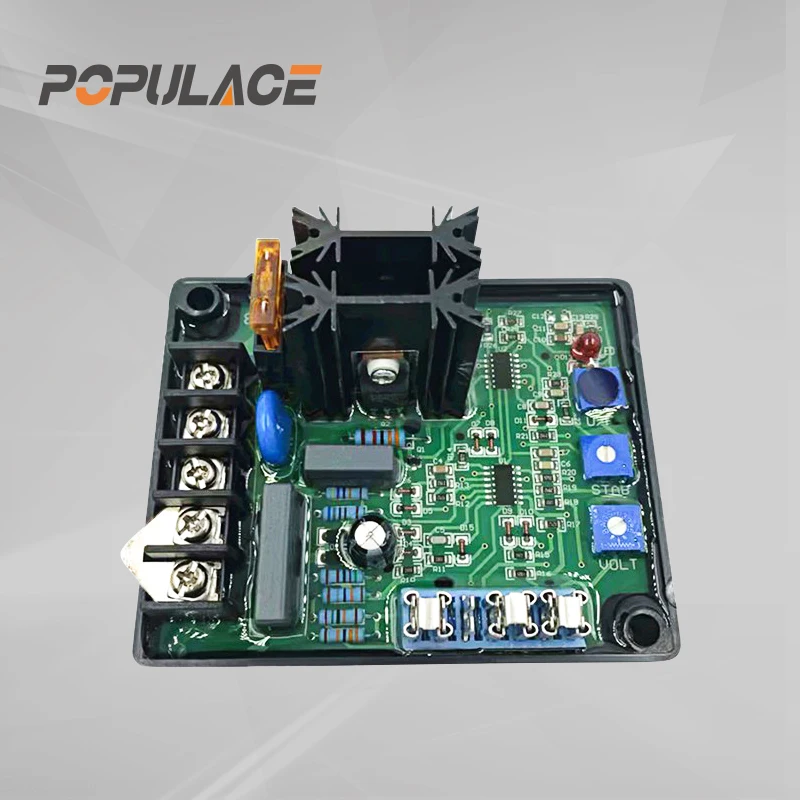
- Universal AVRs (GAVR-8A / GAVR-20A) — Cross-compatible designs working across multiple alternator types. The GAVR series is widely used by generator distributors who stock parts for diverse fleets rather than a single brand.
Experienced buyers tend to move away from brand loyalty as a selection criterion. What actually matters is whether the sensing input range and output current capacity match the specific alternator and load profile.
Key Specifications to Verify Before Ordering
One frequently overlooked factor when sourcing an automatic voltage regulator for generator use is the sensing input range — not the output voltage spec. Sensing input range varies across winding configurations and is not consistently listed prominently in catalog descriptions. If the winding output does not sit within the AVR's sensing window, regulation will be unstable even if the nominal voltage appears to match.
Beyond sensing input, the following parameters matter most for any automatic voltage regulator for generator replacement or new installation:
- Field current output — Rated in amps continuous. Must meet or exceed the exciter field winding requirement of the specific alternator model.
- Operating temperature range — The SX460 is rated –40°C to +70°C, covering most field environments. For tropical installations or enclosed generator rooms, confirm the thermal limit.
- Under-frequency protection — Most automatic voltage regulators reduce output proportionally when generator speed drops below a knee-point frequency. Confirm the protection threshold matches the engine's cranking behavior.
- Single-phase vs. three-phase sensing — Standard AVRs use single-phase sensing. Higher-power alternators may require three-phase sensing for accurate regulation under unbalanced loads.
In practice, rapid load changes expose a gap between bench test results and field performance. Temperature rise in the stator winding introduces variability that controlled testing does not replicate. Factor this into specifications when sourcing for prime power or high-duty-cycle applications.
If your application runs at a stable load profile, the standard automatic voltage regulator for generator specification will usually hold. If loads swing frequently — especially motor loads cycling on and off — verify the transient response and stability adjustment range handles it.
Sourcing Considerations for Generator Distributors and Brand Merchants
For wholesale buyers and generator distributors sourcing an automatic voltage regulator for generator inventory, evaluation criteria extend beyond technical specification. Early in the process, most buyers focus on voltage and frequency ratings. After a compatibility issue in the field, focus shifts to sensing input type, winding configuration, and connector pinout — details that product datasheets do not consistently surface.
Key procurement checkpoints for distributor-scale purchases:
- Request compatibility charts listing alternator series and model ranges, not just a general "fits Stamford-type" description. Confirm the chart covers the specific production run in question.
- Confirm OEM datasheet dimensions and terminal layout match the supplier's product — especially relevant when stocking universal AVR replacements for a mixed fleet.
- Evaluate lead time consistency across reorders, not just the initial sample. First shipments from a new supplier often arrive faster because they receive priority attention.
- For distributors serving the Pramac S12000 market, confirm automatic voltage regulator compatibility with the specific alternator model fitted to that genset before committing to inventory.
Whether OEM or aftermarket suits your situation depends on application criticality and reorder volume. If the generator is under warranty or in a safety-critical installation, OEM makes more sense. For out-of-warranty units in non-critical applications, a verified aftermarket supplier with documented compatibility support is worth serious consideration for any generator distributor managing cost and availability.
KYGEN Power supplies generator AVRs including the R120 AVR for Leroy Somer diesel generators, with circuit diagram documentation included. For broader alternator compatibility, the GAVR-8A universal exciter control unit covers a wide range of brushless alternator types, and the GAVR-20A handles higher field current requirements at a factory-direct price.
Installation Basics and Common Fault Diagnosis for Generator AVRs
Even a correctly specified automatic voltage regulator for a generator will fail to regulate properly if wiring connections are incorrect or sensing terminals are swapped. For brushless generator types, the installation sequence for any automatic voltage regulator for generator use follows these steps:
- Identify the voltage sensing input terminals — typically labeled VS+ and VS— — and connect to the correct stator auxiliary winding phase per the wiring diagram.
- Connect field output terminals (F+ and F–) to the exciter field winding, observing polarity to avoid reversed excitation.
- Set the voltage trim potentiometer to mid-range before first startup, then fine-tune with the generator on load.
- Confirm the stability potentiometer setting — too high causes voltage hunting; too low causes sluggish load response.
Common fault patterns and likely causes:
- Output voltage hunting — Stability potentiometer set too high, or intermittent sensing connection. Check terminal connections before adjusting.
- No output voltage after startup — Insufficient build-up voltage from residual magnetism. Most automatic voltage regulators require at least 4 V residual to initiate regulation. Flash the field winding if residual has been lost.
- Overvoltage at light load — Voltage trim too high or a sudden load drop. Reduce trim and verify sensing connections are secure.
When a replacement automatic voltage regulator for a generator underperforms in an older unit, check the AVR itself first — but also inspect the wiring harness connector contact resistance and the exciter field winding, which the replacement part cannot correct on its own.






