
 EN

How to Source GAVR 15A AVRs for Wholesale Power Equipment Suppliers?
For a wholesale buyer, a GAVR 15A is not simply a small replacement module to compare by unit price. It is a generator-control component that has to match the alternator, the sensing arrangement, the field circuit, and the customer’s expected duty. From a procurement standpoint, sourcing a GAVR 15A at scale means balancing unit price, minimum order quantities, lead time, and supplier reliability, rather than just the lowest quoted price.
That distinction matters because marketplace descriptions often use broad language such as universal, 15A, or automatic voltage regulator. A gavr 15a automatic regulator may look right in a listing while having a different connector arrangement, sensing requirement, or adjustment configuration from the board it is intended to replace. The result can be a rejected shipment, a field callback, or inventory that cannot be sold into the intended generator segment.
Start with the job the GAVR 15A must do
A generator AVR 15A controls excitation so the alternator can hold an intended output voltage as load conditions change. In a replacement order, the practical question is not whether the label says GAVR 15A. It is whether the proposed board can perform the same control task in the target alternator and panel arrangement.
Published search results commonly describe a GAVR-15A voltage stabilizer as a brushless-generator, half-wave, self-excited AVR. Some listings cite sensing around 220/400 VAC and a maximum output of 90 VDC at 240 VAC input. Treat those figures as a starting point for a document request, not as a universal specification. Revisions and supplier implementations can differ. Ask for the supplier’s current datasheet and wiring diagram for the exact offered version before putting it on a purchase order.
Build a compatibility sheet before requesting a quote
The fastest way to make GAVR 15A sourcing repeatable is to send every supplier the same compatibility worksheet. Early in the sourcing process, buyers often focus on the apparent voltage rating. After a failed installation, the focus usually shifts to sensing type, field requirements, terminals, and adjustment functions. Capture those details before comparing quotes.
- Generator and alternator identity: record the alternator model, generator kVA range, application, and existing AVR part number or clear photos of both sides of the original board.
- Sensing and power input: confirm the required sensing voltage, phase/wire arrangement, frequency, and the source used to power the regulator.
- Field/output requirements: compare the field-voltage and field-current requirements to the offered GAVR 15A datasheet. Do not assume the 15A designation alone establishes a match.
- GAVR 15A circuit and terminals: request a legible terminal diagram and identify every connection: sensing, supply, exciter/field, and any auxiliary or droop-related terminals.
- Adjustment functions: note voltage trim, stability, under-frequency protection, and any dip-switch or jumper configuration required by the application.
- Physical fit: compare mounting holes, board dimensions, connector style, terminal orientation, and access to adjustment controls.
A complete worksheet makes supplier replies comparable. More importantly, it gives your technical team a defined review point before the purchasing team commits to a batch.
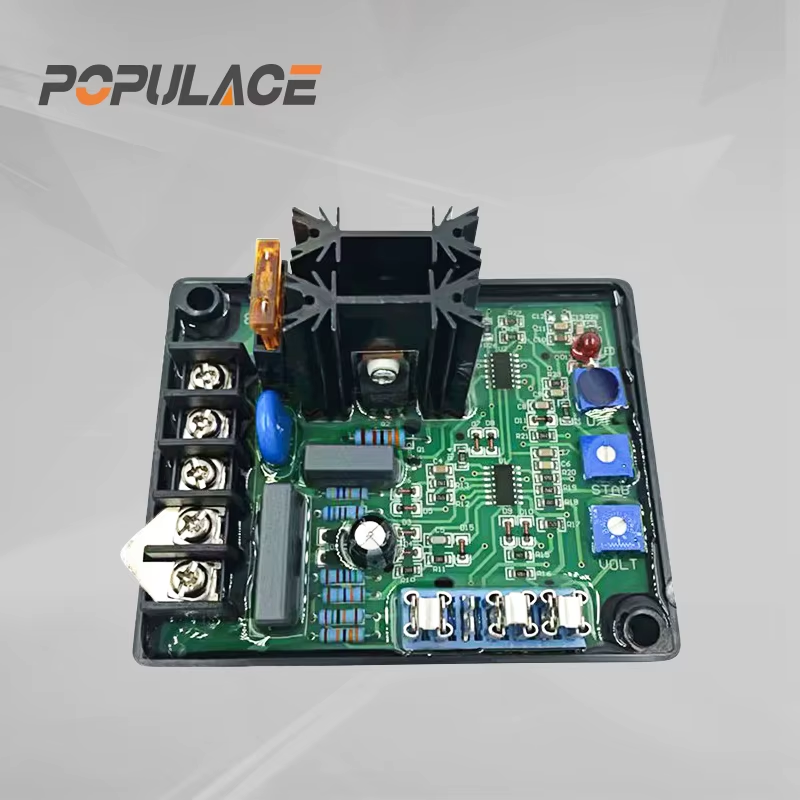
Read the GAVR 15A circuit as a sourcing document
Buyers do not need to reverse-engineer a board to use a GAVR 15A circuit effectively. They do need to verify that the supplier’s diagram maps cleanly to the target generator. Ask the supplier to identify the terminal labels in the supplied diagram and to confirm, in writing, which terminals connect to voltage sensing, AVR power, and the exciter field.
Pay special attention to diagrams that are generic, cropped, or inconsistent with product photos. A part may share the GAVR 15A name while using a different terminal sequence or a different configuration method. That is where a low initial price stops being a saving. If a customer’s installation team cannot reconcile the diagram with the original unit, the distributor absorbs the troubleshooting cost.
It is also useful to ask whether the offered generator AVR 15A is intended for the same excitation concept as the original. The right answer depends on the alternator design and field requirements; there is no single universal replacement rule. A supplier that can review photos, the original label, and the circuit diagram before quoting is usually easier to qualify for repeat orders.
Evaluate suppliers beyond the sample price
Once you manage a replacement-parts inventory for a while, the question changes from “Who has the lowest quote?” to “Who can provide the same configuration, documentation, and batch consistency when the next order is needed?” Evaluate a GAVR-15A voltage stabilizer supplier on a short, evidence-based scorecard:
- Technical response: Can the supplier answer the compatibility worksheet without vague assurances of universality?
- Revision control: Will the quotation, drawing, product photo, and carton label identify the same offered configuration?
- Sample process: Can you inspect the board, terminal labels, dimensions, and documentation before releasing a larger order?
- Batch traceability: Can the supplier distinguish production lots and investigate a repeat-order complaint?
- Packaging: Are boards protected against static, vibration, and terminal damage during export transit?
- Commercial clarity: Are MOQ, lead time, warranty handling, payment terms, and replacement policy stated before the order is placed?
Direct manufacturer supply can reduce trading layers, but it does not remove the need for validation. Its practical value is a clearer path to technical confirmation, controlled samples, and a consistent re-order specification. For distributors and brand buyers, a supplier focused on B2B terms and pre-sales compatibility support can make this process more manageable.
Control the first wholesale batch
Do not treat a passed sample as proof that every unit in a larger batch is identical. A practical first-batch plan is to retain the approved sample, attach the approved datasheet and GAVR 15A circuit to the PO, and define receiving checks. At minimum, check the carton marking, board revision or visible layout, terminal markings, mounting pattern, and supplied instructions against the approved sample.
For higher-risk accounts, arrange functional verification with a suitable alternator test setup or through the customer’s qualified service team before distributing the lot. The purpose is not to make a blanket promise about performance; it is to catch a configuration change before stock reaches multiple installers. Keep photos and inspection records with the PO so a later reorder is based on an approved reference rather than memory.
Plan the reorder before stock becomes urgent
GAVR 15A demand can be reactive: a service contractor or generator dealer may need replacements after a field failure. That is why the first sourcing cycle should document lead time, sample approval time, freight options, and the level of stock you want to hold. Local availability helps, but it does not guarantee compatibility. A modest, verified safety stock of the approved configuration can be more valuable than a larger quantity of an uncertain substitute.
Use reorder feedback to improve the specification file. Record which alternator families accepted the unit, which terminal questions installers raised, and whether the documentation was sufficient. This turns a one-off GAVR 15A purchase into a controlled SKU that sales teams can offer with more confidence.
A concise buying checklist
- Obtain the original AVR label, board photos, and application details.
- Match sensing, supply, field/output, terminal layout, and adjustments against an exact supplier datasheet.
- Review the GAVR 15A circuit terminal by terminal before approving a substitute.
- Approve a sample and lock its revision, photo, drawing, packaging, and documentation into the PO.
- Inspect the first batch against that approved reference and retain traceability records.
- Set reorder criteria based on verified compatibility and service feedback, not just the quoted price.
Conclusion
A reliable way to source a GAVR 15A for wholesale supply is to turn a generic product search into a controlled compatibility process. Verify the exact electrical and circuit requirements, qualify the supplier’s documentation and batch discipline, and preserve an approved sample as the reorder reference. That approach helps power-equipment suppliers protect their inventory investment while giving downstream installers clearer information for a successful replacement.





