
 EN
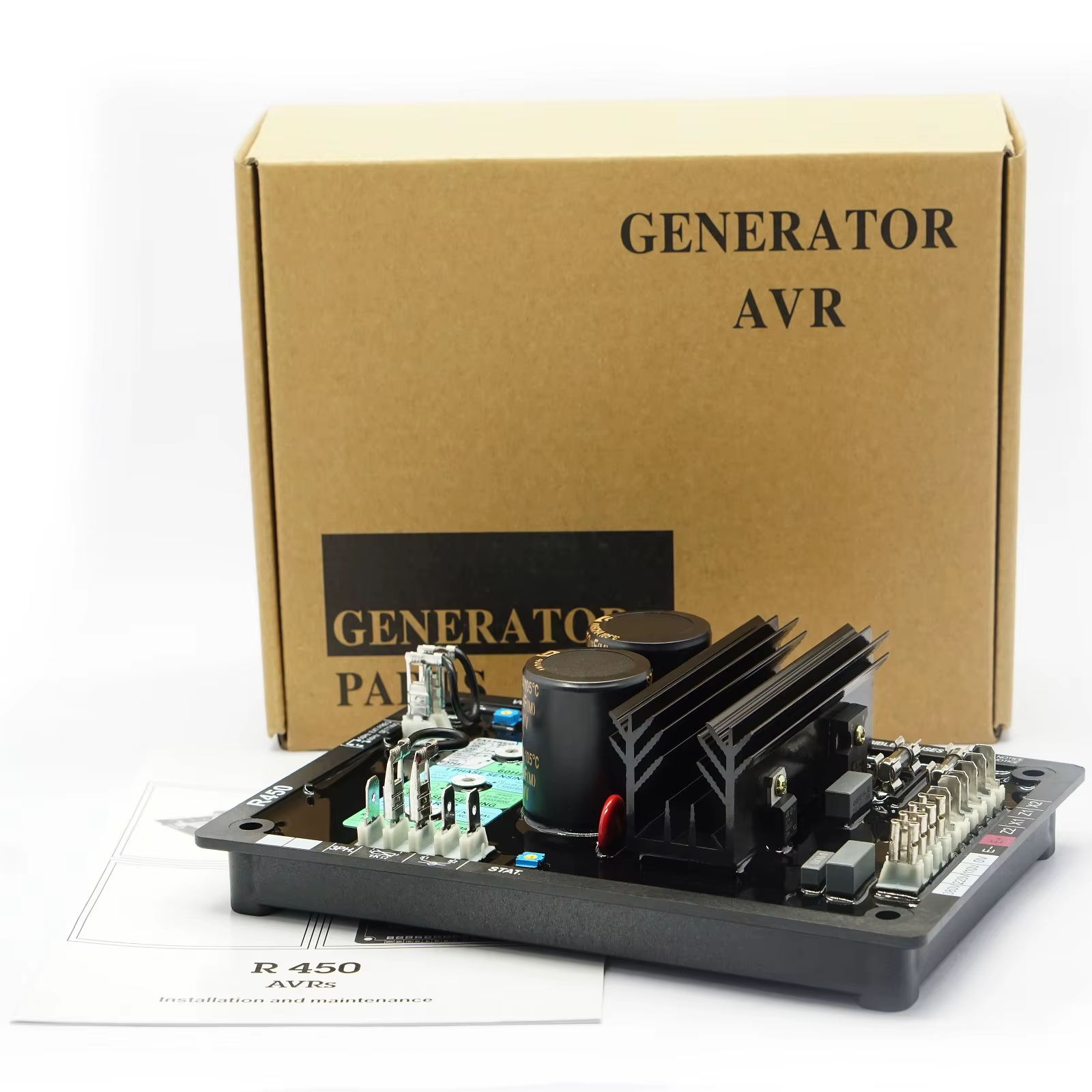
Voltage Regulator On A Generator: Selection and Setup Guide
A voltage regulator on a generator is the small control device that keeps alternator output close to its target while load and engine conditions change. For a service team, a failed regulator can look like an alternator problem. For a wholesale buyer, it is usually a compatibility problem waiting to happen: a part may look similar, yet have the wrong sensing arrangement, excitation range, supply input, or connector layout.
In a brushless set, the automatic voltage regulator (AVR) measures generator output and adjusts current to the exciter field. More excitation raises the main alternator field and supports output voltage; less excitation reduces it. The regulator is therefore part of a closed control loop, not a universal plug-in board. Start with the generator and alternator documentation, then confirm every electrical connection before you compare price.
What the AVR controls—and what it does not
The voltage regulator on a generator normally receives an AC sensing signal from the alternator, compares that signal with its set point, and changes DC field output to correct the difference. Stability and voltage-adjust controls tune how quickly that correction happens. A well-matched AVR can hold output steadily through ordinary load changes; it cannot repair a weak engine, incorrect speed, damaged rotating diodes, loose sensing wiring, or a winding fault.
That distinction matters during diagnosis. If frequency changes with load, establish engine speed and governor performance first. If frequency is stable but voltage is low, high, hunting, or absent, continue with the AVR circuit, exciter, sensing leads, and alternator test procedure. Disconnecting or probing live generator terminals should be handled by qualified personnel using the manufacturer’s safety instructions.
AVR types: compare the control job before the model name
Common names such as SX440, SX460, AS440, R120, and R450 are often used as shorthand in replacement inquiries. They are families or model references, not proof of interchangeability. Their actual suitability depends on the specific alternator arrangement and the regulator’s documented inputs, outputs, protection functions, and adjustment range.
| AVR reference | Typical buyer question | Compatibility evidence to request |
|---|---|---|
| SX440 / SX460 | Does the regulator suit the alternator and its excitation arrangement? | Original part reference, sensing voltage, field terminals, supply source, wiring diagram, adjustment layout. |
| AS440 | Is it the correct replacement for this alternator control configuration? | Alternator model, terminal designation, sensing connection, excitation specification, approved schematic. |
| R120 / R450 | Can a similarly shaped regulator replace the installed unit? | Input and output ratings, frequency setting, connector or terminal pattern, mounting and commissioning instructions. |
The practical rule is simple: use a model name to begin the inquiry, not to close it. Early in sourcing, most buyers focus on voltage and frequency ratings. After a failed installation, the focus usually shifts to sensing input type, excitation details, and the control-panel or alternator terminal layout.

A compatibility checklist for wholesale and brand buyers
- Record the original reference. Photograph the label, terminals, jumpers, and existing wiring before removal. Include alternator model and generator set details.
- Confirm sensing and supply. Verify the sensing source, nominal system voltage, phase arrangement, and whether the AVR has an independent supply requirement.
- Confirm excitation. Match the field-output arrangement and the alternator’s documented excitation requirements. Do not assume terminals with similar labels are equivalent.
- Check frequency and settings. Identify the operating frequency and preserve or document adjustment positions before installing a replacement. A regulator configuration that is appropriate at one frequency may not be appropriate at another.
- Check mechanical fit last, not first. Board outline, mounting holes, terminal order, and access to adjustment controls still matter, but physical fit alone is not electrical compatibility.
- Request a written match confirmation. For recurring orders, send the alternator data and photos with the purchase order. A supplier’s pre-shipment compatibility review is more useful than a generic “universal” description.
For buyers building a replacement-parts range, keep the approved cross-reference with the evidence behind it. That protects brand reputation when a customer sends back a unit that “fits” but does not regulate correctly.
How controller references fit into the picture
Generator controllers and AVRs have different jobs. A DSE8610 MKII is a generator control module used in more involved set control applications; a deepsea 7320 or deep sea 4520 reference likewise points to controller families rather than an AVR substitute. They may monitor voltage, frequency, alarms, starting, or transfer functions, while the AVR manages alternator excitation. When replacing either part, trace the wiring and configuration separately. Do not replace an AVR because a controller display reports a voltage alarm; the alarm may be reporting a problem elsewhere in the control loop.
Installation and commissioning sequence
Isolate the set, follow lockout procedures, and use the alternator manufacturer’s diagram as the authority. Label each removed lead. Install the replacement only after the terminal map, sensing source, and field connections have been checked against its documentation. Inspect terminals for heat damage, corrosion, loose crimping, and strained conductors before energizing.
On initial startup, run unloaded first and verify engine speed/frequency before making voltage adjustments. Increase load in controlled steps while watching voltage stability and temperature. Make small adjustments only, allowing the system to settle after each change. If the output oscillates, do not keep turning the stability control blindly; recheck sensing wiring, speed stability, field circuit condition, and regulator compatibility.
Troubleshooting symptoms without guessing
- No voltage or very low voltage: verify residual magnetism and the documented excitation path; inspect AVR supply, field leads, fuses, rotating diodes, and windings according to the alternator procedure.
- Voltage too high: stop and check sensing connections, set-point adjustment, and whether the installed regulator matches the system voltage.
- Hunting or unstable voltage: first confirm stable engine speed, then inspect sensing lead integrity and stability settings. Cycling motor loads may reveal a marginal setup that looks acceptable at no load.
- Works cold, fails later: inspect terminal tightness, heat exposure, enclosure ventilation, and batch consistency. A replacement board is not the only possible cause.
Service life and replacement-cost guidance
There is no defensible universal service-life number for an AVR. Heat, vibration, moisture, poor connections, load transients, installation quality, and alternator condition all influence longevity. For procurement, the real replacement cost is not only the board price; it includes identification time, technician labor, downtime, freight, return handling, and the cost of an incorrect cross-reference.
That is why repeat buyers should compare quotations on documentation quality, matching support, consistency between batches, and replenishment reliability as well as unit cost. For applications needing an R120-style replacement, the documented R120 generator AVR option can be evaluated against the original specification. A separate GAVR-8A exciter control unit and GAVR-20A brushless AVR should be treated the same way: as products to verify against the alternator, not automatic substitutes.
Field record for each voltage regulator on a generator
For every voltage regulator on a generator in stock, record the alternator model and original part number. For every voltage regulator on a generator returned from site, record the reported symptom and wiring condition. For every voltage regulator on a generator being quoted, record the sensing and excitation evidence supplied by the buyer.
A voltage regulator on a generator should be released only after the terminal map is checked. A voltage regulator on a generator should be packed with its matching documentation. A voltage regulator on a generator should be commissioned against measured voltage and frequency, rather than an assumed setup.
- Before removal, photograph its terminal labels.
- Before installation, compare the voltage regulator on a generator with the approved diagram.
- After startup, observe the voltage regulator on a generator at no load and controlled load.
- For a repeat order, retain the voltage regulator on a generator cross-reference and change history.
- When troubleshooting, separate the voltage regulator on a generator from engine-speed and alternator faults.
- When sourcing, describe the voltage regulator on a generator by alternator fit, not board shape alone.
When a DSE8610 MKII is installed on the same set, confirm its alarm logic separately from AVR wiring. A DSE8610 MKII can report a condition without proving the regulator is defective. For controller replacements, a DSE8610 MKII configuration backup belongs in the service record.
A deepsea 7320 controller reference does not replace alternator excitation checks. When a deepsea 7320 alarm appears, verify generator frequency and sensing inputs before changing parts. Keep the deepsea 7320 settings record with the commissioning documents.
The same separation applies to a deep sea 4520 control module. A deep sea 4520 display or alarm should be traced through the documented circuit. Preserve the deep sea 4520 configuration before maintenance so later voltage findings are easier to interpret.
Bottom line
Selecting a voltage regulator on a generator is a controlled matching exercise. Identify the alternator, capture the original wiring and part reference, verify sensing and excitation requirements, install methodically, and commission under measured load. That approach reduces callbacks and makes replacement cost more predictable for service companies, distributors, and private-label buyers.





