
 EN

Types of AVR for Generators: Complete Comparison
Understanding the types of AVR for generator applications starts with one practical question: which excitation architecture does your generator use? When evaluating the types of avr for generator selection decisions, the answer goes well beyond picking any compatible part off a catalog. As a technical consultant working with wholesale buyers and brand distributors across Asia, Europe, and North America, the question I hear most often is: "Can't we just use the same AVR across our whole product line?" The short answer is no. Understanding why is the starting point for a better sourcing decision.
An automatic voltage regulator stabilizes a generator's output voltage by adjusting excitation current to the field windings. Simpler version: if the generator's load changes suddenly — a motor starting up, for example — the AVR detects the voltage drop and increases field current to compensate, all within milliseconds. Without an AVR, even modest load changes would cause voltage fluctuations that could damage connected equipment. The generator field coil is the component the AVR directly controls; how the AVR gets its sensing signal determines which type you are working with.
Main Types of AVR for Generators
There are four excitation and architecture categories that matter most for procurement decisions:
- Self-Excited (Shunt) AVR: Draws sensing voltage directly from the generator's output terminals. These are the most economical option and cover the majority of small-to-medium gensets up to around 500 kVA. Models like the SX440 and SX460 fall into this category. The trade-off is that performance under highly distorted loads can degrade, because the sensing circuit shares the same potentially noisy bus it is trying to regulate.
- PMG-Excited AVR: Uses a separate permanent magnet generator (PMG) mounted on the rotor shaft as the power supply for the excitation circuit. This isolates the AVR from load-side distortion and delivers notably more stable regulation under non-linear loads. The AS440 is a widely recognized model in this category. PMG-equipped configurations cost more upfront but reduce voltage hunting on sites with heavy motor or UPS loads.
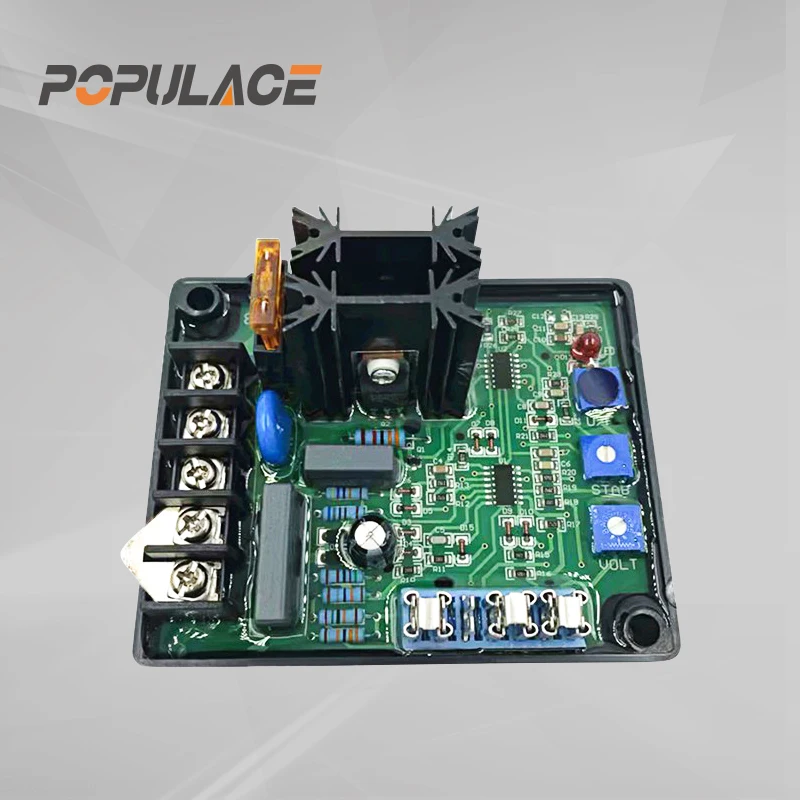
- Brushless Excitation AVR: Common in modern brushless generators where there is no direct electrical contact between the rotating and stationary components. AVRs like the GAVR-8A and GAVR-12A are designed for this architecture, working with the generator's internal exciter winding rather than slip rings. This eliminates a common maintenance point and makes the unit suitable for dusty or humid environments.
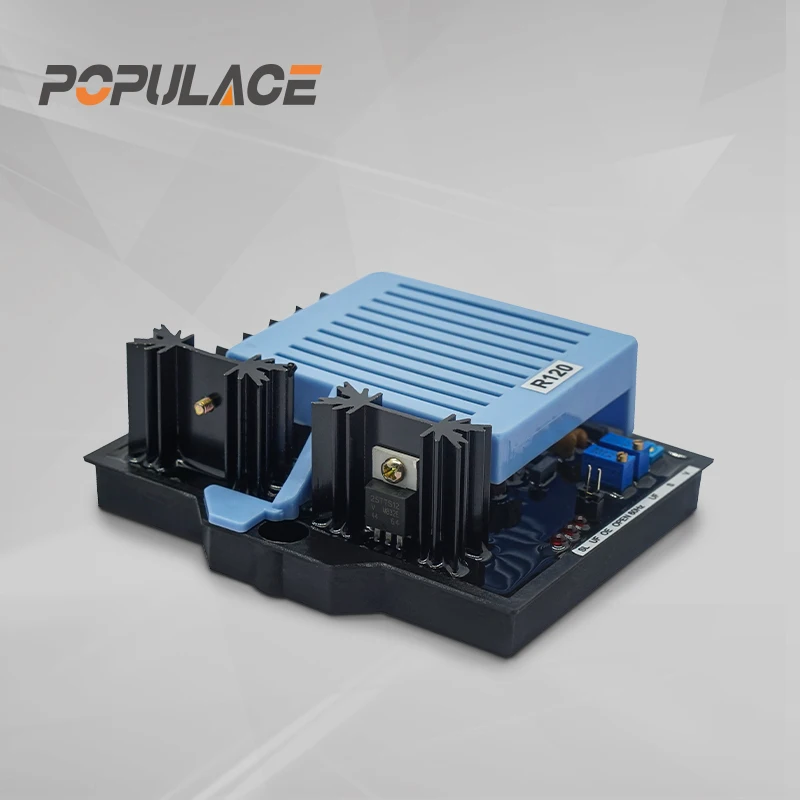
- Digital AVR: Replaces analog sensing and control circuits with a microprocessor-based design. Digital units offer tighter voltage regulation (typically ±0.5% vs. ±1–2% for analog models), built-in diagnostics, and programmable response curves. The R120 is one example of a digital genset AVR that combines circuit-diagram level serviceability with factory-direct pricing, making it a practical option for service fleets and distributors who need consistent, repairable inventory.
Popular AVR Models Compared by Application Range
The comparison that matters most for bulk purchasers is not which model is technically superior — it is which model fits the generator variants you are stocking parts for.
| Model | Type | Typical Power Range | Typical Use Case |
|---|---|---|---|
| SX440 | Self-Excited | Up to 550 kVA | Stamford-compatible gensets, single-phase sensing |
| SX460 | Self-Excited | Up to 1250 kVA | Higher-power Stamford frame, three-phase sensing available |
| AS440 | PMG-Excited | Up to 630 kVA | Sites with non-linear or motor loads, Stamford compatible |
| R120 | Digital | 5–15 kVA diesel sets | Small diesel gensets, field-serviceable with circuit diagram |
| R450 | Analog | Up to 450 kW | Leroy-Somer compatible, mid-range stationary sets |
| GAVR-8A / GAVR-12A | Brushless Universal | 3–25 kVA (8A); up to 50 kVA (12A) | Brushless generators across multiple brands, universal fit |
The shift most experienced wholesale buyers make is realizing that model selection is not about brand loyalty — it is about matching the sensing input range and excitation architecture to the specific generator variant in the field. A buyer sourcing avr generac replacements, for instance, needs to confirm whether their units use brushless or shunt excitation before picking a drop-in replacement. For buyers working with gensets monitored by the DSE 8610 MKII controller, it is worth confirming whether the 8610 mkii configuration requires a specific AVR input voltage range — controller-AVR compatibility is a detail that often surfaces only during commissioning, not during the initial procurement review.
Compatibility, Lifespan, and Replacement Cost
For wholesale buyers managing large replacement part inventories, three factors determine the real cost of an AVR type: compatibility breadth, mean time between failures, and parts availability on repeat orders.
Self-excited models like the SX440 and SX460 have the widest aftermarket availability and lowest unit cost, but they require careful voltage sensing input matching — the adjustment range (typically ±10% of rated output) must align with the generator's nominal voltage. Getting that wrong is the single most common cause of return claims.
Universal brushless units like the Universal Generator AVR GAVR-8A / GAVR-8a Exciter Control Unit reduce the number of SKUs needed in a parts catalog, since one model covers multiple generator brands in the same power band. Similarly, the GAVR-12A Brushless AVR extends that coverage to slightly larger brushless sets, with a straightforward wiring interface that reduces installation errors.
For distributors who service small diesel sets, the R120 Diesel Generator AVR offers a digital design with published circuit diagrams, which simplifies fault isolation and reduces the total cost of field service — especially relevant for markets where technician labor is not cheap.
Installation Basics and Common Fault Points
Regardless of the AVR type, three wiring checks prevent most installation errors. First, confirm the sensing voltage input terminals match the generator's output — most AVRs have adjustment trimmer pots (VOLT trim) to fine-tune within range, but trying to regulate a 240V generator with an AVR calibrated for 110V will not end well. Second, verify the excitation output polarity on brushless units; reversing F+ and F- immediately creates an uncontrolled excitation condition. Third, set stability (STAB) and under-frequency roll-off (UFRO) after installation, not before — these need to be tuned to the actual load profile on site.
Common fault signals worth knowing: if the output voltage is high and does not respond to the VOLT trimmer, the AVR's sensing circuit is likely open. If the generator hunts (voltage oscillates rhythmically), increase the STAB setting incrementally. If regulation is erratic only under load, check the generator field coil resistance against the AVR's rated excitation load range — a degraded generator field coil draws higher-than-spec current and can mask itself as an AVR fault, particularly in older units where the field winding insulation has deteriorated.
Selecting the Right Types of AVR for Generator Applications
If your priority is lowest unit cost and wide replacement coverage for standard commercial gensets, self-excited models in the SX440/SX460 range cover most needs. If your application runs non-linear loads or the installation environment is demanding, PMG-excited or brushless configurations reduce long-term reliability risk. If you are building a service-friendly spare parts program around small diesel sets, a digital unit with accessible circuit documentation like the R120 lowers the total cost of maintenance over the product lifecycle.
Whether OEM or aftermarket suits your situation depends on your downstream customers' acceptance criteria and your supplier's ability to provide consistent batch quality across reorders. A supplier who can demonstrate compatibility documentation and offers direct-manufacturer pricing — eliminating trading company markups — gives you more room to compete on margin without compromising on part quality.
Are you sourcing AVR replacements for a specific generator brand or building a multi-model inventory? That distinction changes which specifications deserve the most attention before placing a bulk order. Understanding the types of avr for generator procurement decisions — not just which models exist, but which excitation architecture governs your specific generator fleet — is what separates effective inventory planning from recurring compatibility problems.





