
 EN
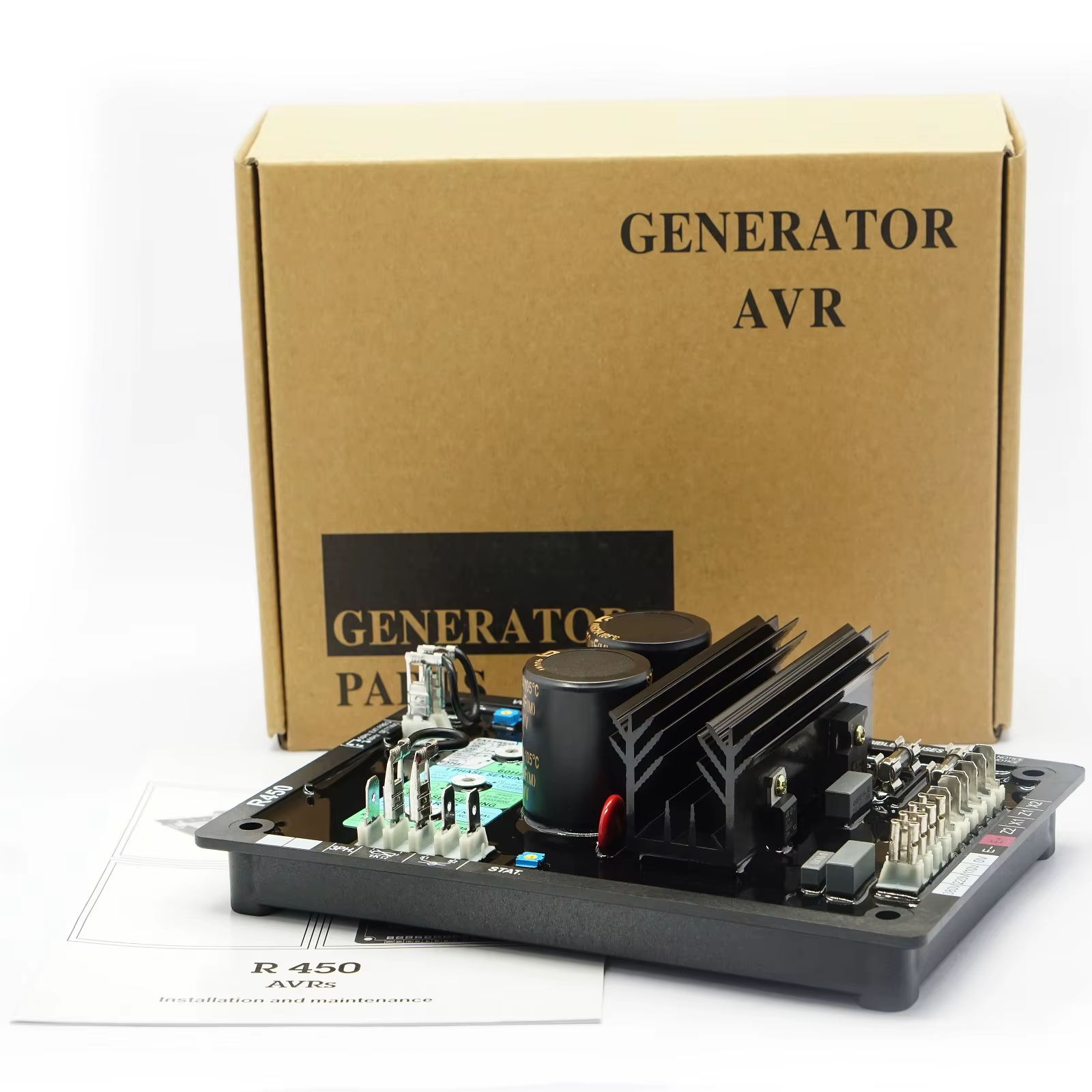
Portable Generator Voltage Regulator: Selection and Setup
A portable generator voltage regulator does more than keep a meter close to its nominal reading. In a brushless alternator, the automatic voltage regulator (AVR) senses output voltage and changes excitation so the alternator can respond when load changes. That feedback role makes regulator selection a compatibility exercise, not a simple “same wattage, same part” purchase.
For a distributor, repair shop, or genset integrator, the practical question is whether a replacement will match the alternator’s sensing arrangement, excitation circuit, operating voltage, phase configuration, and adjustment range. A portable generator voltage regulator that looks similar can still be unsuitable if its terminals, sensing input, or field-current capability differ from the original design.
What an AVR controls—and what it does not
The AVR compares sensed AC output with a reference. If voltage falls as load is applied, it can increase field excitation; if output rises, it can reduce excitation. In that way, a portable generator voltage regulator helps the alternator hold a stable target while the engine governor separately manages speed and frequency. Confusing these two loops leads to wasted troubleshooting: a frequency problem often points to engine speed or governor behavior, while a voltage-only problem may involve sensing, excitation, connections, or the regulator.
This distinction matters for sensitive loads. Stable voltage is useful, but an AVR cannot correct every issue caused by overload, poor engine speed control, damaged windings, loose terminals, or an unsuitable generator rating. Treat a portable generator voltage regulator as one component in an electrical and mechanical system.
Start selection with the alternator, not the label on the old board
Before ordering, record the generator and alternator nameplate information, original AVR markings, connector or terminal layout, rated output voltage, frequency, phase count, and any wiring diagram available from the equipment maker. Also inspect whether sensing is taken from the generator output, whether the excitation source is separate, and which adjustment functions are actually present.
- Sensing and supply: Verify the expected AC sensing/input range and terminal designation.
- Excitation interface: Confirm the field or exciter connection method and allowable current range from manufacturer documentation.
- Single- versus three-phase: A 3 phase avr for generator work must match the alternator’s sensing and phase arrangement; it is not interchangeable merely because the enclosure fits.
- Control features: Compare voltage trim, stability, under-frequency roll-off, droop, and parallel-operation requirements only where the generator design specifies them.
- Environment and serviceability: Consider vibration, heat, terminals, protective enclosure, and access for future replacement.
Power range is a useful screening clue, but it is not a substitute for these checks. A small portable unit and a larger brushless genset may both use an AVR, yet their excitation and sensing requirements can be different. When a buyer asks for a portable generator voltage regulator by kW rating alone, request the alternator details before quoting a substitute.

How common regulator families fit different jobs
Names such as mecc alte voltage regulator and leroy somer voltage regulator are often used in replacement searches because technicians associate them with specific alternator families. They should be treated as compatibility references, not universal specifications. A branded replacement is appropriate only where its exact model, documentation, and application match the alternator; an aftermarket option can be reasonable when the supplier can document equivalent terminal functions, electrical ranges, and installation guidance.
For general replacement inquiries, compare the actual board against the application. The catalogued Universal Generator AVR GAVR-8A exciter control unit is a relevant starting point for a specification review, not proof of fit. Likewise, buyers comparing a digital-style option can review the R120 diesel generator AVR listing against their original wiring documentation. For applications that require a higher-current regulator family, the GAVR-20A brushless generator AVR listing can support an initial sourcing conversation. Each selection still requires a technical cross-check.
Installation and wiring: use a controlled sequence
Installing a portable generator voltage regulator is electrical service work. Isolate the generator, prevent unexpected starting, disconnect external power paths, and use the correct wiring diagram before moving any lead. If the diagram is missing, the terminals are damaged, or the alternator has been modified, stop and obtain qualified technical support rather than transferring wires by position.
- Photograph and label every original lead, then compare labels with the verified replacement terminal diagram.
- Inspect connectors, field leads, sensing leads, fuses, brushes where applicable, and grounds for heat damage or looseness.
- Mount the AVR securely and route conductors so vibration cannot abrade insulation or strain terminals.
- Set adjustable controls to the documented starting position. Do not make large trim changes before confirming the correct sensing and excitation wiring.
- Commission with appropriate instruments and a qualified person: check no-load output, frequency, response to a controlled load, and abnormal heating or hunting.
Do not assume that a portable generator wiring scheme is identical to another model. A portable generator voltage regulator may have similar terminal names while the overall alternator circuit differs. For a 3 phase avr for generator application, verify phase sensing and any droop or parallel provisions against the original system documentation.
Fast troubleshooting before replacing the AVR
Begin with symptoms. Low or high voltage at normal frequency can justify checking sensing connections, adjustment settings, excitation components, and AVR condition. Voltage that follows engine speed may indicate a governor or engine-speed issue. Output that drops only under excessive load may be a capacity or load problem rather than a failed portable generator voltage regulator. Intermittent output can also arise from loose terminals, contaminated connectors, moisture, or damaged wiring.
A useful workshop record includes no-load voltage, loaded voltage, frequency, ambient condition, connected load type, and what changed before the fault appeared. This evidence helps distinguish a mecc alte voltage regulator or leroy somer voltage regulator cross-reference request from a genuine diagnosis. It also gives a supplier enough context to identify whether an exact replacement, a documented equivalent, or a broader alternator repair is the safer path.
Wholesale sourcing criteria that reduce returns
For volume purchasing, the lowest quoted AVR is rarely the complete comparison. Ask suppliers for a clear compatibility matrix, terminal diagram, model photographs, packing method, traceable batch information where available, lead-time confirmation, and a process for technical questions or returns. Sample verification against an actual alternator can be more valuable than relying on a generic description.
Separate a portable generator voltage regulator order into application groups: small single-phase portable units, three-phase sets, and alternator-specific replacements. Require each group to have a part-number cross-reference and approved wiring information. This makes replenishment easier and reduces the chance that a part intended for one excitation system is shipped as a universal replacement.
Selection checklist
Choose a portable generator voltage regulator only after confirming alternator model, phase count, voltage and frequency, sensing and excitation terminals, adjustment needs, physical mounting, and verified documentation. For a mecc alte voltage regulator, a leroy somer voltage regulator, or a 3 phase avr for generator request, begin with the exact alternator reference rather than a visual match. The result is a more defensible quote, a safer installation, and fewer preventable callbacks.





