
 EN
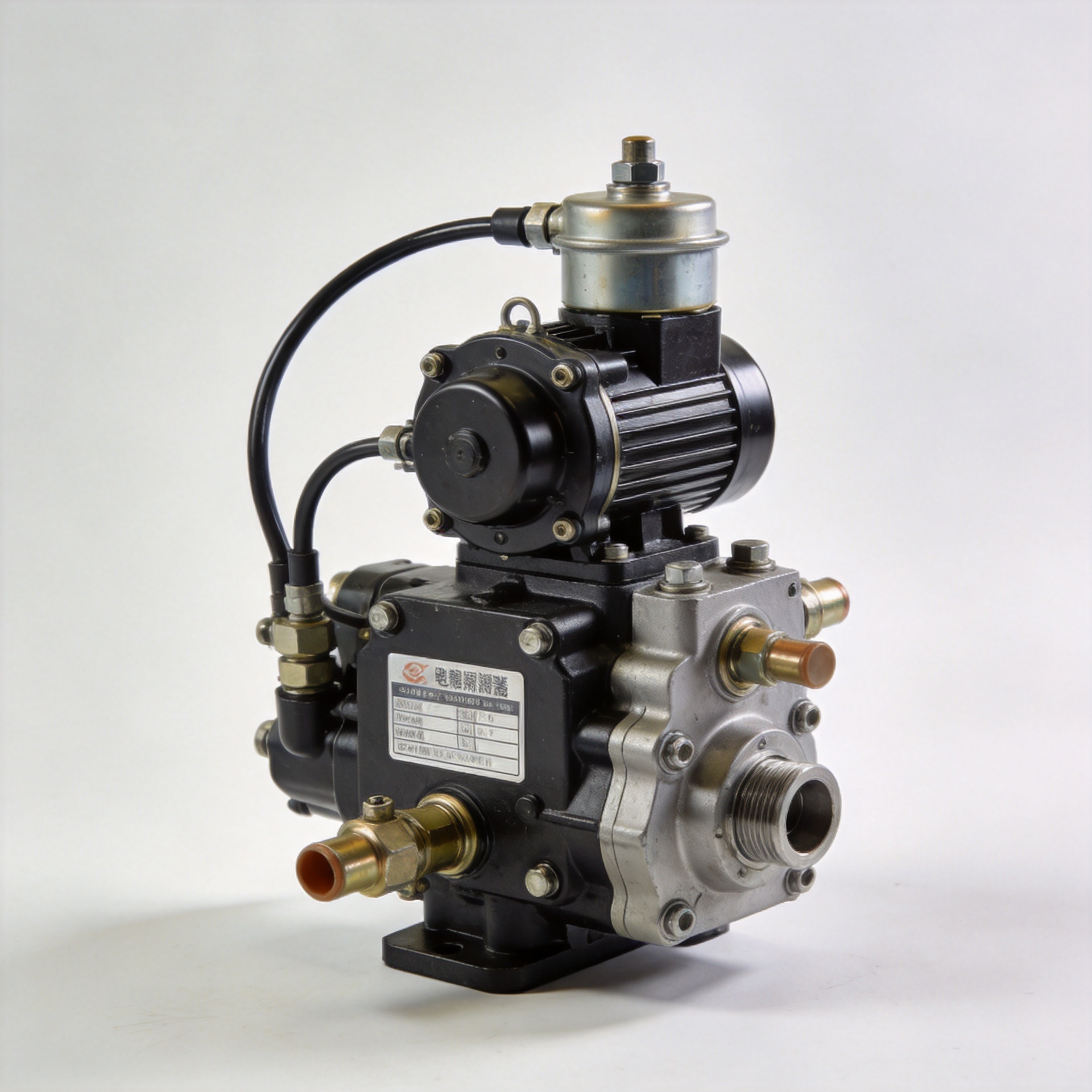
Governor Actuator for Diesel Gensets: Selection Guide
Selecting the right governor actuator for diesel genset applications is one of those decisions that looks straightforward until you encounter your first speed instability problem post-installation. Most procurement errors in this category trace back to a mismatch between the actuator's operating parameters and the fuel system type, not the actuator quality itself.
This guide covers the practical criteria for choosing a governor actuator for diesel genset use: how different actuator types work, when to choose isochronous versus droop modes, and what specifications actually matter for your application.
How a Governor Actuator Controls Engine Speed
A governor actuator for diesel genset operation is the electromechanical device that physically moves the fuel control rack on a diesel engine in response to signals from the governor controller. When load changes, the controller detects a speed deviation and sends a proportional current signal to the actuator, which converts that signal into mechanical movement, increasing fuel delivery under load and reducing it when load drops.
Electronic actuators for diesel gensets operate on 12V or 24V DC supply and produce rotation in the range of 25 to 45 degrees. Response time is under 50 milliseconds in most cases, fast enough to correct transient load disturbances without perceptible frequency drop under industrial generator loads.
The shift experienced buyers make is realizing that governor actuator selection is not about brand loyalty. It is about matching torque output, rotation angle, and signal interface to the specific fuel injection pump type and engine displacement.
Mechanical vs. Electronic Governor Actuators
Mechanical governors use centrifugal flyweights and spring tension to regulate speed without electronic input. They are self-contained, require no external power supply, and remain common on older diesel gensets where no electronic controller infrastructure exists.
Electronic governor actuators require a companion controller to process the speed signal and generate output current. This separation allows finer control: isochronous or droop regulation modes, load-sharing logic for parallel operation, and configurable gain and stability settings. For modern industrial gensets or any application involving parallel operation, electronic actuators are the standard choice.
If your application runs at a stable load profile and the genset operates in isolation, a mechanical governor may serve well. If load swings frequently, or if you are running parallel sets, an electronic governor actuator for diesel genset control will give you the response and stability required.
Isochronous vs. Droop Mode
This is the selection point most buyers overlook when sourcing a governor actuator for diesel genset systems.
Isochronous mode maintains a fixed engine speed regardless of load changes, correcting 100% of any speed deviation. This is the correct mode for a single genset operating in isolation, keeping output frequency exactly at the rated setpoint under any load condition.
Droop mode allows engine speed to drop slightly as load increases, by 3 to 5 percent between no-load and full-load. This speed-load relationship is engineered for stable parallel operation of multiple gensets. When two or more units run in parallel, droop ensures proportional load sharing without instability.
The difference between standby and prime power applications shows most clearly in governor behavior under sustained heavy load. For parallel prime power installations, selecting an actuator-controller combination with droop adjustment capability is a system requirement, not a preference.
Key Selection Criteria
Supply Voltage: 12V or 24V
The actuator must match the genset panel's DC supply. Most modern industrial gensets use 24V; smaller and portable units often use 12V. Wrong voltage will affect actuator response and can cause premature coil failure.
Fuel System Interface and Torque
Multi-plunger injection pumps, common on Cummins, Perkins, and similar engines, use a rotary actuator driving a rack rod. Torque output for medium-duty gensets ranges from 2 to 4 lb-ft. Rotation angle must cover the full rack travel from minimum to maximum fuel. Undersizing either parameter leads to insufficient fuel control authority under load.
Mobile vs. Stationary Applications
Mobile generator sets and outdoor installations need actuators with higher ingress protection ratings and vibration-resistant mounting. Stationary industrial applications have more tolerance for standard-duty actuators, but mobile deployments benefit from sealed enclosures and shock-mount brackets.
ADC Series Actuators: Selecting the Right Variant
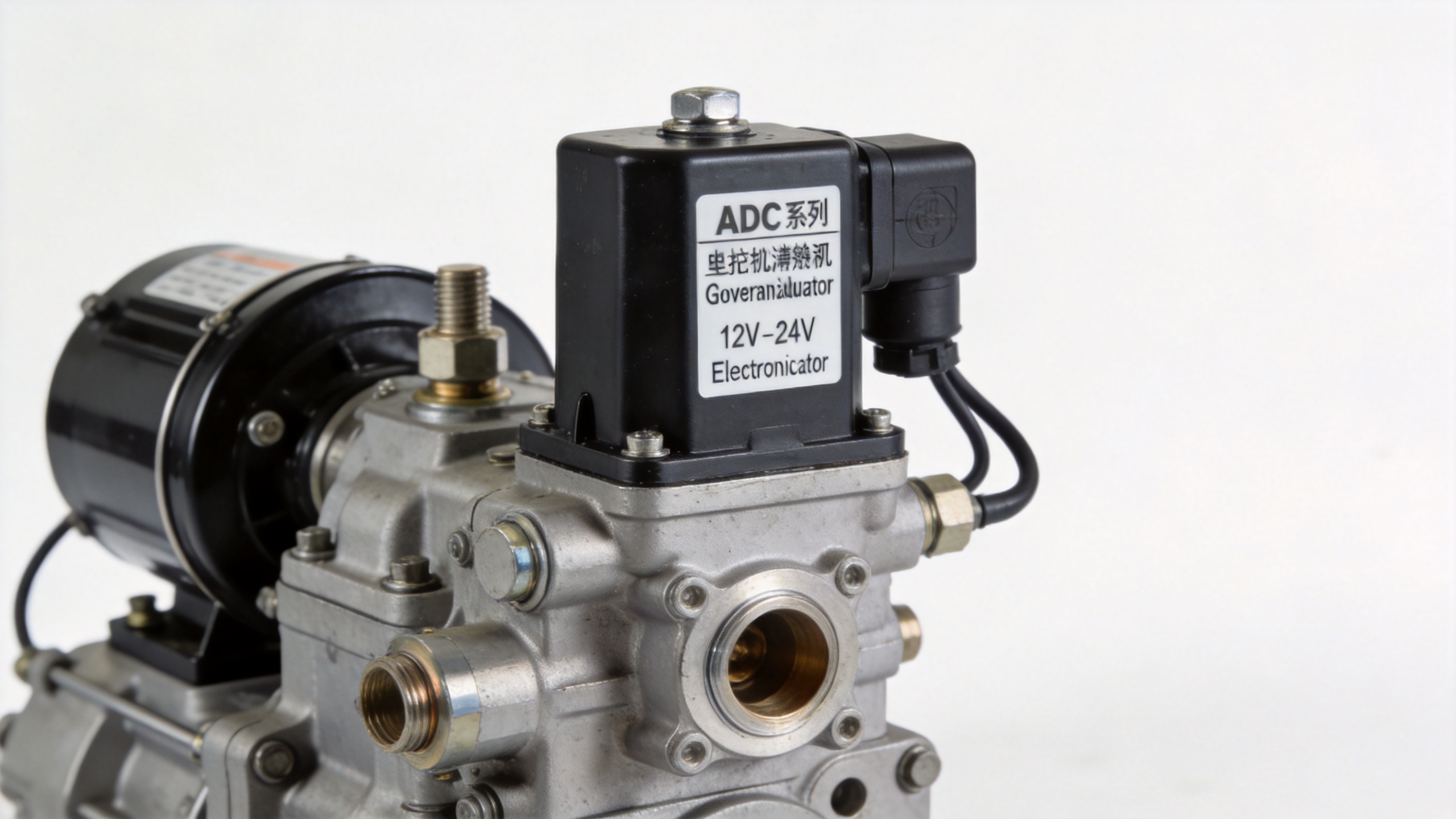
The ADC series is among the most widely used governor actuator for diesel genset replacement and retrofit projects. Available in 12V and 24V versions, ADC actuators are designed for external mounting on multi-plunger injection pumps and are compatible with a broad range of governor controllers from different manufacturers.
- ADC120: Smaller displacement engines and light-duty gensets; compact form factor with lower torque output.
- ADC175: Mid-range torque covering the majority of 50 to 300 kW commercial genset applications.
- ADC225: Higher torque for larger displacement engines and high fuel rack spring loads.
One of the most common ordering mistakes with ADC actuators is specifying only the engine brand rather than the exact engine model and rack spring return force. This leads to receiving a part that cannot fully open the fuel rack under load. Confirm the engine model serial range and rack resistance before selecting the variant.
The POPULACE ADC120/ADC175/ADC225 External Actuator supports both 12V and 24V supply across all three size variants. For direct electronic replacement, the ADC Series Electric Governor Actuator provides the same broad compatibility in a standardized package.
Pairing with a Governor Speed Controller
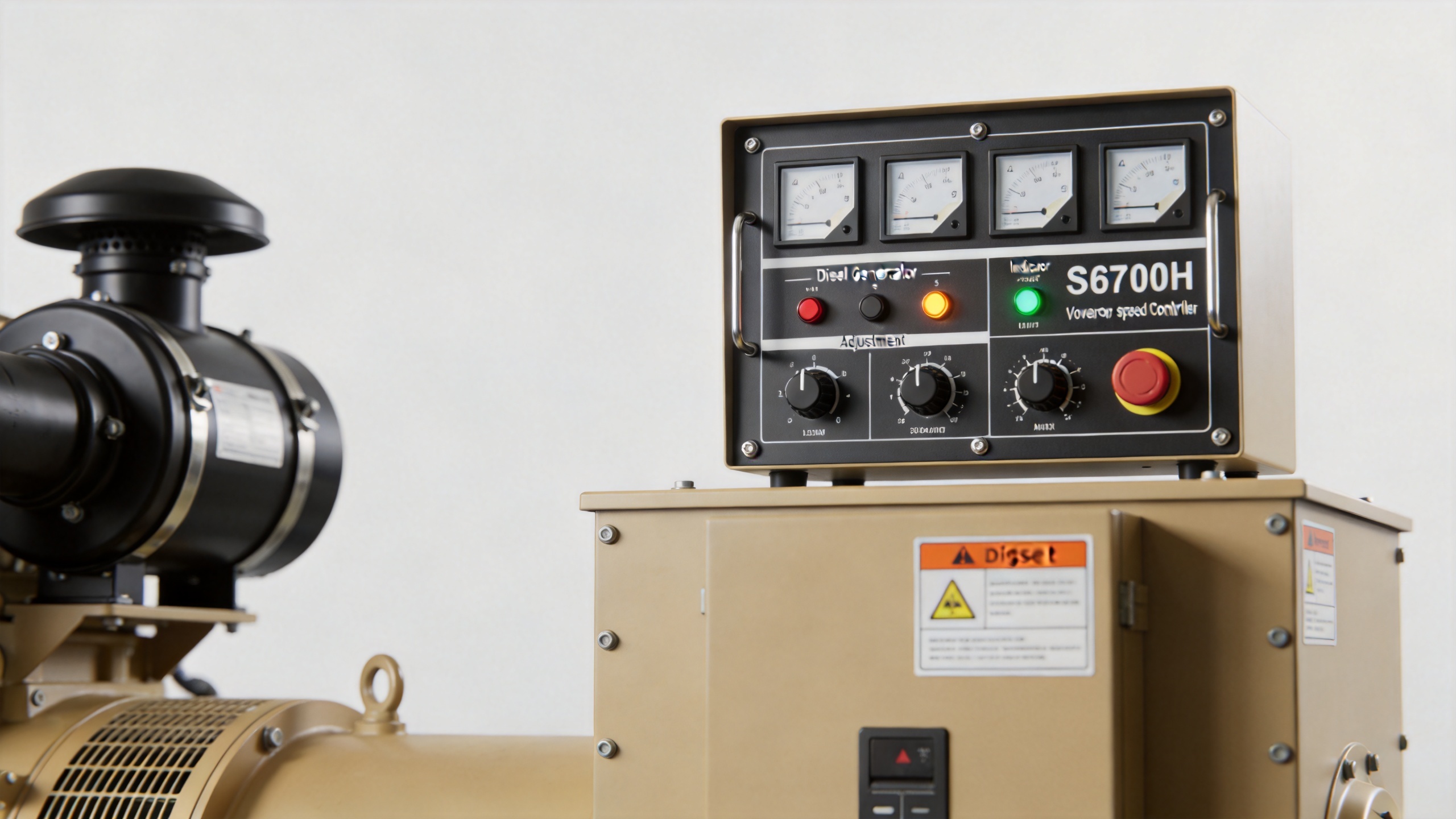
An actuator performs only as well as the controller driving it. The controller's gain settings and speed sensing accuracy determine whether the actuator delivers stable regulation or causes hunting. For new installations where the existing controller is unknown or aging, replacing both together removes tuning uncertainty.
The S6700H Governor Speed Controller pairs with ADC-type actuators and provides adjustable gain, droop, and isochronous mode selection, suitable for both standalone and parallel genset configurations.
Calibration and Adjustment Steps
After installing a governor actuator for diesel genset use, calibration involves three adjustments: speed setpoint, gain, and droop if parallel operation is required.
- Set the speed setpoint with the generator running at no load until rated frequency is reached (50 Hz or 60 Hz as applicable).
- Apply a step load change and observe the response. If the engine hunts, reduce gain; if recovery is slow, increase it.
- For parallel operation, set droop to match other units in the system, typically 3 to 5 percent, and verify load sharing with a clamp meter before continuous parallel operation.
Before making fine-tuning adjustments, inspect the mechanical linkage for wear. A governor that appears unstable is sometimes responding correctly to a loose or worn control rod, not malfunctioning internally. Resolving the mechanical issue first prevents unnecessary controller adjustments that will not address the root cause.
Sourcing Guidance
When sourcing a governor actuator for diesel genset applications at volume, verify engine model serial range, supply voltage, and fuel system interface type before committing to a batch order. Populace Electronic Co., Ltd. supplies ADC series actuators and S6700H controllers with pre-sales technical compatibility support, covering 12V and 24V versions across ADC120, ADC175, and ADC225 variants. Inquiries can be directed to kygenpower.com.






