
 EN
Generator Replacement Parts Supplier: How to Qualify
Finding a generator replacement parts supplier takes minutes. Qualifying one is the part most wholesale buyers get wrong. Whether you are sourcing controllers, AVRs, speed governors, solenoid valves, or battery maintenance equipment, the evaluation process involves more variables than a catalog and a price sheet can reveal. Confirming that a supplier can deliver consistent compatibility, reliable quality, and B2B-ready terms at the volume your operation needs takes deliberate work.
This guide walks through the qualification criteria in the order that matters most to distributors and brand merchants managing multi-brand generator fleets. Work through these before you are deep in an order cycle.
Start with Component Category Coverage
Before evaluating a specific generator replacement parts supplier, map the component categories your operation actually needs. A qualified supplier should cover the core electrical and mechanical replacement categories without splitting sourcing across multiple relationships.
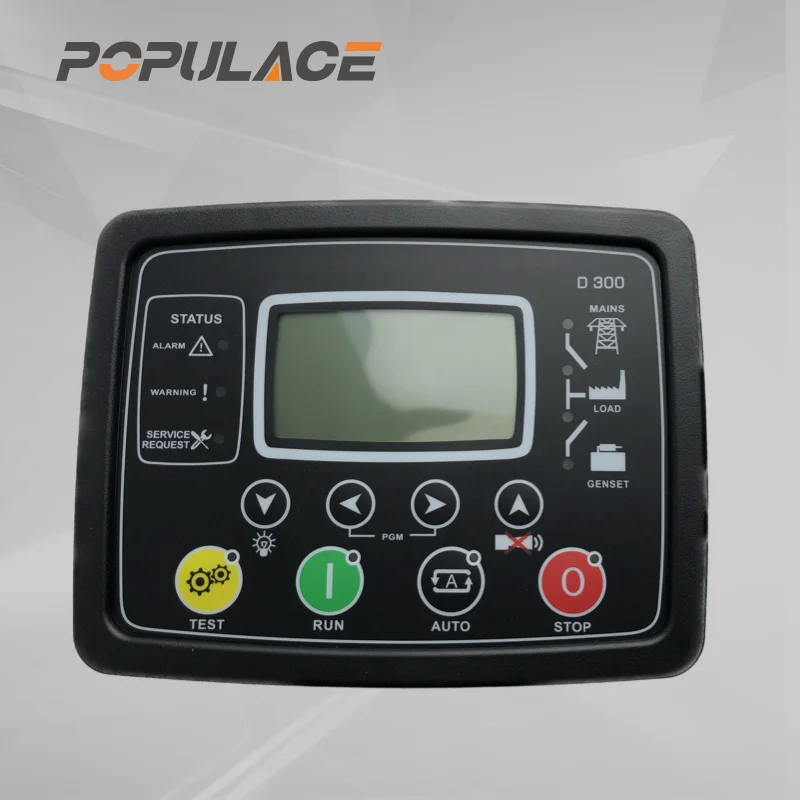
Categories worth confirming upfront:
- Genset controllers: Multi-brand compatible controllers, such as the DATAKOM D-300-MK3 Genset Controller, handle protection, monitoring, and automatic start/stop functions. Model compatibility with your fleet configuration should be confirmed before price discussions.
- AVR (automatic voltage regulators) and speed governors: These directly affect generator output quality and frequency stability. Any supplier claiming broad compatibility should provide model-specific compatibility charts, not just brand-level listings.
- Sensors and monitoring components: Coolant temperature sensors, oil pressure sensors, and level senders — VDO-compatible units like the 803/1/25 803/1/30 Water Temperature Sensor VDO Compatible Engine Coolant Sender — form part of the generator's protection system. Cross-referencing OEM part numbers is standard practice here.
- Battery maintenance equipment: For standby generators, battery health is a common failure point that often goes unmonitored until it matters. A 12V/24V automatic battery trickle charger, such as the POPULACE 12v 24v 4a/6a/10a Generator Automatic Battery Trickle Charger, keeps standby batteries at optimal charge between run cycles — a practical add-on for buyers who also supply honda generator battery maintenance products.
Suppliers who cover this range under one relationship reduce administrative overhead and make reordering more predictable.
Criterion 1: Brand and Model Compatibility Depth
The most important qualification criterion for a generator replacement parts supplier is compatibility coverage depth — not the number of brand names listed in the catalog.
Are you sourcing for a single-brand fleet, or managing mixed-brand assets including Cummins, Perkins, Volvo Penta, or Doosan? The answer changes how you evaluate compatibility claims. A supplier who can confirm compatibility for specific Cummins and cummins onan parts variants — down to engine series, serial range, and actuator interface type — is worth considerably more than one who lists "Cummins compatible" without documentation behind it.
For buyers sourcing parts for newer EFI generator models, this becomes even more specific. EFI generator systems use electronic fuel injection with integrated control signals that may not align with parts designed for traditional mechanical fuel systems. Confirming that a supplier's control components have been tested against your specific efi generator configuration is worth the extra exchange before placing an order.
The risk most buyers underestimate when sourcing generator replacement parts internationally is assuming brand-level compatibility claims translate to variant-level installation success. Before confirming a compatibility-critical order, verify: engine model number, serial range, control interface type, and sensing voltage range for AVRs.
Criterion 2: OEM Compatibility Documentation and Batch Quality
For B2B buyers who resell or maintain fleet equipment, documentation is a supplier value signal — not administrative overhead. Buyers who have dealt with installation failures tend to treat compatibility documentation and wiring diagrams as a primary evaluation criterion rather than an afterthought.
A qualified generator replacement parts supplier should be able to provide, on request:
- Technical data sheets with input/output specifications and applicable model ranges
- Wiring diagrams and installation guidance for each product category
- Batch test records or quality inspection certificates (ISO 9001 certification is a baseline signal for systematic quality control)
- Compliance documentation — CE, RoHS, or ASTM equivalents — for regulated markets in Europe or North America
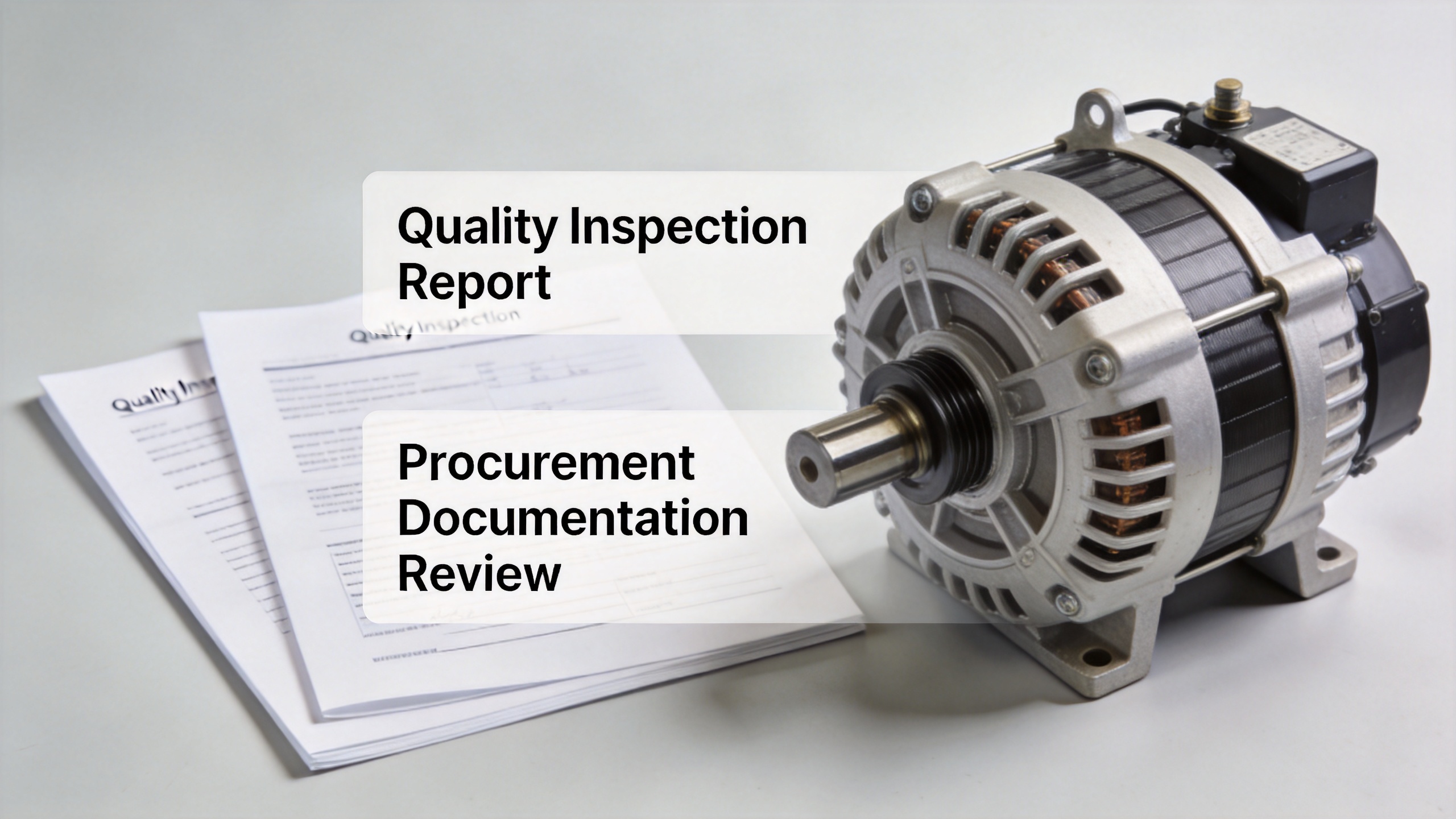
Batch consistency matters beyond the first order. A sourcing process that seemed efficient broke down at the repeat order stage when quality on a new production batch differed from the evaluated sample. Requesting batch consistency terms — not just first-order sample quality — as part of the qualification agreement is a step most buyers add after learning the hard way.
Suppliers with OEM private-label capability offer an additional option for brand merchants. OEM compatibility packaging at flexible minimum order quantities lets brand owners build a product line around generator parts without committing to large-scale OEM programs upfront.
Criterion 3: B2B Wholesale Terms and Minimum Order Flexibility
Once you manage a parts inventory long enough, you stop asking "which supplier has the lowest price?" and start asking "which supplier can reliably ship within a confirmed lead time and maintain consistent batch quality across repeat orders?"
Practical qualification criteria around ordering terms include:
- Trial order acceptance: A supplier who allows small initial orders before volume commitment reduces qualification risk. Confirm whether trial order pricing reflects production batch quality or is a selectively managed sample.
- MOQ flexibility across categories: Suppliers whose minimum order quantities make it impractical to stock low-velocity SKUs — specialized sensors or legacy controllers — alongside high-velocity items create inventory management problems over time.
- Volume pricing structure: Wholesale pricing should reflect distributor margin requirements. Confirm whether pricing scales with order frequency and relationship history, not just single-order volume.
- Export documentation: For international buyers, a commercial invoice, packing list, and certificate of origin should be included as standard with every shipment — not as a follow-up request that delays customs clearance.
Criterion 4: Spare Parts Inventory Planning and Maintenance Cycle Alignment
Effective inventory management for generator replacement parts starts with the maintenance intervals that drive demand. Standard diesel generator maintenance follows predictable cycles: daily checks for fluid levels and visual inspection, monthly service for filters and belts, and annual overhaul that typically includes AVR inspection, governor calibration, and battery system review.
For wholesale distributors, this suggests a stocking approach: hold safety stock on the highest-velocity compatible parts for the three to five generator brands most common in your market, and source on demand for specialty configurations. Holding deep inventory across all SKUs reduces emergency sourcing risk but ties up working capital in slow-moving items. The right balance depends on your order volume, customer lead time expectations, and upstream supply reliability.
A supplier who holds to lead time commitments across repeat orders is worth more than one who offers competitive pricing with variable delivery windows. The first order from a new generator parts supplier often ships faster than subsequent ones because the initial order receives priority attention — which is why placing a second test order within 60 days, before committing to full-scale inventory reliance, is worth the extra step.
Supplier Qualification Checklist
Before finalizing a generator replacement parts supplier relationship, confirm the following:
- Component category coverage for controllers, AVR, governors, sensors, and battery equipment
- Brand and model compatibility verified at engine-series and serial-range level, not just brand name
- Technical data sheets, wiring diagrams, and batch test documentation available on request
- Quality certifications — ISO 9001, CE, RoHS as applicable — provided and verifiable
- Trial order terms confirmed with realistic production batch representation
- MOQ flexibility suitable for your stock depth and velocity mix
- Export documentation included as standard with international shipments
- Repeat order lead time consistency tested through a second order before scaling
One round of thorough evaluation pays off across years of consistent supply. The suppliers who manage this well treat qualification not as a procurement hurdle but as the starting point for a reliable parts relationship. Contact Grace at [email protected] or visit kygenpower.com to discuss compatibility requirements and wholesale pricing for your specific fleet configuration.






