
 EN
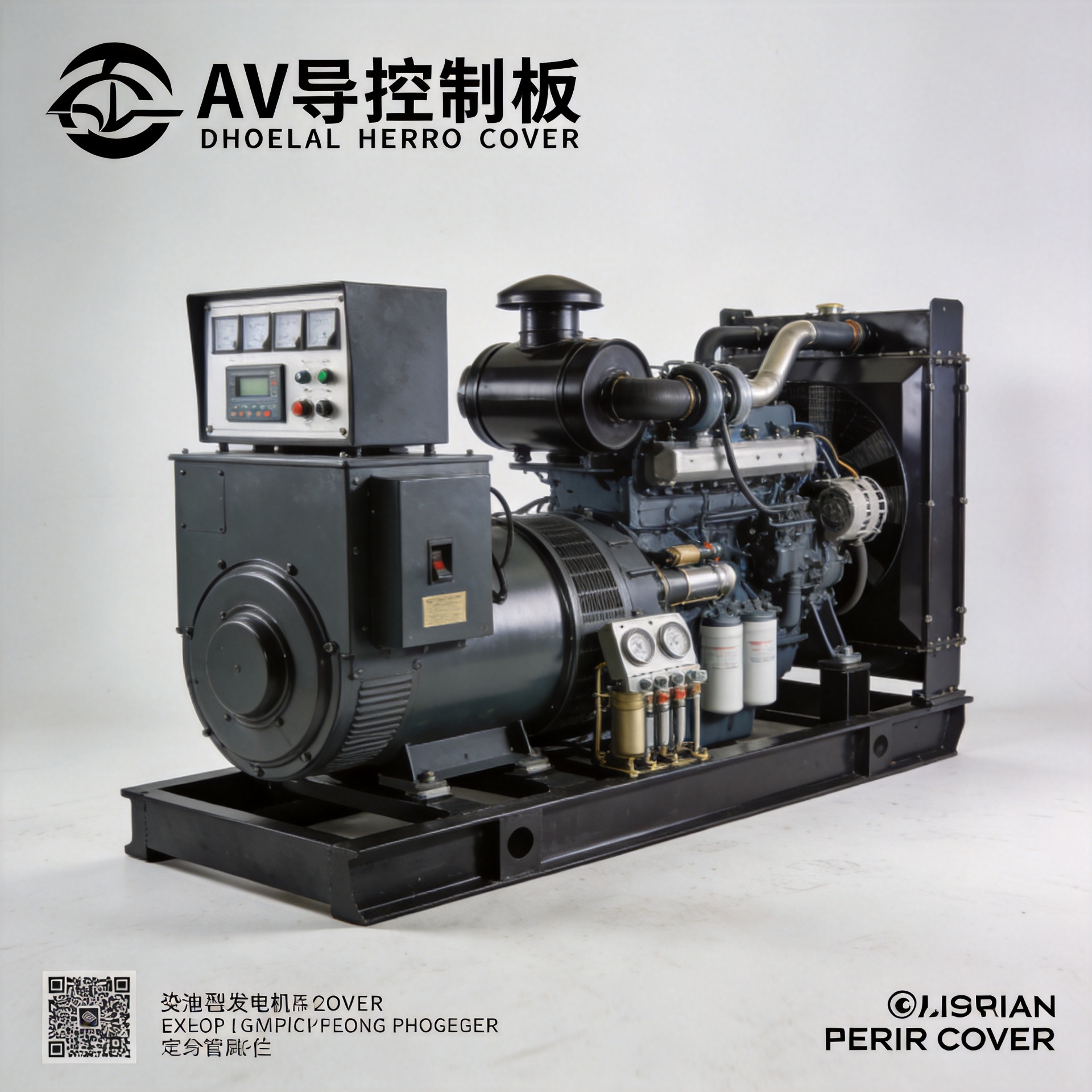
Generator Parts Supplier: Sourcing and Replacement Guide for B2B Buyers
Choosing the right generator parts supplier is a decision that shapes your entire maintenance operation — from parts available on short notice to total landed cost per unit across repeat orders. Whether you manage a distributor inventory, run a field service fleet, or handle procurement for a multi-site facility, the sourcing structure you establish with your generator parts supplier directly affects your uptime record and supply chain resilience.
This guide covers what experienced B2B buyers look for when evaluating a generator parts supplier, the core component categories that demand the tightest specification discipline, and practical inventory strategies that reduce emergency sourcing events.
Core Generator Parts Categories and What to Verify Before Ordering
Most diesel generator systems share a common anatomy regardless of the nameplate — Cummins, Perkins, Volvo Penta, Doosan, or domestic brands. The categories below carry the highest specification risk and the greatest downtime consequence when sourced incorrectly from an unqualified generator parts supplier.
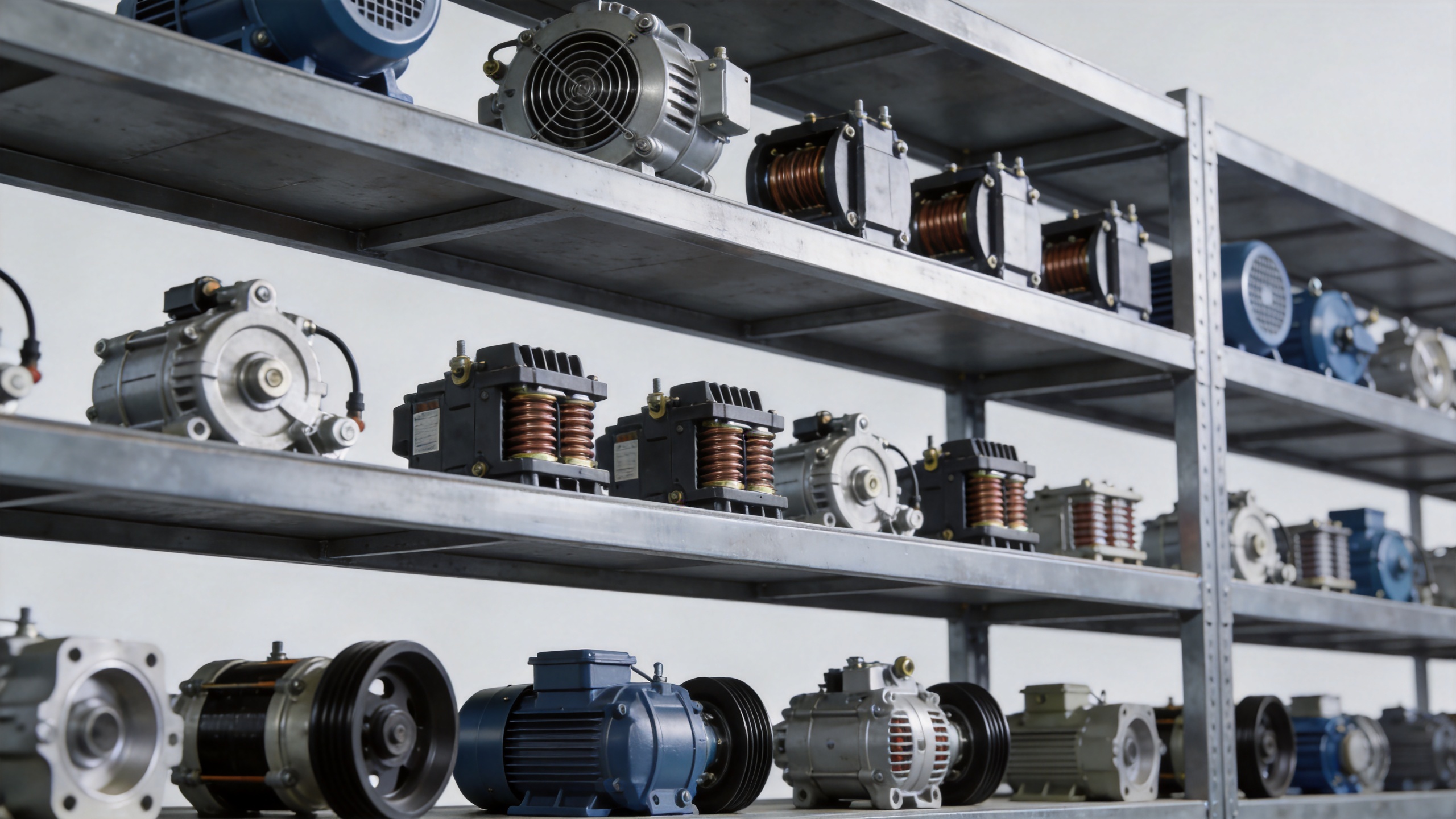
Generator Controllers
The controller manages automatic start/stop sequences, monitors protection alarms, and handles load transfer logic. Controllers are not universally interchangeable; the protocol version, I/O pin configuration, and firmware compatibility all need to align with the genset's wiring and protection scheme. For buyers stocking controllers across multiple genset brands, a compatibility reference document from your generator parts supplier is worth requiring before the first shipment.
For reliable genset management across a range of diesel generator configurations, the DATAKOM D-300-MK3 Genset Controller provides comprehensive AMF and manual control functions with clear specification documentation.
AVR (Automatic Voltage Regulator)
The AVR regulates alternator output voltage by adjusting field excitation. Correct specification requires knowing the sensing voltage range, excitation current rating, and excitation type — shunt or PMG. A mismatched AVR from a generator parts supplier who does not verify compatibility at the model level can result in voltage instability or protection trip after installation.
AVRs have a predictable service life: inspection every 2–3 years is standard, with replacement recommended at 10,000–20,000 operating hours for units in prime or continuous service. Distributors who stock the most common AVR variants for their service fleet eliminate a significant share of emergency orders.
Speed Governors and Actuators
Speed governors regulate engine RPM under changing load. Both mechanical and electronic governor types remain active in the installed base, with compatibility determined at the actuator interface level for electronic types and coupling geometry for mechanical types. For Cummins standby gensets, governor configuration can vary within the same engine series by production run and application — confirming the variant with your generator parts supplier before ordering is worth the added step.
Engine Sensors and Coolant Senders
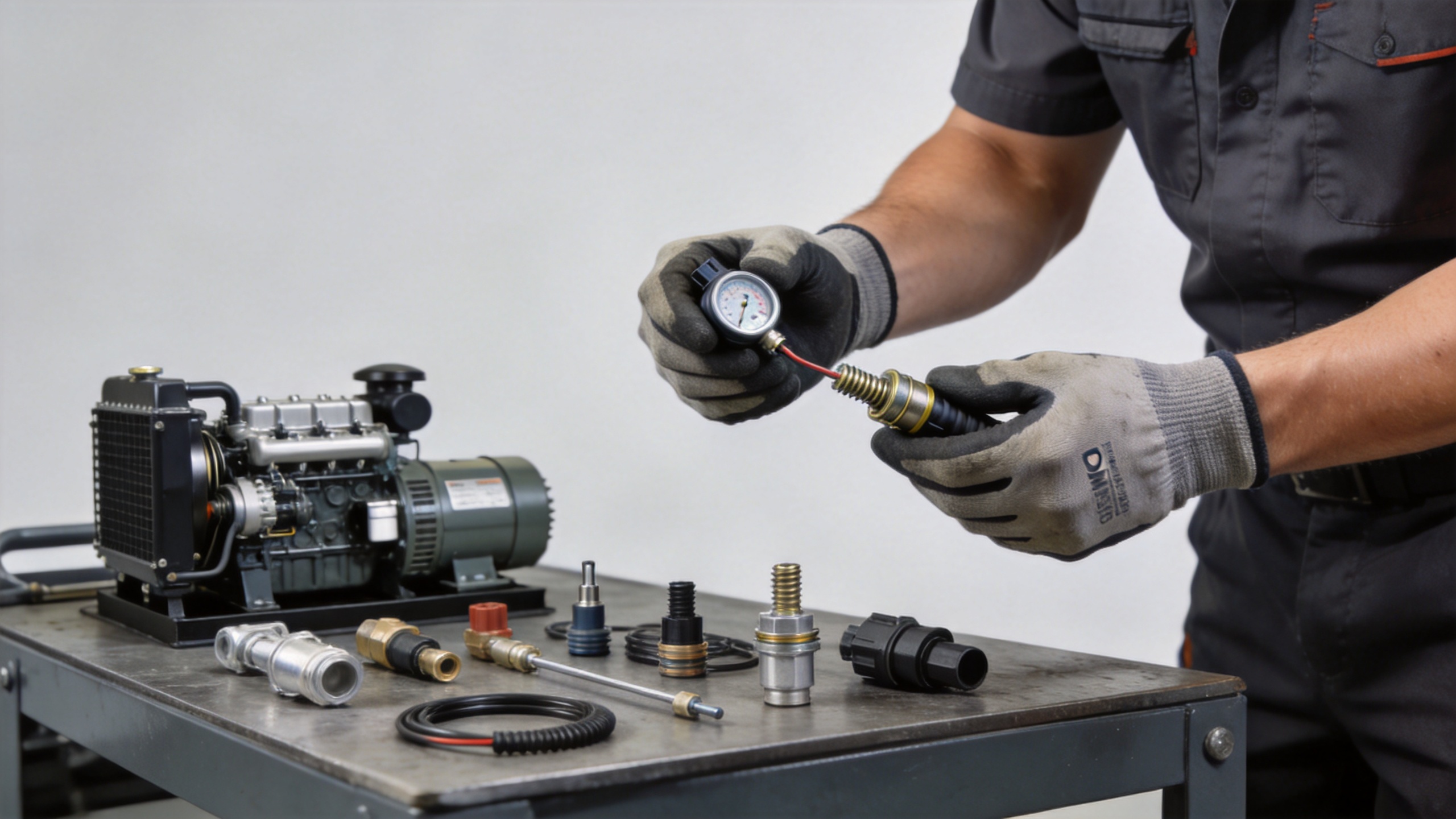
Coolant temperature senders, oil pressure switches, and fuel level senders are among the highest-frequency replacement parts in a working generator fleet. VDO-compatible sensors serve a broad range of engine types, but thread specification, resistance curve, and operating temperature range need to match the existing gauge or ECU input. A reliable generator parts supplier should be able to provide cross-reference data for common sensor configurations.
The 803/1/25 and 803/1/30 Water Temperature Sensor VDO Compatible Engine Coolant Sender offers a cross-reference option for compatible engine configurations, with specification data available for buyer confirmation before ordering.
Generator Fuel Tank and Fuel System Components
The generator fuel tank, fuel level senders, shut-off solenoids, and fuel lines are commonly overlooked in spare parts planning until a leak or sender failure causes an unplanned shutdown. For distributors managing customer generator fleets, stocking sub-base tank components and float-type senders for commonly serviced models reduces field response time when fuel system issues arise.
Battery Chargers and Starting System Components
Starting battery failures are a common and avoidable cause of standby generator unreliability. A generator that starts during weekly testing can fail during an actual power event if battery float voltage has dropped between test cycles. Automatic trickle chargers maintain battery readiness without requiring manual intervention and are a practical addition to any spare parts kit.
The POPULACE 12v 24v 4a/6a/10a Generator Automatic Battery Trickle Charger supports 12V and 24V battery systems at multiple charge rates, covering a wide range of genset configurations from a single SKU.
Champion and Generac Generator Parts: Sourcing Considerations for Distributors
B2B buyers who stock champion generator parts or generac generator parts typically serve retail service centers, generator rental fleets, or residential standby customers. Both brands have active installed bases with predictable replacement part demand, and both support a mix of OEM and compatible aftermarket sourcing.
For Champion units, carburetor kits, spark plugs, and fuel system components see the highest service frequency. For Generac, AVR assemblies and ignition modules are common items. In both cases, confirming the part number cross-reference before stocking reduces returns and misfit inventory. The right generator parts supplier should provide model-specific compatibility data rather than category-level catalog listings.
For industrial diesel generator parts — covering Cummins, Perkins, Volvo, Doosan — specification requirements are more demanding, but per-unit order value is typically higher, making the sourcing investment worthwhile for distributors who can manage the compatibility documentation properly.
OEM vs. Aftermarket: The Practical Trade-off for Wholesale Buyers
OEM parts carry manufacturer warranty coverage and a known compatibility record, but longer lead times and higher unit prices can compress distributor margins. The decision between OEM and aftermarket hinges on application criticality, budget constraints, and your confidence in the aftermarket generator parts supplier's quality documentation.
Well-specified aftermarket parts from a direct manufacturer generator parts supplier can match OEM performance at lower cost — but compatibility needs verification at the specification level, not assumption from brand references alone. Batch consistency needs confirmation across repeat orders, and technical documentation should accompany the product as standard. Sourcing from a generator parts supplier with pre-shipment compatibility verification and documented batch quality controls reduces tail risk in ways that unit price alone cannot compensate for.
Maintenance Intervals and Parts Planning for B2B Distributors
Diesel generator maintenance programs follow a tiered schedule — from basic A-checks at short intervals to comprehensive D-check overhauls at 3,000–5,000 operating hours. Most facility management programs schedule inspections every six months or annually regardless of usage intensity.
For wholesale distributors supplying service contractors, aligning your stocking plan to these cycles is more effective than reactive fulfillment. D-check demand — AVRs, governors, sensor suites — is foreseeable months in advance by tracking fleet operational hours. Buyers who share maintenance forecast data with their generator parts supplier can negotiate buffer stock and priority fulfillment instead of paying expedite premiums.
Inventory Strategy: Balancing Stock Depth Against Cash Flow
For distributors, managing generator parts inventory comes down to a practical trade-off between stock depth and working capital commitment. Holding too little inventory creates downtime and lost service revenue; holding too much ties up cash in slow-moving items with uncertain demand cycles.
A practical framework: identify the top 15–20% of part numbers that account for 70–80% of your service demand and maintain buffer stock on those items. For long-tail parts, establish a verified relationship with a generator parts supplier who can commit to reduced lead times in exchange for demand forecast sharing, rather than building deep inventory on items with uncertain turnover.
How to Evaluate a Generator Parts Supplier for B2B Procurement
When assessing a new generator parts supplier for wholesale procurement, the checklist goes beyond catalog breadth and quoted unit price:
- Compatibility documentation: Can the supplier provide engine-model-level cross-reference data, not just general brand catalog listings?
- Pre-shipment verification: Is there a defined process for specification confirmation before order finalization, especially for AVRs and governors?
- Batch consistency: Does the supplier document quality control procedures across production batches, not only for the initial sample?
- OEM compatibility support: Can the supplier cross-reference OEM part numbers and provide specification-matched aftermarket equivalents?
- Export packaging: Are anti-static and impact-resistant packaging standards applied to electronic control components as a default, not an optional add-on?
- Order flexibility: Can the supplier accommodate trial quantity orders before scaling to full wholesale volume?
KYGEN Power (kygenpower.com), operating under Populace Electronic Co., Ltd., is a manufacturer-direct generator parts supplier based in Xiamen, Fujian, serving wholesale buyers and brand merchants across Asia, Europe, and North America. The product range covers genset controllers, AVRs, governors, engine sensors, battery chargers, and ancillary parts. OEM compatibility documentation and batch quality controls are standard features of the supply process. For wholesale inquiries, the company can be reached through kygenpower.com or the Alibaba storefront at populaces.en.alibaba.com.






