
 EN
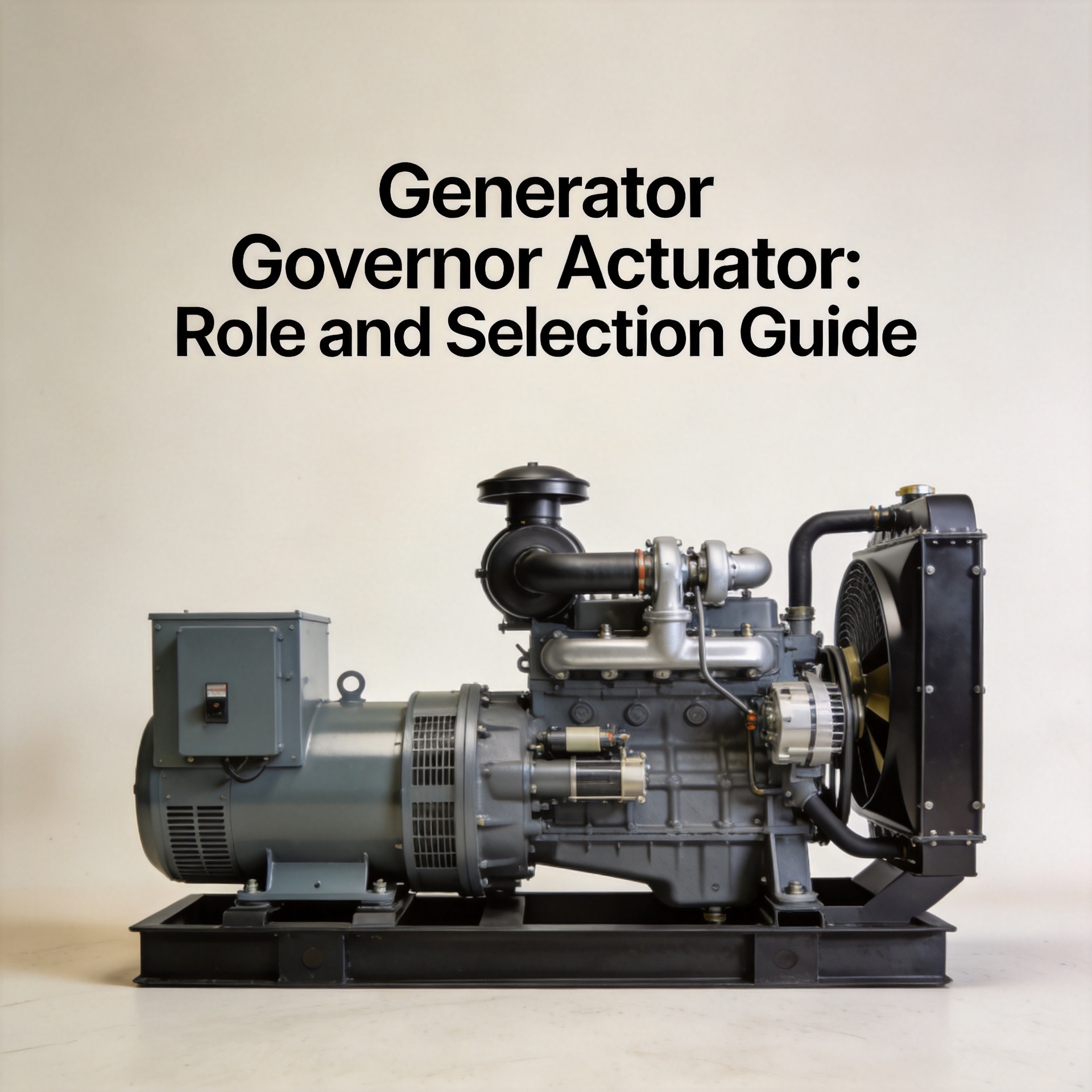
Generator Governor Actuator: Role and Selection Guide
When a diesel generator fails to hold steady speed under load, the problem often traces back to a single component: the generator governor actuator. Understanding what this part does, how different types compare, and what selection criteria matter is the starting point for sourcing and maintaining reliable generator sets.
What Does a Generator Governor Actuator Do?
The generator governor actuator is the electromechanical interface between the governor controller and the engine's fuel delivery system. On a diesel engine, it physically adjusts the fuel rack position in response to electronic signals from the speed control unit, which continuously monitors engine RPM and calculates the correction needed to hold the target set point.
When a generator picks up a load and engine speed begins to drop, the controller detects the deviation and transmits a corrective signal to the generator governor actuator. The actuator moves the fuel rack to increase fuel delivery. Response time determines how quickly frequency stabilizes after a load change. Typical external electric actuators in the ADC range provide around 25 degrees of rotation and respond in under 45 milliseconds, specifications that matter for systems with sudden or repetitive load changes.
Mechanical vs. Electronic Generator Governor Actuators
The distinction between mechanical and electronic governor actuator systems is a compatibility and sourcing consideration for anyone maintaining a mixed-age generator fleet.
Mechanical governors rely on flyweight or spring mechanisms to sense engine speed and move the fuel rack directly. They require no external power and are well-suited to harsh environments. Their limitation is response accuracy: under rapidly varying loads, a mechanical governor exhibits more speed variation than a tuned electronic system.
Electronic governor actuators separate the sensing and actuation functions. A dedicated speed control unit handles sensing and signal processing; the generator governor actuator handles only the physical fuel rack movement. This division improves response precision and allows isochronous operation and adjustable droop to be implemented in the controller. Most modern industrial generator sets with parallel operation requirements use electronic governor actuators for this reason.
The shift most experienced buyers make is realizing that generator governor actuator selection is not about brand loyalty. It comes down to matching the droop setting and actuator response range to the specific engine variant and load profile. A mechanical governor suited for standby duty may be unsuitable for a prime power system with motor loads cycling on and off.
Industrial Generators vs. Mobile Power Stations
The application environment changes what you need from a generator governor actuator in ways that are easy to underestimate when sourcing for both types.
Industrial stationary generators operate at stable, defined loads over long duty cycles. The priority is frequency stability under sustained heavy load, which favors generator governor actuators with precise droop response curves and thermal durability. If the generator supplies critical loads, the actuator's response to sudden load additions directly affects whether the system stays within frequency tolerance.
Mobile power stations face vibration stress, temperature cycling, and load variability that changes with each deployment site. Engine-mounted actuators handle high-temperature environments and resist vibration better than externally mounted types. External ADC series generator governor actuators offer easier replacement access and broader engine compatibility, making them practical when serviceability is a priority.
If your application runs at a stable load profile in a fixed installation, an external generator governor actuator with a 12V or 24V input range will typically hold the set point reliably. If the load swings frequently, especially with motor loads cycling on, verify that the actuator's response curve handles the transient magnitude your system produces under real conditions.
Isochronous vs. Droop Mode: Generator Governor Actuator Operating Modes
This is the most consequential selection question for buyers who operate multiple generators.
Isochronous mode holds engine speed constant regardless of load. On a 50 Hz system, the generator governor maintains 1500 RPM; on a 60 Hz system, 1800 RPM. This mode suits single-generator operation in island mode, where all load changes are absorbed without intentional speed variation.
Droop mode introduces a defined percentage of speed reduction as load increases, typically 3 to 5 percent. For parallel generator operation, droop allows power to distribute proportionally between units without a dedicated load-sharing controller. If both generators run isochronous without load-share control, they will compete for load in an unstable feedback loop.
The practical rule: single generator in island mode uses isochronous. Two or more generators paralleled without a load-share module use droop. Parallel generators with a dedicated load-share controller can run isochronous. Matching the operating mode to the system architecture is the first calibration step.
Key Selection Criteria for Generator Governor Actuators
One of the most common ordering mistakes with speed governors is specifying the engine brand alone instead of the exact engine model and serial range, which leads to receiving a generator governor actuator with an incompatible interface or control signal type. Before confirming an order, verify the following:
- Voltage supply: Confirm 12V or 24V DC input matching the generator set's electrical system
- Actuator interface type: Rotary (common in external ADC-type generator governor actuator models) or linear, matched to the fuel pump linkage
- Torque and rotation range: Verify the mechanical output matches the fuel rack travel requirement
- Control signal compatibility: Match the generator governor actuator to the governor controller's output signal type, PWM, analog, or CAN
- Operating mode requirement: Isochronous for standalone; droop for parallel configurations without a load-share controller
- Application duty rating: Standby or prime power, affecting thermal and duty cycle specifications
Actuator Calibration Steps
Installing a replacement generator governor actuator without calibration creates new performance problems rather than solving the original one. The sequence is consistent across most systems:
- Verify the generator governor actuator is mechanically centered before electrical connection. Confirm the linkage arm moves freely through its full range without binding.
- Set the controller gain (P), integral (I), and derivative (D) values to the baseline recommended for the specific engine and actuator combination.
- Start the engine at no load and confirm idle speed matches the set point. Adjust the speed reference incrementally.
- Apply load in stages at 25%, 50%, 75%, and 100% and observe the frequency recovery curve. Excessive overshoot indicates gain is too high; slow recovery indicates insufficient integral action.
- For droop mode, adjust the droop percentage to match the intended load-sharing ratio.
Featured Generator Governor Actuator Products
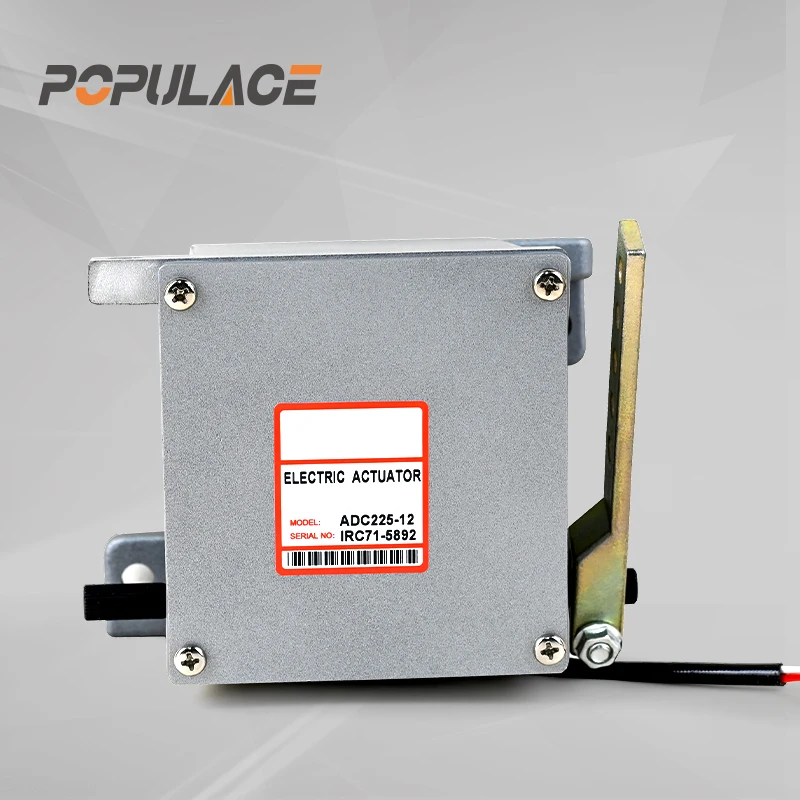
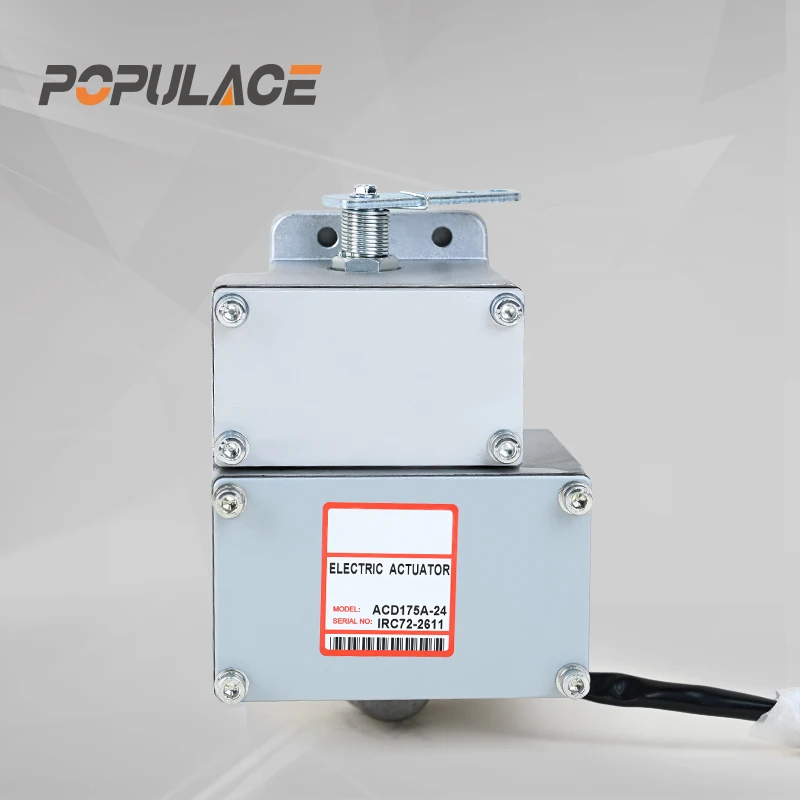
The POPULACE Diesel Generator Engine Parts External Actuator 12V 24V ADC120 ADC175 ADC225 covers the ADC generator governor actuator range for external-mount configurations compatible with multi-plunger fuel pumps on medium to large diesel engines. Three models, ADC120, ADC175, and ADC225, offer differentiated torque and rotation output, allowing buyers to match the mechanical output to specific fuel rack travel requirements.
The ADC Series Electric Governor Actuator for Diesel Engine Generator 12V 24V provides the standard ADC electric generator governor actuator format compatible with most electronic speed control units operating on 12V or 24V systems, suitable for both fixed industrial installations and mobile generator configurations.
For applications requiring an integrated speed control solution, the S6700H Governor Speed Controller Diesel Engine Generator Speed Control Unit combines speed sensing and control with actuator drive output. Voltage regulators such as the sx 440 avr and mx 321 avr manage output voltage on the alternator side, while this generator governor actuator controller addresses engine RPM. The sx 440 avr, mx 321 avr, and m16fa650a specifications represent the alternator control side; buyers should verify the speed controller's output signal format is compatible with their chosen generator governor actuator model before ordering. Systems using the m16fa650a alternator should confirm actuator interface compatibility during the pre-order specification step.
Selection Checklist
Before confirming a generator governor actuator purchase:
- Engine model and serial range confirmed, not just the manufacturer name
- Generator governor actuator interface type verified against fuel pump linkage
- Voltage supply confirmed: 12V or 24V DC
- Operating mode selected: isochronous for single-unit, droop or load-share controller for parallel
- Application duty identified: standby vs. prime power
- Calibration baseline prepared for the specific controller model
A supplier who confirms generator governor actuator compatibility at the engine model and serial range level, rather than brand alone, provides sourcing confidence that a marginal price difference rarely compensates for.






