
 EN
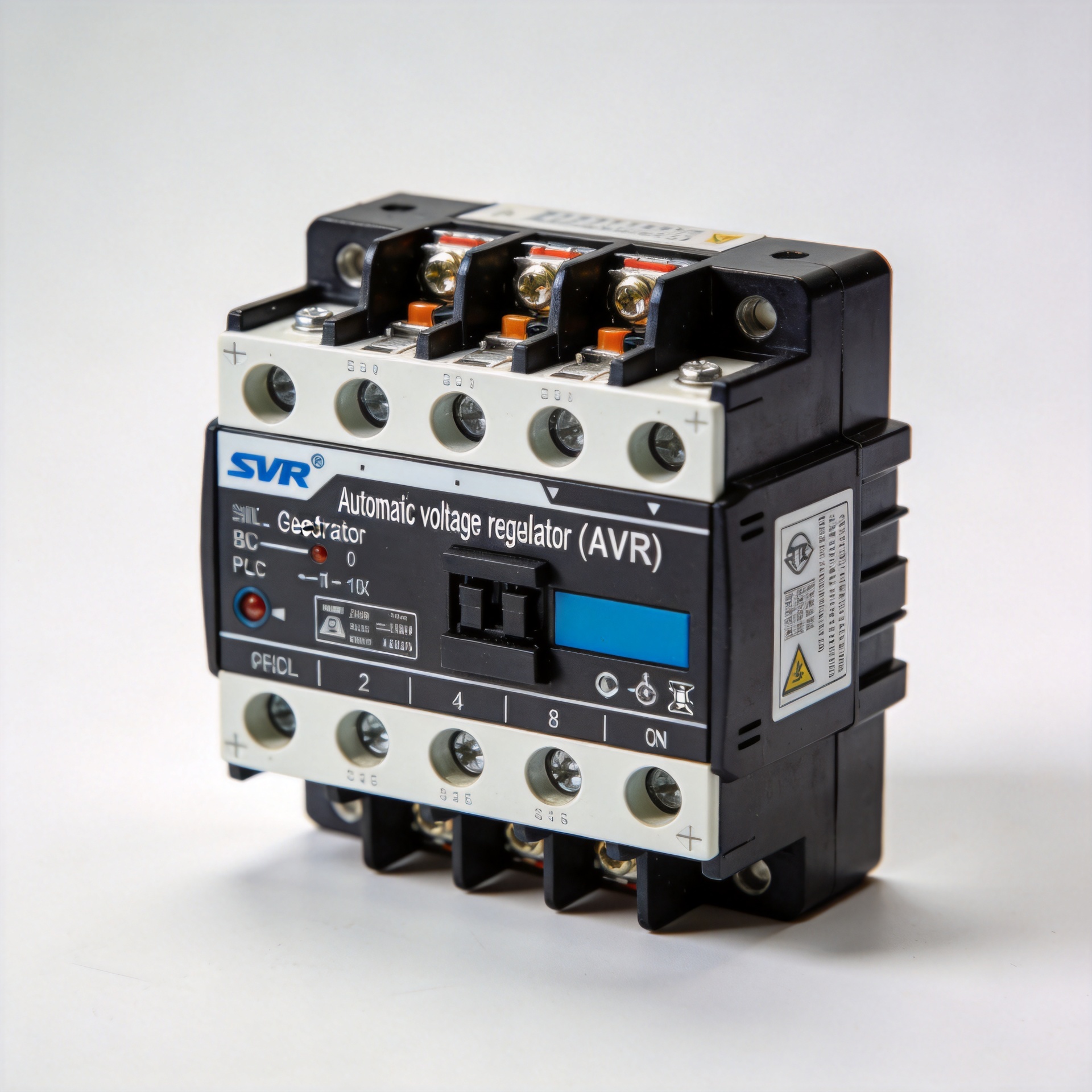
Generator AVR Supplier: How to Find Reliable Sources
Sourcing automatic voltage regulators at scale involves more than comparing unit prices and minimum order quantities. The technical accuracy of what you actually receive is above all what determines the value of a generator AVR supplier relationship. Most buyers go straight for price. That is a reasonable starting point, but what usually determines the real cost of a generator AVR supplier relationship is whether the part is genuinely compatible with the generator models in your customer base and whether the supplier can back that up before shipment.
This guide covers what wholesalers and brand buyers should look for when evaluating a volume AVR source. It covers the sourcing risks most commonly overlooked, what a trustworthy generator avr supplier should be able to demonstrate, and what the common model families look like from a compatibility standpoint.
What an Automatic Voltage Regulator Does
An automatic voltage regulator (AVR) monitors the generator's output voltage and adjusts the excitation current to the alternator's field winding in real time. When load conditions change, such as a motor starting up, the AVR responds by correcting the output before the voltage drift becomes significant enough to affect connected equipment.
The sensing input is the voltage signal the AVR reads from the generator windings. This sensing range is one of the most important specifications to verify when sourcing replacement parts. For example, fitting a unit with a 10–160 V AC sensing range on a generator that delivers 180 V AC at the sensing terminals will result in poor regulation or failed startup. Any generator AVR supplier worth evaluating should provide sensing range data upfront, not just output voltage specs.
Common AVR Model Families and Application Range
Knowing the model succession landscape reduces compatibility errors when working with a generator avr supplier. Here is an overview of commonly requested models:
- SX440 / SX460: Originally developed for STAMFORD alternators. SX460 accepts a 12–180 V AC sensing input and has since been superseded by the AS440. Buyers sourcing older alternator replacements will still encounter SX460 requests.
- AS440: Current-generation replacement for SX460, with a 10–160 V AC sensing range. Response time on genuine units is ≤120 ms. Widely used in medium to large standby gensets.
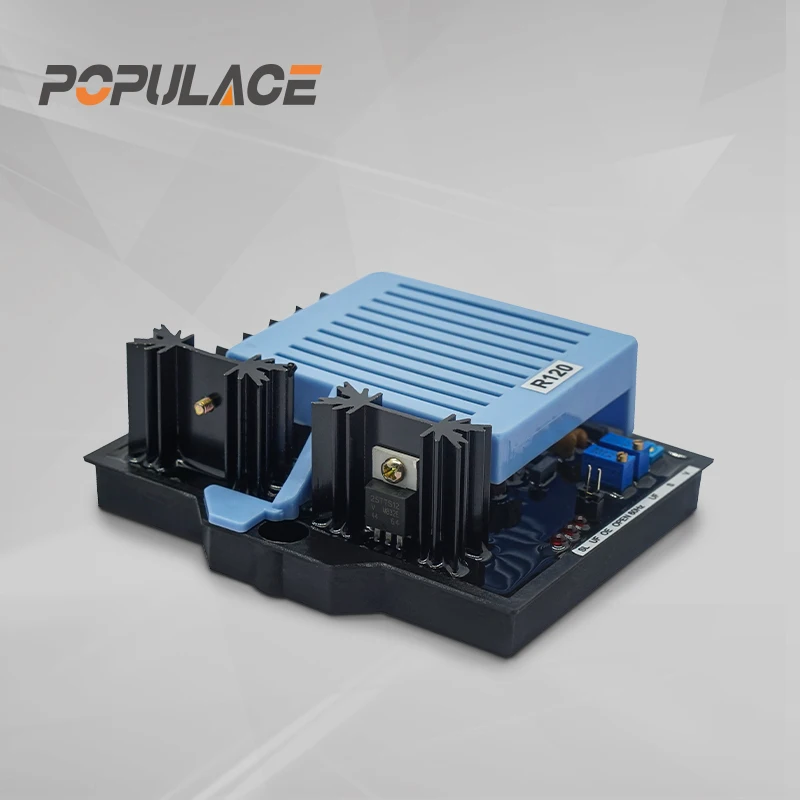
- R120 / R450: Common in diesel generator sets across a broad power range. The R120 is frequently used in smaller to mid-range gensets. A reliable generator avr supplier will provide circuit diagram documentation alongside these units, supporting downstream installation and wiring verification.
- se350 regulator / se 350 voltage regulator: The SE350 is used in specific alternator configurations. Distributors serving mixed-brand fleets will encounter se350 regulator and se 350 voltage regulator specifications alongside STAMFORD series variants. Confirming the interface type for the se 350 voltage regulator before placing volume orders prevents the most common compatibility errors.
- mecc alte sr7 2g: Specific to Mecc Alte alternator series. The mecc alte sr7 2g must be sourced as a distinct part number , not substituted with a generic universal AVR. Ask any generator avr supplier to confirm the mecc alte sr7 2g specification against the target alternator model before committing to a batch order.
The shift most experienced procurement buyers make is realizing that AVR selection is not about finding the lowest-cost unit in the right voltage range. It is about confirming the model match — whether that is a se350 regulator, mecc alte sr7 2g, or R120 variant — at the point of inquiry, not after shipment arrives.
The Most Common Sourcing Risks
If you have managed a generator parts inventory long enough, the risks become familiar. The most frequent problems when working with an unreliable generator avr supplier are:
- Specification substitution without disclosure: A supplier sends a different model than specified — often labeled "compatible," without buyer confirmation first. For wholesale operations reselling by model number, this creates downstream returns and lost time.
- Batch inconsistency: A sample passes inspection but production batches differ. For standby and emergency power applications, this has higher-than-average consequences.
- Missing installation documentation: Receiving units without wiring diagrams or compatibility references forces downstream customers to troubleshoot problems that should have been eliminated at procurement. This is particularly relevant for se 350 voltage regulator and mecc alte sr7 2g models where wiring differences between alternator series matter.
- Certification gaps: CE markings and compliance indicators need to be verified, particularly for buyers serving European markets. A trustworthy generator avr supplier will provide certification documentation on request before order confirmation.
What to Verify Before Committing
The compatibility check does not have to be exhaustive for every SKU. Confirming the engine model range, interface type, and sensing voltage spec is usually sufficient to eliminate the most common error. Key verification points for a generator avr supplier relationship:
- Compatibility documentation: Can the supplier provide a compatibility chart linking AVR models including se350 regulator and se 350 voltage regulator variants, to alternator brands and series?
- Sensing input range confirmation: Request the spec sheet showing sensing voltage range. This is the specification most commonly mismatched in aftermarket AVR supply.
- Sample evaluation before volume commitment: Accepting small trial orders before full-volume commitment signals production batch confidence.
- Pre-shipment quality check: Functional and visual inspection before shipment, with documentation, reduces your incoming inspection burden.
- Export documentation support: The generator avr supplier should handle commercial invoice, packing list, and certificate of origin preparation.
KYGEN Power: Direct-Manufacturer Generator AVR Supply
Populace Electronic Co., Ltd. — operating under the KYGEN Power brand — supplies generator automatic voltage regulators directly from manufacturing, covering models used across a broad range of diesel and gas genset configurations. The product range includes the R120 series with circuit diagram documentation, brushless AVR configurations for dynamo-type generators, and universal AVR units for various excitation control applications.
For wholesale and brand buyers, KYGEN Power supports both replacement-part sourcing and private-label configuration. Wiring documentation is included as standard. GAVR-8A and GAVR-12A units are available for applications where a universal brushless AVR fits the specification.
- AVR for Power Generator R120 Diesel Generator Circuit Diagram AVR Digital Genset AVR — R120 with full circuit diagram support, suitable for mid-range diesel gensets.
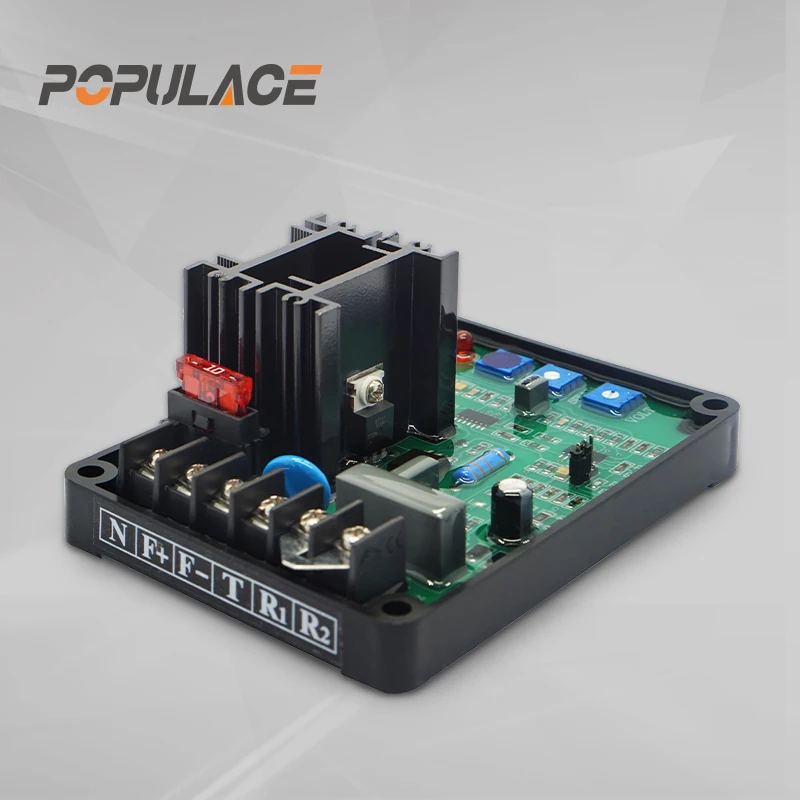
- Automatic Voltage Regulator GAVR-12A Brushless AVR — brushless configuration for dynamo generator sets, suitable for replacement and spare part inventory.
- Universal Generator AVR GAVR-8A Exciter Control Unit — universal brushless AVR covering a range of exciter control requirements.
Installation Basics and Troubleshooting
Common AVR installation errors include incorrect polarity on the sensing input terminals, sensing wiring connected to the wrong phase, and trimmer pot adjustments made before the unit has reached stable operating temperature. Most AVRs — including se 350 voltage regulator variants and comparable units — have a voltage adjustment trimmer (V-ADJ) and a stability trimmer (STAB or DAMP). Adjusting stability before voltage is set correctly will produce misleading results.
Whether your downstream application involves servicing an existing generator fleet or expanding a distribution catalog, confirming sensing range compatibility and requesting batch quality documentation from your generator avr supplier remains the most reliable way to reduce post-shipment issues. KYGEN Power accepts wholesale inquiries at kygenpower.com for compatibility support and pricing.






