
 EN
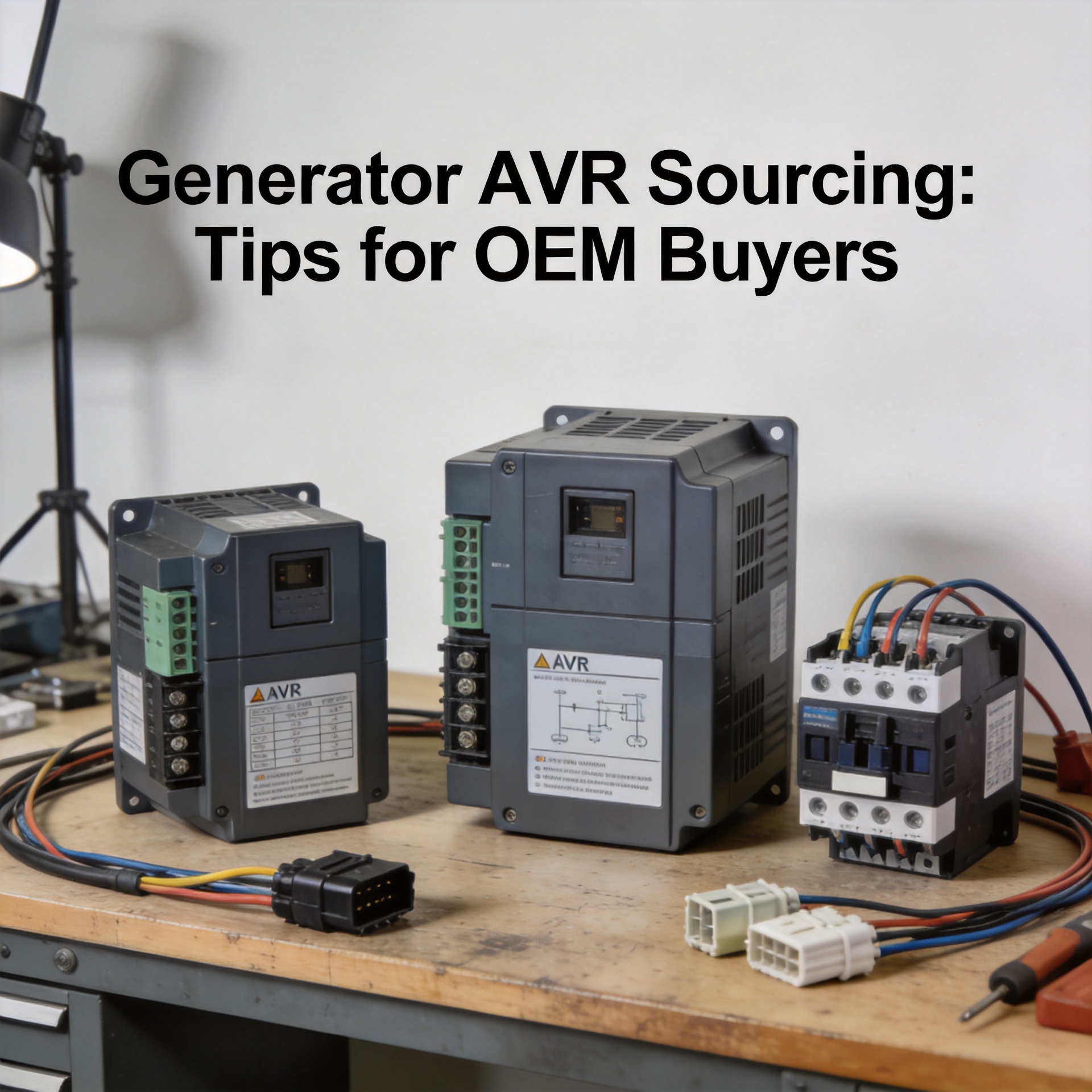
Generator AVR Sourcing: Tips for OEM Buyers
From a procurement standpoint, generator AVR sourcing at scale means balancing unit price, minimum order quantities, lead time, and supplier reliability — not simply finding the lowest quoted figure. Whether you are building a product line under your own brand or supplying wholesale to distributors, the decisions made early in the generator AVR sourcing process determine the total cost and risk profile of every order that follows.
What follows covers the sourcing considerations that matter most for OEM buyers and wholesale distributors: model selection by power range, compatibility verification before purchase, documentation requirements, and supplier evaluation criteria that go beyond catalog listings.
What a Generator AVR Does and Why It Matters for Sourcing
An automatic voltage regulator (AVR) maintains a generator's output voltage at a stable, preset level by controlling the excitation current to the alternator field winding. Without a functioning AVR, a generator becomes an uncontrolled power source — voltage drops under load, spikes on load shedding, and sensitive connected equipment is at risk.
For OEM buyers, this means the AVR is not a commodity component. A specification mismatch does not necessarily produce an immediate obvious failure. It can produce subtle instability that surfaces only under specific load conditions or ambient temperature ranges. That technical consequence is what makes generator AVR sourcing a more rigorous process than ordering general electrical parts. Early in the sourcing process, most buyers focus on output voltage and frequency ratings. After a failed installation, the focus typically shifts to the sensing input voltage range, the excitation interface type, and the connector pinout — exactly the parameters that catalog descriptions often omit.
Common AVR Models and Their Power Range Applicability
The selection of AVR model is directly tied to alternator type and rated output. OEM buyers building procurement catalogs encounter a range of models with different specifications and compatibility profiles:
| Model | Typical Application Range | Notes for OEM Buyers |
|---|---|---|
| SX440 | Small alternators (≤63 kVA) | Older lower-power variant; widely stocked as a replacement part |
| AS440 (replaced SX460) | 63–250 kVA class | SX460 is now superseded by AS440; verify production status before bulk ordering |
| R120 | Small-to-mid diesel gensets | Digital genset AVR; circuit diagram support available for installation reference |
| R450 | Mid-to-large generators | Higher excitation current capacity for larger alternators |
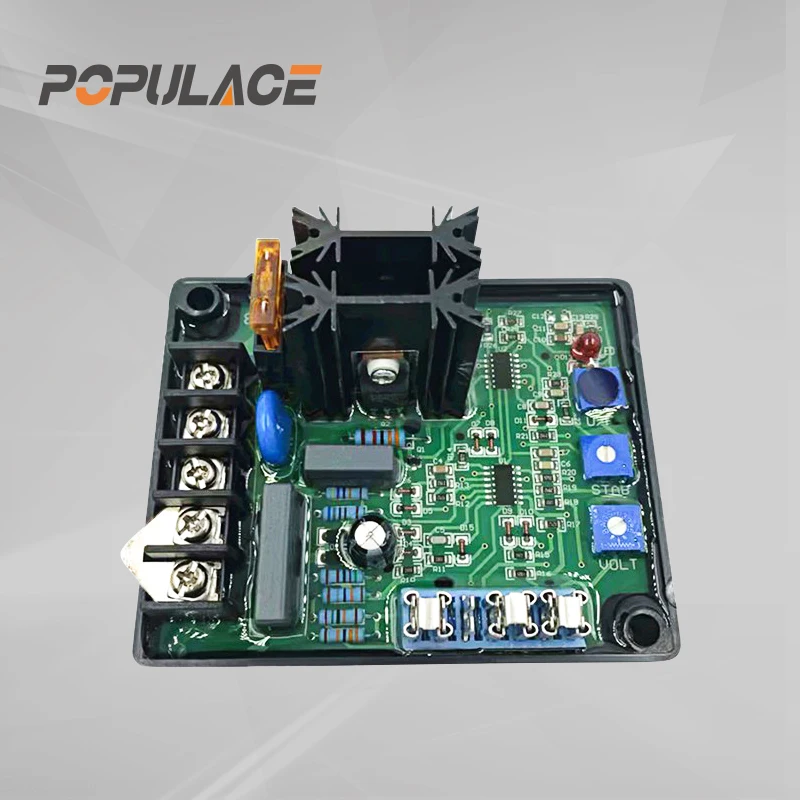
| GAVR-8A / GAVR-12A | Universal / brushless alternators | Brushless exciter control units with broad alternator compatibility |
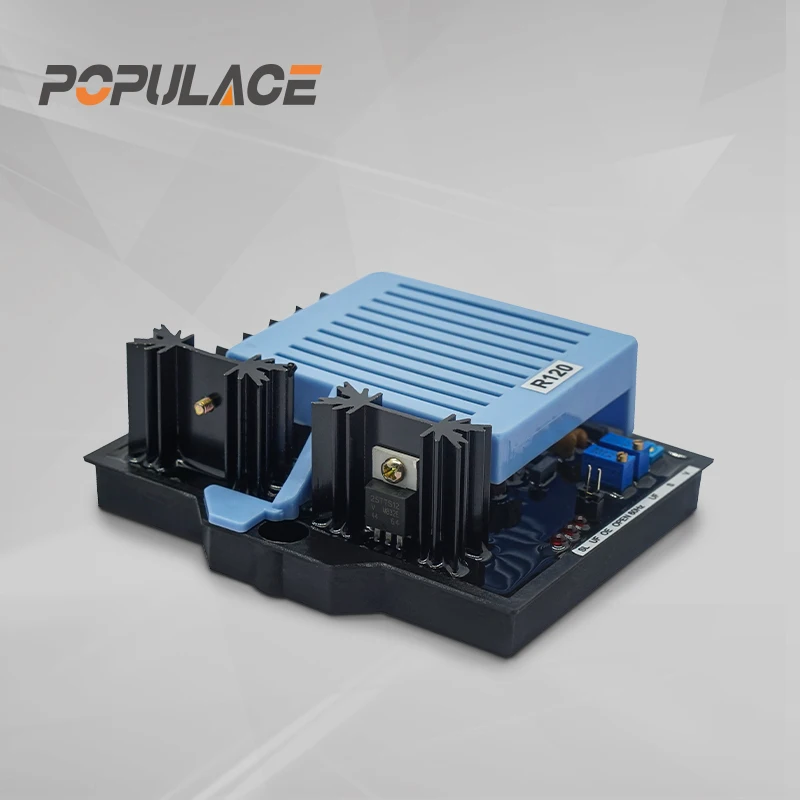
Are you sourcing a specific model as a direct replacement for units already installed in the field, or building an inventory catalog covering multiple alternator types? That distinction changes which specification deserves the most scrutiny during your generator AVR sourcing evaluation.
Three Sourcing Risks OEM Buyers Consistently Underestimate
The risk most buyers underestimate when approaching generator AVR sourcing internationally is not price variance — it is compatibility failure after receipt. Here is a structured look at the risks that matter most for wholesale and OEM buyers, and the verification steps that reduce them.
Risk 1: Sensing Input Voltage Mismatch
Catalog descriptions for generator AVRs tend to highlight output voltage and excitation power — but the spec that actually causes the most post-installation problems is the sensing input range. This parameter varies across alternator winding configurations and is not consistently listed prominently in supplier catalogs. An AVR rated at the correct output voltage can still fail to regulate properly if its sensing circuit expects a different input range than the alternator winding provides.
Simpler version: the AVR reads a sample voltage from the generator winding to understand what output voltage it needs to maintain. If that sample voltage falls outside the range the AVR is designed to read, regulation becomes unstable — sometimes enough to trip the load under real operating conditions. Before confirming any generator AVR sourcing order, verify the sensing input voltage range, the excitation voltage range, and the rated power output (VA) against your specific alternator specification sheet.
This applies whether you are sourcing standard universal models or brand-specific variants. For Mecc Alte alternator applications, models such as the mecc alte avr type dsr and the mecc alte dsr voltage regulator avr have specific sensing and connection requirements that differ from generic AVR configurations. Requesting the wiring diagram and connection data before order confirmation is not optional for this product category — it is the baseline for a responsible procurement process.
Risk 2: Batch Quality Inconsistency on Repeat Orders
Wholesale buyers managing ongoing AVR procurement often qualify a supplier on sample quality, only to run into a different story on production batches three or four orders later. Electronic control components are sensitive to component sourcing changes that suppliers may not document or disclose between orders.
Buyers who have dealt with installation failures tend to reassess batch production test reports as a primary supplier evaluation criterion, not an afterthought. Request a sample of the supplier's batch test documentation before committing to volume. A supplier who cannot provide batch-level quality records for generator control components is a signal worth taking seriously in your generator AVR sourcing process.
Risk 3: Missing Technical Documentation
Receiving AVR components without wiring diagrams, installation instructions, or compatibility reference materials creates downstream friction for installation teams. For OEM buyers building product lines or reselling to installers, documentation is part of the delivered product value — not an optional addition. This is particularly important when sourcing specific models such as the marathon dvr2000e voltage regulator, which has defined connection and calibration parameters that installers need to reference during commissioning.
OEM vs. Universal AVR: Matching the Trade-off to Your Application
The choice between OEM-specific and universal AVR designs is not a quality question — it is a compatibility and flexibility question. OEM AVRs are matched to a specific alternator model, offering tighter parameter alignment. Universal AVRs are designed for broad compatibility across multiple excitation systems, making them practical for OEM buyers who need to cover a range of generator configurations without maintaining a separate SKU for each variant.
For small diesel gensets and compact generator applications where 2kw voltage regulator requirements are common, a universal design can reduce catalog complexity without sacrificing regulation performance. For larger alternators or applications with strict voltage tolerance requirements — such as data center backup or medical facility standby systems — model-specific AVR selection with full documentation reduces installation risk.
Over time, most buyers who manage generator parts inventory at volume develop a preference for confirming the alternator interface specification before the price conversation — because a compatibility mismatch takes longer and more cost to recover from than a one-day delay for specification confirmation.
Practical Checklist for Generator AVR Sourcing
- Confirm the alternator brand, model, and serial range before finalizing AVR model selection
- Verify sensing input voltage range and excitation voltage range against your alternator's specification sheet
- Request wiring diagrams and installation documentation as part of the standard sample order package
- Ask for batch production test reports before committing to volume orders
- Confirm minimum order quantities and lead times for reorders, not just the initial sample
- Check whether the model you are sourcing is current production (e.g., SX460 has been superseded by AS440)
- Establish written specification confirmation — including model, sensing range, and excitation specs — before order confirmation
Sourcing Generator AVRs from a Specialized Supplier
Consolidating generator AVR sourcing with a supplier who specializes in generator control components — rather than a broad industrial parts aggregator — reduces the risk of specification mismatches and delays in technical support. Populace Electronic Co., Ltd. supplies generator AVRs to wholesale buyers and OEM product line builders across Asia, Europe, and North America, with pre-sales compatibility support for specification verification before order commitment.
Available models include the R120 Digital Genset AVR for diesel generator applications, the GAVR-8A universal automatic voltage regulator covering a range of brushless alternator configurations, and the GAVR-12A brushless AVR for brushless exciter applications. Technical documentation including circuit diagrams is available with product supply.
For wholesale inquiries or OEM sourcing discussions, reach the team through kygenpower.com or via Alibaba at populaces.en.alibaba.com.






