
 EN
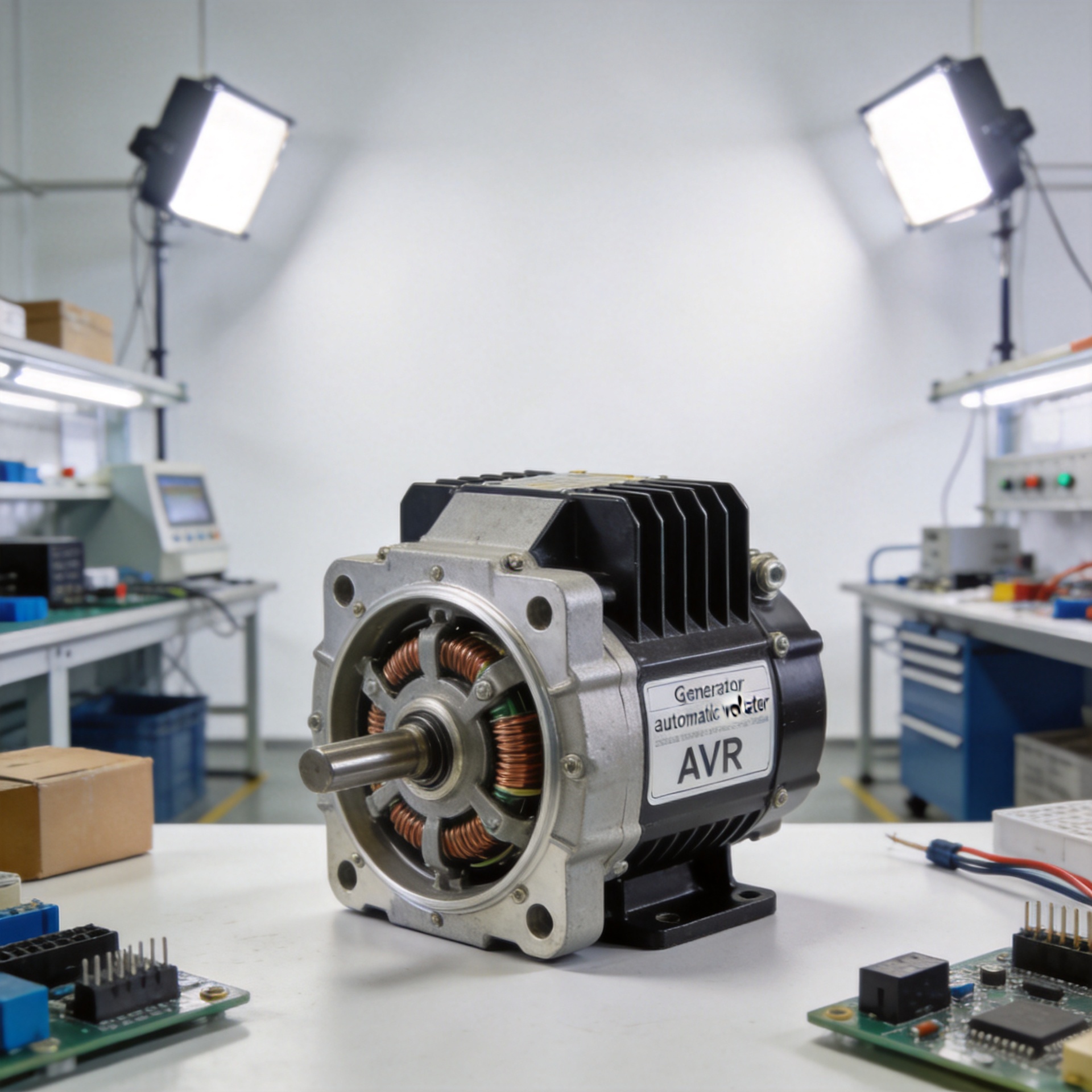
Generator AVR Manufacturer: OEM Sourcing Guide
If you've been sourcing generator parts long enough, you know that finding the right generator AVR manufacturer isn't just about price. A mismatched automatic voltage regulator can cause voltage instability, shorten alternator life, or simply fail within months — and that's a problem nobody wants to explain to a downstream customer. This guide is put together from a generator parts supply perspective, covering how AVRs work, which models fit which applications, and what actually matters when you're evaluating a manufacturer for OEM or wholesale supply.
What Does an AVR Do in a Generator?
An automatic voltage regulator maintains the generator's output voltage at a stable, preset level by controlling the excitation current supplied to the alternator's field winding. When load increases and voltage starts to drop, the AVR responds by increasing excitation — typically within milliseconds — to bring voltage back to the set point. The reverse happens during load reduction.
One detail that often gets overlooked: the AVR is technically an alternator component, not a generator engine component. That distinction matters when you're sourcing: the correct AVR depends on the alternator brand and model, not the engine. Alternators from Stamford (AVK), Mecc Alte, Leroy Somer, and WEG each have their own AVR specifications and compatible replacement options.
Common AVR Models and Their Power Range Applicability
Most wholesale buyers are working with a handful of well-known model lines. A practical comparison of common models:
| AVR Model | Type | Input Voltage Range | Typical Application |
|---|---|---|---|
| SX460 | Analogue, 2-phase sensing | 12–180 V AC | Stamford UC22/UC27 alternators; now considered legacy, response ≤120 ms |
| AS440 | Analogue, 2-phase sensing | 10–160 V AC | Current Stamford replacement for SX460; preferred for new builds and replacements |
| SX440 | Analogue, self-excited | 95–132 V AC (sensing) | Stamford mid-range alternators; widely stocked by distributors globally |
| R120 | Digital/analogue hybrid | Wide input range | Diesel genset applications; compatible with multiple alternator brands when correctly specified |
| R450 | High-capacity model | Wide input range | Larger capacity gensets; used in industrial and data center backup power |
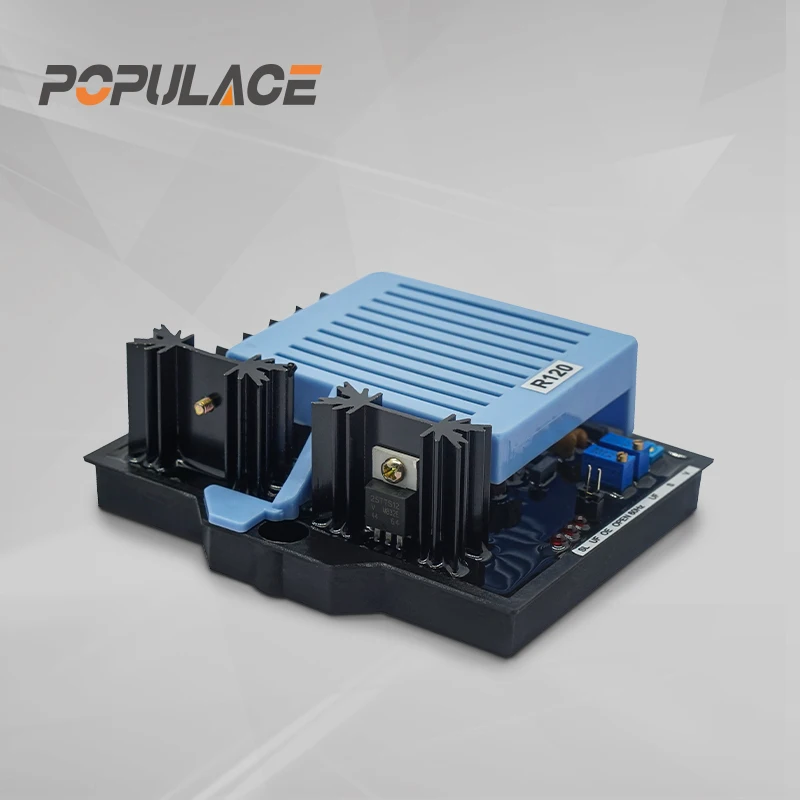
For avr 5.5 kw applications — small portable or residential gensets — universal brushless AVR models like the GAVR-8A or GAVR-12A are often a better fit than brand-specific models. They offer wide compatibility across alternator types and are cost-effective for lower-volume replacements.
OEM Sourcing Criteria: What Wholesale Buyers Should Evaluate
When you're placing a wholesale order with a generator AVR manufacturer, the conversation usually starts with model numbers. But the real sourcing risk shows up later — in the form of warranty claims, compatibility complaints, or logistics delays. Based on experience supplying B2B customers in Asia, Europe, and North America, here are the factors worth verifying upfront:
1. Compatibility Verification
Compatibility is determined by the alternator's excitation type (self-excited vs. separately excited), sensing voltage range, and field current requirements — not just the physical dimensions. A generator AVR manufacturer that can provide alternator-to-AVR compatibility tables or technical datasheets cuts down sourcing errors in practice. Confirm which alternator serial ranges a model is validated for before committing to a bulk order.
2. Documentation and Technical Support
This is an underrated signal of supplier quality. If a manufacturer can supply circuit diagrams, wiring connection guides, and parameter setting instructions — as is standard for products like the R120 diesel genset AVR — that's a positive indicator of product maturity and post-sale support capability. The marathon se350 voltage regulator manual, for instance, is widely referenced precisely because it provides precise wiring and adjustment instructions that reduce installation errors. Expect the same level of documentation from any serious OEM supplier.
3. Replacement Cost and Service Life
For distributors managing inventory, the total cost calculation includes replacement frequency. Cheaper AVRs with shorter operating lifespans can end up costing more when warranty return rates are factored in. Ask manufacturers for their mean time between failure (MTBF) data or field return rates — even directional data is useful. Brands like Mecc Alte AVR DSR and equivalent products are benchmarked against market expectations on this dimension, and kirloskar avr price list comparisons from the Indian market reflect similar trade-offs between unit price and reliability.
4. OEM and Private Label Capability
For brand owners and distributors building their own product line, OEM packaging availability matters. A direct manufacturer — as opposed to a trading company — can typically offer custom labeling, minimum order flexibility, and faster response to technical specification adjustments. This is relevant for buyers who need to source generator AVR components under their own brand or as part of a bundled genset supply chain.
KYGEN Power's AVR Product Line
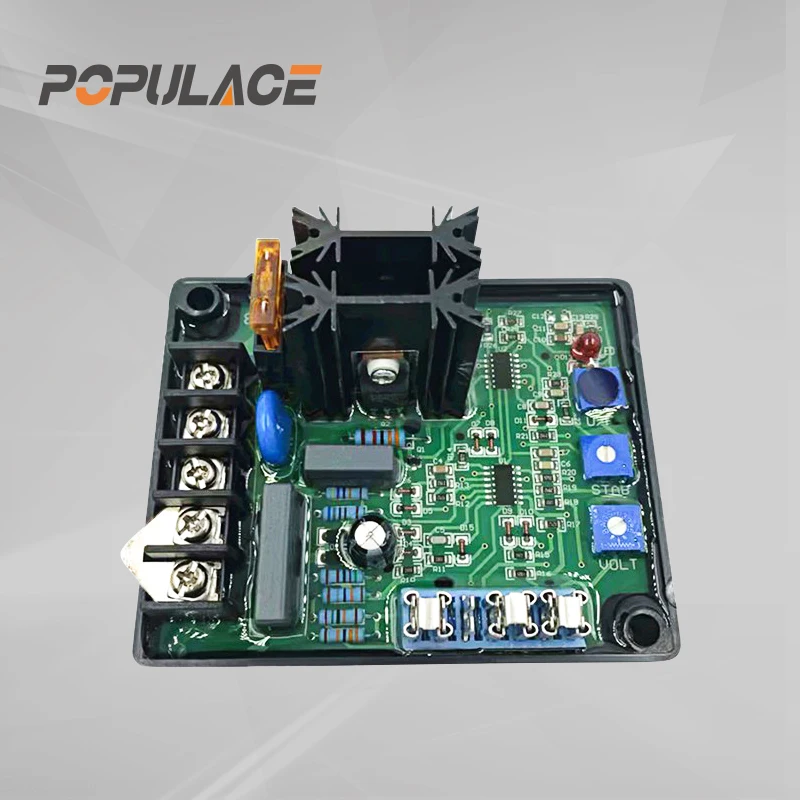
For buyers sourcing from China, KYGEN Power (Populace Electronic Co., Ltd.) offers a focused range of AVR products covering common replacement and universal applications:
- AVR for Power Generator R120 — Designed for diesel genset applications with circuit diagram support, factory direct pricing, and compatibility documentation for OEM sourcing contexts.
- GAVR-12A Brushless AVR — A brushless universal replacement AVR suitable for a wide range of genset spare part applications. Commonly used in medium-capacity alternator configurations.
- Universal Generator AVR GAVR-8A — High-quality exciter control unit with 8A rating, suitable for small-to-mid capacity generators as a cross-compatible OEM solution.
The product range is sourced directly from the manufacturer, which eliminates trading company markups — relevant for wholesale buyers managing cost per unit across larger order volumes.
Installation and Common Troubleshooting Notes
AVR installation involves connecting sensing voltage inputs, excitation output terminals, and optional trim/droop adjustments. Most standard models follow a wiring layout that is consistent across brands for self-excited configurations. Key points:
- Sensing voltage input must match: Connecting an AVR with a 95–132V sensing range to a 240V sensing tap will cause immediate failure. Check this against the alternator terminal configuration before connecting the AVR.
- Stability and voltage trim pots: After installation, voltage output should be adjusted using the trim potentiometer with no load, then verified under rated load conditions. Stability adjustments may be required for reactive loads.
- Common fault symptoms: If output voltage is uncontrolled (overvoltage or undervoltage), first check AVR input connections and field winding resistance before replacing the unit. A voltage rating mismatch at installation is one of the most frequent sourcing errors in the field.
For any generator AVR manufacturer you evaluate, confirming that technical documentation and wiring support materials are included in the product delivery reduces downstream installation issues and return claims — a consideration that directly affects the total cost of supply for distributors and brand buyers.






