
 EN
Speed Governor Quotation: How to Get Accurate Pricing
When you search for a speed governor quotation, many results return vehicle speed limiter content — which is not what industrial procurement managers are looking for. A generator speed governor is a control component that regulates diesel engine RPM to maintain stable frequency output under varying electrical loads. Getting an accurate quotation for this component depends entirely on providing the right technical information upfront. Without it, you risk receiving a price for the wrong governor type, or a quote that changes significantly once the supplier reviews your actual specifications.
This guide walks through the specification and quotation process step by step, covering the factors that affect pricing and the pitfalls that lead to mismatched orders.
Mechanical vs. Electronic Speed Governors: What Affects the Quote First
There are two primary governor categories, and the type you need should be the first item in any quotation request.
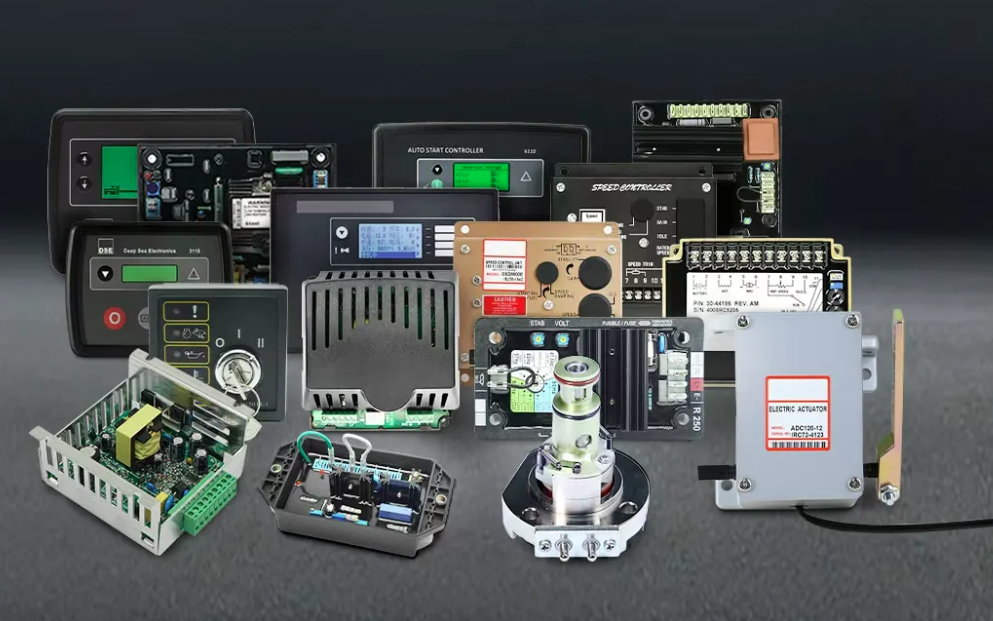
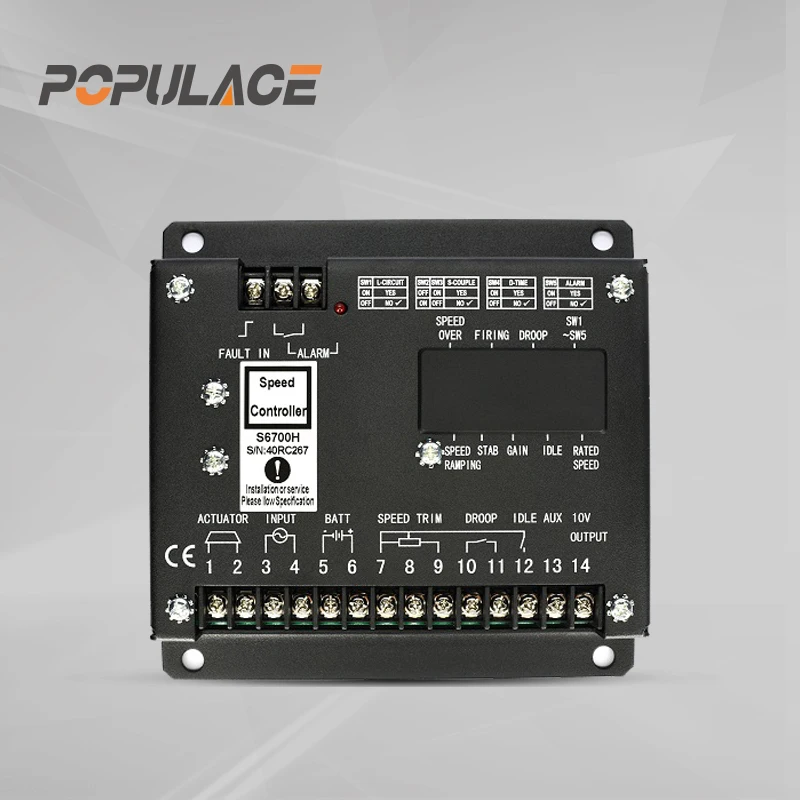
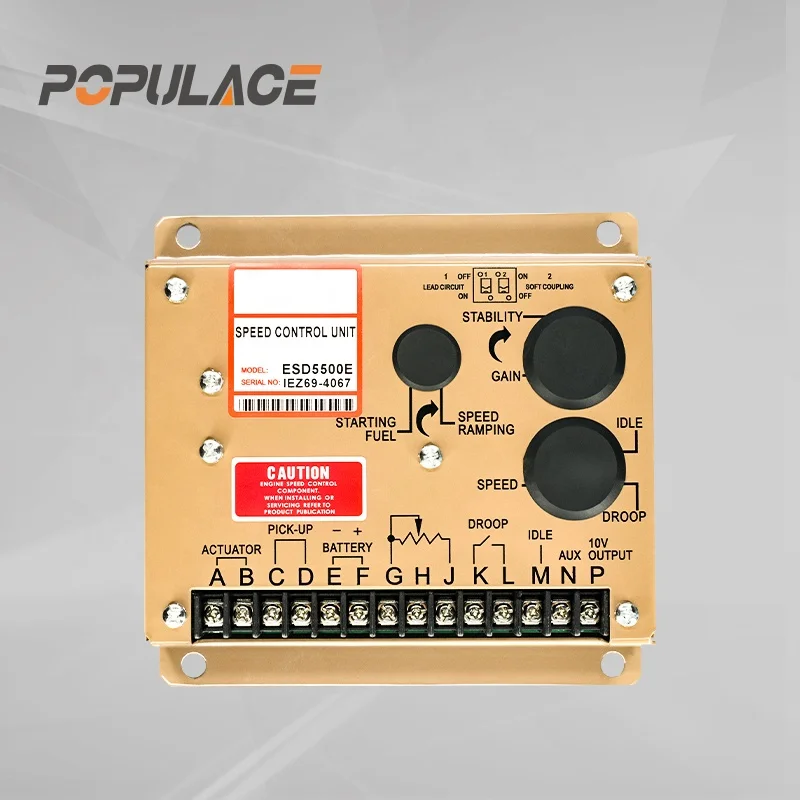
Mechanical governors use a spring-and-flyweight mechanism to regulate engine speed. They are robust, require no external power supply, and are commonly found on older or simpler diesel generator sets. Electronic governors are solid-state control units that offer tighter regulation — typically within a 1% to 5% speed regulation range — and support programmable settings. Electronic units like the ESD5500E or S6700H-type controllers are better suited for variable-load applications and modern gensets where frequency stability is critical.
If you request a speed governor quotation without specifying the type, you will likely receive a generic price range that does not reflect your actual requirement. Most experienced suppliers will ask for this detail before confirming any price — if they do not, that is worth noting.
Industrial Generators vs. Mobile Power Stations: Different Control Needs
The operating context of the generator affects governor selection in ways that directly influence pricing. Industrial stationary generators used in data centers, hospitals, or continuous manufacturing environments generally require isochronous (constant-speed) mode. The governor holds engine speed constant regardless of load changes, which is essential for supplying frequency-sensitive equipment without variation.
Mobile power stations and gensets configured for parallel operation with other units require droop mode capability. Droop mode allows engine speed to fall slightly as load increases, enabling proportional load sharing between generators running in parallel. A governor specified in isochronous mode will not function correctly in a parallel configuration — and this is one of the more common causes of post-delivery disputes in bulk governor orders.
When requesting a speed governor quotation for either application, state the intended operating mode explicitly. This single clarification eliminates a common source of specification mismatch.
Key Specifications to Include in Your Quotation Request
Your quotation request should include all the details a supplier needs to return an accurate, specification-confirmed price. At minimum, provide:
- Engine brand and model — for example, Cummins 6BT, Perkins 1104, or Deutz BF4M
- Rated engine speed — typically 1500 RPM for 50 Hz grids or 1800 RPM for 60 Hz grids
- Operating voltage — 12V DC or 24V DC
- Actuator interface type — such as ADC120, ADC175, or ADC225 (if an external actuator is required)
- Operating mode — isochronous for single-unit operation, droop for parallel configurations
- Regulation performance requirement — whether 1%, 2%, or 5% steady-state regulation is acceptable
Submitting incomplete specifications is one of the most common reasons a governor quotation takes multiple rounds of back-and-forth before it becomes usable for a purchase order. Suppliers who include specification confirmation in the initial quotation response — rather than treating it as a follow-up step — reduce the pre-order timeline considerably.
What Drives Speed Governor Pricing
Several factors shape the final price in any speed governor quotation:
- Governor type: Electronic units are generally priced higher than mechanical, reflecting more complex manufacturing and tighter performance tolerances
- Actuator compatibility: Governors paired with external actuators (ADC120, ADC175, ADC225) involve additional interface matching that affects unit cost
- Operating mode: Droop-capable electronic governors typically carry a premium over isochronous-only units due to the additional control circuitry
- Brand and quality tier: OEM-equivalent aftermarket units from recognized manufacturers differ in price from entry-level alternatives, and the difference often reflects regulation accuracy and operating lifespan
- Order volume: Wholesale pricing for repeat orders differs significantly from unit pricing — typically the most important lever for distributors and fleet maintenance buyers
For reference, electronic governor control units in the ESD-series aftermarket segment commonly range from approximately $59 to $129 per unit at retail. Wholesale buyers sourcing at volume should expect different price structures based on quantity tiers and whether technical documentation is included.
How to Request a Specification-Confirmed Quote
A thorough quotation request does more than ask for a price — it establishes the technical boundary that the supplier is pricing against. When you send an inquiry, structure it to include all six specification items listed above, and specifically ask whether the quotation covers specification confirmation or whether that is a separate step.
Suppliers who confirm specifications as part of the initial quotation process reduce the risk of ordering an incompatible unit. This matters particularly if your application involves an engine variant with a specific actuator interface or a regulation requirement that differs from the standard product configuration.
For procurement managers handling multiple generator models across a mixed fleet, a single specification confirmation step at the quotation stage is more efficient than discovering compatibility issues after delivery.
Calibration, Controller Integration, and Pre-Installation Checks
Once you have selected a governor based on an accurate quotation, confirm whether pre-calibration or setup documentation is included with the order.
If your generator system uses a controller such as a DeepSea 3110 unit, the setting deepsea 3110 configuration procedure and governor calibration are separate processes. The DeepSea controller handles load management, start/stop sequencing, and protection functions, while the speed governor handles engine RPM regulation directly. Both need to be configured — and the interaction between them should be confirmed before installation, not discovered during commissioning.
For systems where generator power factor correction is part of the electrical design, stable engine speed control is a prerequisite. Reactive power management and power factor correction equipment depend on the alternator maintaining consistent output frequency, which in turn depends on the governor holding engine RPM within specification.
Before finalizing installation, it is good practice to perform a generator winding resistance test and a generator insulation test on the alternator. These checks confirm that no pre-existing winding issues or insulation degradation will affect the performance evaluation of a newly installed governor. A governor that appears to underperform can sometimes be tracing a fault in the alternator winding rather than a governor deficiency.
Evaluating Quotations Beyond the Unit Price
When you receive multiple speed governor quotations, the comparison should go beyond the line-item price. Evaluate each quote on:
- Whether specification confirmation is included or needs a separate follow-up
- Whether wiring diagrams and installation instructions are provided with the order
- The supplier's process for post-delivery technical questions
- Packaging standards — electronic governors require anti-static protection and impact-resistant packaging to prevent transit damage
- Defect handling terms and the process for non-conforming units
A speed governor quotation that comes in lower than market range is not automatically a saving if the specification is not confirmed and documentation is absent. Procurement managers who optimize on price alone in this category tend to encounter compatibility issues, calibration delays, or quality inconsistencies that cost more to resolve than the initial price difference.
Speed Governor Products for Industrial Genset Applications
For buyers sourcing electronic speed governor control units for diesel generators, the S6700H Governor Speed Controller Diesel Engine Generator Speed Control Unit and the ESD5500E Speed Governor Generator Speed Control Unit are available for industrial genset applications. For systems requiring an external actuator interface, the POPULACE External Actuator (ADC120 / ADC175 / ADC225) for Generator Speed Governor supports 12V and 24V configurations for complete governor system builds.
Quotation inquiries with technical specifications can be submitted via the product pages or directly through the contact listed on the supplier profile. Including the specification details outlined in this guide will help ensure the quotation returned is accurate and usable for purchase approval without additional rounds of clarification.






