
 EN
SmartGen for Generator Systems: HGM Module Overview
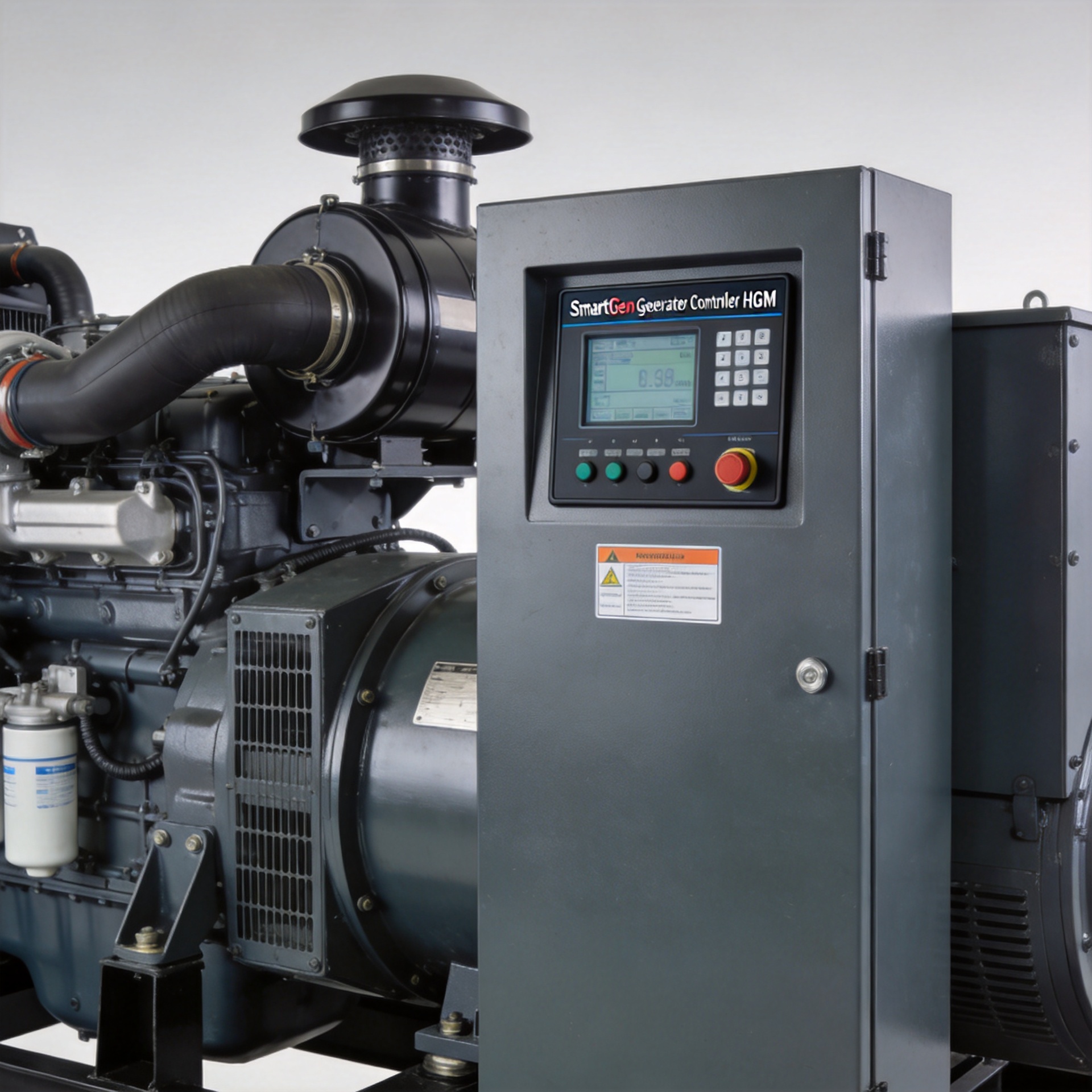
For engineers and integrators specifying automatic control for diesel generator sets, the SmartGen generator controller platform has become a widely referenced solution in standby and prime power applications. The SmartGen generator HGM series spans simple manual start modules to multi-function ATS controllers, but most integration projects converge on two workhorses: the HGM6110N and HGM6120N. Choosing between them, or evaluating a SmartGen generator module against alternatives like Deep Sea Electronics, requires looking past the front panel and into how each unit handles power transfer logic, protection events, and communication interfaces.
This overview is structured for integrators who already have a genset in scope and are selecting the SmartGen generator controller that fits the site protection and automation requirements.
HGM6110N vs HGM6120N: Positioning Within the SmartGen Generator HGM Series
Both modules are mid-range SmartGen generator controllers with LCD display, multiple digital inputs and outputs, RS485 communication, and AMF (Automatic Mains Failure) capability. The functional difference comes down to how each SmartGen generator control module defines the power transfer scenario.
The Smartgen HGM6110N Genset Controller ATS Auto Start Module for Diesel Generator is designed for single-genset automatic start and stop with ATS output signals. This SmartGen generator module monitors the mains input and triggers the genset start sequence on mains failure, with configurable start delays, cooldown timers, and a relay output for ATS changeover. The logic model is one utility source, one generator, one transfer switch. The SmartGen generator controller manages the genset lifecycle and outputs the transfer signal to an external ATS contactor or static transfer switch.
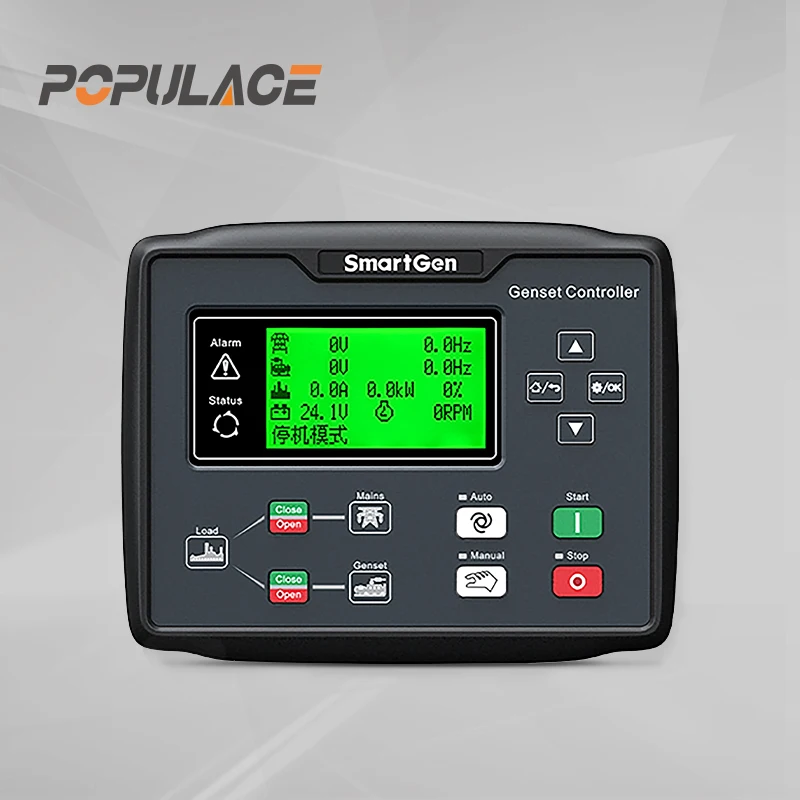
The HGM6120N Controller Intelligent Diesel Genset ATS Generator Control Module HGM6110N extends the SmartGen generator platform with additional mains voltage and frequency sensing and enhanced ATS control outputs. Where the HGM6110N outputs a changeover signal and expects the transfer logic to be handled externally, the HGM6120N integrates tighter switching sequence coordination for dual-source ATS panels. This makes this SmartGen generator control module better suited to applications where the controller needs to manage transition timing directly rather than delegating it to a separate transfer switch relay.
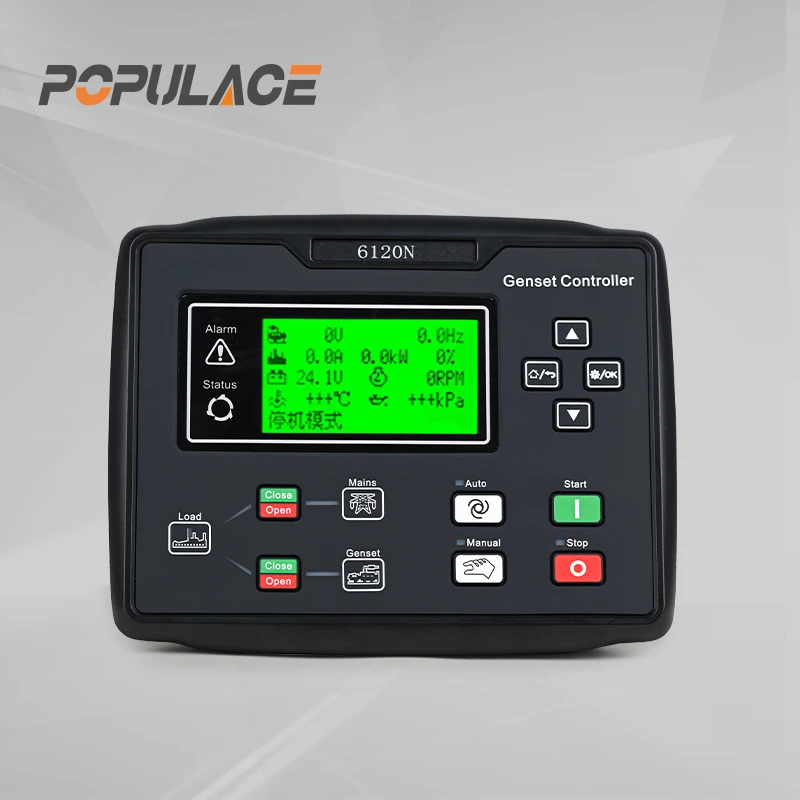
The selection between the two depends on how your panel is designed. If the transfer logic is already handled in the switchgear and you need the SmartGen generator controller to manage only the genset lifecycle, the HGM6110N is sufficient. If you want the SmartGen generator control module to coordinate the mains-to-generator and generator-to-mains transition sequences as part of its own logic, the HGM6120N is the more appropriate starting point. Both SmartGen generator modules accept the same DC control supply range and share the same RS485 port for remote monitoring integration.
SmartGen vs DSE: Comparing Control Platforms for B2B Buyers
SmartGen generator controllers and Deep Sea Electronics (DSE) address similar functional requirements in the automatic genset controller market, but they differ in platform positioning and the price tier they target.
The deep sea controller 8610 and the DSE4520 MKII are frequently compared against SmartGen generator HGM modules for dual-source ATS applications. DSE controllers are well-documented platforms with a large installed base in European and North American markets. The deepsea ats controller product range is known for its structured configuration toolset and broad third-party integrator support. These platforms typically carry a higher entry price, with equivalent models running 50 to 150 percent above comparable SmartGen generator controller units on B2B sourcing channels.
SmartGen generator HGM modules are positioned at a lower price point and are widely available through Asian and international B2B supply chains. The smartgen controller software (SmartGen PC Tool) supports USB-based configuration for setting protection thresholds, start/stop timers, output relay assignments, and RS485 Modbus address parameters. The configuration interface covers the parameters that matter most for commissioning a SmartGen generator installation and works well for most commercial genset integration scenarios.
Where SmartGen generator controllers make sense is in projects targeting cost-sensitive markets in Asia, the Middle East, or Latin America, where DSE equivalent models represent a meaningful budget constraint. SmartGen generator HGM modules deliver the core AMF, ATS, and communication features needed for most commercial and light-industrial genset installations. Where DSE compatibility documentation or a specific third-party integrator ecosystem is a hard requirement, DSE remains the established option.
The comparison is not about technical superiority in either direction. Both platforms are mature and field-proven. The decision is about aligning the SmartGen generator controller specification to the project's market, documentation requirements, and supply chain access.
Configuration and Wiring: Practical Notes for SmartGen Generator Integrators
SmartGen generator HGM module wiring follows a consistent physical structure across the HGM6110N and HGM6120N. Both SmartGen generator control units provide separate terminal blocks for AC measurement inputs (voltage sensing), DC control supply, digital inputs (remote start, emergency stop, external fault), output relays (fuel, crank, alarm, ATS transfer), and RS485 communication.
Configuration points that have the most impact on SmartGen generator integration outcomes:
- Protection thresholds: Default overcurrent and undervoltage settings are conservative for larger gensets. Verify and adjust high oil temperature, low oil pressure, and overspeed trip thresholds via the SmartGen generator controller front panel menu or smartgen controller software before commissioning. The default values work for standard applications but should be confirmed against the engine manufacturer's protection specification.
- Start sequence timing: The pre-glow, crank, crank rest, and safety delay timers are all configurable in the SmartGen generator control module. Match these to the engine manufacturer's start specification, especially the crank disconnect RPM threshold, to avoid over-cranking or false speed sensor trips during commissioning.
- RS485 addressing: When integrating multiple SmartGen generator HGM units on a Modbus network, assign unique addresses through the controller menu before wiring. The HGM series defaults to address 1, which creates conflicts when more than one SmartGen generator module shares the same bus without prior address assignment.
- ATS relay logic: For the HGM6110N SmartGen generator controller, the ATS relay energizes on genset ready. Confirm your external transfer switch coil voltage and logic polarity before wiring the relay output, since mismatches here account for a large share of ATS changeover issues observed during commissioning.
The RS485 port on SmartGen generator controllers supports Modbus RTU protocol at configurable baud rates. Standard SCADA or BMS integration typically uses 9600 bps, 8N1 settings. The smartgen controller software (PC Tool) can also be used to upload and save parameter sets, which is useful for replicating a verified SmartGen generator configuration across multiple units in a project.
Sourcing and Technical Support Considerations
When sourcing SmartGen generator HGM modules through international supply channels, the total acquisition experience matters beyond unit price. Pre-shipment compatibility verification, meaning confirmation that the SmartGen generator module configuration matches the engine interface and site automation requirements, reduces commissioning risk. Suppliers who can confirm the correct firmware version, I/O configuration, and communication parameters before shipment reduce the risk of field rework.
Wiring documentation and parameter sheets should accompany the SmartGen generator unit. The terminal connection diagram and default parameter list are the minimum documentation needed before installation begins. Technical support access for SmartGen generator configuration parameter questions and wiring clarification is a meaningful differentiator between suppliers offering similar headline prices.
For projects requiring an alternative controller platform, the DATAKOM D-300-MK3 Genset Controller is available as a separately specified option with its own feature set and documentation package.
When evaluating SmartGen generator HGM module supply for volume or repeat-order scenarios, documentation package completeness and pre-sales specification support reduce integration time and post-delivery support overhead, both of which contribute to total project cost beyond the unit price comparison.






