
 EN
SmartGen Controller Manufacturer: Sourcing Overview
When integrating a genset control panel, the choice between controller models involves more than voltage ratings and relay counts. As someone who has configured SmartGen HGM-series controllers across multiple diesel generator projects, the question I am asked most often is not which brand to use, but which specific model fits the application and where to source it from a qualified SmartGen controller manufacturer without compatibility surprises after the order arrives.
This overview addresses that question directly: what distinguishes the main SmartGen controller variants, how SmartGen compares to Deep Sea Electronics on a feature and cost basis, and what integrators should confirm before finalizing a sourcing arrangement with a SmartGen controller manufacturer. Whether you are evaluating a SmartGen controller manufacturer for the first time or consolidating an existing supplier relationship, the model selection and wiring verification steps outlined here apply consistently across project types.
SmartGen HGM Series: Background and Product Range
SmartGen (Zhengzhou) Technology Co., Ltd. has been producing genset controllers since 1998. Over that period, the company has developed close to 50 independent controller series covering single-unit automatic start, parallel operation, ATS management, and marine applications. The HGM6100N series — which includes the HGM6110N and HGM6120N — is among the most widely deployed in the diesel generator market. As a recognized SmartGen controller manufacturer for single-unit and ATS genset applications, SmartGen supports the HGM6100N series with an active global distribution network and readily available documentation.
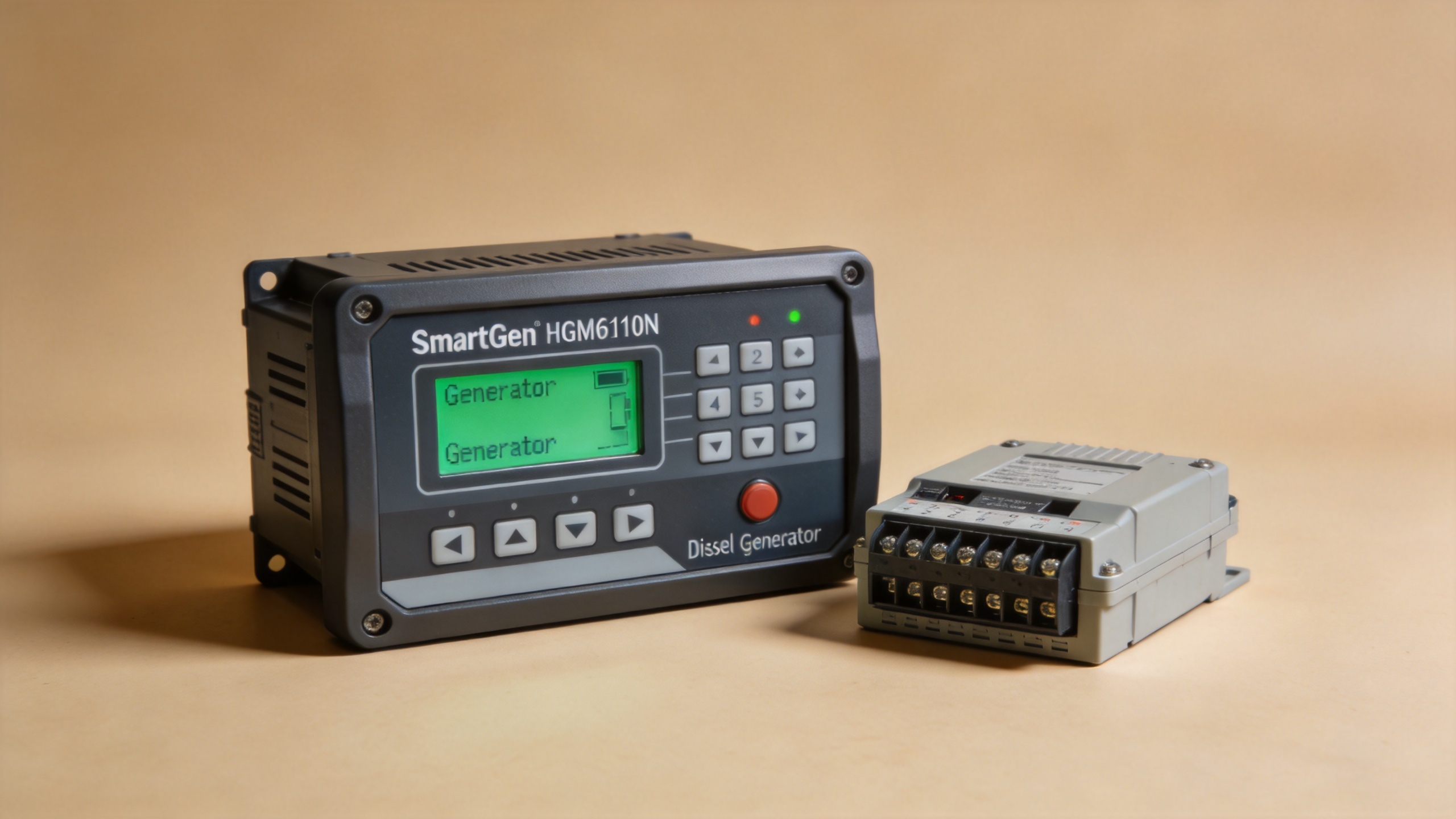
The HGM6100N series shares common hardware specifications: a 132×64-pixel LCD display, five digital inputs, six relay outputs, three analog inputs, and a compact 209×166×44 mm enclosure with a 186×141 mm panel cutout. What changes between variants is the control logic and the number of available mains monitoring terminals. These details determine whether a given unit suits a simple remote-start application or a full automatic transfer switch setup. The widely stocked SmartGen 6110 refers specifically to the HGM6110N variant — a common shorthand used by distributors and integrators sourcing from a SmartGen controller manufacturer for diesel genset panels.
HGM6110N vs. HGM6120N: The ATS Distinction
The most common point of confusion between HGM6110N and HGM6120N is also the most consequential: ATS capability. Most buyers focus on the relay count and voltage specs first. After a failed installation, the focus usually shifts to whether the controller actually monitors mains voltage and initiates automatic transfer — which is not interchangeable between the two models.
- HGM6110N: Single-unit automatic start module. The controller starts and stops the generator in response to a remote signal. It does not natively monitor three-phase mains voltage for automatic transfer switching. This model is appropriate for remote-start applications, manual transfer panels, or systems where mains monitoring is handled externally.
- HGM6120N: Adds three-phase mains input terminals and the logic to initiate generator start when mains voltage falls outside acceptable limits, then transfer the load back once mains is restored. This is the standard choice for ATS-integrated panels where the controller manages the entire start-transfer-retransfer-stop sequence.
The assumption that HGM6110N for one wiring configuration will also work on an ATS panel designed for HGM6120N is one of the more reliable ways to create a rework situation. The mains voltage monitoring terminals, terminal assignments, and relay output logic were designed differently from the start. Confirming the ATS requirement before selecting the model is the step that prevents this.
The HGM6100N series also includes NC (non-CAN) and CAN bus variants for parallel operation and more complex load-sharing configurations. For single-genset ATS applications, the standard HGM6110N or HGM6120N covers the majority of use cases. The Smartgen HGM6110N Genset Controller ATS Auto Start Module for Diesel Generator and the HGM6120N Controller Intelligent Diesel Genset ATS Generator Control Module are both stocked and available for review before ordering.
SmartGen vs. Deep Sea Electronics: A Working Comparison
Deep Sea Electronics (DSE) is frequently mentioned in the same breath as SmartGen when integrators evaluate controller options. The comparison is reasonable; both companies produce controllers covering the same application categories. For buyers choosing between a SmartGen controller manufacturer and DSE, the deciding factors vary by project type.
The choice between SmartGen and DSE is not a quality question — it is a cost and ecosystem question. If your downstream customers require DSE documentation for warranty or service purposes, DSE makes more sense. If the application allows a qualified alternative, SmartGen from a verified manufacturer is worth evaluating seriously, particularly for volume orders.
| Feature Area | SmartGen HGM6120N | DSE 4520 MKII (comparable) |
|---|---|---|
| Single-unit ATS control | Yes | Yes |
| LCD display | 132×64 pixel | Graphic display |
| Digital inputs | 5 | 8+ |
| Relay outputs | 6 | 8+ |
| Typical price position | Lower (approx. 20–30% below comparable DSE models per market reports) | Higher |
| Documentation availability | English manuals, wiring diagrams available | English manuals, extensive support network |
| Global distribution | Wide, including local distributors | Wide, with authorized service network |
For integrators building panels for price-sensitive markets or domestic distribution, sourcing from a SmartGen controller manufacturer at the 20–30% cost advantage over comparable DSE units matters practically. DSE controllers carry more I/O at the baseline, which matters for complex parallel or load management systems. For the typical single-genset ATS application, the HGM6120N covers the control requirements at a lower unit cost.
A related option worth knowing for buyers evaluating European control alternatives is the DATAKOM D-300-MK3 Genset Controller, which occupies a mid-range position between SmartGen and DSE in terms of feature density and price point — useful context when discussing options with customers who specify by region of origin. The Datakom Smart 500 MK2 is another product in the DATAKOM lineup that some integrators consider for applications requiring European-brand documentation, though availability through standard supply channels varies by region and should be confirmed with your supplier.
Configuration and Wiring Notes for Integrators
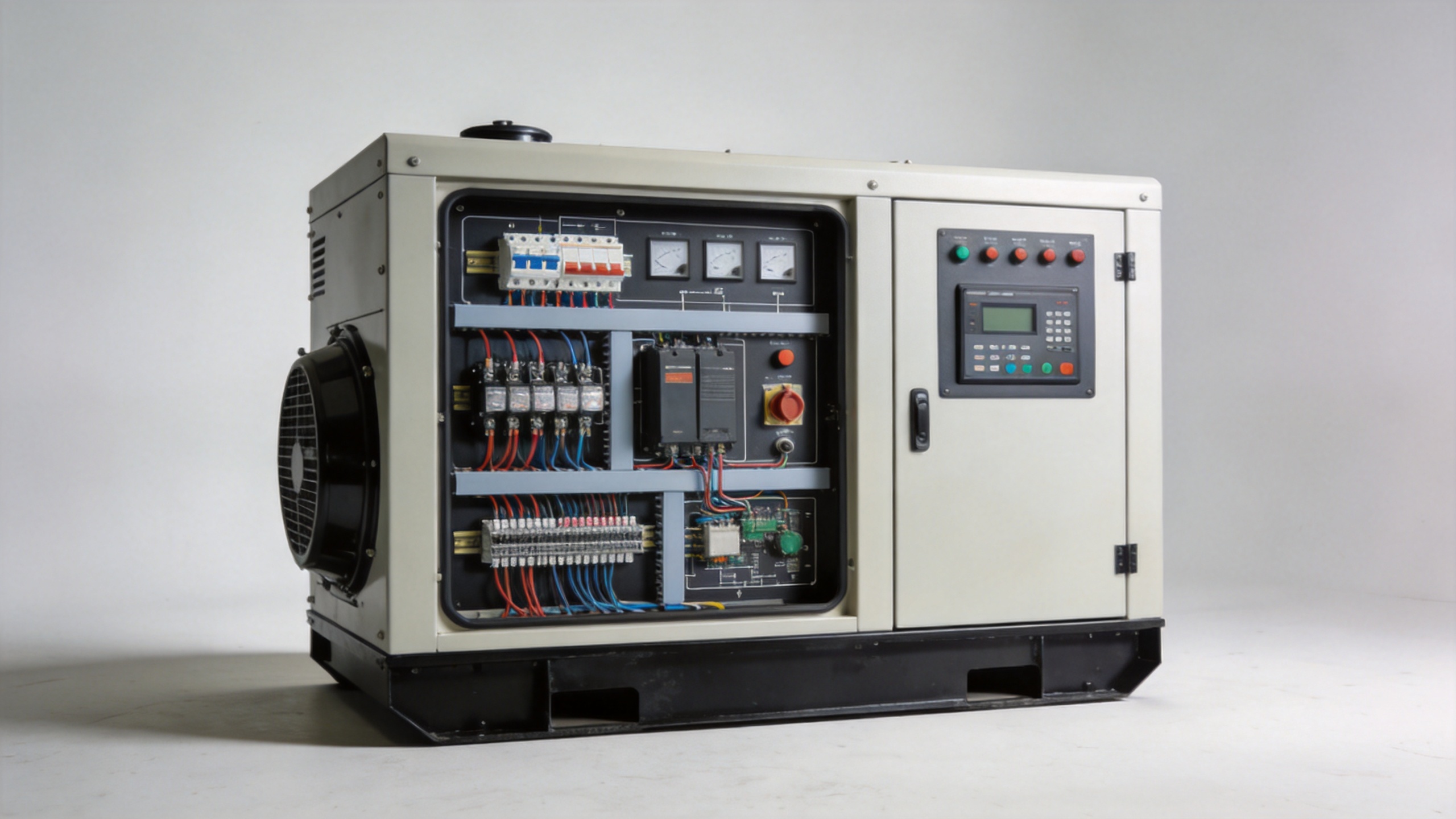
Over time, the configuration checkpoint that prevents the most downstream callbacks is not the parameter menu — it is verifying the fuel and crank relay output ratings against the starter and fuel solenoid loads on the specific engine. A SmartGen controller manufacturer should supply the relay ratings datasheet with the quotation. The HGM6110N and HGM6120N ship with 16A rated start relay output and 7A rated auxiliary relay outputs. If your application includes contactors or solenoids that draw more than 7A continuously, interposing relays on the auxiliary outputs are worth the additional wiring step.
For the HGM6120N in ATS configurations, the mains voltage sensing terminals accept three-phase input and should be wired to the incoming mains side of the transfer switch, not downstream of it. Wiring the sensing point downstream means the controller reads the generator's own output after transfer, which prevents it from detecting a mains restoration event and initiating the retransfer sequence.
The analog input terminals cover oil pressure, coolant temperature, and an optional fuel level sensor input. Integrators connecting a generator fuel level sensor to the third analog input should verify the sensor output range matches the controller's default analog scaling — SmartGen's default is typically 0–190 Ω resistive type, which is standard for most diesel genset fuel senders but worth confirming on non-standard tanks. A correctly wired generator fuel level sensor provides real-time tank level display on the LCD and can trigger low-fuel shutdown alarms — one of the more useful features for remote site installations where manual tank checks are impractical. When sourcing the generator fuel level sensor alongside the controller, confirming the resistance range compatibility at the order stage prevents a common mismatch.
Sourcing from a SmartGen Controller Manufacturer
Buyers who have dealt with installation failures tend to reassess compatibility documentation and wiring diagrams as a primary supplier evaluation criterion — not an afterthought. When sourcing from a SmartGen controller manufacturer internationally, the practical checklist is: confirm the model variant (6110N vs. 6120N and whether CAN bus is needed), verify the supply voltage compatibility with the battery system, and request the English wiring diagram and parameter list before the order is confirmed.
Populace Electronic Co., Ltd. supplies SmartGen HGM series controllers including the HGM6110N and HGM6120N to wholesale buyers and brand merchants across Asia, Europe, and North America. As a direct-supply SmartGen controller manufacturer source, Populace eliminates trading company layers for buyers sourcing at volume. Pre-sales support is available to confirm model compatibility for specific engine and panel configurations before purchase. Contact can be made through kygenpower.com or via email at [email protected].
The smartgen mgc100 and similar compact controller variants for marine or specialty applications are also available through the same supply channel — worth confirming availability if your project scope extends beyond standard HGM genset controllers. When evaluating a SmartGen controller manufacturer for ongoing supply, requesting English documentation and a pre-shipment compatibility confirmation as part of the quotation process is a straightforward step that prevents most post-delivery rework.






