
 EN
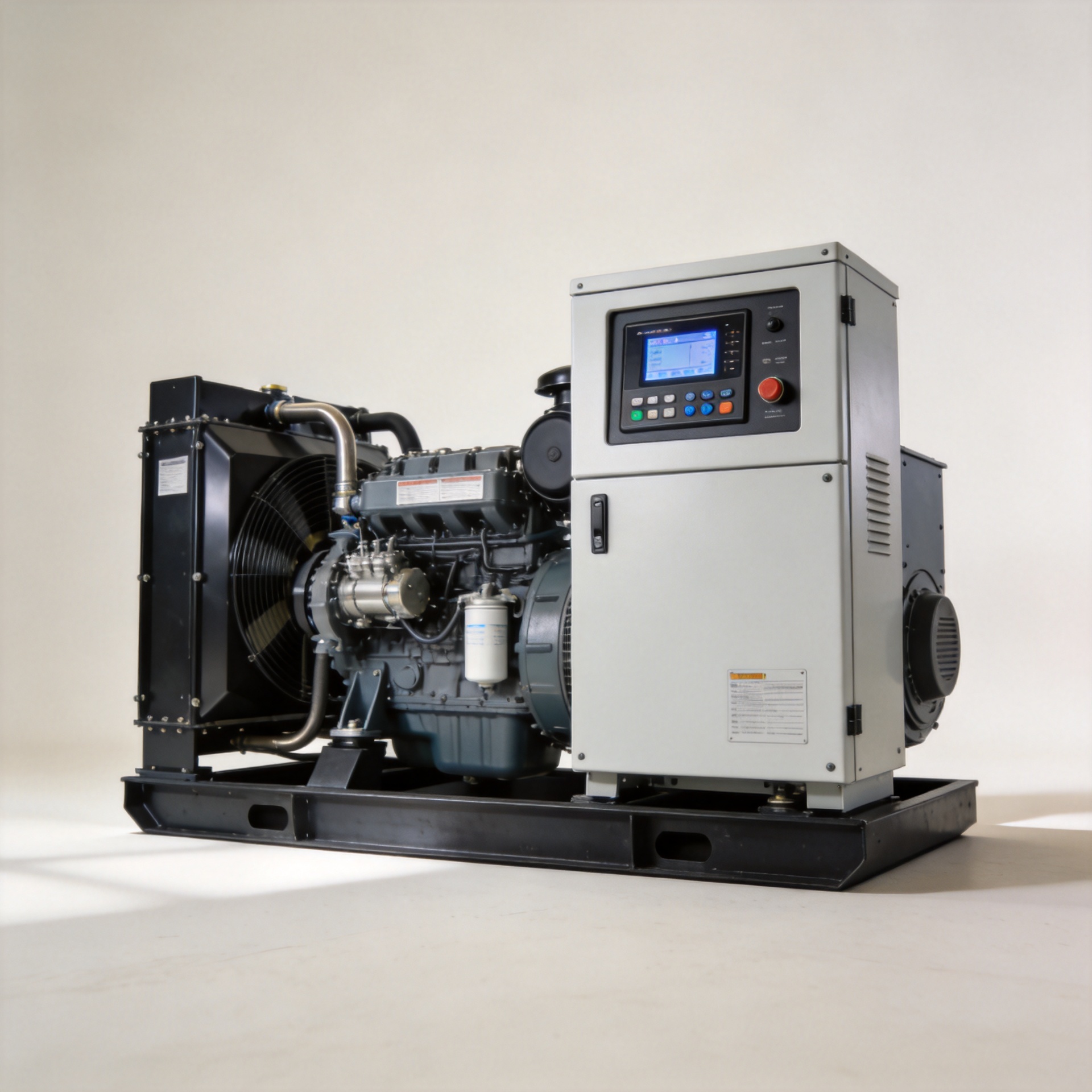
Smart Generator Controller: Digital Control Features
When evaluating a smart generator controller for a standby or prime power application, the spec sheet is only part of the picture. What actually determines long-term reliability is whether the controller's control logic, protection thresholds, and communication interfaces match the site's operational requirements, not just the voltage and frequency ratings listed in the datasheet.
The sections below cover the core digital control capabilities of modern controllers, the operating mode selection criteria for AMF, ATS, and manual configurations, and what those differences mean when sourcing for wholesale or brand distribution.
Core Functions of a Smart Generator Controller
A smart generator controller manages three fundamental tasks: automatic start and stop sequencing, engine and alternator protection, and real-time parameter monitoring. In a digital implementation, all three are handled by embedded microprocessors that can process multiple inputs simultaneously and execute conditional logic that analog relay circuits simply cannot replicate.
Automatic start/stop on a digital controller typically involves a configurable crank sequence — including preheat timing, crank attempt limits, and a post-start stabilization delay — before the unit declares itself ready to take load. These parameters are adjustable on most modern controllers, which matters when you have customers running engines with different cold-start characteristics or fuel types.
Protection functions on a digital smart generator controller typically include: over- and under-voltage on all three phases, over- and under-frequency, high engine coolant temperature, low oil pressure, overcurrent, and loss of excitation. The key difference from analog protection is that digital controllers allow configurable alarm and trip setpoints. A distributor can supply a single controller model and have it configured on-site to match the specific engine and alternator ratings, rather than stocking separate analog relay combinations for each application.
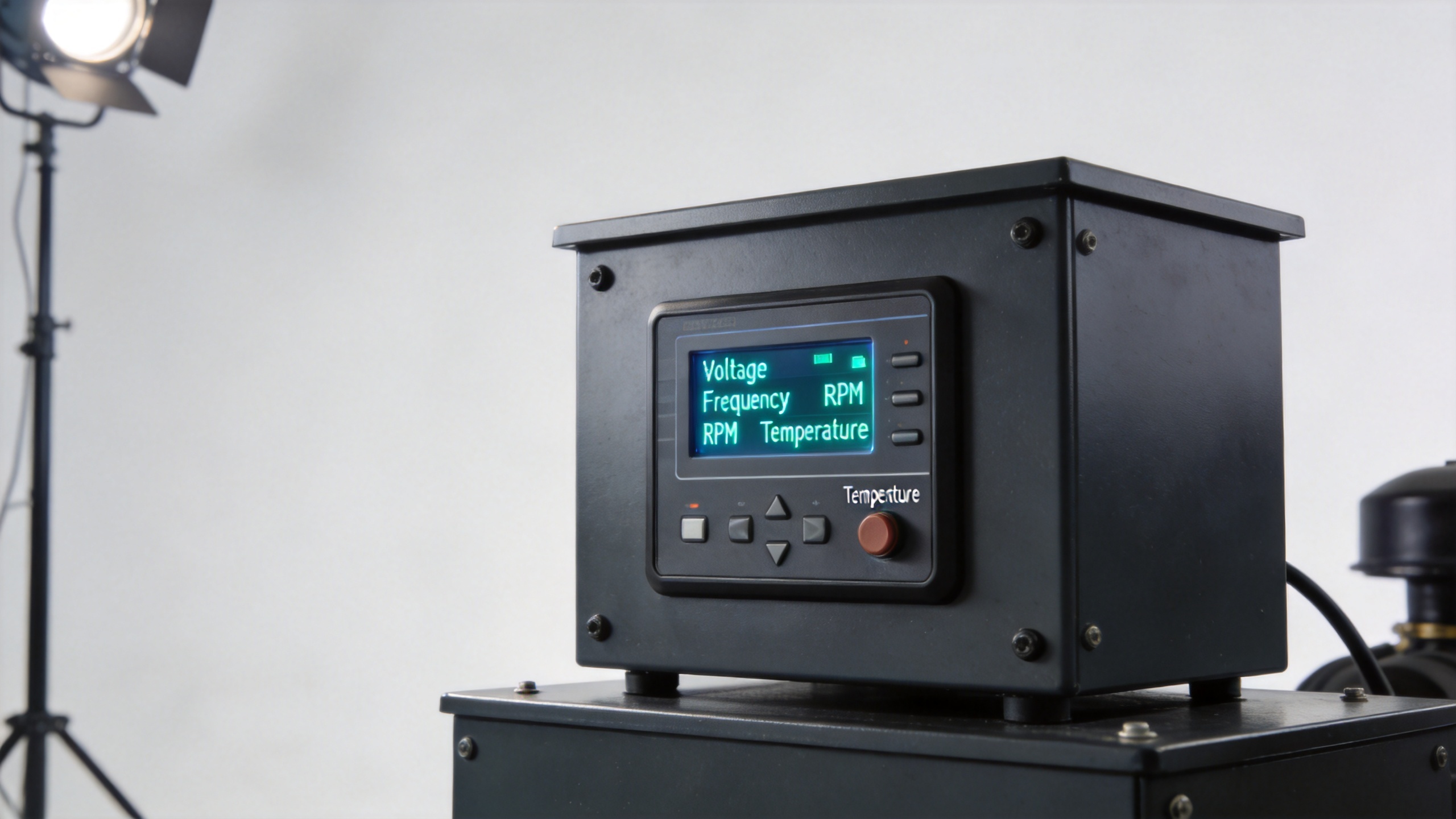
Monitoring on a digital platform aggregates all measured parameters — engine RPM, battery voltage, oil pressure, coolant temperature, output volts, amps, frequency, and power factor — into a single display and data log. That aggregate view is not achievable with a standard analog panel without adding multiple separate instruments.
AMF, ATS, and Manual Control Modes: What Matters for Selection
The operating mode determines how the controller responds to utility supply events, and it is one of the first selection filters when specifying a smart generator controller for a particular application.
AMF (Automatic Mains Failure) mode is designed for applications where the generator must start automatically whenever the utility supply fails. The controller continuously monitors the incoming mains voltage and frequency; when either falls outside programmed limits, it initiates the start sequence without manual intervention. This is the standard requirement for critical standby installations — hospitals, data centers, telecom sites — where any manual step in the transfer process introduces unacceptable delay.
ATS (Automatic Transfer Switch) mode builds on the AMF function by integrating control of the transfer contactor or motorized breaker. Rather than just starting the generator, an ATS-capable controller also manages the changeover between mains and generator supply, monitors for mains restoration, and handles retransfer when the grid returns stable. If your customers are supplying packaged genset panels for single-source installations, ATS mode is generally what they need.
Manual mode remains relevant in applications where operator oversight is required before load transfer in certain industrial processes, grid-connected parallel operation setups, or test scenarios where automatic transfer is not permitted. Most digital controllers support all three modes and allow selection via parameter programming rather than hardware rewiring.
If the application is uncertain, or your customer is sourcing controllers for a range of downstream projects, choosing a controller that handles all three modes in firmware rather than separate hardware variants, which simplifies inventory and reduces the risk of sourcing the wrong model for a specific site.
Products like the DynaGen TG410 represent the AMF-focused end of the digital controller spectrum — designed specifically for single-unit AMF applications where transfer switching is handled by a separate ATS panel rather than integrated into the controller itself. Knowing where a given application sits on this spectrum before sourcing helps avoid over-specifying or under-specifying the control layer.
Digital Controllers vs. Analog Panels: The Practical Differences
The shift from analog to digital control is not primarily about aesthetics. The operational differences are concrete, and they show up most clearly in installations where parameters need to be adjusted after commissioning, or where remote management is a requirement.
Configurable protection thresholds are the most immediately practical advantage. With an analog panel, protection setpoints are typically fixed by the relay or trip module installed. Changing a low-oil-pressure trip threshold means replacing or adjusting a component. On a digital smart generator controller, the same adjustment is a parameter entry — done in seconds without opening the panel.
Remote monitoring and communication interfaces are the other defining capability. Controllers from established digital platforms — including the Datakom D-300-MK3, Deep Sea Electronics DSE series, and SmartGen equivalents — support RS-485, Modbus RTU, and in some configurations GPRS or Ethernet interfaces. This enables integration with building management systems, remote SCADA monitoring, or cloud-based fleet management platforms. A standard analog relay panel has no native communication path without adding a separate external data logger.
Multi-language display support and password-protected parameter access are standard on most current digital controllers, which matters when your customers are distributing into multiple markets or operating with mixed-language service teams.
Controller Options in the Populace / KYGEN Product Range
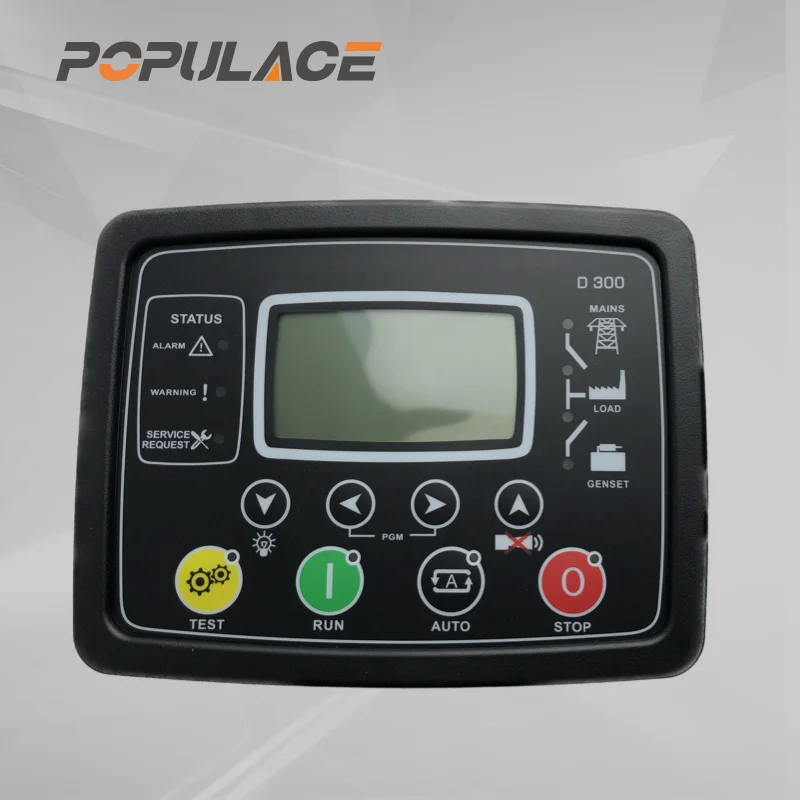
For wholesale buyers and distributors evaluating options within this product category, the following controllers are available with documentation and compatibility data:
- The DATAKOM D-300-MK3 Genset Controller supports AMF, ATS, and manual modes with configurable protection and RS-485 communication. It is a widely specified controller in the Datakom line and is suitable for single-unit standby and prime power applications requiring remote monitoring integration.
- The POPULACE DKG 307 AMF Controller Panel Module is designed for single-generator AMF applications. The panel module format integrates the controller and switching components, making it appropriate for customers assembling packaged transfer panels where a compact, pre-wired solution is preferred.
- The POPULACE DSE5110 Genset Controller (DSE 5110/5120 series) covers both AMF and ATS operation with advanced engine protection and remote monitoring. The DSE series is commonly specified for applications that require multi-parameter protection logging and communication with external monitoring systems.
When sourcing controllers for brand customers or wholesale distribution, having access to product documentation — wiring diagrams, parameter lists, and compatibility specifications — before the order is finalized tends to reduce downstream installation callbacks. That documentation is available for each of the models above through the product pages or on request.
Installation and Commissioning Considerations
Digital smart generator controllers require correct wiring of sensing inputs and output contacts before programming begins. The voltage sensing inputs, current transformer connections, and engine interface wiring (start relay, fuel relay, governor output if applicable) all need to match the generator's interface requirements. If the application involves a digital automatic voltage regulator in the alternator circuit, confirming the AVR's sensing and trim input compatibility with the controller's analogue outputs is worth doing before the panel is assembled.
Parameter commissioning typically involves setting the nominal voltage and frequency, configuring protection thresholds to match the engine manufacturer's alarm limits, and defining the start sequence timing. Controllers with a built-in event log simplify fault diagnosis during commissioning — you can review the sequence of events leading to a trip without relying on a technician's account of what happened.
For wholesale buyers who supply to OEM panel builders or service companies, confirming that a controller model supports on-site parameter adjustment via front panel keys — without requiring a laptop or proprietary software for basic configuration — is a practical requirement that narrows the selection to a subset of available models.
Compatibility between the smart generator controller and the generator's existing components is also worth verifying before finalizing a sourcing decision. In applications involving Generac gensets, for example, parts like the Generac 0J8371C controller interface component require confirmation that the replacement or upgraded controller is compatible with the existing engine harness and interface protocol — something that product documentation or a pre-order technical check can resolve before shipment.






