
 EN
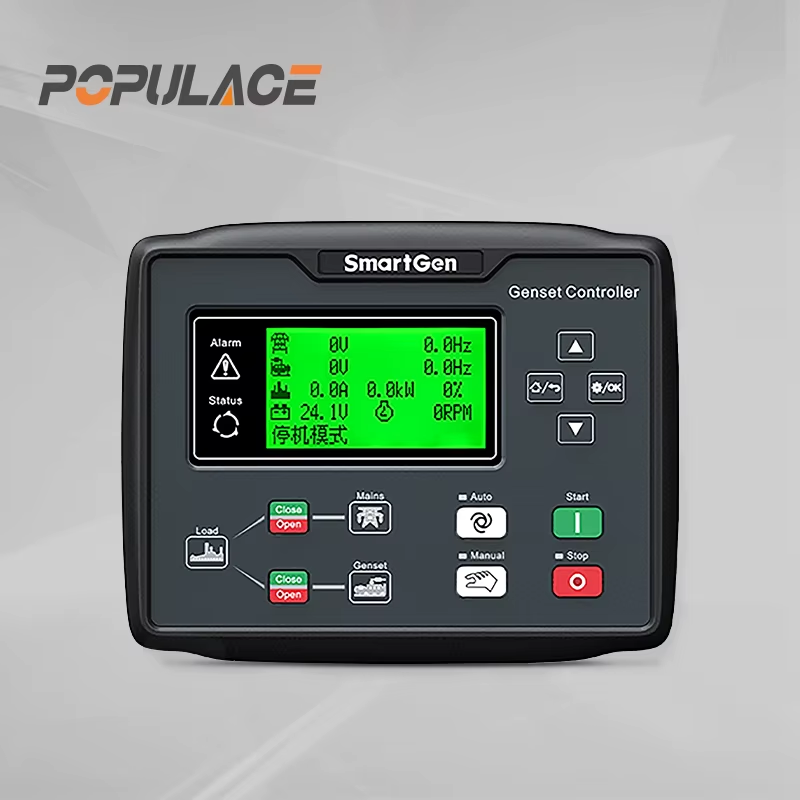
Smart Gen Controller: Features and Selection Guide
When integrating a smart gen controller into a diesel genset system, the challenge is rarely finding a product. More often, it comes down to confirming that the control interface, automation logic, and communication variant align with the site's actual power requirements. The SmartGen HGM series is one of the most widely deployed controller platforms for single-unit genset applications, and knowing the differences between models matters before making a sourcing decision.
What Is a Smart Gen Controller?
A smart gen controller is an electronic module that manages automatic start, stop, protection, and load transfer for a diesel generator set. Unlike basic manual panels, a smart gen controller monitors engine parameters — oil pressure, coolant temperature, battery voltage, and AC output — and responds to faults or power loss events without operator intervention. For genset system integrators, selecting the right controller determines the level of automation and the communication flexibility available for remote monitoring or SCADA integration.
The SmartGen HGM6100N series is designed for single-unit diesel gensets and covers a range of automation requirements. It is one of the most recognized controller platforms in its price segment, with measurable value for small- to mid-scale installations where cost per unit matters and integration complexity stays manageable.
HGM6110N vs HGM6120N: Core Functional Difference
The most common selection question among integrators is the difference between the HGM6110N and the HGM6120N. The distinction is straightforward, but its practical impact is significant:
- HGM6110N: Automatic Start Module — controls the genset to start and stop based on a remote signal input. Handles single-unit automation; AMF detection is typically managed via external input. No built-in three-phase mains voltage input terminal.
- HGM6120N: Extends the HGM6110N with three-phase mains AC input terminals. This allows the controller to monitor mains availability directly and manage the full ATS (Automatic Transfer Switch) sequence — starting the genset when mains fails, shutting down when mains restores.
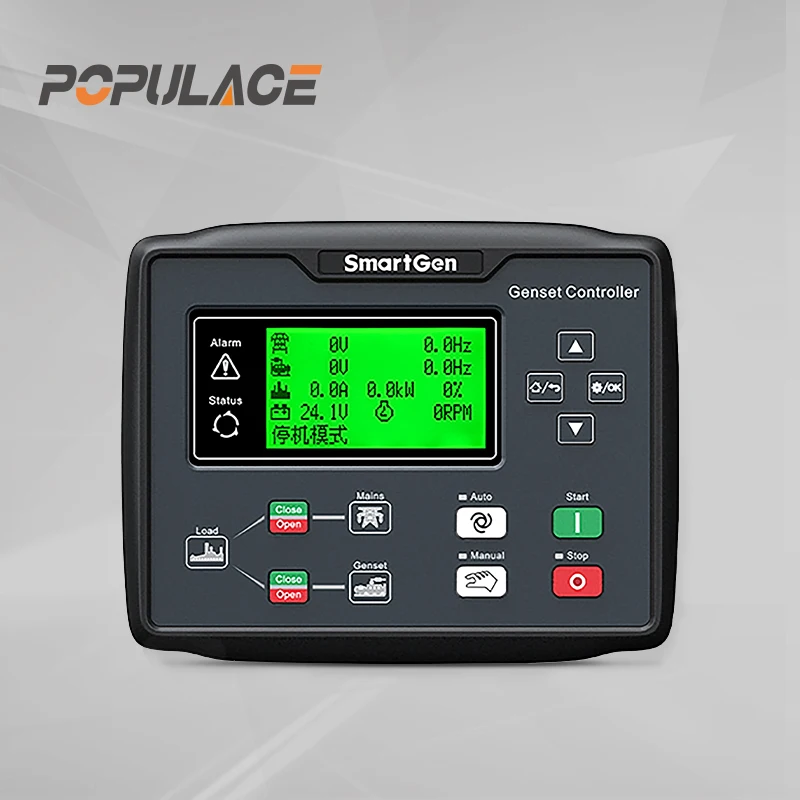
If your application requires a standalone start/stop trigger from an external signal — a remote AMF panel or a building management system relay, for example — the Smartgen HGM6110N Genset Controller ATS Auto Start Module for Diesel Generator is the more direct fit. If you need the controller to detect mains failure and run the full ATS sequence internally, the HGM6120N Controller Intelligent Diesel Genset ATS Generator Control Module handles this without additional relay logic.
Communication Variants: RS485, CANBUS, and Standard
The HGM6100N series spans six variants, differentiated primarily by communication capability:
| Model | ATS / Mains Input | Communication Port |
|---|---|---|
| HGM6110N | No (signal start only) | None |
| HGM6120N | Yes (3-phase mains input) | None |
| HGM6110NC | No | RS485 (Modbus) |
| HGM6120NC | Yes | RS485 (Modbus) |
| HGM6110CAN | No | CANBUS |
| HGM6120CAN | Yes | CANBUS |
Projects requiring remote monitoring through a SCADA system or a wifi generator controller gateway typically use the NC variants (RS485/Modbus). Modbus RTU is an open protocol supported by most building automation platforms, which makes it preferable to proprietary solutions in mixed-system environments. Where the controller is being paired with a CAN-based engine ECU, the CAN variants remove the need for a protocol bridge entirely.
Most integrators focus first on the automation function when evaluating a smart gen controller. After a few installations, the communication interface tends to become the primary filter — because confirming RS485 support upfront prevents more rework than almost any other decision in the process.
SmartGen vs. Deep Sea Electronics (DSE): Positioning and Trade-offs
Both SmartGen and Deep Sea Electronics (DSE) are established controller platforms with broad genset market coverage. Selection between them generally comes down to application scale and budget structure:
- SmartGen HGM series: Positioned for value on small- to mid-range single-unit applications. Supports open protocols (Modbus/RS485) that work with third-party monitoring software. More accessible price point for projects where genset avr price and controller cost together are a meaningful budget factor.
- DSE series: Generally suited to larger industrial applications and multi-set paralleling. Strong reliability credentials for mission-critical environments. Uses proprietary protocols that are brand-specific, which can raise integration cost in open-protocol environments.
For single-unit AMF/ATS applications with Modbus connectivity, SmartGen HGM controllers are a technically capable and cost-efficient option. DSE's advantages emerge in paralleling configurations, grid-code compliance, and environments already running the full DSE ecosystem.
The right choice depends on three practical factors: genset count, whether paralleling is needed, and whether the monitoring infrastructure runs open or proprietary protocols.
Alternative: DATAKOM D300-MK3 for Multi-Function Applications
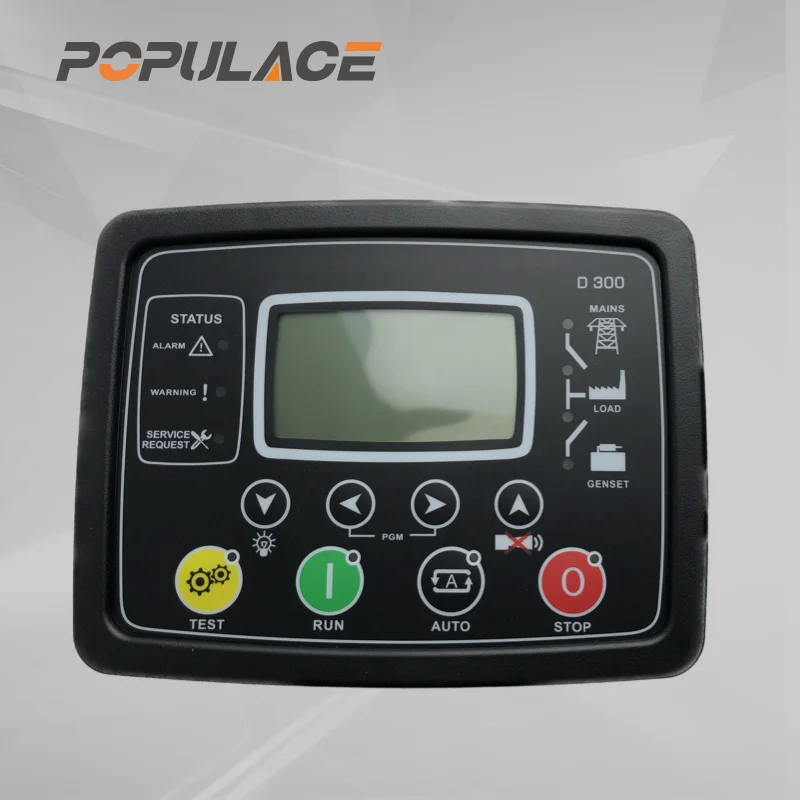
For integrators who need more advanced protection relay functions alongside genset automation, the DATAKOM D-300-MK3 Genset Controller is worth evaluating. DATAKOM controllers occupy a mid-tier position in feature depth, and the D300-MK3 covers applications where SmartGen's HGM entry-level feature set falls short but a full DSE paralleling controller is over-specified.
Selection Criteria Summary
A practical framework for choosing a smart gen controller for a diesel genset installation covers four criteria, in order of priority:
- Automation requirement: Signal-triggered start only (HGM6110N) vs. full mains-monitoring ATS (HGM6120N).
- Communication interface: No port / RS485 Modbus / CANBUS — determines the variant suffix to specify.
- Application scale: Single-unit vs. multi-unit paralleling — determines whether SmartGen HGM or a higher-tier platform is the right fit.
- Supplier support and availability: Pre-sales technical compatibility verification, wiring documentation, and confirmed stock before committing to a project timeline.
One clarification worth making: smart gen controller selection is a different category from products like a wind generator charge controller for lithium batteries, which manages battery charging profiles and handles DC input from a wind turbine. Confirming the correct product category for your power system type before ordering avoids specification errors that can be difficult to resolve after delivery.
Sourcing and Technical Support Considerations
For genset system integrators sourcing SmartGen HGM controllers and related components, pre-sales technical support from the supplier is a practical differentiator. Confirming the correct HGM variant — particularly the communication port and mains voltage input configuration — before procurement eliminates the most common field compatibility problems. A supplier who provides wiring diagrams, installation documentation, and model-specific compatibility confirmation as part of the standard ordering process reduces commissioning risk on both sides.
KYGEN Power (Fujian Kaiyue Electronics Co., Ltd.) supports wholesale buyers and genset integrators with pre-sales technical consultation and supply from its generator parts catalog. Contact: visit www.kygenpower.com.






