
 EN

M16FA655A AVR: Specs and Compatible Generator Models
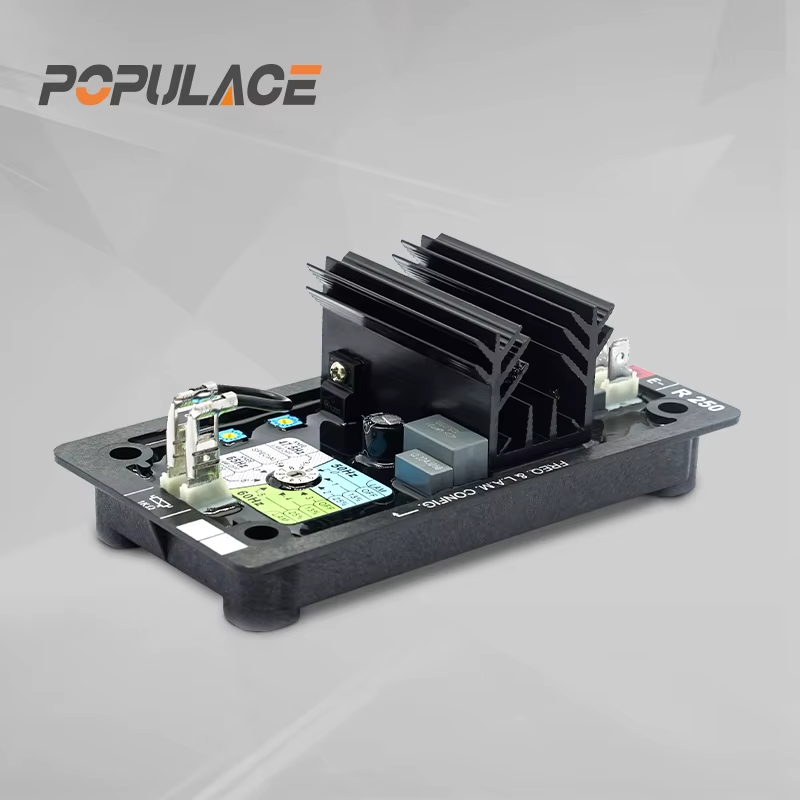
For a generator-parts buyer, m16fa655a is not a generic label. It identifies a Mark V style automatic voltage regulator used in certain synchronous-generator applications. The practical job of an avr automatic voltage regulator generator is simple to describe: it senses output voltage, compares it with a target, and changes exciter-field current so alternator output returns toward the set point. Selecting or replacing one is less simple. A board that looks similar can have different sensing, supply, excitation, stability, or protection requirements.
This guide is written from the viewpoint of a buyer checking replacement fit before a wholesale order. It explains how to evaluate m16fa655a, where comparisons with SX440, SX460, AS440, R120, and R450 help, and where they can mislead.
What the M16FA655A AVR does
An AVR works in a closed loop. When load changes pull terminal voltage down, the regulator increases excitation within its design limits. When voltage rises, it reduces excitation. The result should be stable generator voltage rather than an uncontrolled swing. Search results for m16fa655a associate the Mark V regulator with Marelli applications and 160–250 generator frames; one listing also describes two-phase sensing. Treat those details as a starting point for verification, not as a specification for every alternator carrying a similar part number.
In service, the board is part of a system: alternator windings, sensing leads, exciter, rotating rectifier, engine speed, wiring harness, and load behavior all affect what the technician sees. A poor connection can look like a bad avr automatic voltage regulator generator, while an incorrectly adjusted stability control can look like an alternator fault.
Compatibility is a wiring-and-function decision
Buyers commonly ask whether m16fa655a can substitute for SX440, SX460, AS440, R120, R450, or an mx321 voltage regulator. These model families are not automatically interchangeable. A compatible replacement must match the generator’s actual electrical arrangement, not merely the mounting footprint.
| Check before replacement | Why it matters |
|---|---|
| Voltage sensing input and phases | The regulator must read the same sensing configuration the alternator provides. |
| AVR power source | Auxiliary winding, PMG, or terminal-fed arrangements require different inputs. |
| Field/exciter output range | Excitation capability and polarity must suit the exciter circuit. |
| Frequency and engine speed | Under-frequency protection and adjustment behavior depend on the set’s operating frequency. |
| Terminals, trim functions, and protection | Remote voltage trim, droop, stability, and protection connections need equivalent functions. |
SX440, SX460, AS440, R120, R450, and mx321 voltage regulator references are useful comparison points because they prompt the right questions. They do not prove fit. Record the old-board terminal markings, photograph the harness with power isolated, consult the alternator wiring diagram, and compare the supplier’s datasheet before approving a replacement. That procedure reduces expensive returns and avoids turning a field repair into a controller-and-winding investigation.
Wholesale selection: assess the board and the supplier
For distributors and private-label buyers, replacement cost is more than unit price. Include incoming inspection time, technical support, packaging, repeat-order consistency, and the cost of a wrong compatibility claim. Request clear photographs of both sides of the regulator, terminal identification, applicable alternator models, and a functional test process. A supplier focused on generator controls can help with a pre-sales compatibility check, but the final selection should remain tied to the customer’s alternator documentation.
When building a mixed AVR range, an R120-type product can support a different service need from an m16fa655a replacement. For example, this R120 diesel-generator AVR listing is a useful internal product reference for buyers who are separately sourcing that regulator family. Likewise, a universal generator AVR listing should be treated as a distinct product line, not evidence of a Mark V substitution.
Installation and first-start checklist
- Lock out the generator, verify it is de-energized, and label every removed lead.
- Compare terminal names and the wiring diagram before moving any conductor.
- Inspect sensing fuses, connectors, rotating diodes, and grounding; do not install a new m16fa655a onto a known damaged circuit.
- Start with conservative voltage and stability settings specified for the alternator, then test at no load and through controlled load steps.
- Document final readings and settings for future service.
A diesel generator automatic start panel can complicate troubleshooting because the start sequence and transfer equipment introduce more signals around the set. Keep the AVR diagnosis separate: confirm engine speed and alternator terminal voltage first, then investigate start-control logic if the issue occurs only during automatic operation.
Troubleshooting symptoms without guessing
If voltage is absent or low, check residual magnetism, AVR supply, sensing leads, field continuity, and engine speed before condemning m16fa655a. If voltage hunts, inspect loose terminals and load changes, then review stability adjustment. If output is high, isolate the sensing path and verify the configured set point. Do not adjust multiple controls at once; one documented change followed by one measured result is more useful than a fast sequence of guesses.
Frequently Asked Questions
Is M16FA655A interchangeable with SX440 or R450?
No model name alone establishes interchangeability. Confirm sensing, AVR supply, field output, terminals, protection functions, and the alternator wiring diagram.
How long should an AVR last?
Service life depends on heat, vibration, moisture, wiring condition, load events, and correct setup. Clean connections and correct enclosure conditions support longer service; there is no single reliable lifetime for every generator.
Can an AVR fault stop diesel generator automatic start?
An AVR normally regulates output after the set runs. A start failure may be a battery, controller, fuel, interlock, or sensing issue, although an output fault can affect downstream transfer or protection behavior.
For dependable purchasing, make m16fa655a selection a documented compatibility review. The same discipline applies to an avr automatic voltage regulator generator, an mx321 voltage regulator, and any other replacement board: verify the alternator first, then order the regulator that matches it.





