
 EN
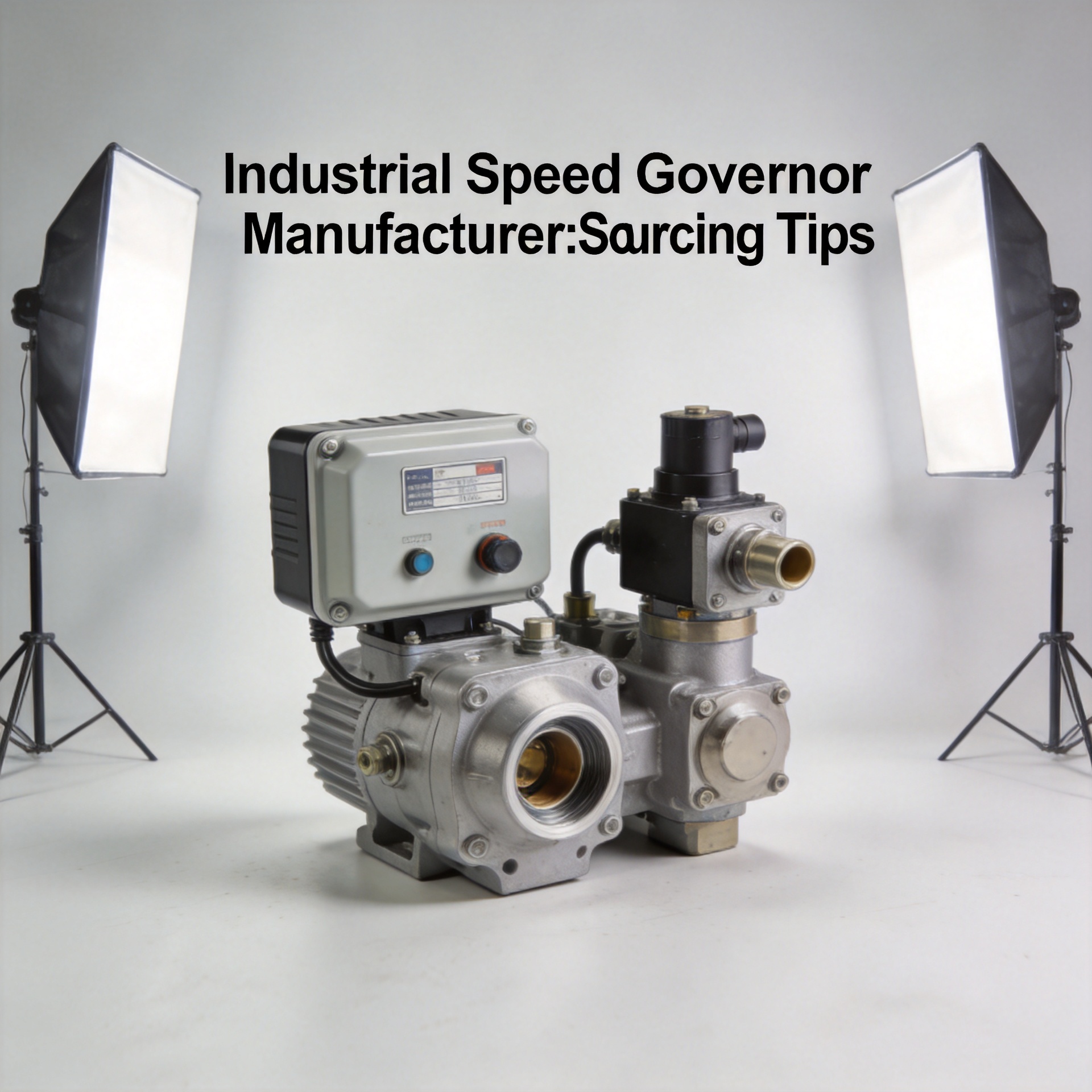
Industrial Speed Governor Manufacturer: Sourcing Tips for Wholesale and B2B Buyers
Sourcing from an industrial speed governor manufacturer involves more variables than most buyers initially expect. The part looks straightforward on a spec sheet, but matching control type, operating mode, actuator interface, and engine variant requirements is where most sourcing errors originate. This guide covers the key technical and supplier evaluation points that procurement managers need to work through before committing to a purchase.
Mechanical, Hydraulic, or Electronic: Why Governor Type Matters Before You Specify
Three primary governor types are used in diesel generator and industrial engine applications: mechanical flyweight-spring, hydraulic oil-amplified mechanical, and electronic microprocessor-controlled. Specifying the type is not optional — it is not interchangeable across engine configurations.
Mechanical governors regulate fuel rack position through centrifugal flyweight and spring tension. They are durable, need no external power supply, and remain the dominant choice in older generator fleets, cost-sensitive markets, and field settings where maintenance capability is limited. Response time is slower than electronic alternatives, but for stable load profiles this rarely limits performance.
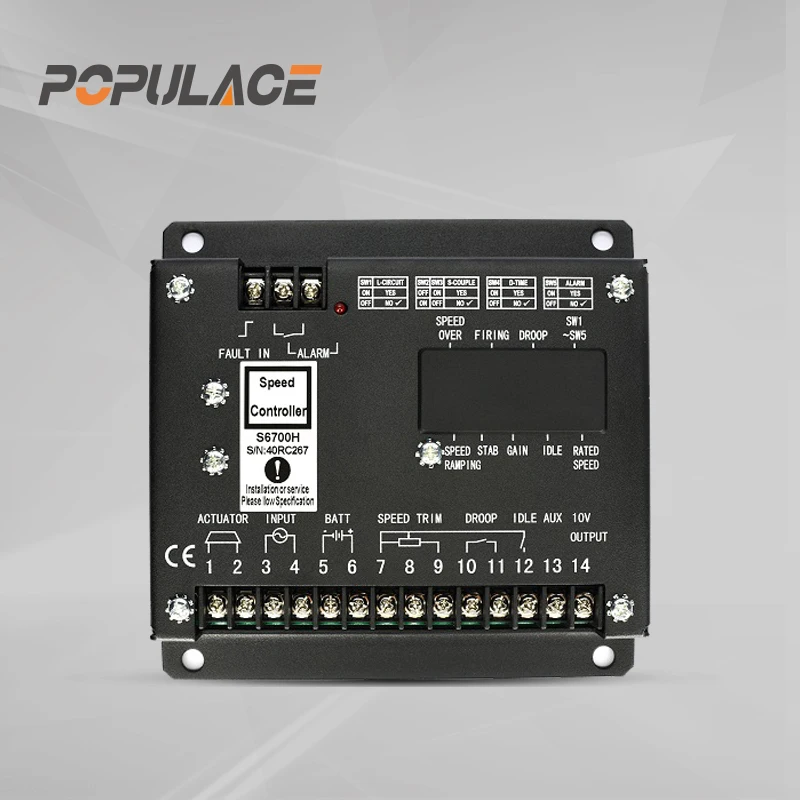
Electronic governors use engine speed sensors, an electronic control unit, and an actuator to achieve tighter precision and faster response under variable loads. The S6700H Governor Speed Controller is a compact electronic speed control unit for diesel engine generator applications. Electronic governors are the standard choice for prime-power and parallel-operation configurations where frequency stability matters.
Hydraulic governors sit between the two — mechanically actuated but with hydraulic amplification for high-torque engine applications. They appear on large industrial prime-power units but are less commonly specified for standard gensets below 500 kW.
Are you sourcing a replacement for an existing unit, or specifying a governor for a new installation? That distinction changes which type to evaluate first. Swapping a mechanical governor for an electronic alternative is technically feasible but requires actuator interface and control panel wiring verification before purchase — a step often skipped when buyers focus primarily on price.
Isochronous vs. Droop Mode: The Operating Setting That Defines System Compatibility
Governor operating mode is frequently underdocumented in quotation requests sent to an industrial speed governor manufacturer, yet it is one of the most consequential settings for system compatibility.
Isochronous mode holds engine speed constant regardless of load changes. This suits single-generator installations where steady frequency output is the primary requirement. No load-sharing coordination with other units is needed.
Droop mode allows engine speed to decrease slightly as load increases — typically between 2% and 5% of rated speed. A 3% to 4% droop setting is a common factory default for generators designed for parallel operation. This lets multiple generators share load proportionally without the feedback instability that isochronous control introduces in parallel configurations.
If your installation uses a deep sea electronics generator controller for multi-unit coordination and load sharing, the governor's droop adjustment range must be compatible with the controller's frequency input and load-sharing logic. In facilities running multiple diesel gensets simultaneously, the governor and generator control panel need to function as a matched system rather than independent components.
For buyers specifying systems that include a generator protection relay for fault isolation and frequency monitoring, the governor's response time under sudden load changes affects how the relay classifies frequency excursions. Confirm these parameters with the supplier before finalizing the order.
Three Sourcing Risks Worth Addressing Before You Send a Quotation Request
When evaluating an industrial speed governor manufacturer — particularly for international procurement — three risk categories cause the most post-delivery problems.
Specification Mismatch
Specifying the engine brand alone instead of the exact engine model, serial range, and actuator interface type is one of the most common mistakes when ordering speed governors. The result is receiving a part with incompatible actuator shaft dimensions or a control signal type mismatch — a problem invisible until installation. Experienced procurement managers typically move from brand-level to model-level specifications after encountering this once, since a governor compatible with one engine variant can have a different actuator pinout than a closely related variant from the same manufacturer.
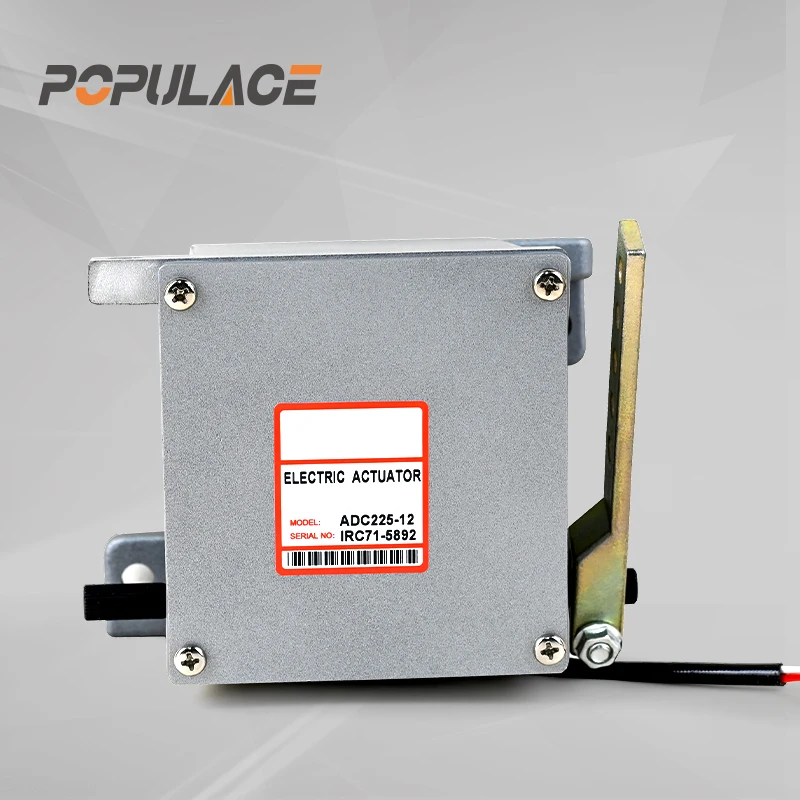
The external actuator — such as the ADC120, ADC175, or ADC225 actuator — must match both the engine mechanical interface and the governor control unit's signal output. These are not universal parts.
Documentation Gaps at Shipment
A supplier unable to provide a complete compliance declaration and export documentation package is a risk worth taking seriously, particularly for buyers importing into Europe or North America. Confirm upfront what documentation is included: commercial invoice, packing list, certificate of origin, and applicable product compliance declarations. Missing documentation at customs clearance can delay critical installation timelines in ways that are difficult to recover from.
Batch Quality Inconsistency
Most buyers start with a focus on unit price. After one installation failure traced back to inconsistent calibration or substandard components, lead time reliability and batch traceability become the actual selection filters. A qualified industrial speed governor manufacturer should be able to describe their pre-shipment functional testing process and provide batch reference documentation when requested.
How to Evaluate a Supplier's Technical Credibility
When evaluating any industrial speed governor manufacturer, the supplier should be able to provide compatibility documentation for your specific engine model range, a quotation process that includes specification confirmation, and pre-sales technical capability to answer interface and calibration questions — without requiring repeated follow-up to obtain basic information.
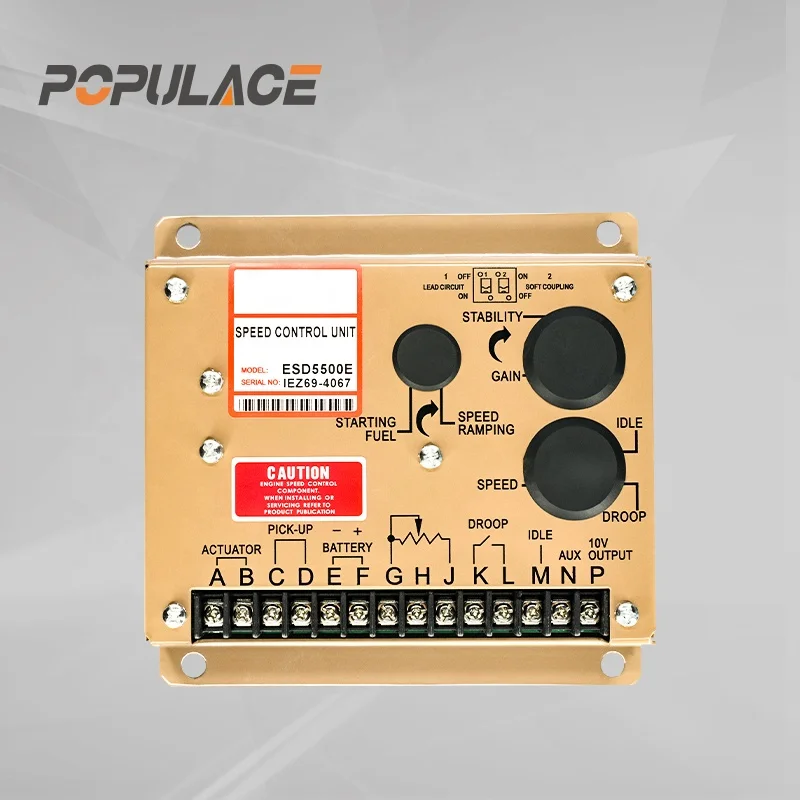
Populace Electronic Co., Ltd. manufactures and supplies industrial speed governors including the ESD5500E Speed Governor and S6700H electronic controller for diesel engine generator applications. As a direct-factory supplier operating under the Populace and Doopser brands, the company serves wholesale buyers and brand merchants across Asia, Europe, and North America via kygenpower.com and an Alibaba storefront at populaces.en.alibaba.com. Pre-sales compatibility confirmation is available for governor and actuator inquiries before purchase.
Buyers working with deep sea electronics 6020 control panels can confirm governor compatibility at the speed input and droop control level with the supplier before ordering — one of the standard verification steps worth completing before committing to a volume order from any new source.
Governor Calibration Parameters: What to Confirm Before Installation
Calibration is a field task, but knowing what to ask for during sourcing reduces installation surprises. Key parameters to confirm at the specification stage or verify in the supplier's documentation:
- Speed setpoint range — confirm the governor supports your engine's rated RPM. Common values are 1500 RPM for 50 Hz systems and 1800 RPM for 60 Hz systems.
- Droop adjustment range — for parallel-operation applications, confirm the droop range covers 3%–5% of rated speed.
- Gain and stability adjustments — electronic governors include sensitivity settings that need to match the engine's fuel system response. Request factory defaults and any application-specific setup notes.
- Actuator interface and signal type — confirm whether the actuator accepts a voltage signal (0–5V DC or similar) or PWM input, and that the shaft interface fits the fuel rack linkage of your engine model.
Units shipped without setup documentation transfer calibration work to the installation team — a cost that does not show up in the unit price comparison.
Sourcing Checklist Before Sending an Inquiry
Before reaching out to an industrial speed governor manufacturer with a quotation request, have the following confirmed:
- Engine brand, model, and serial range (not engine brand alone)
- Governor type: mechanical, hydraulic, or electronic
- Operating mode: isochronous (single-unit) or droop (parallel operation)
- Actuator shaft type, interface dimensions, and signal type
- Required droop adjustment range if parallel operation applies
- Applicable compliance certifications for the destination import market
- Supplier documentation package: COO, commercial invoice, packing list, compliance declaration
- Pre-shipment testing process and batch traceability availability
Selecting the right industrial speed governor manufacturer comes down to compatibility verification and documentation — not price alone. Getting those two confirmed before the order prevents the kind of delays and replacements that end up costing far more than the original price difference.






