
 EN
Industrial Generator Controller: Heavy-Duty Selection
When integrating an industrial generator controller into a diesel genset system, selecting the right control architecture is the core challenge: the operating environment, load profile, and monitoring requirements all influence which controller is appropriate. The controller determines how a genset starts, protects itself, and communicates with the rest of the power system. Getting that selection wrong leads to mismatched response curves, trip-prone protection settings, and commissioning that takes significantly longer than it should.
This guide covers the core industrial generator controller functions, mode differences (AMF, ATS, manual), the digital versus analog decision, and practical selection criteria for heavy-duty applications — with a note on sourcing for wholesale and brand buyers.
Core Functions of an Industrial Generator Controller
A genset controller handles three primary functions: engine start/stop sequencing, system protection, and operational monitoring.
Start/stop sequencing manages the engine warm-up cycle, applies load after stable voltage and frequency are reached, and controls cooldown before shutdown. On digital platforms, these timing parameters are software-configurable, which matters when startup behavior needs tuning after commissioning based on actual load behavior rather than fixed factory defaults.
Protection monitoring covers the critical parameters that prevent equipment damage:
- Over/under voltage (typically ±10–15% of nominal)
- Over/under frequency
- Overcurrent
- Low oil pressure
- High coolant temperature
- Low fuel level
- Battery voltage
On digital controllers, these thresholds are configurable and can be aligned to the engine manufacturer's specifications rather than fixed relay defaults.
Operational monitoring feeds data to the display, logs events for maintenance records, and — on controllers with communication outputs — transmits real-time telemetry to remote monitoring platforms or SCADA systems.
Control Mode Comparison: AMF, ATS, and Manual
The three main control modes for an industrial generator controller serve different operational scenarios. Selecting the wrong one adds unnecessary cost or complexity.
AMF (Auto Mains Failure) mode monitors the mains supply and automatically starts the generator when mains voltage drops outside acceptable limits. Once mains power restores and stabilizes, the controller handles retransfer and cooldown without operator involvement. AMF is the standard selection for standby power applications where unattended operation is required: data centers, hospitals, and critical industrial facilities.
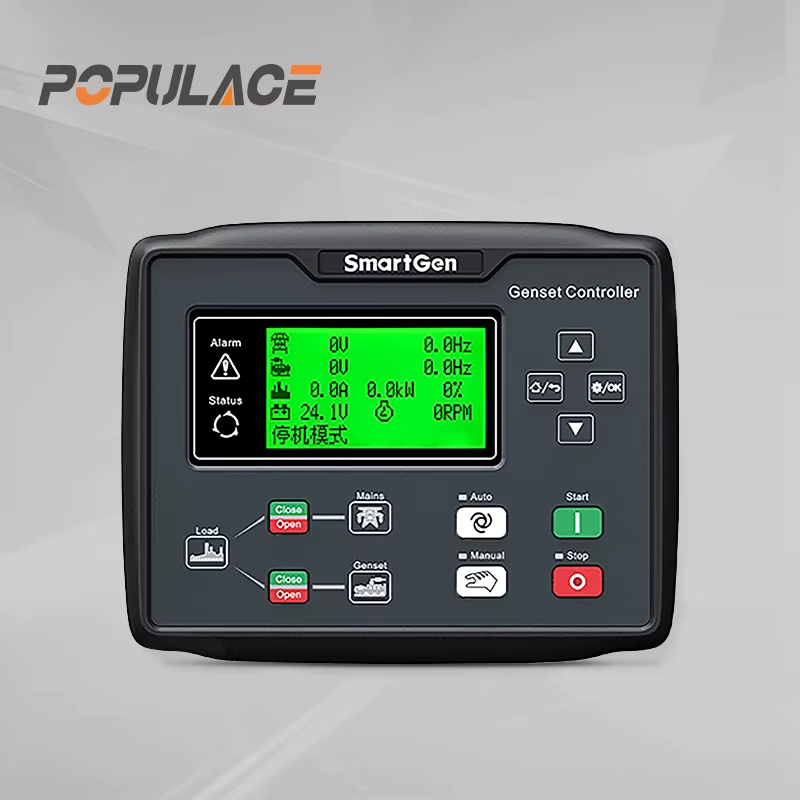
ATS (Automatic Transfer Switch) functionality manages the physical load transfer between mains and generator. Many modern controllers combine AMF detection with integrated ATS control in a single module. The DSE4520 MKII is a purpose-built AMF control module that handles both mains failure detection and transfer logic, simplifying panel design by consolidating what older installations handled with separate units.
Manual mode is appropriate for prime power applications where the generator is the primary source and start/stop decisions are operator-driven. It is also used during installation and commissioning to test protection settings before enabling automatic functions.
Selection guideline: if the application requires unattended automatic response to mains failure, AMF is the starting point. If the genset is prime or continuous power with no mains transfer, manual or remote start configurations are more appropriate.
Digital vs. Analog: Why Industrial Installations Favor Digital Controllers
The shift from analog relay-based panels to digital industrial generator controller platforms has been consistent across industrial applications, and the technical reasons are straightforward.
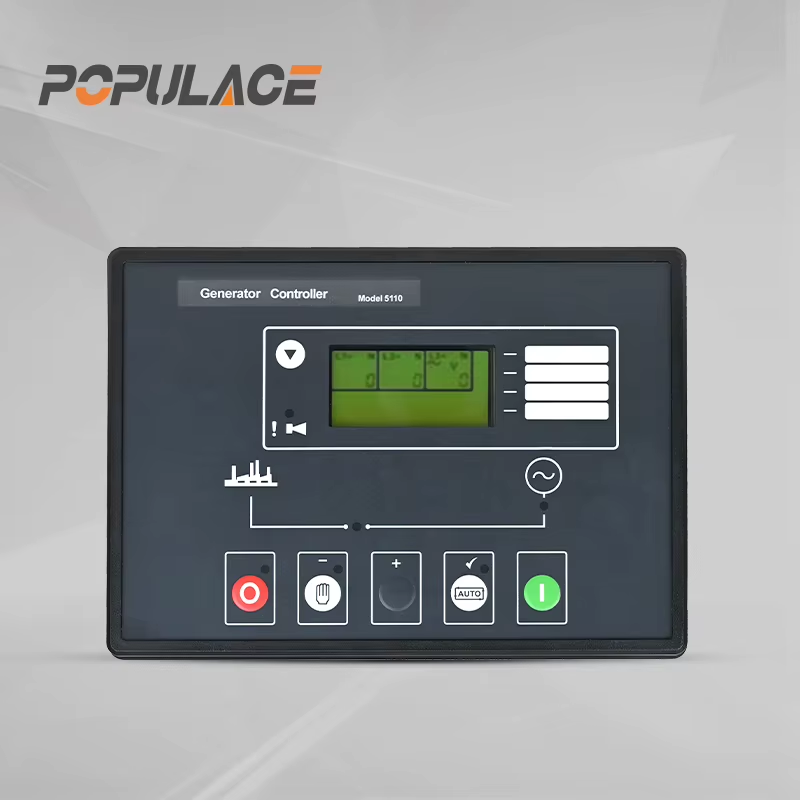
Digital controllers — platforms like Deep Sea Electronics (DSE), SmartGen, and Datakom — offer configurable protection thresholds, real-time displays, event logs, and communication outputs (RS485, MODBUS, CANbus). The Populace DSE5110 controller represents this generation: a compact digital module with configurable inputs, a clear operator interface, and remote monitoring connectivity support.
A common assumption is that digital controllers are primarily about display convenience. The more significant advantage is configurable thresholds. A diesel engine running at altitude or in high-ambient-temperature conditions may need adjusted oil pressure and temperature trip points — changes that require hardware modifications on analog relay systems but are parameter edits on digital platforms. That difference becomes meaningful when commissioning dozens of units across varied site conditions.
Analog relay-based controllers still have a place where extreme temperatures, moisture, or vibration make digital electronics less durable, or where installation budget and application complexity do not justify digital features. For wholesale buyers maintaining service stock across mixed-age generator fleets, stocking both types is often the practical approach.
Industrial Generator Controller: Key Selection Criteria for Heavy-Duty Applications
When evaluating an industrial generator controller for a heavy-duty installation, the following criteria drive most selection decisions:
- Voltage input range: Match the controller's sensing input to the generator's output — 120/240 V single-phase or 3-phase 380–480 V for most industrial configurations.
- Engine interface protocol: CAN-bus compatibility is required for generators with electronic engine modules (ECMs). Older mechanical engines use analog signals.
- Environmental rating: IP54 or IP65 for outdoor or dusty environments. Most panel-mount digital controllers assume panel-level IP20 protection.
- Communication outputs: If remote monitoring or SCADA integration is required, confirm RS485/MODBUS or Ethernet support before specifying.
- Battery charger output: Many controllers include a regulated battery charge output — useful for standby applications where battery condition requires active maintenance between runs.
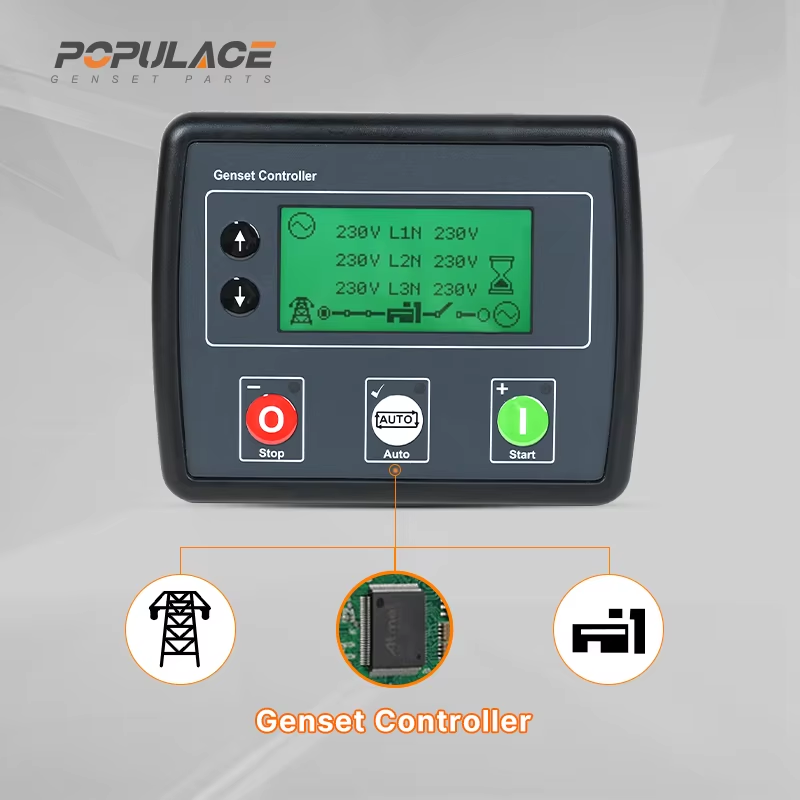
The Datakom D-300-MK3 addresses several of these criteria in a single module — supporting AMF and manual operating modes, providing a comprehensive measurement display, and offering compatibility with a range of diesel engine types used in industrial genset configurations.
Sourcing Considerations for Wholesale and Brand Buyers
For buyers managing controller inventory across multiple generator types, a few sourcing factors are worth noting.
Controller pricing scales with capability tier. At the 30 kw generator price range — typically USD 3,000–8,000 for a complete genset package — the controller represents roughly 5–15% of total system cost, which makes specification accuracy meaningful rather than a secondary detail.
Compatibility verification matters more for industrial generator controller units than for mechanical replacement parts. Unlike sourcing honda eu2000i generator parts or champion power equipment parts — where model cross-references are well-documented and straightforward — controller compatibility depends on engine communication protocol, operating voltage, and control logic matching the original installation. Wholesale buyers building service stock should confirm engine compatibility before committing to volume orders.
KYGEN Power supplies Populace and Doopser branded industrial generator controller units to wholesale and OEM buyers, with pre-sales compatibility verification available for controller and engine matching. International sourcing inquiries are handled through the Alibaba channel at populaces.en.alibaba.com.
Industrial Generator Controller: Installation and Commissioning Notes
A few consistent issues arise during industrial generator controller installations that are worth addressing before the system goes live:
- Wiring terminal identification: Reference the wiring diagram for the specific controller model, not a generic diagram. Terminal labeling follows IEC conventions on some platforms and manufacturer-specific conventions on others.
- Protection threshold verification: Before enabling automatic mode, verify all protection setpoints against the engine manufacturer's specifications. Factory default settings may not match the installed engine model.
- Load test before sign-off: Test the controller's start/stop sequence and protection response under actual load — not just no-load — before commissioning is complete.
- Firmware version check: For controllers with updateable firmware, confirm the installed version is current before troubleshooting behavior that may have been corrected in a newer release.
For wholesale buyers and brand merchants evaluating industrial generator controller options for distribution or OEM programs: digital platform advantages, mode flexibility across AMF, ATS, and manual configurations, and verified engine compatibility form the core selection framework. Sourcing from a manufacturer with pre-sales technical support reduces the risk of compatibility issues that emerge post-installation.






