
 EN
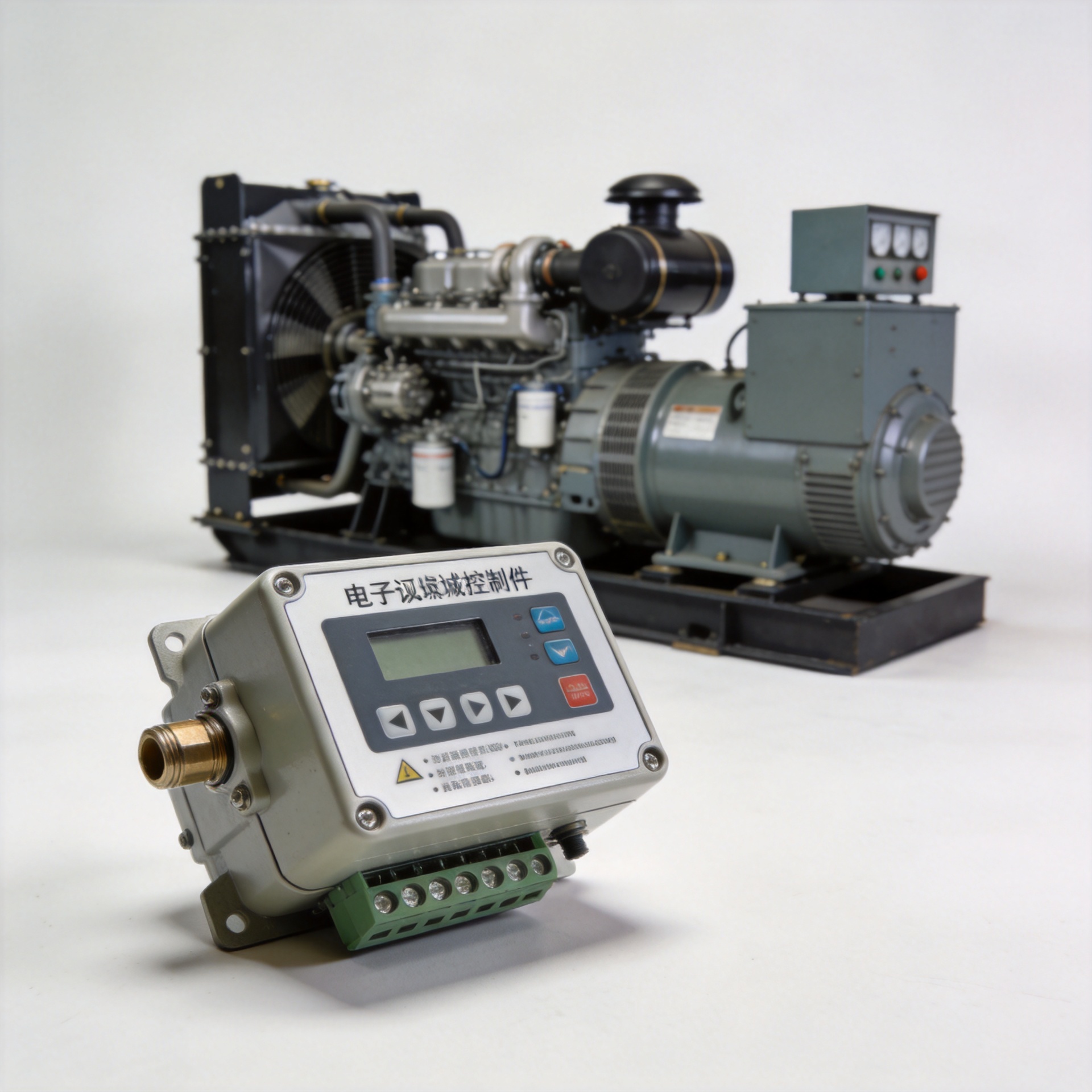
Genset Governor for Sale: Sourcing and Pricing Guide
When you begin evaluating a genset governor for sale, the immediate tendency is to compare listed prices. That starting point is reasonable — but what experienced procurement managers learn quickly is that a governor purchase is a compatibility decision before it is a pricing decision. The part needs to match your engine model, control signal type, and operating mode before price becomes the meaningful variable.
This guide walks through the core factors that should structure your sourcing process when looking for a genset governor for sale: governor types, application requirements, operating modes, pricing ranges, and evaluation steps before committing to a supplier.
Mechanical vs Electronic Governor — What the Difference Means for Sourcing
Mechanical governors use flyweights or centrifugal force to sense engine speed and mechanically adjust the fuel rack. They are durable, self-contained, and suited to simple single-generator applications where frequency accuracy within ±1–2% is acceptable. For smaller and mid-range gensets — particularly in the 5–25 kW range — a quality mechanical unit typically runs $45–$85 when sourcing a genset governor for sale at this tier.
Electronic governors connect a speed-sensing magnetic pickup, a control module, and an actuator to form a closed-loop system. Frequency regulation improves to within ±0.25% under dynamic loads. That precision carries a cost: electronic governor control modules for genset applications start around $220, and if the actuator and magnetic sensor are not included, add another $35–$65 for those components.
A small engine electronic governor covering the lower power range (compact petrol or diesel gensets under 15 kW) is increasingly available in complete kit form. Sourcing a small engine electronic governor kit that bundles the control unit and compatible actuator can be more cost-effective than sourcing components separately, especially for high-volume orders where per-unit cost structure matters. This applies whether you are looking for a small engine electronic governor for a rental fleet or maintenance inventory.
Application Scope: Industrial Stationary vs Mobile Generator Power
Industrial stationary gensets (data centers, manufacturing facilities, commercial standby power systems) typically operate at consistent speeds and face predictable load cycles. For these applications, a governor calibrated to a fixed frequency setpoint (50 Hz or 60 Hz) with well-defined droop settings delivers reliable performance over extended operating hours. When sourcing a genset governor for sale for stationary installations, isochronous operation and thermal stability are the primary selection criteria.
Mobile generator plants and rental gensets face variable environments: fluctuating ambient temperature, vibration from transport, and unpredictable load profiles. Governors for mobile applications require stronger vibration resistance, wider operating temperature ranges, and in some configurations, faster dynamic response to handle sharp load changes without hunting or instability.
The difference between a standby and a prime power application becomes most visible in governor behavior when sustained heavy load occurs — selecting a standby-rated component for prime power duty is a specification mismatch that does not show up until runtime hours accumulate.
Isochronous vs Droop Mode: Choosing for Single and Parallel Operation
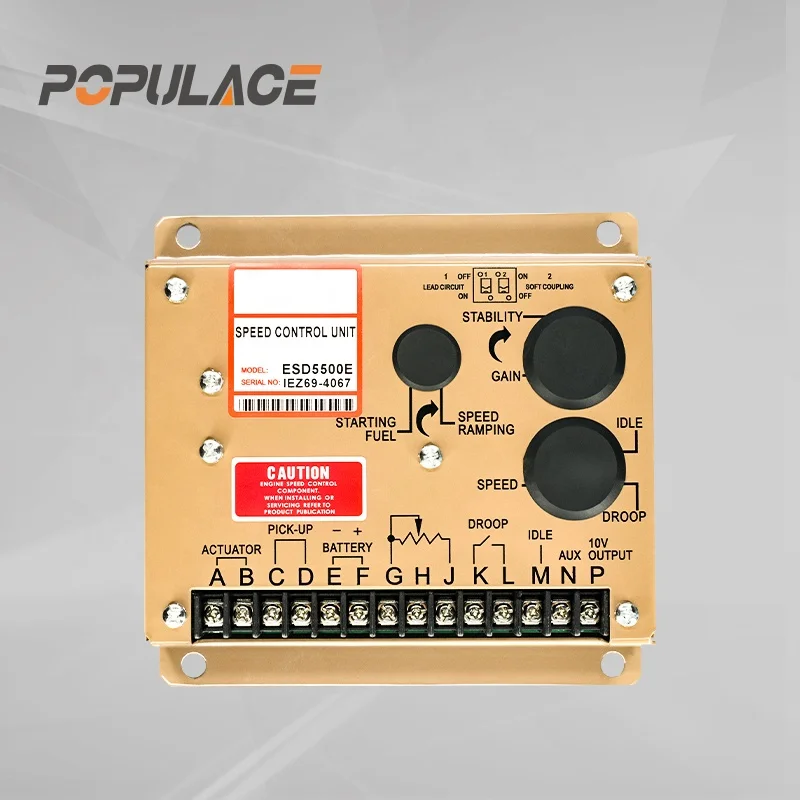
Isochronous mode maintains constant engine speed regardless of load. It is the standard choice for standalone single-generator operation, where one unit carries all the load and frequency stability is the priority. Most quality electronic governors, including units compatible with the governors america corp esd5500e specifications, support isochronous operation as the default mode, providing stable frequency output independent of changing load conditions.
Droop mode intentionally reduces engine speed as load increases. This behavior is necessary in parallel generator operation, where multiple sets must share load without competing for frequency control. When two isochronous-configured generators are paralleled without droop, they will fight each other for load dominance, causing instability that can trip both units.
If you are sourcing a genset governor for sale for a facility that runs multiple generators in parallel, confirm droop mode availability and the droop percentage range before finalizing your order. Most quality electronic governors — including the governors america corp esd5500e series — support selectable droop settings from 0% (isochronous) up to 5–10%, which covers the majority of commercial parallel applications. Confirm this specification in writing before placing a volume order.
Pricing Reference by Governor Type
Are you sourcing a single replacement unit or building inventory for a fleet of gensets? That distinction changes which price range is relevant and which supplier tier to target when evaluating a genset governor for sale.
- Basic mechanical governor (5–25 kW class): $45–$85 per unit
- Mid-range electronic governor module (industrial genset class): $80–$200 per unit depending on configuration
- Full electronic governor kit (control unit + actuator + sensor): $150–$350 per set
- OEM-branded governors from established brands such as governors america corp: $400–$550+ for specific models including the ESD5500E series
Wholesale and volume buyers who source direct from a manufacturer-level supplier can reduce unit costs by 30–50% compared to retail. Most buyers start with a focus on unit price — but after one missed deadline or emergency substitution, lead time reliability becomes the filter that actually drives supplier selection.
One of the most common ordering mistakes when searching for a genset governor for sale is specifying the engine brand alone instead of the exact engine model and serial range. That shortcut leads to receiving a part with an incompatible actuator interface or control signal type — a mismatch that causes delays and rework.
Key Sourcing Evaluation Criteria
When evaluating a supplier for a genset governor for sale at wholesale volume, the selection criteria should extend beyond price per unit:
- Compatibility confirmation: Can the supplier confirm compatibility with your specific engine model series before order placement? A supplier who includes a technical specification review in the quotation process reduces the risk of post-delivery mismatches.
- Operating mode support: Does the unit support both isochronous and droop modes? Is the droop setting adjustable on-site without special tools?
- Actuator interface type: ADC-series actuators (ADC120, ADC175, and ADC225) are common in industrial diesel genset applications. Verify whether your engine uses this interface or a different mechanical connection type before ordering.
- Documentation package: Wiring diagrams, installation guides, and compatibility charts should be included with the product. Buyers who have dealt with installation failures consistently reassess documentation as a primary supplier evaluation criterion.
- Supply continuity: For fleet maintenance buyers, confirm whether the supplier can fill repeat orders at consistent quality — not just the initial sample.
Some branded governor families — including the gemini speed governor range widely used in certain regional markets — are sold through distributors and may carry longer lead times depending on stock location. The gemini speed governor is one example where confirming in-stock availability against your project timeline matters as much as the unit price, especially for buyers in North America or Europe sourcing from overseas suppliers.
Calibration and Adjustment Basics
Electronic governors require initial calibration after installation. Gain (proportional), integral, and derivative settings are adjusted to match the engine's fuel system response characteristics. Most modern genset governor units include a simplified three-potentiometer adjustment panel for on-site setup without specialized equipment.
For parallel generator applications, the droop setting must be verified to produce load sharing within acceptable balance limits — typically within ±5% of rated load across all paralleled sets. If the governor was previously calibrated for single-unit isochronous operation and is being reconfigured for parallel duty, both the droop adjustment and the speed setting trim must be re-verified during commissioning.
The compatibility check routine that prevents repeat governor mismatch events is not complicated — it comes down to consistently verifying the engine model serial range and actuator type against the supplier's compatibility chart before every order. This applies whether you are ordering a small engine electronic governor for a light-duty unit or a heavy-duty industrial governor for a prime power application.
Governor Products Available from KYGEN Power
For procurement teams looking to source a genset governor for sale at wholesale pricing, KYGEN Power offers manufacturer-direct supply on the following models:
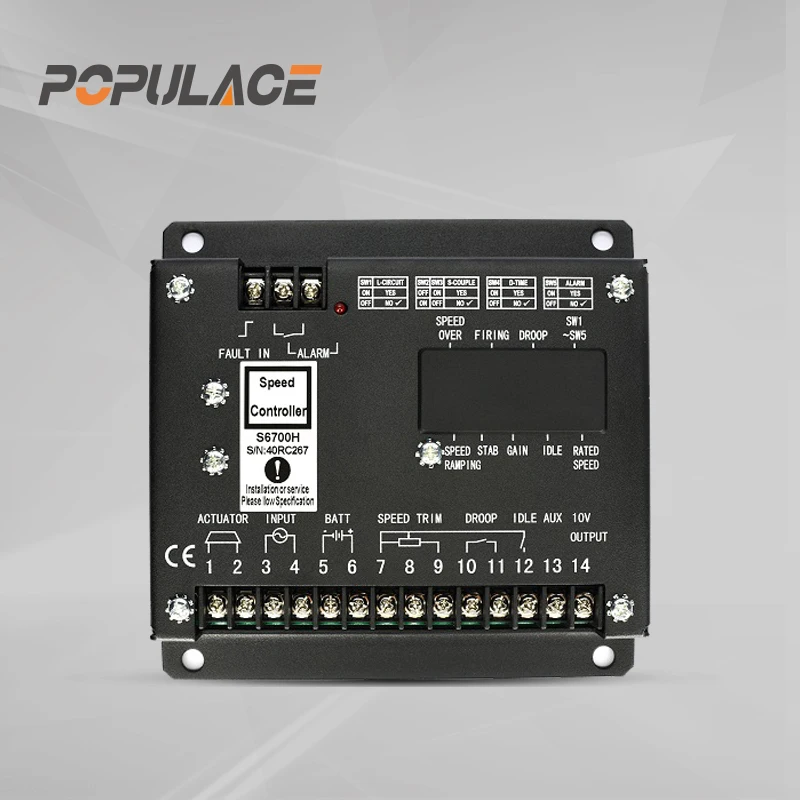
- S6700H Governor Speed Controller Diesel Engine Generator Speed Control Unit — designed for diesel engine speed regulation in industrial genset applications, with direct-from-manufacturer supply for wholesale and brand buyers.
- ESD5500E Speed Governor Generator Speed Control Unit Diesel Engine ESD5500E — compatible with ESD5500E-series specifications and supporting isochronous and droop operating modes for both standalone and parallel genset configurations.
- POPULACE Diesel Generator Engine Parts External Actuator 12V 24V ADC120 ADC175 ADC225 for Generator Speed Governor Actuator — ADC-series external actuators for governor system integration across multiple diesel engine platforms, available in 12V and 24V variants.
Technical compatibility inquiry and quotation support is available through kygenpower.com. For wholesale and brand-buyer inquiries, pre-sales specification confirmation is included as a standard step before order commitment — which covers the compatibility check that prevents the most common genset governor for sale sourcing errors.






