
 EN
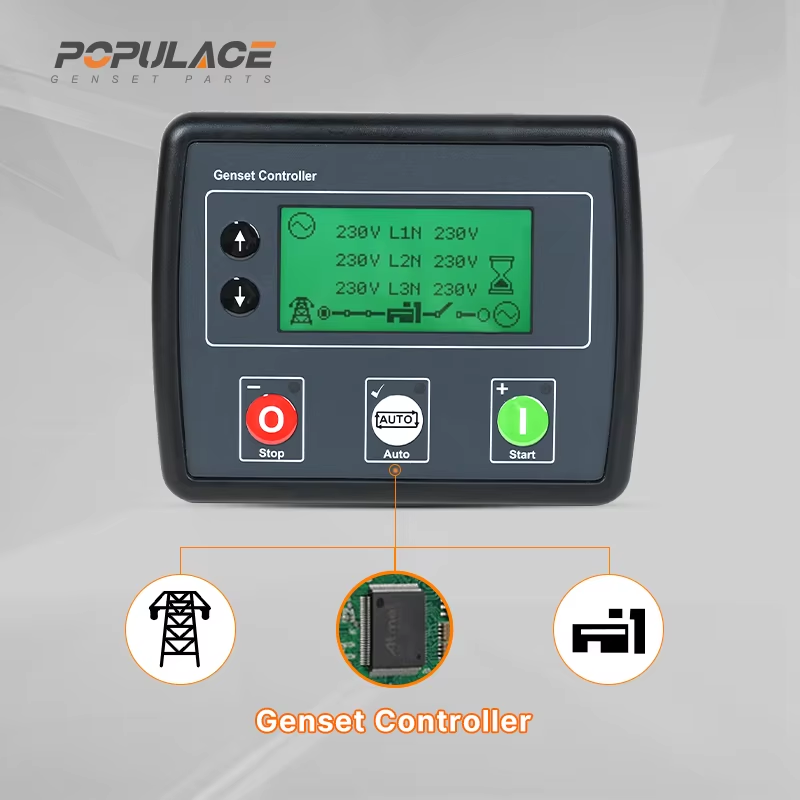
Genset Controller: Key Features and Selection Tips
When managing standby power at a facility level, sourcing the right genset controller is a decision that affects operational reliability, installation complexity, and the total cost of the power backup system. Whether you are a wholesale buyer evaluating a new product line or a brand merchant building a controller offering for your customers, the choice goes beyond brand names and price points. From a procurement standpoint, the variables that matter most are application fit, engine interface compatibility, and communication requirements — not just the quoted price.
What Does a Genset Controller Do?
A genset controller is the central electronic management unit for a generator set. Its three core responsibilities are:
- Automatic start/stop — The controller monitors the mains power supply. When the main supply fails, it starts the generator and transfers the load; when mains power is restored, it transfers back and initiates a controlled shutdown.
- Protection — The controller monitors and responds to fault conditions including low oil pressure, high coolant temperature, over/under voltage, over/under frequency, and overcurrent. When a threshold is exceeded, the unit shuts down the generator and triggers an alarm for operator review.
- Monitoring and data logging — Operational parameters (voltage, current, frequency, active and reactive power in kW and kVAr, power factor, fuel level, oil pressure, and coolant temperature) are continuously recorded. This gives operators both a real-time view and a historical log for maintenance planning.
Are you sourcing a genset controller for a single standby unit or for a paralleled multi-generator installation? That distinction changes which feature set deserves the most attention from the start.
AMF, ATS, and Manual Control Modes
Understanding control modes is the starting point for accurate controller specification:
- AMF (Automatic Mains Failure): The genset controller continuously monitors the mains supply. On detecting a failure, it automatically starts the generator, manages load transfer, and monitors the genset throughout the outage. For critical standby applications in commercial and industrial facilities, this is the mode most commonly specified.
- ATS (Automatic Transfer Switch): This refers to the switching mechanism that transfers load between the mains and the generator. In modern digital genset controllers, AMF logic and ATS switching functionality are typically integrated in a single unit — the distinction is important for panel specification, not buyer selection.
- Manual mode: The operator starts and stops the generator through front-panel controls or remote command. Appropriate for utility, test, and maintenance scenarios where automation is not required.
If your application runs at a stable, predictable load profile with an experienced on-site team, manual mode may be acceptable. If the site is unmanned or the load is sensitive — a data center, medical facility, or telecom tower — AMF with automated transfer is the practical requirement, not a premium option.
 Digital vs. Analog Genset Controllers: What Changes in Practice
The shift from analog to digital genset controllers has redefined what these units can do in practice. Analog controllers rely on fixed relay logic for basic start/stop and protection functions. They are mechanically straightforward and need no programming, but the trade-off is limited monitoring capability, no communication ports, and little configurability.
Digital controllers — including brands such as Deep Sea Electronics (DSE), SmartGen, and Datakom — replace relay logic with microprocessor-based processing. In advanced designs, load transfer switching circuits may use components such as silicon controlled rectifier (SCR) devices or solid-state relays for faster switching response and reduced arc wear compared to traditional contactors. Typical advantages of digital genset controllers include:
- Comprehensive monitoring: Alternator voltage (typically 0–330V AC phase-to-neutral), frequency, current (CT input up to 5000/5A on advanced units), active and reactive power, power factor, oil pressure, coolant temperature, and fuel level are continuously measured and displayed.
- Communication interfaces: RS-485, RS-232, Ethernet, CAN bus (J1939), and USB connectivity allow integration with SCADA systems, remote monitoring platforms, and PC configuration software.
- Programmable protection thresholds: Voltage, frequency, temperature, and pressure alarms can be calibrated to match specific engine and application requirements — not left at factory defaults.
- Environmental durability: Well-specified digital units are rated for operating temperatures from -20°C to +70°C with IP54 front-panel protection, suitable for demanding industrial environments.
A counterintuitive reality with genset controller components: the highest-priced digital controller is not automatically the right fit for every application. Premium units are engineered for multi-genset paralleling and microgrid management. Specifying them for a single standby unit adds cost without adding reliability. The right selection is defined by the application, not by feature count.
Selection Criteria: What to Evaluate Before Ordering
Early in the sourcing process, most buyers focus on nominal voltage and frequency ratings. After a difficult commissioning experience, the focus usually shifts to engine interface type, connector pinout, and communication configuration — the compatibility factors that catalog descriptions do not typically make explicit. The following criteria should be confirmed before finalizing a genset controller order:
- Application type: Single standby, prime power, or parallel operation? Each drives different feature requirements and certification expectations.
- Engine interface: J1939 CAN bus for electronic engines vs. magnetic pickup (MPU) for mechanical engines. Confirm the controller supports the engine's communication standard before specifying.
- Communication requirements: Does the site require Ethernet for remote monitoring? Is Modbus integration with a building management system specified? These requirements eliminate certain controller classes entirely.
- Certifications: CE, RoHS, and UL/CSA compatibility are increasingly expected by buyers in Europe and North America. Controllers with UL 6200 recognition simplify import documentation for North American markets.
- Panel cut-out and mounting dimensions: Physical dimensions must match the existing or planned control panel design. This is verified at the specification stage, not after delivery.
Featured Genset Controllers
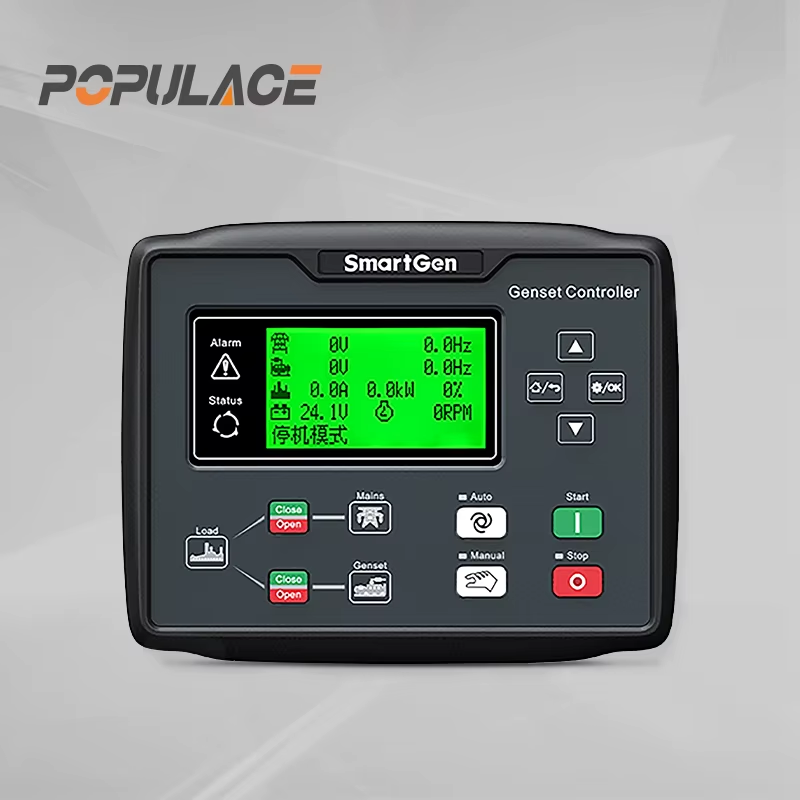
For wholesale buyers and brand merchants evaluating a genset controller product range, several options address different application tiers:
- The DATAKOM D-300-MK3 Genset Controller delivers AMF functionality with digital monitoring, programmable protection, and multi-communication options in a compact panel-mount form factor, suited for single and dual genset standby applications.
- The POPULACE DKG 307 AMF Controller offers automated mains failure detection and load transfer in a cost-effective module, targeted at distributors serving price-sensitive standby markets without complex communication requirements.
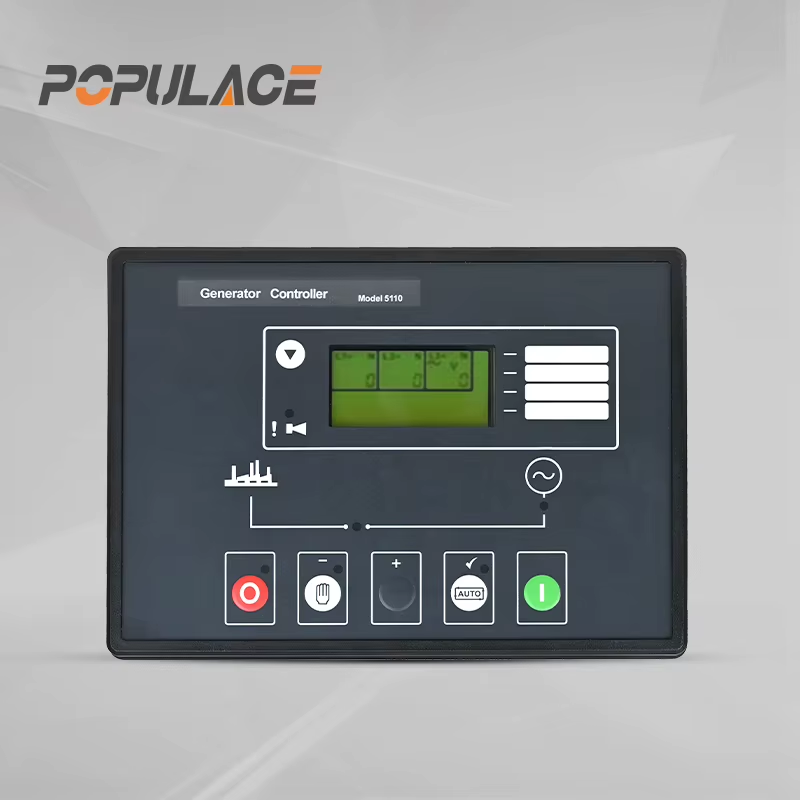
- The POPULACE DSE 5110 Genset Controller is a DSE-format module supporting single genset AMF operation with digital monitoring, compatible with both diesel and gas generator sets across a range of power outputs.
Installation and Commissioning Notes
Getting installation right matters as much as getting selection right. A few points that affect commissioning outcomes directly:
- Mounting environment: Mount the genset controller panel away from direct heat sources and vibration. In generator rooms where a generator exhaust silencer is installed, verify the panel location is clear of exhaust routing and associated heat zones before finalizing the mounting position.
- CT wiring and ratio: Confirm the CT ratio and wiring configuration match the controller's input range before energizing. Mismatched CTs are a common cause of incorrect current and power readings during commissioning.
- Communication setup: For units with RS-485 or Ethernet connectivity, configure the Modbus address and baud rate before closing the panel — access becomes significantly more difficult afterward.
- Protection threshold calibration: Set oil pressure, coolant temperature, and voltage protection limits to match the engine manufacturer's specifications, not factory defaults.
Note that small portable inverter generators such as the Honda EU20i class use integrated control electronics that are not field-replaceable panel controllers. The selection criteria and installation notes above apply to diesel and gas gensets from a few kW to several megawatts where a standalone genset controller panel is fitted.
Selection Checklist
Before confirming a genset controller order, verify:
- Application confirmed: standby, prime power, or parallel
- Engine interface type identified: MPU or J1939 CAN bus
- Mains and genset voltage range within controller input specification
- Communication protocol requirements defined (RS-485, Ethernet, Modbus)
- Market certifications confirmed (CE, UL, RoHS as applicable)
- Panel cut-out dimensions verified against control panel design
- Protection thresholds reviewed against engine specification sheet
Specifying a genset controller with the same rigor applied to the generator itself reduces commissioning rework and simplifies the downstream conversation with your wholesale customers and end users.






