
 EN
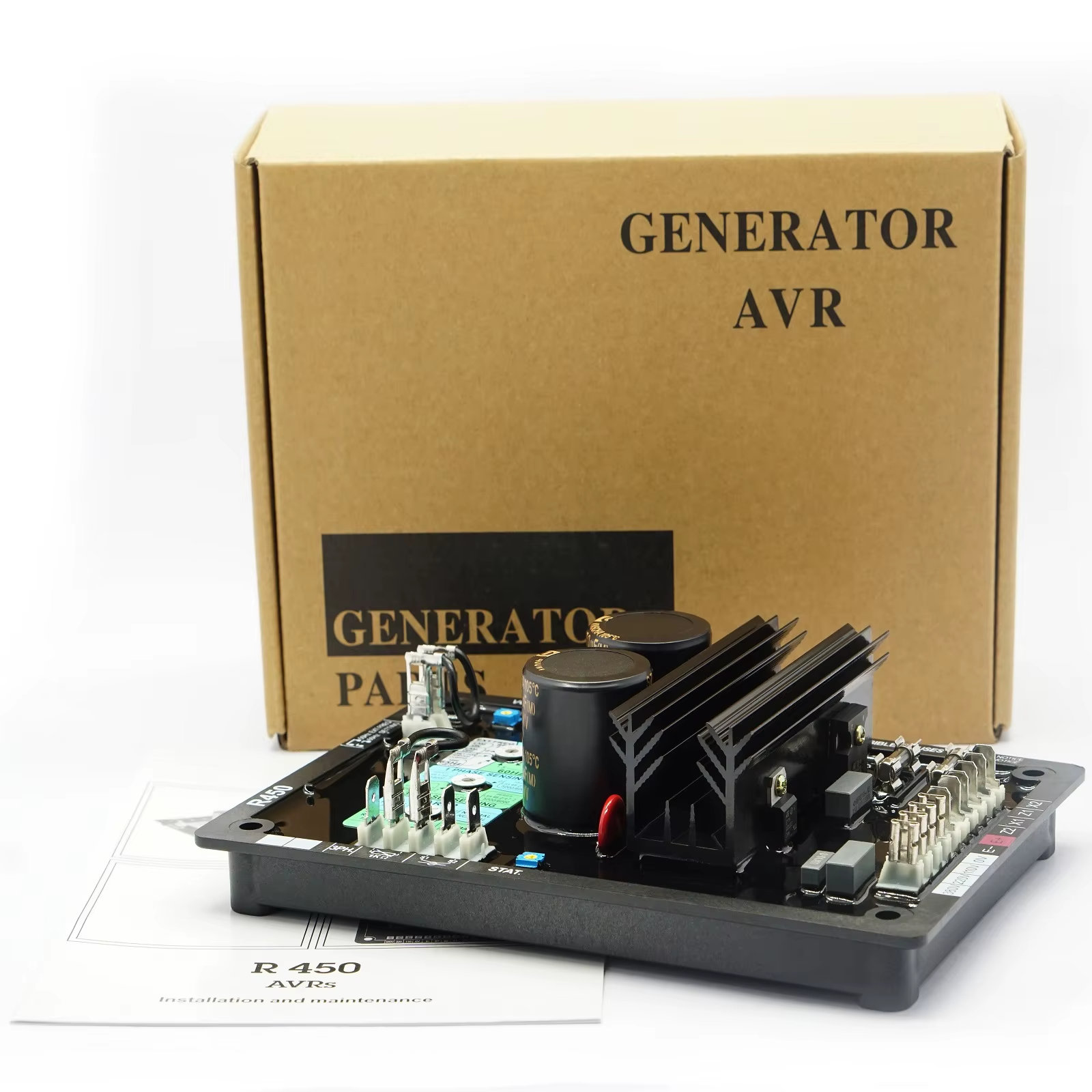
Generator Governor Wholesale: Bulk Procurement Guide
When sourcing generator governors at wholesale volume, the specification gaps that seem minor on a datasheet can turn into costly mistakes across a batch of 50 or 500 units. In reviewing governor orders for diesel genset fleets, I've seen procurement managers focus on price while overlooking the operational context that determines whether an electronic governor or a mechanical unit is actually the right call. This guide is written for buyers managing generator governor wholesale orders — it covers governor types, operating modes, application differences, and calibration requirements before committing to bulk quantities.
Mechanical vs. Electronic Governors: What the Distinction Means for Generator Governor Wholesale
Generator governors regulate diesel engine speed, which sets the output frequency, under changing load conditions. The two categories differ meaningfully in performance tolerance and application suitability, and mixing them in a single wholesale order without clear application segmentation is a common source of return issues.
Mechanical governors use centrifugal flyweight mechanisms to adjust fuel delivery. They're durable, require no external power supply, and tend to have lower unit costs. They work well for portable gensets, simple standby applications, and older fleet models where tight frequency regulation isn't critical.
Electronic governors — such as the ESD5500E Speed Governor Generator Speed Control Unit and the S6700H Governor Speed Controller Diesel Engine Generator Speed Control Unit — use an electronic speed sensor and actuator to regulate engine RPM with precision. The ESD5500E operates across a speed input range of 1K to 7.5K Hz with a maximum speed drift of ±1% under temperature variation, and delivers a nominal actuator current of 7.0 A (peak 10.0 A). That level of accuracy matters for prime power installations and generators serving sensitive electronic loads.
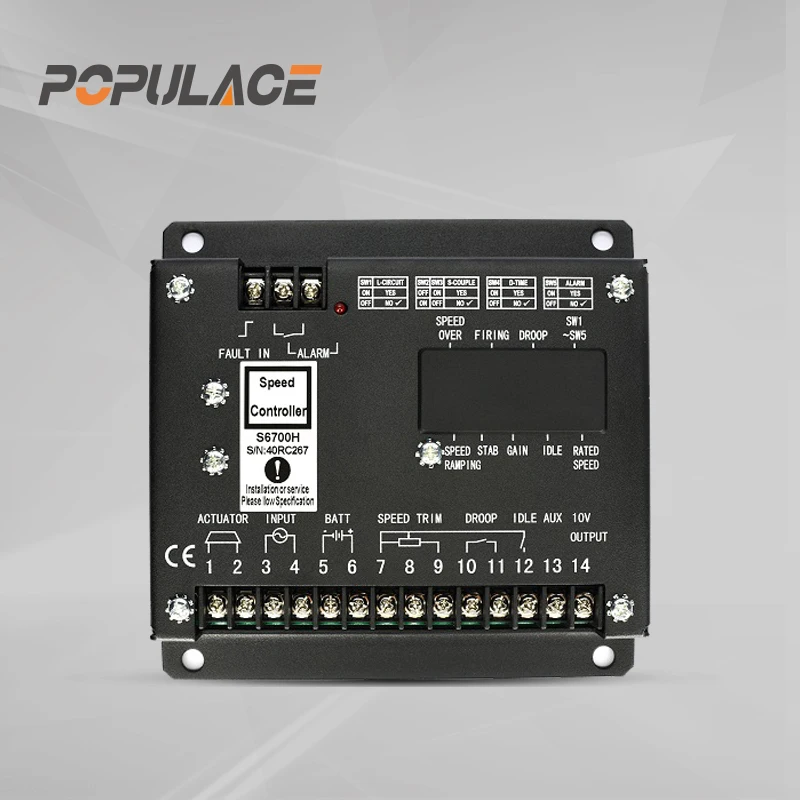
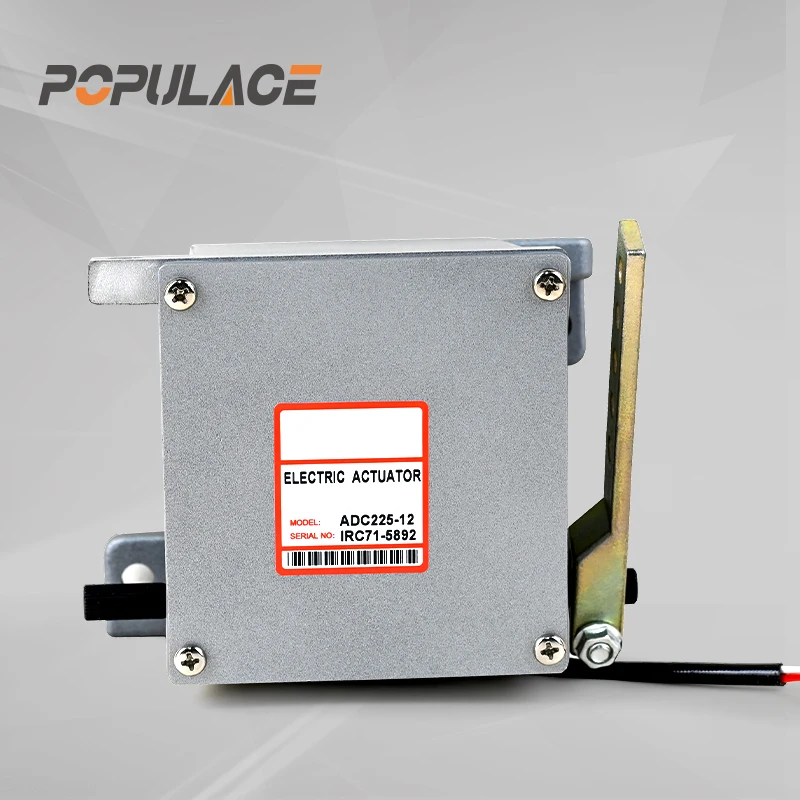
Before placing a generator governor wholesale order, confirm which actuator interface your engine models require. Governor controllers and actuators must be matched: the POPULACE External Actuator (ADC120 / ADC175 / ADC225, 12V/24V) is a common companion component for electronic governor controllers and must be specified separately when ordering. An incorrect actuator model is one of the more expensive mistakes in generator governor wholesale procurement — the governor may appear compatible on spec but fail to regulate correctly once installed.
Isochronous vs. Droop Mode: Why It Determines Which Governor to Order
This is the specification point that catches out many technical procurement managers, particularly when sourcing generator governors for wholesale across mixed-fleet environments.
Isochronous mode holds engine speed constant regardless of load. A 50 Hz generator running isochronously maintains 1500 RPM whether it is at 10% load or 90% load. This is standard for standalone generators where frequency stability matters most.
Droop mode allows a controlled speed reduction as load increases. A typical droop setting of 3 to 5 percent means the engine runs at roughly 1575 RPM at no load and drops to 1500 RPM at full load. This speed differential allows proportional load sharing between parallel generators — each unit takes on more load as its speed falls, which keeps one generator from carrying the entire system while others run light.
If your end customers run parallel generator systems — data centers, hospitals, industrial plants — they need governors with adjustable droop. Standalone prime power or standby units use isochronous operation. A single generator governor wholesale order that conflates these two application profiles will produce misapplied units, calibration problems, and potential callbacks.
Industrial Gensets vs. Mobile Power Stations: Different Generator Governor Wholesale Requirements
The demand profile for generator governor wholesale varies between these two segments, and experienced distributors keep separate stocking lists for each.
Industrial generators and prime power installations run under variable, sustained loads. Electronic governors are generally needed for load stability, parallel operation compatibility, and interface with AMF or ATS control panels. Actuator output demand is higher, and calibration precision affects long-term reliability. Buyers in this segment typically order controllers and actuators as matched pairs when placing generator governor wholesale orders.
Mobile and portable power stations — construction site gensets, rental units, remote power applications — often use simpler mechanical or basic electronic governors. The priority here is durability under vibration and temperature variation rather than tight frequency regulation. For Generac governor applications and similar light-to-medium commercial platforms, simpler electronic speed controllers may be adequate. When ordering Generac governor replacements at wholesale, verify whether the application calls for isochronous or droop behavior, as Generac governor models differ in their mode configuration options.
Part Number Compatibility: Avoiding Costly Mismatches in Bulk Orders
Governor procurement for maintenance applications often involves specific OEM part numbers. References such as e000 23212 1p and e000 24030 are Cummins-format governor-related part numbers used for specific engine series. When sourcing aftermarket or compatible replacements at generator governor wholesale quantities, confirm that the replacement specification — input signal range, actuator interface, and operating voltage — matches the original component requirements, not just the model designation.
A model name can be shared across product revisions with different interface specifications. Requesting the supplier's compatibility documentation before finalizing a bulk order containing e000 24030 or similar OEM reference parts is a practical precaution that prevents post-delivery disputes.
Calibration Parameters: What to Confirm Before Accepting Generator Governor Wholesale Delivery
Electronic governor controllers need on-site calibration after installation. For technical buyers, knowing the calibration scope before ordering helps set realistic expectations and reduces post-delivery complaints from downstream customers who receive generator governor wholesale product without adequate documentation.
Key adjustment parameters typically include:
- Speed reference (frequency set point): sets the target operating RPM for the genset
- Gain / sensitivity: determines how quickly the governor responds to load changes
- Stability: prevents oscillation (hunting) under certain load conditions
- Droop percentage: adjustable from 0% (isochronous) to typically 5 to 10 percent
- Idle control: on units like the ESD5500E, idle speed is set at approximately 160 plus or minus 20 Hz (around 60% of operating set speed) via a dedicated trim potentiometer
Confirm whether the units ship pre-calibrated or require field setup. For generator governor wholesale buyers reselling to distributors or installation contractors, governor controllers that ship with factory-configured settings and a documented parameter sheet reduce the technical support load considerably.
Wholesale Procurement Checklist for Generator Governors
A practical pre-order confirmation list for generator governor wholesale purchases should include:
- Application type: standalone vs. parallel operation, isochronous vs. droop requirement
- Engine platform and actuator interface type (mechanical or electronic, 12V or 24V voltage rating)
- OEM part reference cross-check if replacing specific models — for example, e000 23212 1p or e000 24030 series Cummins governor parts
- Actuator output current spec vs. engine fuel system demand
- Calibration documentation included with shipment
- Pre-shipment technical compatibility verification offered by supplier
- MOQ, pricing tier, and lead time for the planned order volume
- Export documentation package for international generator governor wholesale buyers
Generator governor wholesale sourcing rewards buyers who invest time in specification confirmation upfront. The cost of replacing mismatched units in the field — logistics, installation labor, and downstream customer impact — tends to outweigh whatever was saved on unit price alone.






