
 EN
Generator Engine Governor: Types and Applications
When evaluating diesel generator systems for industrial or commercial deployment, the generator engine governor is one of the most consequential components to understand — and one of the most frequently misspecified. A generator engine governor is a control device that regulates engine speed by adjusting fuel delivery in response to load changes. Its function keeps generator output frequency stable: 1500 RPM for 50 Hz systems or 1800 RPM for 60 Hz systems. Without a properly matched governor, even a well-engineered genset will produce inconsistent voltage and frequency, causing downstream equipment failures or control instability.
The shift most experienced buyers make is realizing that governor selection is not about brand loyalty or cost alone — it is about matching control response characteristics to the specific application. That distinction matters more than most procurement guides acknowledge.
How a Generator Engine Governor Works
The fundamental job of a generator engine governor is to sense engine speed, compare it against a setpoint, and adjust the fuel rack or throttle to correct any deviation. When load increases, engine speed tends to drop; the governor senses that drop and increases fuel supply. When load decreases, speed rises and the governor reduces fuel. This closed-loop response maintains frequency within an acceptable band for connected equipment.
Speed sensing can be mechanical — using the rotational force on flyweights — or electronic, using a magnetic pickup (MPU) sensor mounted near the ring gear. The actuating mechanism similarly differs between governor types: mechanical governors use centrifugal linkages directly connected to the fuel injection pump, while electronic governors use an electro-hydraulic or electric actuator to reposition the fuel rack.
Types of Generator Engine Governors
Mechanical Governor
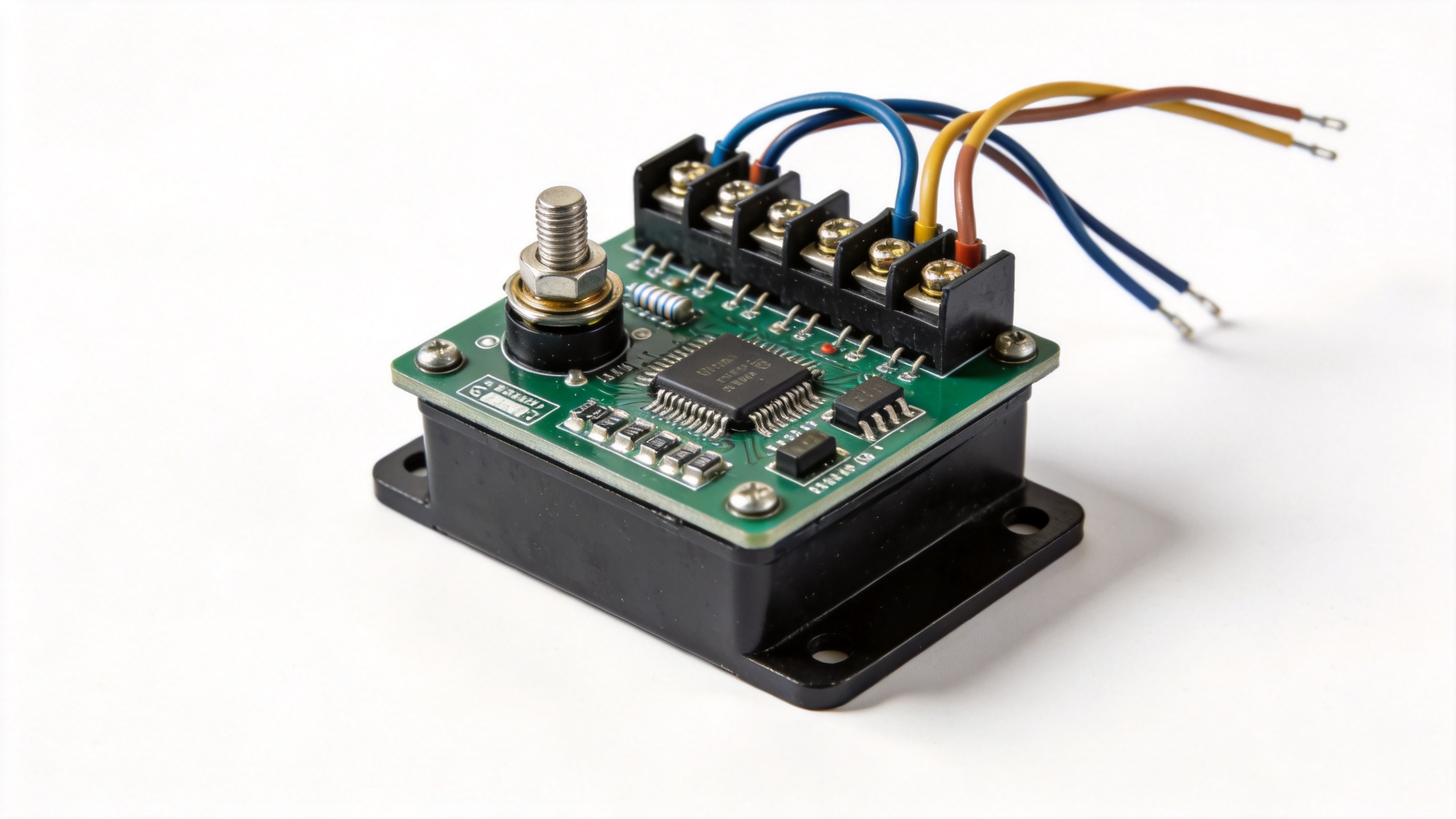
Mechanical governors are the simplest and most durable type fitted to diesel generator engines. They operate through centrifugal flyweights that expand outward as engine speed increases, moving a control collar that adjusts fuel supply via a direct mechanical linkage. No external power supply is required; the governor draws its energy entirely from engine rotation.
For standalone generators in lower-sensitivity applications — remote site power, agricultural pumping, or single-phase construction loads — a mechanical governor can be sufficient. Speed regulation accuracy is typically in the range of ±2–5% from no-load to full-load. The main limitation is response time: purely mechanical systems react more slowly to sudden load transients than electronic alternatives, which can cause brief frequency dips on sensitive loads.
Electronic Governor
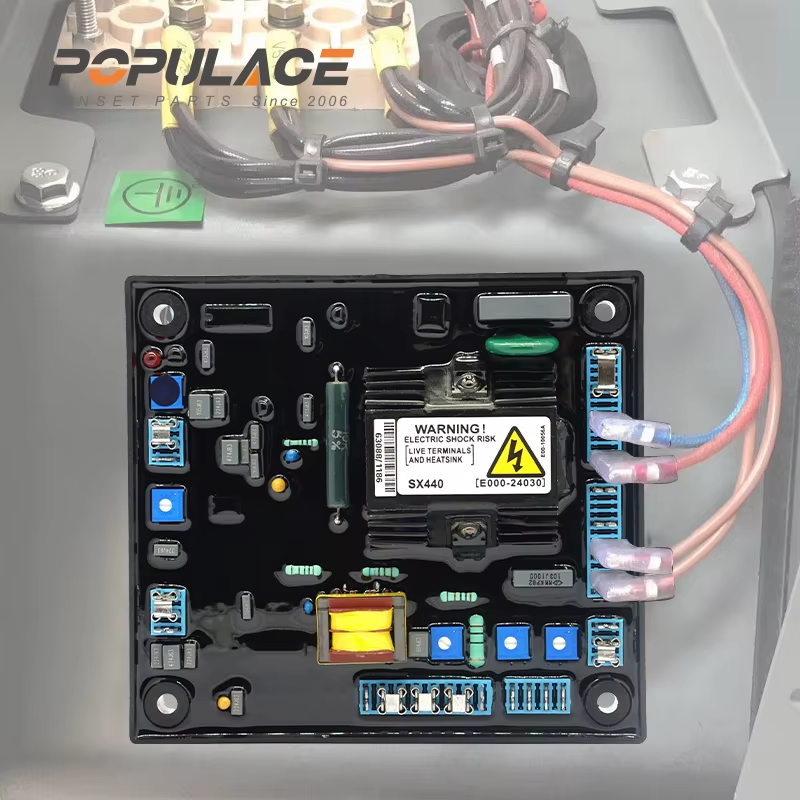
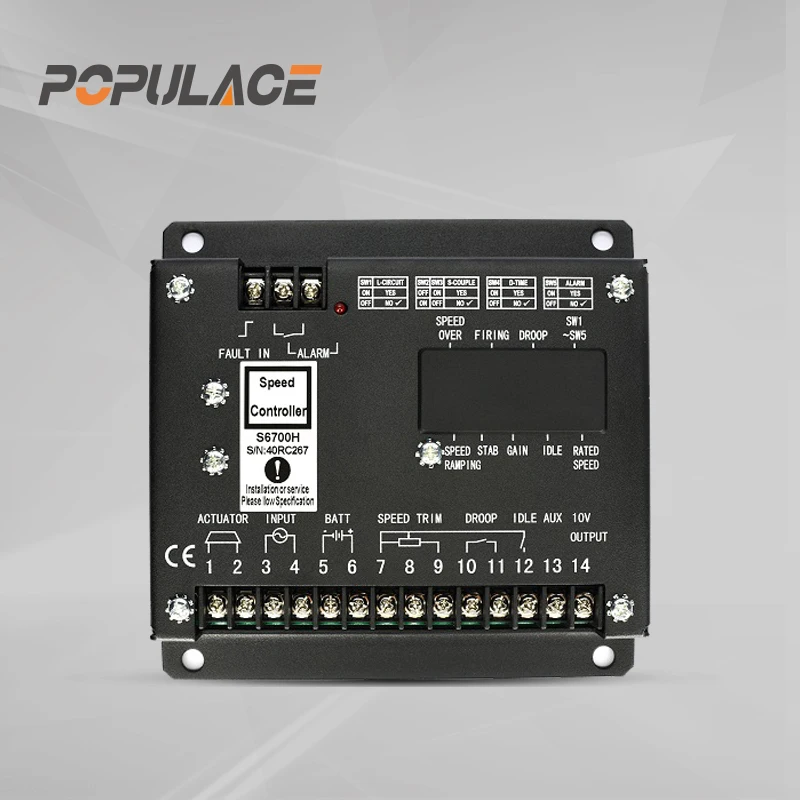
Electronic governors replace the mechanical flyweight sensing system with electronic speed sensing, typically via a magnetic pickup (MPU) reading off the engine flywheel. A control module — such as the S6700H Governor Speed Controller Diesel Engine Generator Speed Control Unit — processes the speed signal and outputs a proportional control current to an actuator, which repositions the fuel rack. This approach enables faster, more precise speed correction than flyweight-based systems.
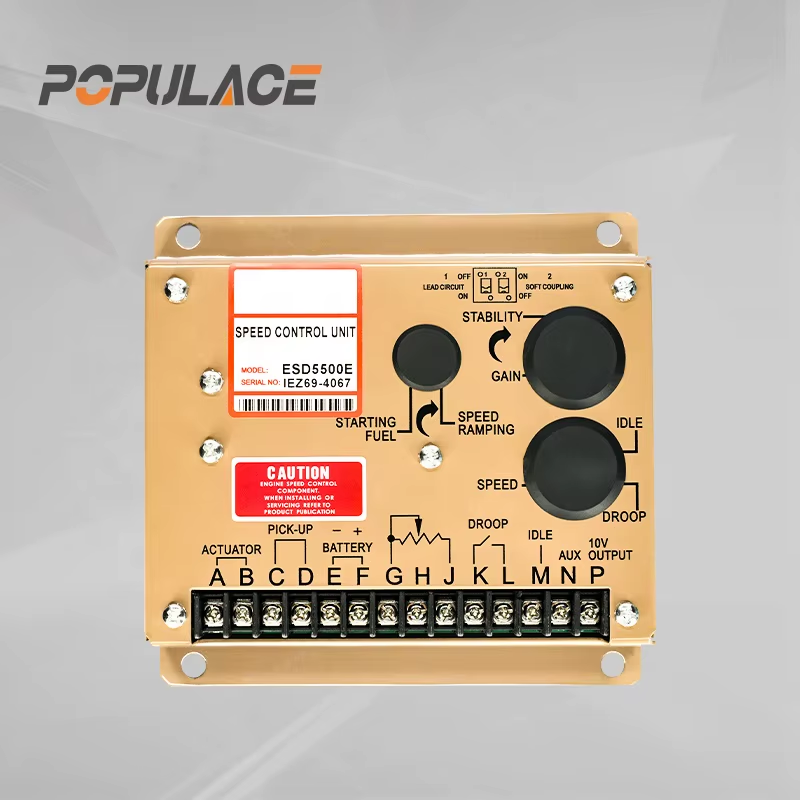
The ESD5500E Speed Governor Generator Speed Control Unit is another widely used electronic governor solution for diesel engines, offering adjustable gain, stability, and speed settings suitable for both standby and prime power configurations. Electronic governors typically achieve speed regulation accuracy of ±0.25–1%, making them the preferred choice for data centers, telecom sites, hospital power, and other frequency-sensitive loads.
In control architectures that include automatic mains failure logic, the governor controller works alongside modules like the Deep Sea Electronics 7310 MKII (DSE7310 MKII) or Deep Sea Electronics 6020, which handle AMF start sequences, protection relay functions, and generator protection relay logic. These systems communicate with the governor over analog or CAN bus interfaces to coordinate load acceptance and speed ramping during generator startup and transfer sequences.
Operating Modes: Isochronous vs. Droop
Beyond governor type, the operating mode setting determines how the governor responds to load — and this distinction is critical for parallel generator operation.
Isochronous (Constant-Speed) Mode
In isochronous mode, the generator engine governor actively corrects speed to maintain exactly the nominal setpoint regardless of load changes. Output frequency stays constant — which is what you want for a standalone generator connected to a sensitive load. If your application runs at a stable load profile, isochronous mode will generally hold frequency tight. If the load fluctuates sharply, the governor's response latency becomes the limiting factor, not the mode itself.
One common pitfall: deploying two generators both configured in isochronous mode and then running them in parallel. The result is load hunting — both governors compete to take on or shed load, causing oscillation rather than stable sharing. This is a genuine field problem, not a theoretical one.
Droop (Speed-Droop) Mode
Droop mode intentionally allows engine speed — and therefore frequency — to decrease slightly as load increases. A typical droop setting is 4–5% from no-load to full-load. This proportional relationship allows multiple generators running in parallel to share load naturally: as one unit takes on more load, its frequency drops slightly, signaling that it is carrying more of the burden.
The standard parallel operation configuration is: one generator in isochronous mode to establish and maintain bus frequency, with additional generators set to droop mode for proportional load sharing. When all generators are in droop mode on an islanded bus, a separate load-sharing controller is needed to maintain frequency. This is a configuration detail that technical procurement teams should confirm with the generator controller supplier before specifying equipment.
Industrial and Mobile Application Differences
Industrial stationary generators — for factories, data centers, and utility backup — typically prioritize precise frequency stability and integration with building management systems. Electronic governors with tight isochronous response characteristics and compatibility with generator protection relay systems are standard for these installations. The ability to interface with AMF modules such as the Deep Sea Electronics 6020 or DSE7310 MKII adds automatic start, load sensing, and fault shutdown capability within a single coherent control architecture.
Mobile generating sets for construction sites, military field operations, or remote telecommunications rely more heavily on robustness and ease of field adjustment. Mechanical governors and simpler electronic governor units both remain in use in these environments, where access to electronic diagnostics is limited and replacement parts availability matters as much as performance specs.
Governor Calibration and Adjustment
Whether mechanical or electronic, a generator engine governor must be calibrated to the specific engine and application after installation. The core adjustment parameters are:
- Speed setpoint: Sets the target RPM (1500 or 1800 RPM for 50/60 Hz applications).
- Gain (sensitivity): Controls how aggressively the governor responds to speed error. Too high causes hunting and oscillation; too low causes slow recovery from load steps.
- Stability (damping): Limits overshoot after a correction, smoothing the response curve.
- Droop percentage: For droop-mode units, sets the speed-load slope used for parallel load sharing.
For electronic governors, these parameters are typically adjusted via potentiometers on the control board or through a digital interface. Units such as the S6700H Governor Speed Controller include labeled adjustment trim pots for speed, gain, and stability — allowing field technicians to tune response without specialized software. Actuator compatibility is a separate verification step: the external actuator type (ADC120, ADC175, or ADC225 rated for 12V or 24V systems) must be matched to the governor controller output specifications.
For actuator selection, the POPULACE ADC Series External Actuators (ADC120 / ADC175 / ADC225) cover a range of torque requirements for different engine sizes, rated for both 12V and 24V systems. Selecting by torque requirement and voltage rating rather than brand name reduces the risk of mismatch in replacement and retrofit situations — something that matters in procurement, where incorrect actuator selection means a second sourcing cycle.
Selecting the Right Generator Engine Governor
For technical procurement buyers, the selection decision comes down to four practical criteria: engine interface compatibility (mechanical linkage vs. MPU speed sensor), application load profile (stable vs. variable), operating configuration (standalone vs. parallel), and integration requirements (standalone governor vs. integration with AMF and generator protection relay modules).
Electronic governors are the appropriate choice for most industrial and commercial applications requiring tight frequency control, compatibility with automatic transfer switches, or integration with modern generator protection relay systems and AMF controllers. Mechanical governors remain a viable, cost-effective choice for simple standalone applications where load profiles are predictable and field serviceability without electronics is the priority.
KYGEN Power (Populace brand) supplies both electronic governor controllers and actuator assemblies, letting buyers source matched governor and actuator combinations from a single supplier — which reduces compatibility verification steps in the procurement process.






