
 EN
Generator Controller: Types, Functions and Uses
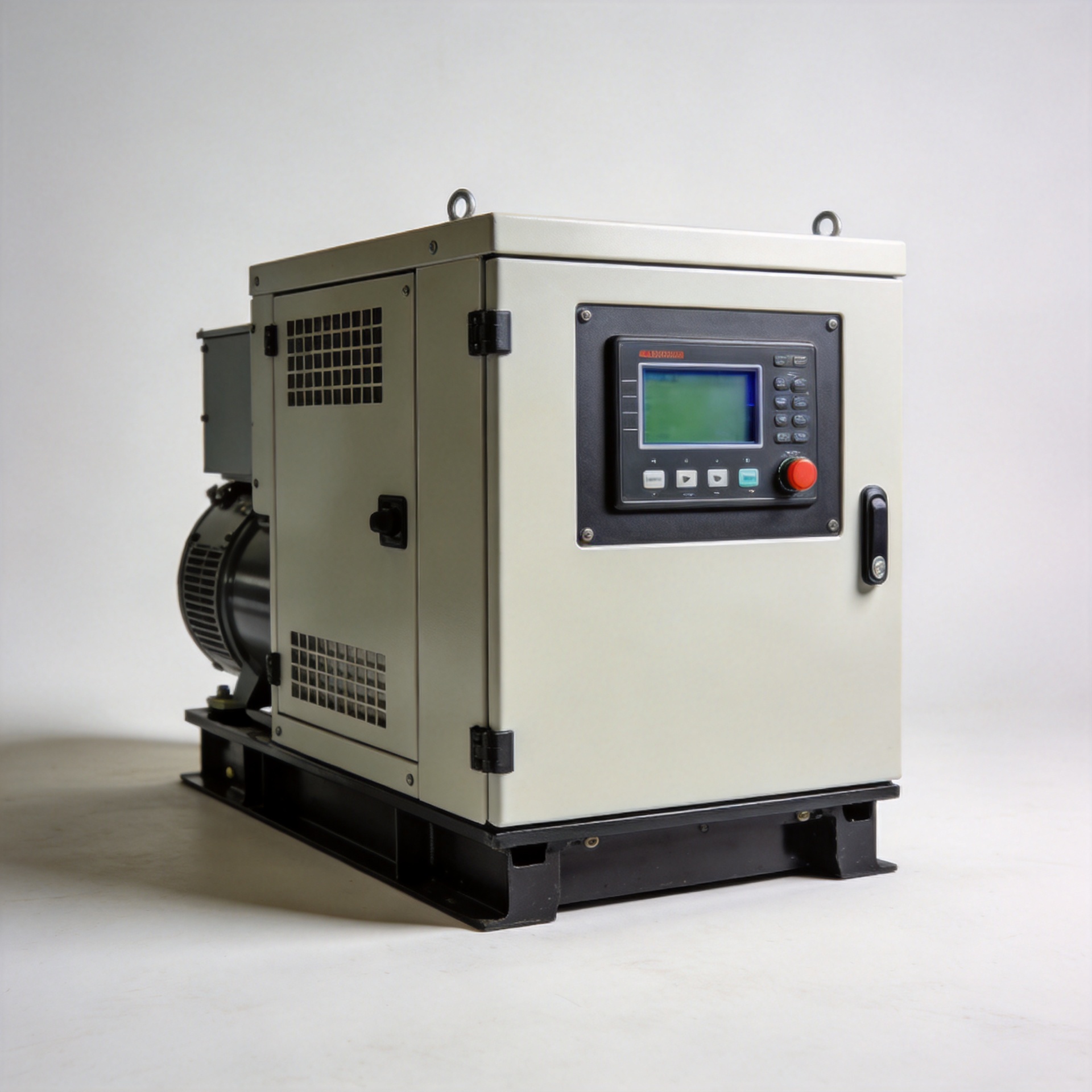
When a standby generator fails to start during a power outage, or shuts down unexpectedly under load, the first question isn't which alternator brand is installed — it's whether the generator controller is configured correctly for the application. As a technical specialist in generator control components, most genset failures I encounter trace back not to mechanical faults but to mismatched or misconfigured control units. Understanding what a generator controller does, which type suits your situation, and what to verify before commissioning can save significant time and cost for distributors and brand owners alike.
What Does a Generator Controller Do?
A generator controller is the central management unit of a genset. Its primary responsibilities include automatic engine start and stop sequencing, real-time monitoring of operating parameters, and protection shutdown when limits are exceeded. The unit continuously tracks voltage output, frequency, engine speed (RPM), oil pressure, coolant temperature, and battery voltage. If any parameter moves outside the programmed threshold — say, oil pressure drops below 1.5 bar or coolant temperature exceeds 105°C — the controller triggers an alarm or initiates an emergency stop.
Beyond protection, modern control modules handle load management, run-hour logging, fault code recording, and remote communication. For wholesalers and brand owners supplying to industrial or commercial markets, picking the right generator controller type directly affects how reliably the genset package performs in the field.
Types of Generator Controllers
AMF Controllers (Automatic Mains Failure)
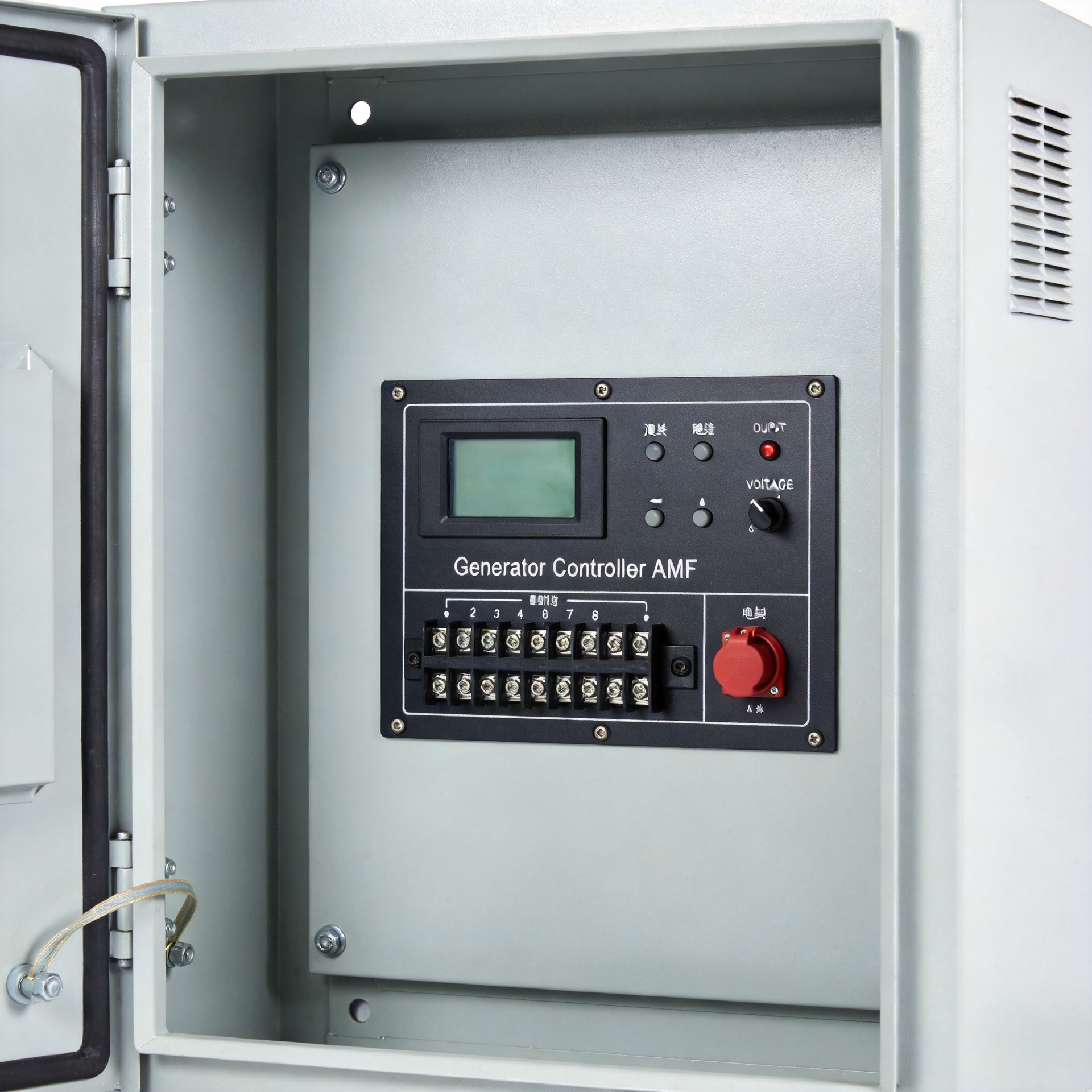
An AMF panel monitors utility voltage continuously. When mains supply drops below the set threshold — typically below 80% of nominal voltage — the amf panel detects the failure, starts the generator automatically, and transfers the load. When utility power is restored and stable, the unit transfers the load back and shuts the engine down after a cool-down period. This type of generator controller is the standard choice for backup power applications in hospitals, data centers, and commercial buildings.
If your priority is fully automatic standby operation with no manual intervention required, an AMF panel is the correct starting point. The key parameter to verify is the mains detection sensing range, which must match the local utility voltage standard (230V/50Hz or 120V/60Hz depending on region).
ATS Controllers (Automatic Transfer Switch)
ATS controllers use a volt-free contact system. Rather than monitoring mains voltage directly, this type receives a start/stop signal from a separate transfer switch panel. This distinction matters for installation design: in an AMF panel setup, the generator controller handles both mains monitoring and genset control from a single unit; in an ATS setup, the transfer switch and control unit are separate devices communicating via signal contact.
For larger installations where the transfer switch is already part of the electrical infrastructure — or located remotely from the genset — an ATS unit keeps the control logic clean and separate. DEIF controllers, such as the AGC 150 ATS, implement AMF logic within an ATS architecture. DEIF controllers accept control input via digital signals, analogue input, front panel buttons, or communication protocols — practical for complex sites where deif controllers or equivalent units need to tie into existing electrical infrastructure.
Manual Controllers
Manual controllers provide start, stop, and basic parameter display without automatic mains monitoring. They suit prime power applications — where the generator runs as the primary source rather than standby — or situations where a site operator is on-site to initiate startup. For remote or unattended sites, manual control is generally not appropriate regardless of cost savings.
Digital Generator Controllers vs. Analog Controllers
A common sourcing decision is whether to specify a digital generator controller or accept an analog alternative. For most commercial and industrial genset applications, digital units offer clear advantages: programmable protection thresholds, fault logging with timestamps, multi-language LCD or graphic displays, and — in modular designs — plug-in communication modules for remote access.
The DATAKOM D-300-MK3 Genset Controller illustrates these advantages. This modular AMF/ATS generator controller supports CAN J1939 engine communication, Modbus RTU and Modbus TCP protocols, and accepts plug-in modules for GSM/4G, Ethernet, or Wi-Fi connectivity. A single unit can serve both a basic local installation and a remotely monitored fleet deployment — the hardware stays the same, and the functionality is unlocked through modules and software configuration. For distributors building standardized genset packages, this platform flexibility reduces the number of SKUs required to cover diverse customer requirements.
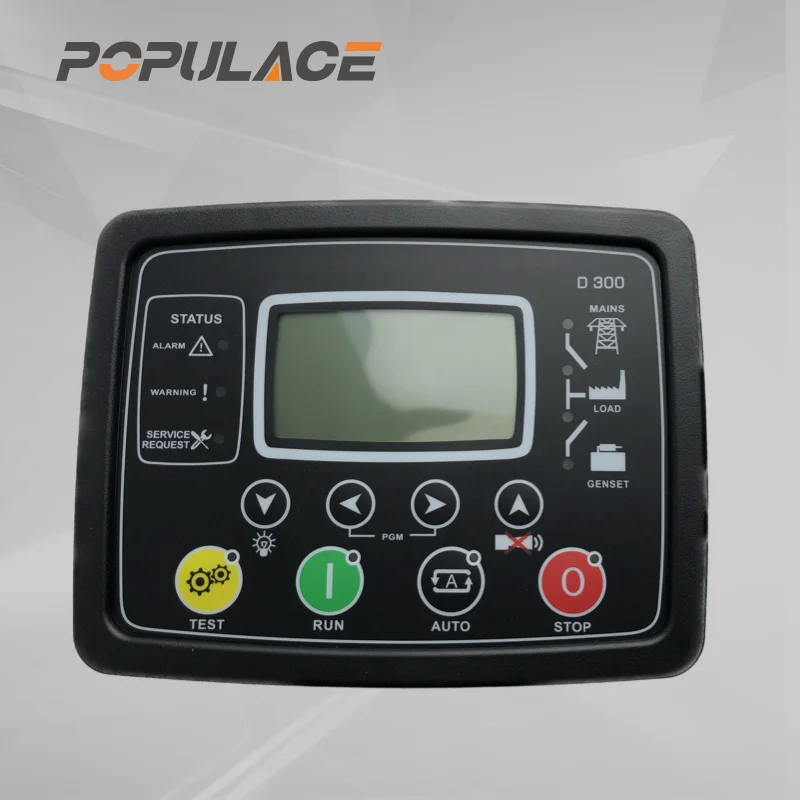
The POPULACE DKG 307 AMF Controller Panel Module is a cost-effective option for standard amf panel applications. Its compact panel-mount design fits most single-phase and three-phase genset enclosures, making it practical for mid-range equipment where advanced communication features are not required.
For applications requiring DSE-compatible interfaces, the POPULACE DSE5110 Genset Controller provides a replacement-compatible option for Deep Sea 5110 and 5120 series units, suitable for diesel generator sets where the original DSE unit needs to be replaced or standardized across a fleet.
Generator Controller Selection: Key Criteria by Application
The selection decision typically comes down to four factors:
- Operating mode: Standby applications require a generator controller with AMF panel logic. Prime power applications can use manual or simplified automatic units.
- Site supervision: Unattended remote sites require automatic units with alarm outputs and ideally remote monitoring capability.
- Parallel operation: Sites running multiple gensets in parallel need a controller that supports synchronization and load sharing — a feature set found in mid-to-high range digital units, including selected deif controllers and Datakom models.
- Engine protocol: Newer electronic engines communicate via CAN J1939. Confirm the unit supports J1939 if the engine ECU requires it, or fault codes will not be readable from the display.
For standby vs. prime power: standby generators run infrequently, with total run hours typically below 200 per year. Prime power generators accumulate run hours quickly. This affects maintenance intervals and monitoring depth — which is why a comprehensive generator maintenance checklist tied to the generator controller run-hour counter is worth implementing from initial commissioning. A generator maintenance checklist should include self-test cycles, protection threshold verification, and fault log review at every service interval.
Installation and Commissioning Notes
Before commissioning a generator controller, confirm the following. This also forms the basis of a practical generator maintenance checklist for any new installation:
- Mains voltage sensing wiring is connected to the correct amf panel input terminals and rated for the site voltage.
- Engine protection thresholds (oil pressure, coolant temperature, overspeed) are programmed according to the engine manufacturer's specifications — not left at factory defaults.
- A full test sequence has been run: simulate mains failure, verify the unit starts the engine within the configured start delay, confirm load transfer, then restore mains and verify the controller completes cool-down and stops the engine cleanly.
- Communication parameters (Modbus address, baud rate, or IP settings for networked units) are documented before handover.
Skipping any of these steps is the most common reason gensets pass factory test but fail during first real use. For deif controllers and other networked units, also verify that remote communication links are active and alarm routing is correctly configured before signing off the installation.
Summary
A generator controller is not a commodity component — it defines how reliably the genset responds under real operating conditions. AMF panel units are the standard for automatic standby applications; ATS controllers suit sites with separate transfer switch infrastructure; digital units with modular communication options reduce complexity for distributors managing diverse customer requirements. When evaluating options for wholesale supply or OEM integration, matching the generator controller type to the application mode and site supervision model is more important than the headline price per unit.






