
 EN
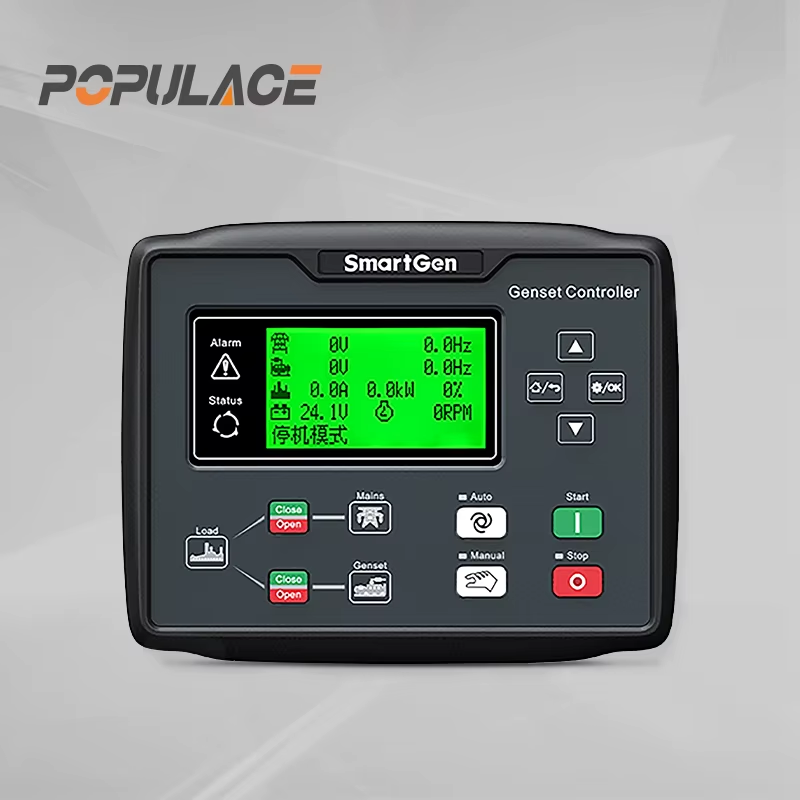
Generator Control Module: AMF and Auto Start Types
A generator control module is the decision-making core of any automatic genset system. It determines when the generator starts, how it runs, and what happens when grid power returns. For wholesale buyers and distributors sourcing diesel generator components at volume, understanding the distinctions between AMF and Auto Start module types is not a theoretical exercise — it directly shapes which products you stock, how you specify orders, and whether replacement parts are compatible with your customers' generator configurations.
This article explains both types from a technical standpoint, compares their operating logic, and covers practical sourcing considerations for B2B buyers working with diesel generator 10kw units and larger commercial gensets.
What Is a Generator Control Module?
A generator control module — also called a genset controller — is an electronic unit mounted in the control panel that manages the entire operating cycle of a diesel or gas generator set. It handles engine startup sequencing, monitors running parameters such as oil pressure, coolant temperature, and battery voltage, and triggers protective shutdowns when specified limits are exceeded.
In its most basic form, a generator control module accepts input signals from the engine and alternator, processes them against pre-programmed thresholds, and outputs control signals to the fuel solenoid, starter motor, and other actuators. More advanced units support RS-485 communication, remote monitoring, and data logging.
The two primary operating types — AMF and Auto Start — differ fundamentally in what triggers the generator to start, not merely in how they start it.
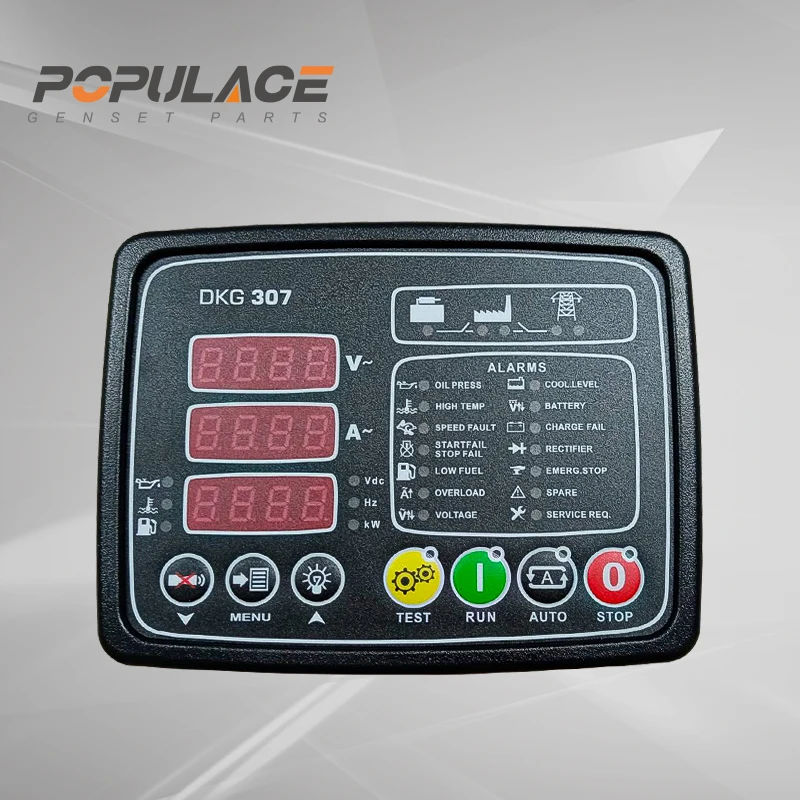
AMF (Automatic Mains Failure) Modules: Mains Voltage Detection
An AMF generator control module continuously monitors the incoming utility supply. When mains voltage drops below a set threshold — or disappears entirely — the module detects this as a mains failure event and initiates the generator startup sequence automatically. Once the generator reaches stable voltage and frequency, the module signals the automatic transfer switch (ATS) to shift the load from the utility to the generator. When mains power is restored and has been stable for a configurable time delay, the module initiates a transfer back and then cools down and stops the generator.
The core function of an AMF generator control module is mains sensing: it needs connection to the utility input to detect failure. This requirement shapes the wiring installation and means AMF modules are typically used in permanently installed standby applications — commercial buildings, hospitals, data centers, and any facility where automatic backup power is mandatory.
Common AMF module families include SmartGen HGM series, DSE 4000 series, Comap InteliATS, DATAKOM controllers, and POPULACE DKG series units. The POPULACE DKG 307 AMF Controller is one example of an AMF generator control module designed for automatic mains failure detection, with configurable time delays and compatibility with a range of diesel genset configurations.
Auto Start (ASM) Modules: Remote Signal-Based Control
An Auto Start generator control module — sometimes called an ASM (Automatic Start Module) — does not monitor mains voltage. Instead, it waits for a remote start signal, typically a contact closure or a digital input from an external device such as a remote switch, a building management system, or an agricultural or industrial controller. When the signal activates, the module starts the generator; when the signal is removed, the module initiates the stop sequence.
Because Auto Start modules do not need to sense mains voltage, they are simpler and often lower cost than AMF units. They are used in applications where the decision to start the generator is made externally — standby irrigation pumps, portable generator sets for events or worksites, and any configuration where the user controls start/stop directly rather than relying on automatic mains monitoring.
Auto Start modules can also be found in purpose-built diesel generator 10kw units used in telecommunications backup installations where a remote management system handles start logic rather than relying on built-in mains sensing.
AMF vs. Auto Start: Functional Comparison
| Feature | AMF Module | Auto Start Module |
|---|---|---|
| Start trigger | Mains voltage failure detection | Remote signal (contact closure / digital input) |
| Mains sensing required | Yes | No |
| ATS integration | Standard | Optional or external |
| Typical application | Permanent standby, commercial backup | Remote control, portable, agricultural |
| Complexity | Higher (mains sensing, delay timers, ATS output) | Lower |
| Cost level | Higher | Lower to mid |
The distinction matters most when a buyer is specifying replacement controllers. Substituting an Auto Start module in a system designed for an AMF generator control module will not provide automatic mains failure response — the generator simply will not start when the grid goes down unless someone manually sends the remote start signal. That is a specification mismatch that spec sheets alone will not flag if the buyer only checks physical dimensions and voltage compatibility.
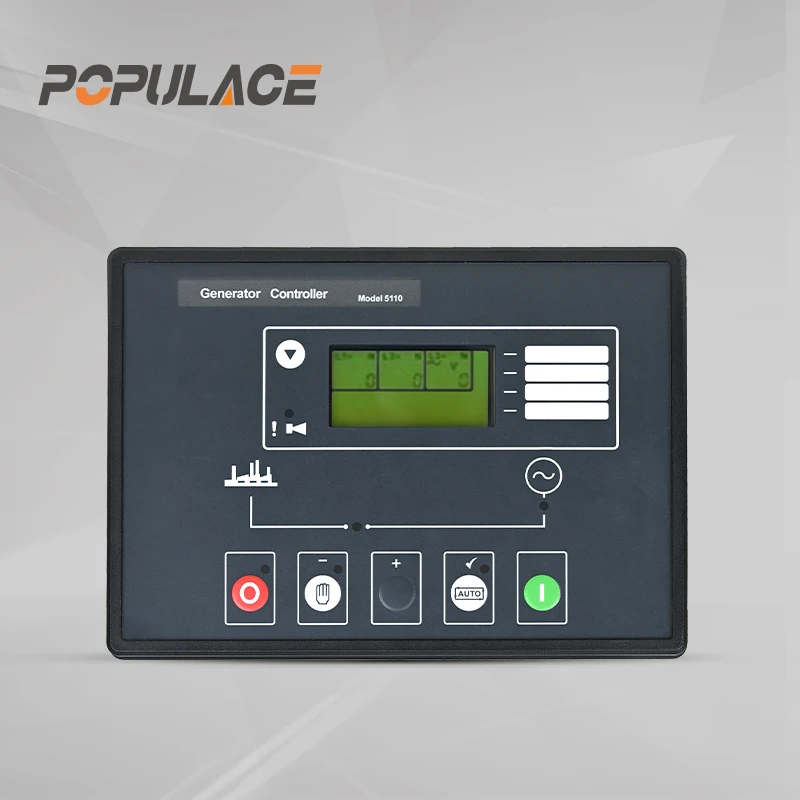
Module Types in Multi-Function Controllers
Many modern genset controllers combine both AMF and manual or remote start functions in a single unit, with the operating mode selected by a front-panel switch or software configuration. The DSE 5110 and similar units — such as the POPULACE DSE 5110 5120 Generator Controller — offer both AMF functionality and remote start capability, allowing the same hardware to serve multiple application types depending on installation configuration.
For wholesale distributors managing inventory across multiple customer sites, stocking AMF-capable multi-function controllers typically provides more flexibility than stocking dedicated Auto Start-only units. The tradeoff is higher unit cost and additional programming steps during commissioning.
Compatibility and Replacement Considerations
A generator control module replacement is not automatically compatible simply because it fits physically and matches the nominal voltage. Key compatibility factors include:
- Operating type: AMF vs. Auto Start vs. multi-function
- Engine protection inputs: Oil pressure, coolant temperature, and speed sensor connection types
- Alternator feedback: Whether the module accepts direct CT input, external transducer signal, or bus sensing
- Communication protocol: RS-485, CAN bus, or Modbus support if remote monitoring is required
- ATS output configuration: Contact type and rating for transfer switch control
Distributors sourcing generac parts or replacement controllers for mixed-brand fleets should confirm these parameters before committing to bulk orders. A controller that works for one brand's diesel genset may require wiring harness modification or firmware configuration to operate correctly on a different platform.
The DATAKOM D-300-MK3 Genset Controller is one option for buyers who need an AMF-compatible module with broad engine compatibility and standard protection input wiring — verifying the exact wiring map and input threshold settings against the target engine is still recommended before bulk procurement.
Wholesale Sourcing and Inventory Planning for Generator Control Modules
For B2B wholesale buyers managing generator control module inventory for resale or fleet maintenance, a few practical points apply:
First, AMF modules should be treated as a distinct SKU category from Auto Start modules, even when they appear physically similar. Mixing them in unlabeled inventory creates the risk of shipping the wrong type to a customer — a problem that may not surface until installation.
Second, multi-function controllers that support both AMF and Auto Start modes reduce the number of SKUs needed for broad compatibility coverage. This is particularly useful for distributors serving mixed-application customer bases.
Third, when evaluating suppliers for generator control module volume orders, confirm that the supplier can provide wiring diagrams and engine compatibility charts — not just the module itself. Buyers who have also sourced generator carburetor components or fuel solenoids know that matching a part's physical specification is only half the requirement; complete installation documentation is what makes the difference at the service technician level.
Maintaining a buffer stock of the most common AMF and Auto Start generator control module models — particularly for high-installed-base platforms — reduces the risk of customer downtime when a controller fails unexpectedly. A structured spare parts inventory, organized by module type and compatible engine range, is more effective than general-purpose stock that requires last-minute identification before dispatch.
Fujian Kaiyue Electronics (brands: Populace and Doopser) supplies generator control modules and associated replacement parts to wholesale buyers and brand merchants across Asia, Europe, and North America. For compatibility inquiries on specific AMF or Auto Start module types for diesel genset applications, contact [email protected] or visit kygenpower.com.






