
 EN
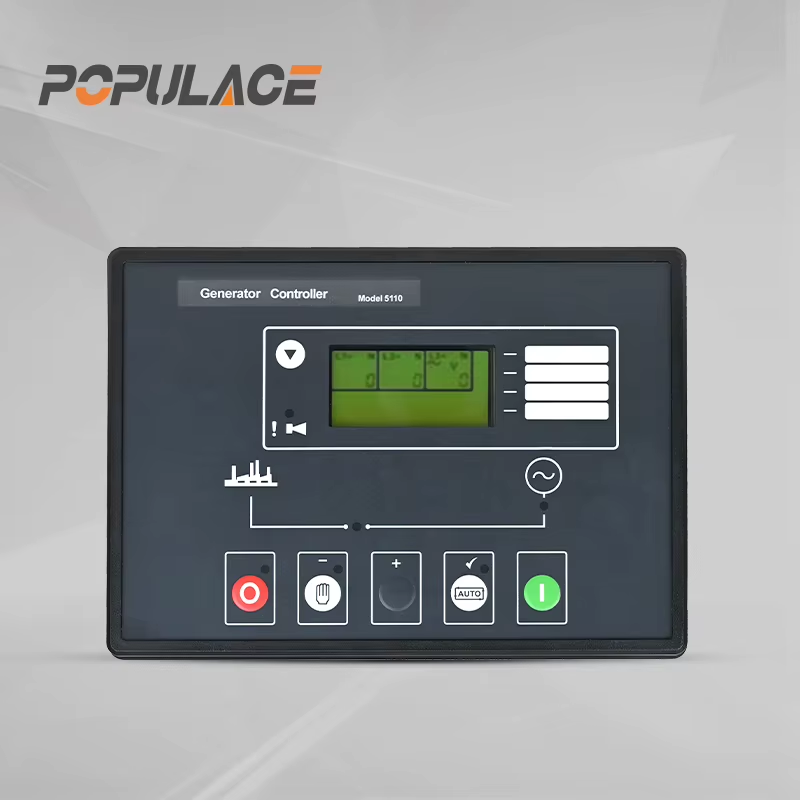
Generator Auto Start Controller: Features and Selection Guide
A generator auto start controller is the central control unit that manages automatic start, stop, protection, and monitoring for a diesel or gas genset. For wholesale buyers and brand integrators evaluating controller options — whether replacing an aging generac controller on an existing installation or specifying a unit for a new product line — understanding what separates a capable digital module from a basic relay-logic board matters far more than comparing datasheets at face value.
This guide covers the core functions, control mode differences, digital-versus-analog trade-offs, and the practical selection criteria that experienced sourcing professionals apply when building out controller inventory.
Core Functions of a Generator Auto Start Controller
At its most basic, the controller handles three integrated functions: automatic start/stop sequencing, protection parameter monitoring, and operator interface output.
When mains voltage falls outside the configured threshold, an AMF-capable generator auto start controller initiates the start sequence: battery check, fuel engagement, crank output, and warm-up timer. Once the generator reaches stable output frequency and voltage, the transfer signal is issued. On mains restoration, the sequence reverses — retransfer, cool-down run, stop. This whole cycle is configurable in the controller's parameter set.
Protection functions typically include:
- Low and high coolant temperature
- Low oil pressure
- Overspeed and underspeed
- Battery undervoltage
- Generator over- and undervoltage, and overfrequency
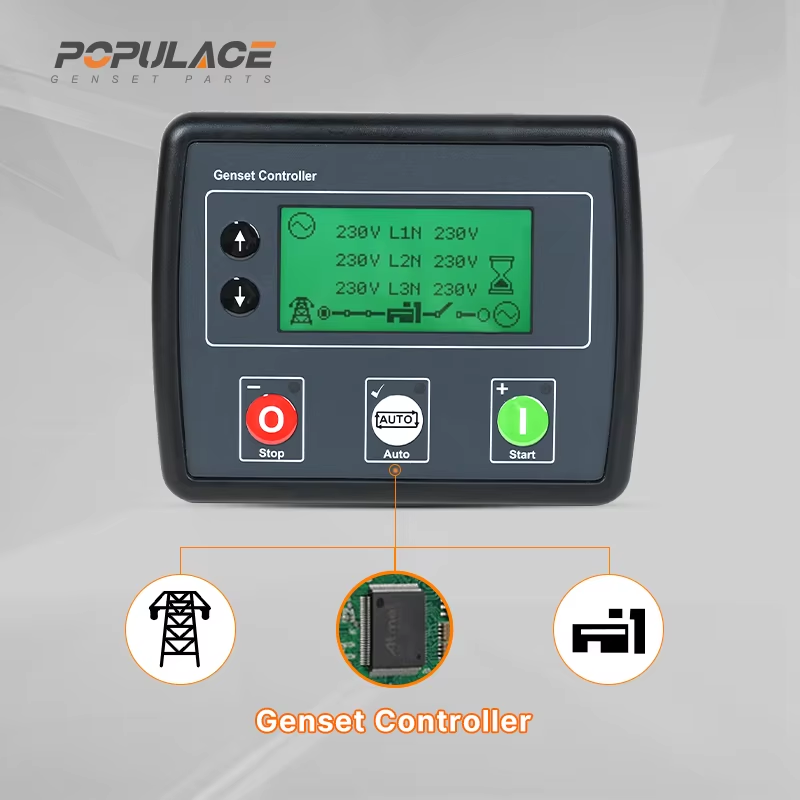
Higher-end digital controllers add three-phase current sensing, maintenance hour counters, fault logging with timestamps, and communication interfaces. The specific inputs and threshold ranges depend on the controller model and the engine it's connected to.
AMF, ATS, and Manual Control Modes
Most generator auto start controllers support multiple operating modes. Matching the mode to the installation type is more useful than comparing feature lists in isolation.
AMF Mode (Automatic Mains Failure)
AMF mode is the standard configuration for diesel standby systems. The controller monitors mains continuously. On dropout, it starts the generator automatically, manages the ATS signal output, and restores mains supply when power returns. AMF units are well-suited for applications under 100 kVA or where a combined start-and-transfer solution is preferred over a separate ATS panel.
ATS Mode (Automatic Transfer Switch)
In some installations, typically those with larger switchboards, a dedicated ATS panel handles source transfer independently. The generator auto start controller in this configuration only issues a volt-free start contact; the transfer panel manages the switching logic. If your buyer already has an ATS panel in the system, specifying a controller with ATS output capability avoids redundant functionality in the genset-side module.
Manual and Remote Mode
Manual or remote mode suits scheduled test runs, parallel generator applications, and installations where mains monitoring is not required. The controller accepts a start command, manages the engine sequence, and maintains protection monitoring throughout the run. If your application runs on a consistent load profile where mains monitoring is not the primary function, this is a straightforward configuration to deploy.
Digital Controllers vs. Analog Controllers
The transition from analog relay-logic modules to digital microprocessor-based controllers has been the single most significant shift in genset control over the past two decades. The performance difference goes well beyond display quality.
Analog auto start modules, including the type still found on older standby units and legacy pb50 reliance-based transfer systems, rely on fixed relay outputs and potentiometer-set thresholds. They're reliable and simple to wire. The limitation is calibration drift, the inability to log fault history, and require on-site parameter adjustment for any threshold changes. For buyers managing distributed service fleets, this increases per-incident field engineering time.
Digital controllers store parameters in non-volatile memory and log fault events with timestamps. Protection thresholds are configured via software, either through a front-panel interface or a PC-based tool over USB or RS-232. Most current digital models from Deep Sea Electronics, SmartGen, and Datakom also include RS-485 ports with MODBUS RTU support, which supports integration into SCADA and BMS systems without additional hardware.
The generac evolution 2.0 controller is a well-recognized example of a brand-integrated digital controller — designed specifically for Generac units, with a proprietary interface and brand-specific diagnostic logic. For generic or multi-brand applications, independent digital controllers offer more flexibility because they're not locked to a single engine manufacturer's protocol.
One point that sourcing professionals learn over time: a higher specification doesn't automatically mean better field performance. A correctly configured entry-level controller outperforms a high-end unit whose protection thresholds were left at factory defaults without adjustment. What determines real-world reliability is compatibility between controller firmware, engine protection values, and the panel wiring.
Recommended Controllers for Wholesale Applications
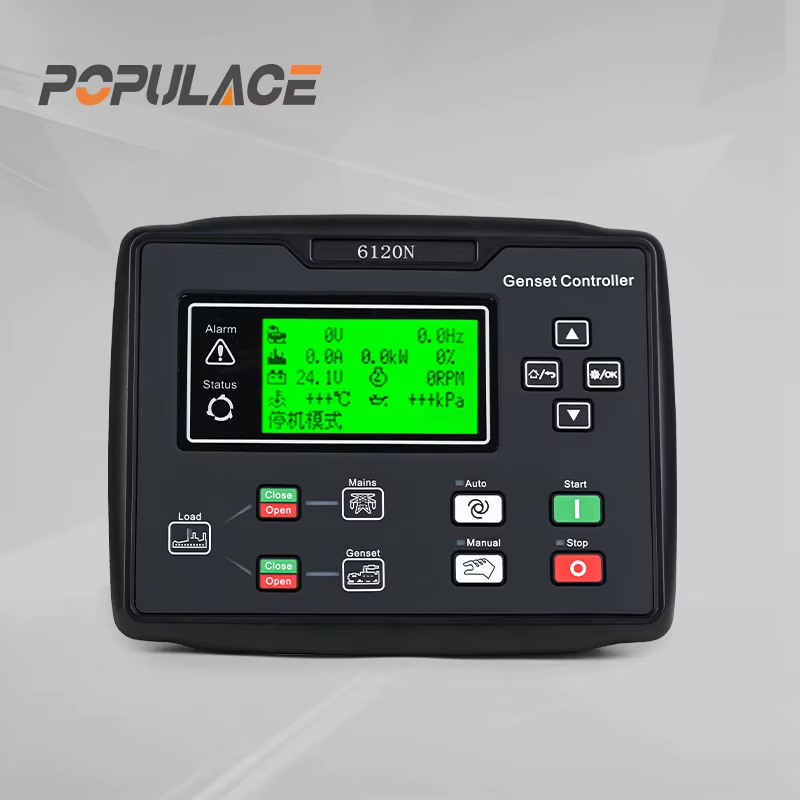
For buyers building inventory across application tiers, three controller models cover the main requirements:
- Smartgen HGM6110N Genset Controller ATS Auto Start Module — Integrates AMF control and ATS output in a single compact unit. A practical choice for mid-range diesel generators where a combined start-and-transfer module is specified. The HGM6110N supports both automatic and manual modes, with full three-phase generator voltage sensing.
- POPULACE DSE3110 Generator Auto Start Control Module — An entry-level generator auto start controller built on the DSE3110 platform. Straightforward wiring, a clear front-panel display, and a standard protection set make this the default choice for lower-complexity single-generator standby applications.
- DATAKOM D-300-MK3 Genset Controller — A higher-capability unit with expanded measurement inputs and RS-485 communication. The D-300-MK3 is suited for installations requiring fault logging, remote monitoring integration, or panel designs with multiple protection output requirements.
Selection Criteria for Wholesale and Brand Buyers
When building controller inventory or specifying a unit for brand integration, apply the following evaluation points systematically:
Engine sensor compatibility: Confirm that the controller's sensor input ranges match the engine's actual oil pressure and coolant temperature sender specifications. Assuming that any generator auto start controller will connect directly to any engine sender type without checking ranges is a common source of installation failures — one that is straightforward to prevent at the sourcing stage.
Communication interface: If end customers will integrate the unit into a BMS or remote monitoring platform, verify the communication protocol (MODBUS RTU over RS-485 is the most common) and whether it's included in the standard firmware or requires a separate option code.
Panel cutout dimensions: Compact digital controllers are not universally interchangeable with the panel cutouts of older analog units. Check DIN dimensions and bezel clearance before committing a new controller model to a panel design that was built around a different form factor.
Documentation completeness: A controller shipped without a wiring diagram creates support costs at the installer level. For wholesale distribution, confirm that installation documentation and parameter setup guides are available in the languages required for your target markets.
Installation and Commissioning Considerations
Installation environment affects controller longevity in ways that product ratings don't fully capture. Controllers mounted inside poorly ventilated generator enclosures operate at significantly higher ambient temperatures than the ambient ratings on the datasheet. Panel design should account for adequate airflow around the controller module, particularly in outdoor installations in warm climates.
During commissioning, the critical verification steps are: confirming protection threshold settings against the engine manufacturer's specified limits (not generic defaults), testing the full start/stop sequence under no-load conditions before connecting live transfer output, and verifying that alarm outputs are correctly wired to any upstream monitoring or BMS panel.
For brand buyers integrating a generator auto start controller into a product line, document the specific firmware version and parameter configuration used during factory setup. Batch-to-batch firmware differences in otherwise identical controller models have created field compatibility issues on repeat production orders — a detail that is straightforward to manage at the design stage and significantly more difficult to resolve after units are in service.






