
 EN
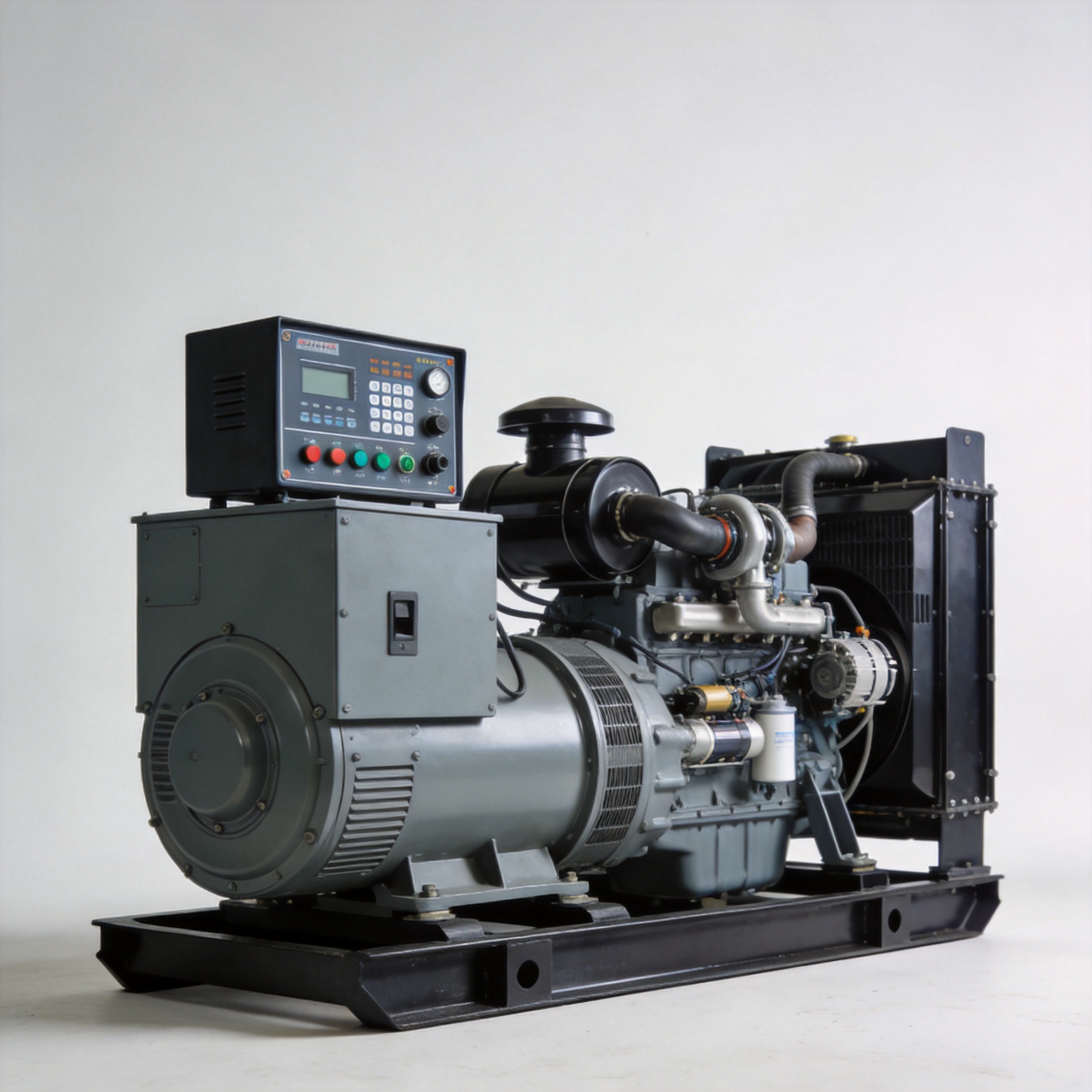
Electronic Governor System: Benefits for Diesel Gensets
When evaluating governor options for a diesel genset application, the technology choice between mechanical and electronic designs carries real operational consequences. An electronic governor system is not simply a digital replacement for the flyweight mechanism; it changes how a diesel engine responds to load changes, how tightly it holds speed, and whether it can run reliably in a parallel configuration with other generator sets. Understanding these distinctions matters before specifying or sourcing a governor controller.
This article covers the core operating principles, the practical differences between mechanical and electronic types, isochronous versus droop mode selection, and what calibration involves for procurement engineers and maintenance teams sourcing governor components.
How a Governor Controls Diesel Engine Speed
A governor on generator sets has one primary function: adjust the fuel rack position to keep the engine running at the target RPM as electrical load changes. When a load is added, the engine slows slightly. The governor detects that speed drop and opens the fuel rack to restore RPM. When load is removed, it does the opposite — reducing fuel to prevent overspeeding.
In a hydraulic governor in diesel engine configurations, this detection and actuation happens through centrifugal flyweights connected to hydraulic servo mechanisms. The flyweights spin with the engine; their outward force varies with speed and drives a hydraulic piston to move the fuel rack. The system is self-contained, mechanically robust, and does not require external power. It also has well-known limitations: response speed is constrained by flyweight inertia and oil viscosity, and the adjustment range for droop and stability settings requires physical access to potentiometers on the governor body.
An electronic governor system replaces the flyweight-hydraulic mechanism with an electronic speed sensor (typically magnetic pickup), a dedicated electronic control board, and an electric actuator. The sensor generates a frequency signal proportional to engine RPM. The control board compares actual speed to the setpoint and drives the actuator to correct the fuel rack position. The entire control loop happens electronically, with the control board parameters — gain, integral, droop — adjustable via onboard potentiometers or, in more advanced units, a programming interface.
Why Electronic Governor Systems Outperform Mechanical Designs for Diesel Gensets
For stationary diesel gensets operating under variable commercial or industrial loads, the electronic governor system offers several specific advantages:
- Faster load response. Electronic control boards respond to speed deviations within milliseconds. Hydraulic governors, dependent on fluid dynamics and flyweight inertia, have longer response cycles by nature. In a data center, hospital, or industrial site where sudden load steps are routine, that response time difference is measurable in voltage and frequency transient behavior.
- Tighter speed regulation. Properly tuned electronic governor systems hold speed deviation to well under ±1% under steady-state conditions. The ESD5500E series, for example, specifies maximum temperature-induced speed drift at ±1%, which is a design target — not a fault tolerance. Mechanical governors are more subject to wear-related drift over time.
- Adjustable control parameters without disassembly. Droop percentage, stability trim, gain, and idle speed settings are all accessible via external potentiometers on most electronic governor control boards. For maintenance teams servicing multiple generator sets, that flexibility matters: adjustments for one application profile do not require replacement parts or workshop time.
- Compatibility with remote and digital control. Electronic governor systems accept external speed reference signals, enabling integration with automatic transfer switches, synchronizing panels, and load management systems. Hydraulic governors have no equivalent input interface.
Isochronous vs. Droop Mode: Choosing the Right Setting
This is where most practical governor selection decisions get made, and it is worth being precise. Both modes are available on electronic governor controllers like the ESD5111 (esd 5111) and ESD5500E series.
Isochronous mode targets zero droop — the governor actively corrects any speed deviation back to the exact setpoint regardless of load level. A diesel genset running in isochronous mode will hold 1500 RPM (or 1800 RPM for 60 Hz systems) from no-load to full load. That makes isochronous mode the right call when a single generator set is operating in island mode with no other generators on the same bus. The governor absorbs all the load variation itself and keeps frequency stable.
Droop mode intentionally introduces a speed-load relationship: as load increases, speed decreases by a calibrated percentage. The standard setting for most diesel generator sets under 10 MW is 3% droop, which translates to approximately 1.8 Hz variation on a 60 Hz system. On a 1500 RPM base, 3% droop means the engine runs at roughly 1545 RPM at no load and 1500 RPM at full load. That sounds like a disadvantage — but for parallel genset operation, it is essential. If two generators share a common bus and both run in isochronous mode, they will fight for load in an unstable feedback loop. Droop mode allows load to distribute proportionally between units based on their respective fuel racks, which is stable and controllable.
The practical rule: single unit, island operation → isochronous. Parallel operation → droop on all units, typically 3–5% matched across all machines.
Industrial Gensets vs. Mobile Power Stations: Different Governor Demands
The application environment shapes which governor characteristics matter most. For permanent industrial installations — standby or prime power sets in data centers, manufacturing facilities, or telecom sites — the priority is speed stability, load-sharing accuracy in parallel operation, and long-term calibration stability with minimal maintenance. Electronic governor systems address all three.
Mobile power stations introduce additional considerations. Vibration from transport and rough terrain puts mechanical stress on sensor connections and actuator linkages. Electronic governor systems with solid-state control boards tend to be less sensitive to vibration than hydraulic governors with oil-filled servo bodies. Fuel quality variation in field conditions also affects combustion consistency, making tight closed-loop control more valuable for maintaining stable output frequency and voltage regulation.
Governor Products from Populace Electronic
For procurement teams sourcing electronic governor controllers, Populace Electronic (KYGEN Power) offers several options suited to diesel genset applications:
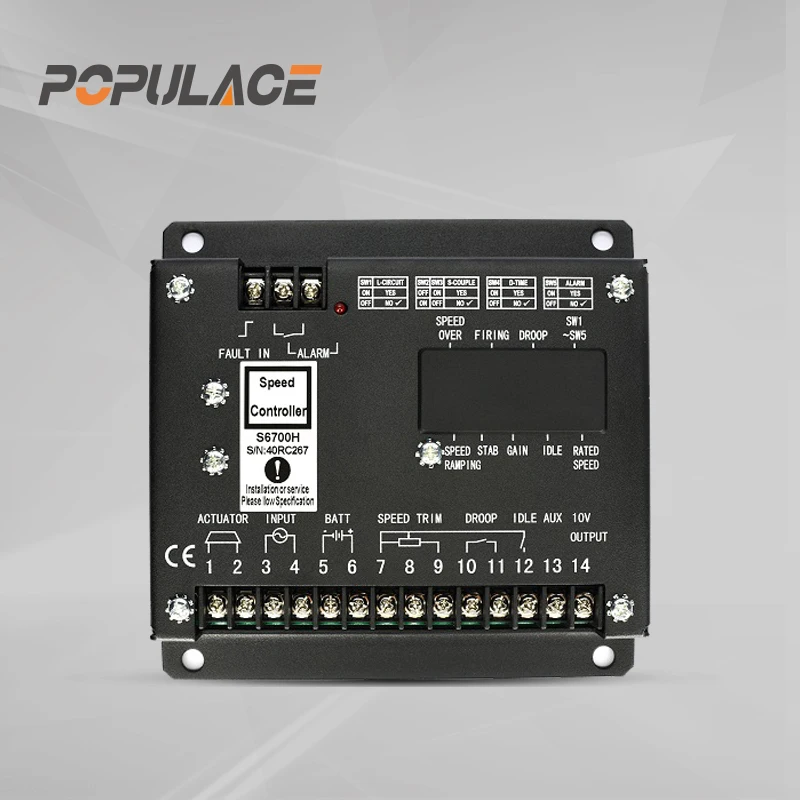
- The S6700H Governor Speed Controller Diesel Engine Generator Speed Control Unit provides electronic speed regulation for diesel engine generator sets, with adjustable gain, stability, and droop parameters for both standalone and parallel configurations.
- The ESD5500E Speed Governor Generator Speed Control Unit is a widely deployed electronic governor control unit supporting isochronous and droop modes, with a speed range of 1K–7.5K Hz and ±1% maximum temperature drift. The ESD5111 variant offers compatible functionality for applications requiring a compact footprint.
- For applications where the actuator is the limiting component, the POPULACE External Actuator (ADC120/ADC175/ADC225) provides 12V and 24V versions compatible with major electronic governor controllers.
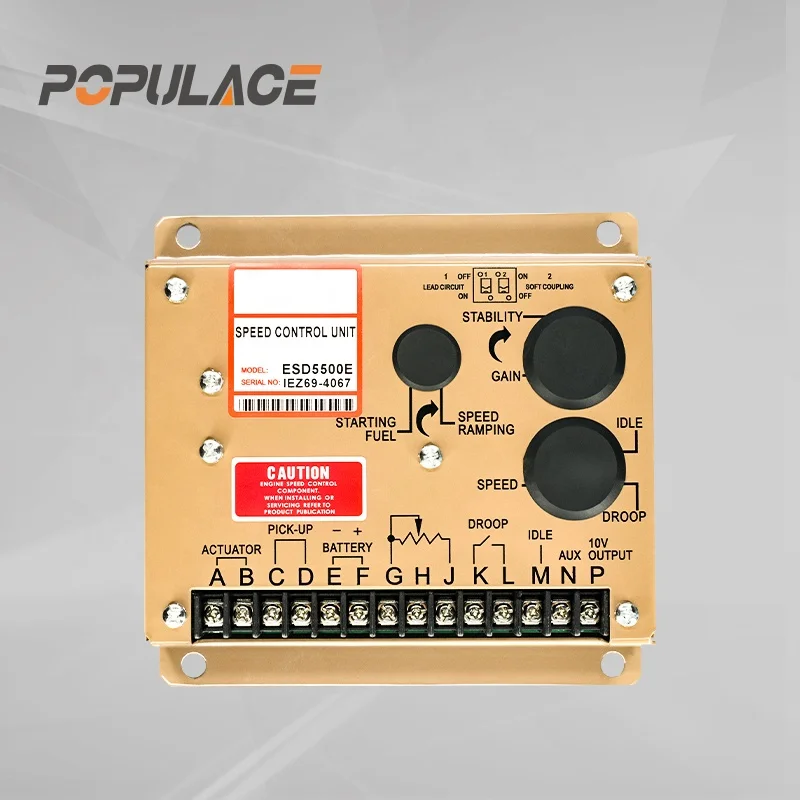
Products are available for wholesale and distributor procurement through Alibaba at populaces.en.alibaba.com, with technical compatibility support available before order confirmation.
Governor Calibration: What Technical Buyers Should Know
Electronic governor systems require calibration after installation and whenever engine or load conditions change significantly. The typical adjustment sequence covers:
- Speed setpoint (gain potentiometer): Set the no-load idle speed to the target RPM with no load connected. For 50 Hz applications, 1500 RPM; for 60 Hz, 1800 RPM.
- Stability trim: Apply incremental load steps and observe speed recovery. If the engine hunts (oscillates around setpoint), reduce gain or increase stability setting. If recovery is sluggish, increase gain — within the range that avoids oscillation.
- Droop adjustment: For parallel operation, set droop percentage to match other units on the bus. Most electronic governor controllers provide a dedicated droop potentiometer. Confirm that load distribution across paralleled units is proportional after adjustment.
- Idle speed (if applicable): Some electronic governor controllers include a separate idle speed setting for engine warm-up. Verify this is set within the manufacturer's specified range before enabling automatic start sequences.
If the engine remains unstable after multiple stability adjustment passes, the issue is often in the actuator linkage — check for free movement, correct travel range, and no binding before returning to the control board parameters. Mechanical binding in the actuator is a more common root cause of hunting than incorrect governor gain settings.
Summary
An electronic governor system delivers measurable advantages for diesel genset applications: faster load response, tighter steady-state speed regulation, parameter adjustability without mechanical disassembly, and full compatibility with parallel operation through droop mode configuration. For procurement engineers evaluating governor components, understanding the isochronous-versus-droop selection and the role of the actuator as a separate system component helps avoid misapplication errors that are slow to diagnose after installation.
For wholesale or distributor sourcing of electronic governor controllers and compatible actuators, contact the Populace Electronic team at kygenpower.com or via Alibaba to confirm compatibility with your engine model and application requirements.






