
 EN
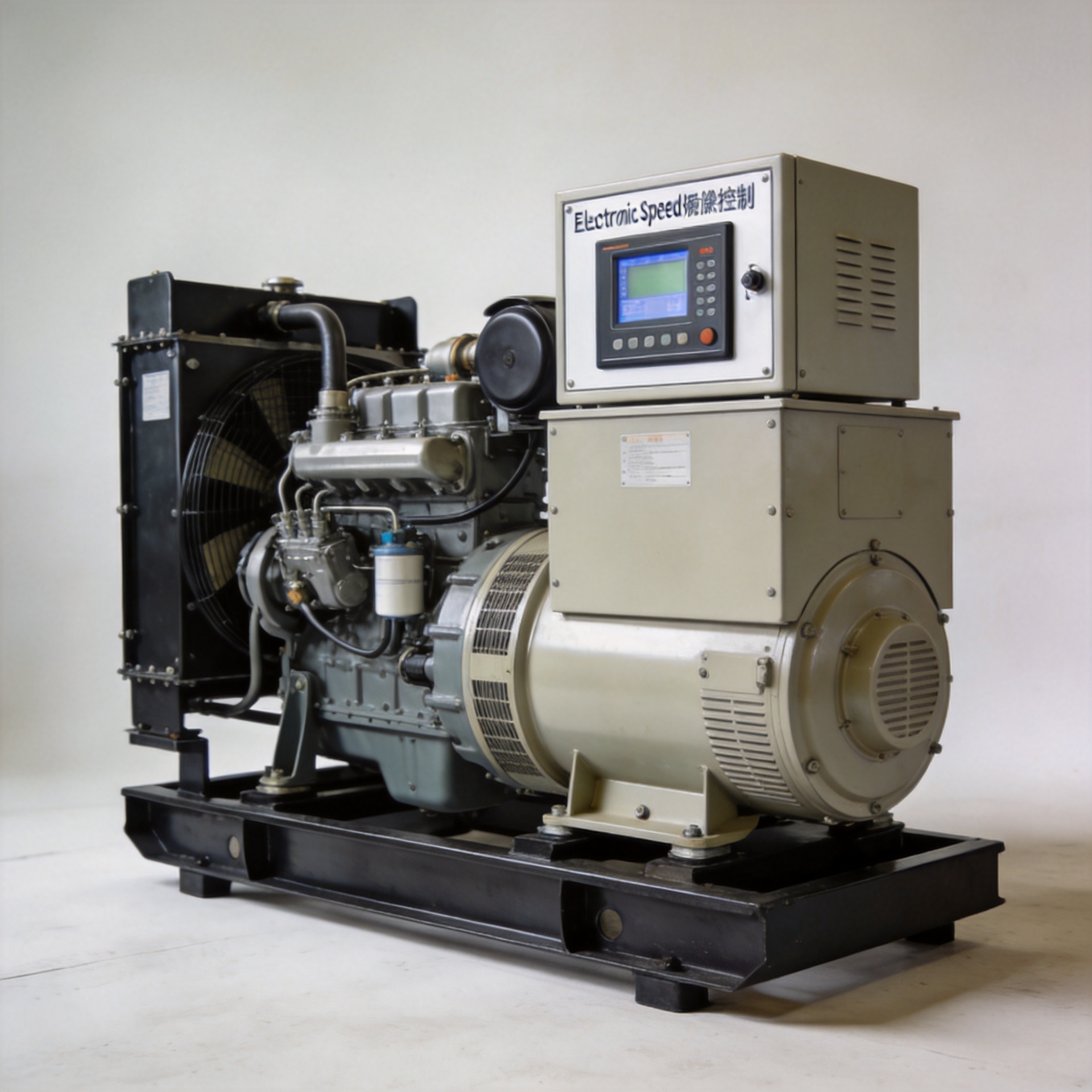
Electronic Governor for Gensets: Selection Guide
Selecting the right electronic governor for a genset is one of those decisions that looks straightforward until you get into the details. The part number, voltage range, and supply voltage are easy to match. What takes more thought is whether the actuator interface aligns with your engine model, whether the operating mode suits your power configuration, and whether the calibration parameters will hold stable under your actual load conditions. As a technical consultant working with generator control components — governors, AVRs, and actuators — my starting point when evaluating an electronic governor for genset applications comes down to compatibility, not brand preference.
Mechanical vs. Electronic Governors: What Has Changed
Traditional mechanical governors use centrifugal flyweights to sense engine speed and mechanically adjust the fuel rack. The system works, but response time and precision are limited by the physical inertia of the mechanism. When load shifts rapidly — as it does in many commercial and industrial installations — the mechanical response can lag enough to affect output frequency stability.
Electronic governors replace the flyweight assembly with a digital speed sensing and signal processing system. The governor monitors engine RPM via a magnetic pickup or frequency input from the alternator output, processes the signal electronically, and drives an actuator to adjust fuel delivery. The result is significantly faster response, finer resolution, and programmable gain and stability settings.
For gensets running critical loads, this matters. Frequency deviation during a load step is shorter and smaller with a properly configured electronic governor for genset applications compared to an equivalent mechanical design. The shift most experienced buyers make is realizing that electronic governor for genset selection is not about brand loyalty — it is about matching the droop setting and actuator response range to the specific engine variant and load profile.
How the Control Loop Works
The electronic governor operates on a closed-loop feedback principle. The speed sensor sends a signal proportional to engine RPM. The governor's control unit compares this to the speed setpoint, calculates the error, and outputs a correction signal to the actuator — which adjusts the fuel injection rack or throttle position to restore speed. Simpler version: the governor watches how fast the engine is turning, compares it to the target, and tells the fuel system to add or reduce fuel accordingly.
One thing that gets overlooked is that the actuator interface is as important as the governor module itself. The connection between the governor output signal and the actuator must match: signal type (voltage or current), polarity, and physical connector pinout. One of the most common ordering mistakes with electronic governors is specifying the engine brand alone instead of the exact engine model and serial range — which leads to receiving a part with an incompatible actuator interface or control signal type.
Operating Modes: Isochronous vs. Droop Control
Most electronic governors for gensets support two primary control modes, and which you need depends on how your system is configured.
Isochronous mode maintains a constant engine speed (frequency) regardless of load — equivalent to 0% droop. If the load increases, the electronic governor for genset increases fuel delivery to hold the speed setpoint. This mode is the right choice for standalone gensets providing power to a single isolated network where precise frequency regulation is required.
Droop mode allows the engine speed to fall slightly as load increases. A typical droop setting of 3–5% means frequency drops proportionally as the generator loads up. When two or more gensets are connected to a common bus, droop mode is what allows them to share load proportionally and stably. If both units run in isochronous mode without a load-sharing controller, they will fight each other — one unit ends up overloaded while the other runs underloaded.
If your application involves parallel gensets, confirm that the electronic governor for genset supports adjustable droop and that the droop setting is properly calibrated between units. A mismatch in droop settings between paralleled gensets is one of the more common causes of load hunting after installation.
Key Selection Criteria
Choosing the right electronic governor for genset use involves more variables than most buyers initially expect. The criteria below are worth evaluating in order of priority:
- Engine model compatibility: Confirm the engine brand and model range, not just the fuel type. Interface pinout and control signal type can differ between production runs of the same engine family.
- Supply voltage: Most electronic governors operate on 12V or 24V DC. Confirm this matches the genset battery and charging system voltage.
- Speed sensing input: Magnetic pickup (MPU) is the most common input type, but some engines use a gear tooth sensor or a frequency signal from the alternator output.
- Actuator interface: Verify whether the governor output drives a linear actuator, a rotary actuator, or uses a PWM or current output signal. Incompatible actuator types require an adapter or a different governor selection.
- Operating mode support: For parallel applications, confirm droop mode with adjustable percentage. For single-unit island systems, isochronous mode with stable no-load to full-load response is the priority.
- Gain and stability adjustments: Quality electronic governors provide external potentiometers or digital parameter settings for gain, damping, and stability — essential for commissioning the system to your specific engine and load characteristics.
Products Worth Evaluating
For standard diesel genset applications, the S6700H Governor Speed Controller Diesel Engine Generator Speed Control Unit is a well-regarded option in the industrial segment. It supports both isochronous and droop modes and is compatible with a range of diesel engine actuator configurations.
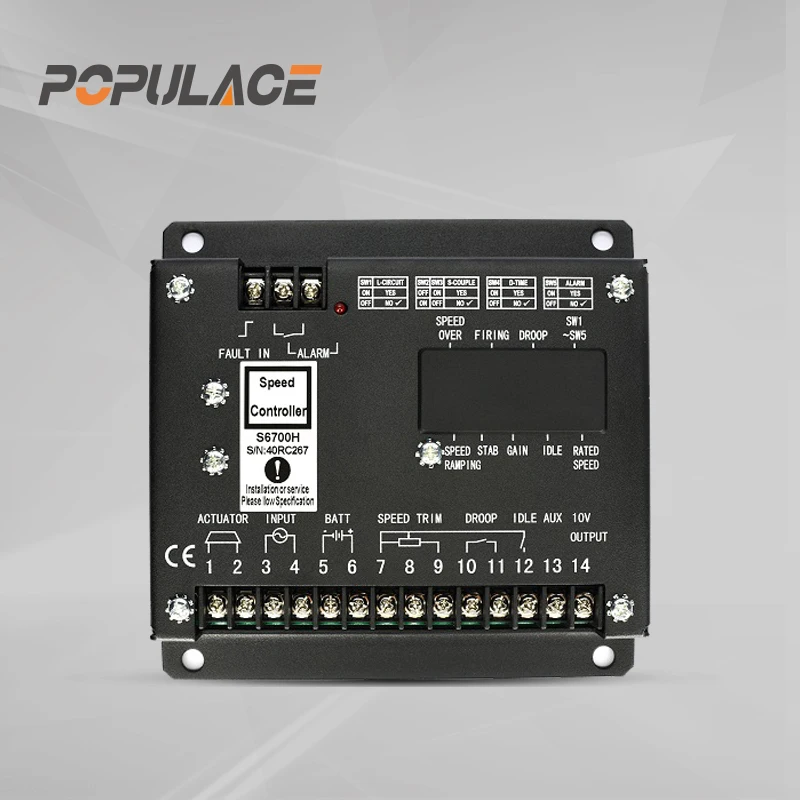
The ESD5500E Speed Governor Generator Speed Control Unit is another widely deployed electronic governor for genset use, particularly where a compact form factor and straightforward parameter adjustment are priorities.
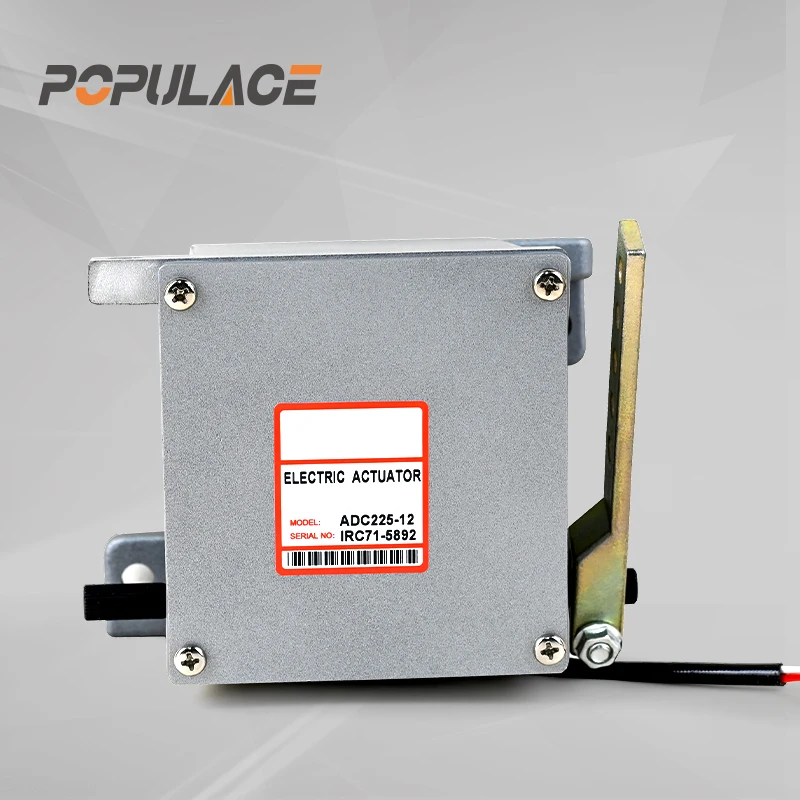
For systems that need an external actuator alongside the governor — common in retrofit installations on older diesel engines — the ADC series external actuators (ADC120, ADC175, ADC225) are compatible with most standard electronic governor outputs and available in both 12V and 24V variants.
Electronic governor for genset compatibility extends across many engine and generator brands. Whether sourcing replacement parts for Northern Lights generators used in marine installations or working with Craftsman generator configurations, the matching principle remains the same: confirm engine model, actuator type, and supply voltage before finalizing a part number. Compact inverter models like the Yamaha generator 2200 use electronically controlled variable engine speed rather than a traditional fixed-speed governor — the selection criteria and replacement approach differ from standard diesel genset governor systems.
Calibration and Adjustment Steps
Once the correct electronic governor for genset is installed, commissioning typically follows four steps:
- Speed setpoint: Set the no-load speed to the target frequency — 1500 RPM for 50 Hz systems or 1800 RPM for 60 Hz systems on four-pole alternators, or double for two-pole configurations.
- Gain adjustment: Increase gain until the system begins to hunt slightly, then reduce until stable. Higher gain means faster response but increases the risk of speed oscillation.
- Stability (damping): Adjust the stability control to eliminate speed oscillations without slowing the load response below an acceptable level for your application.
- Droop setting (parallel only): Set the droop percentage consistently across all paralleled units. A 3–4% droop is a common starting point for diesel gensets running in parallel.
If the system hunts persistently after gain and stability adjustment, the cause is often mechanical rather than electronic — check for worn fuel rack linkage, air intake leaks, or loose speed sensor mounting before continuing to adjust the governor parameters.
Selection Summary
Before finalizing an electronic governor for genset selection, confirm these six points:
- Engine model and serial range — not just brand name
- Supply voltage (12V or 24V DC)
- Speed sensor type and actuator interface compatibility
- Operating mode requirement: single-unit isochronous or parallel droop
- Droop percentage settings if multiple gensets will run in parallel
- Wiring diagram and calibration documentation from the supplier before installation






