
 EN
Electronic Governor for Diesel Generator: Comparison
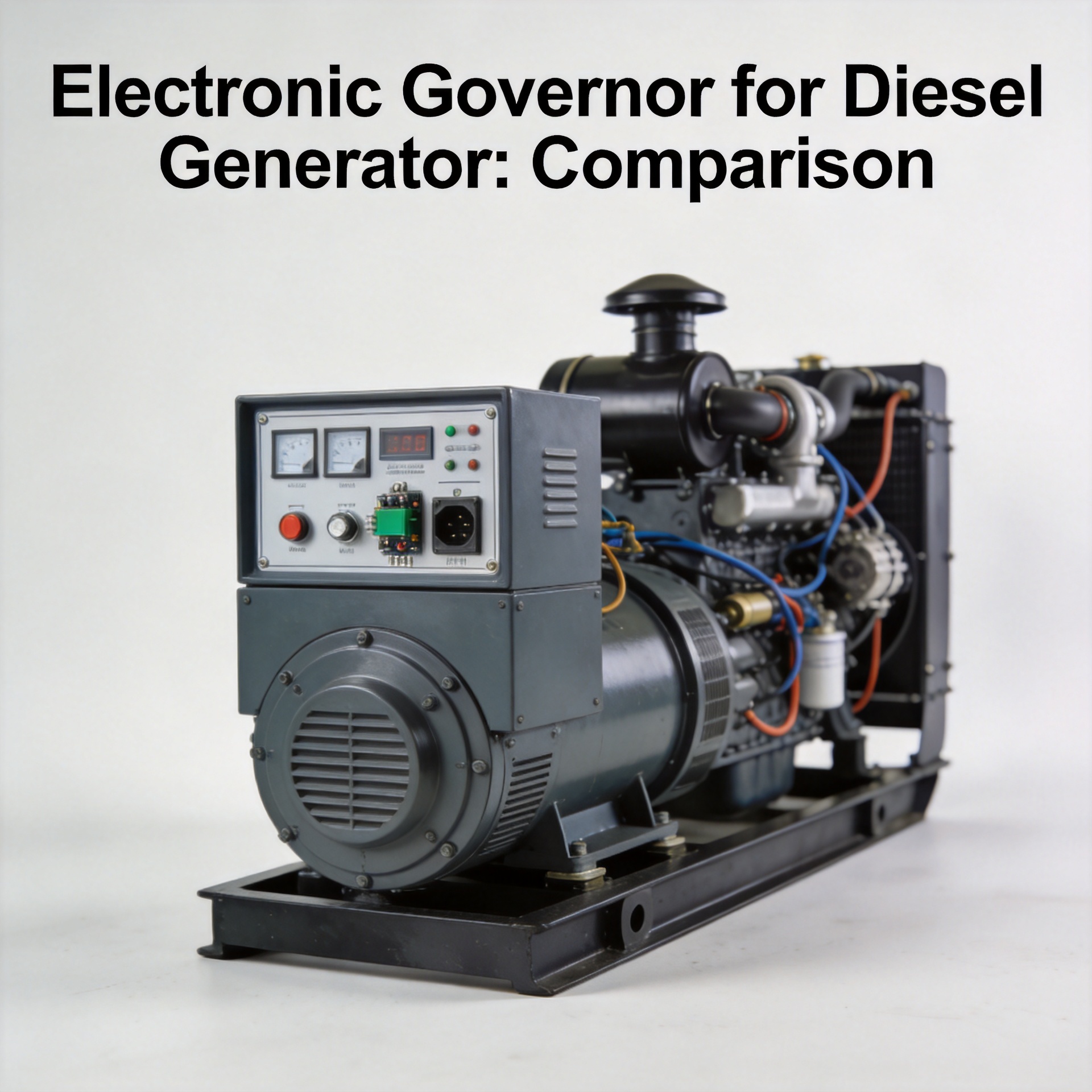
When a diesel generator experiences load changes, the engine must respond quickly to maintain stable output frequency and voltage. The component responsible for that response is the governor — specifically, an electronic governor for diesel generator applications. Unlike its mechanical predecessor, an electronic governor processes speed signals digitally and sends corrective commands to the fuel actuator within milliseconds. Understanding how different electronic governor designs compare, and which operating mode suits your application, is the starting point for making a sound sourcing or replacement decision.
How an Electronic Governor Controls Diesel Engine Speed
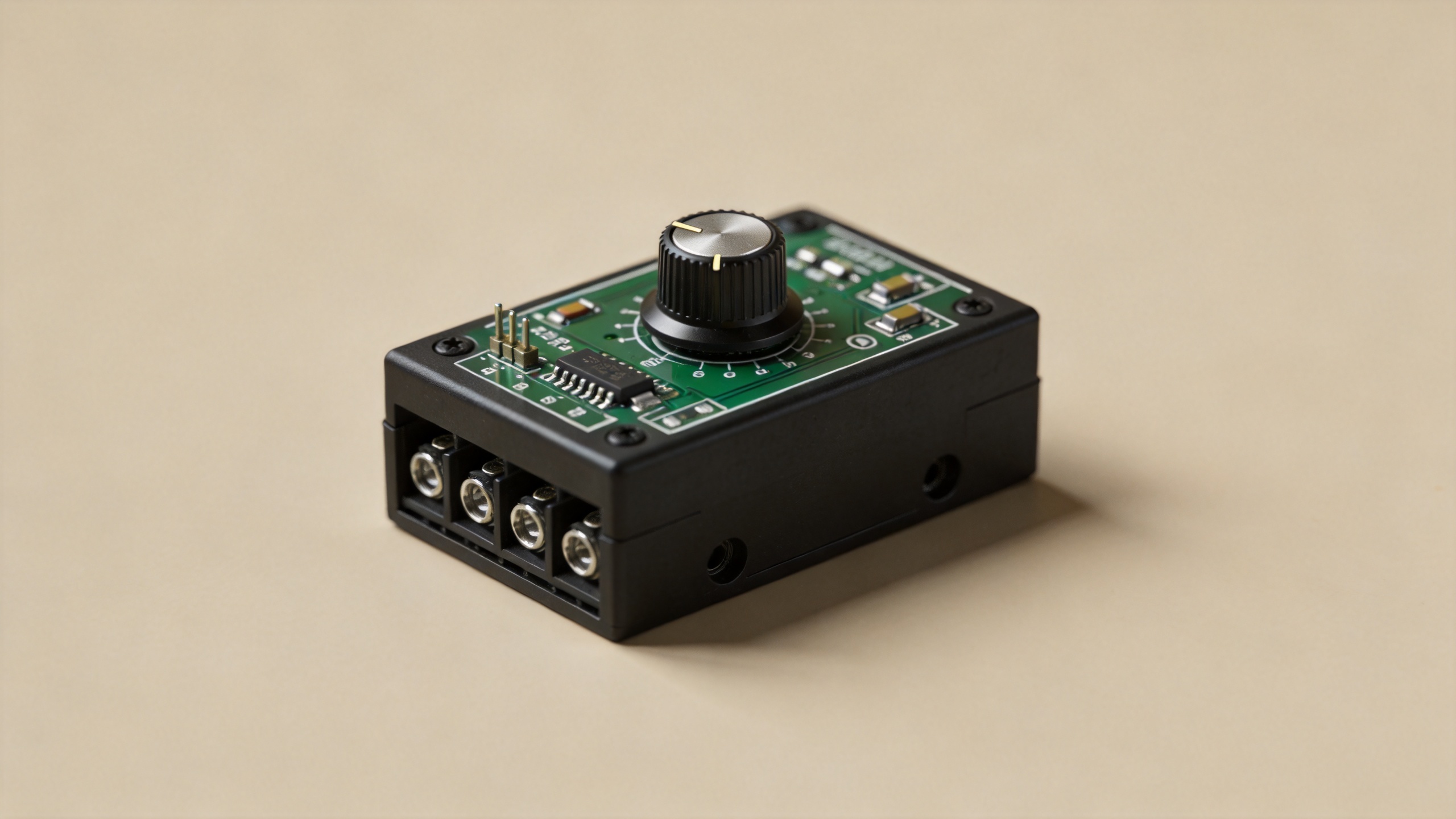
An electronic governor for diesel generator speed control works as a closed-loop system. A magnetic pickup unit (MPU) installed near the engine flywheel generates a pulse signal proportional to engine RPM. The governor control unit compares this measured speed against a programmed set point — typically 1500 RPM for 50 Hz systems or 1800 RPM for 60 Hz systems. Any deviation triggers a proportional correction signal that adjusts the fuel rack through an electromechanical actuator.
The shift most experienced buyers make is realizing that electronic governor for diesel generator selection is not about brand loyalty; it is about matching the droop setting and actuator response range to the specific engine variant and load profile. Sourcing the control unit without verifying actuator compatibility is one of the more common specification errors in field installations.
Mechanical vs. Electronic Governor: Key Differences
Mechanical governors regulate engine speed through centrifugal flyweights connected directly to the fuel injection linkage. They are self-contained, require no external power, and have proven reliability across decades of field use. However, their speed regulation accuracy is typically in the range of ±3% to ±5%, which can cause noticeable frequency variation under load steps.
Electronic governors achieve regulation accuracy of ±0.5% or better under steady-state conditions, with fast transient response to sudden load changes. The tradeoff is complexity: an electronic system requires a functioning MPU signal, a stable power supply, and compatible actuator wiring. If your application demands precise frequency output — for sensitive equipment, parallel operation, or regulated facility power — the case for an electronic governor for diesel generator use is straightforward.
For small portable generators, the idle control behavior is worth examining separately. A system like briggs and stratton generator idle control relies on a combination of mechanical throttle response and, in newer models, electronic load sensing to reduce RPM at low load. This is architecturally different from the industrial electronic governor approach, where the set point remains fixed and only the fuel rack position changes in response to load.
Isochronous vs. Droop Mode: Operating Mode Comparison
Most modern electronic governor for diesel generator control units support two primary operating modes: isochronous (constant speed) and droop (load-dependent speed variation).
Isochronous mode maintains the engine at a fixed set-point speed regardless of load. This is the preferred mode for single-generator operation where load sharing is not required. Frequency stability is maximized, and the governor continuously adjusts the fuel position to eliminate speed error.
Droop mode introduces a deliberate speed decrease of typically 2–5% from no load to full load, which allows multiple generators to share load proportionally when connected in parallel. Without droop, two isochronous governors on a shared bus will fight each other for load, leading to instability. If your installation involves a high speed governor application where several units must synchronize, droop must be configured correctly before parallel connection.
The governor tripping speed (the overspeed protection threshold) should be confirmed against the engine manufacturer's specification before commissioning. Typical values are 10% to 15% above rated speed.
Electronic Governor Selection Criteria
When evaluating an electronic governor for diesel generator applications, confirm these key parameters:
- Input voltage range: Most units accept 12 VDC or 24 VDC. Confirm panel voltage before specifying.
- Speed set-point range: Verify the range covers 50 Hz (1500 RPM) and 60 Hz (1800 RPM) if you supply multiple markets.
- Actuator compatibility: The output signal type (current-driven or voltage-driven) must match the actuator; mismatching causes erratic fuel control.
- Operating temperature range: For high-ambient installations, confirm the rated temperature includes site ambient plus panel heat rise.
- Isochronous/droop mode selection: Confirm whether mode is hardware-selectable, potentiometer-set, or software-configurable.
S6700H vs. ESD5500E: Product Comparison
Two widely referenced models in the industrial diesel generator governor market illustrate the comparison well.
The S6700H Governor Speed Controller Diesel Engine Generator Speed Control Unit is an electronic governor for diesel generator speed control with both isochronous and droop mode capability. It accepts a magnetic pickup input and outputs a proportional current signal to drive compatible actuators, suited for industrial generators and prime power installations.
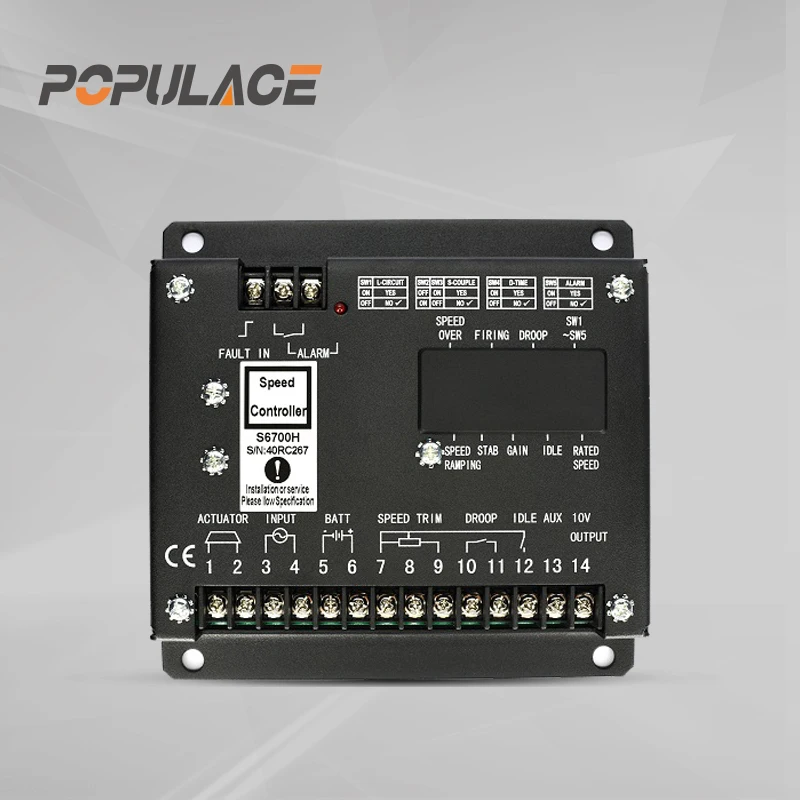
The ESD5500E Speed Governor Generator Speed Control Unit Diesel Engine ESD5500E is a widely deployed electronic governor for diesel generator applications. It supports adjustable droop settings and speed set-point calibration via front-panel potentiometers, making on-site adjustment accessible without specialized tools — frequently specified for new installations and mechanical governor retrofits.
The choice between these two units is a compatibility and application-fit question. The deciding factor is actuator interface match and the availability of technical documentation for your specific engine model.
Actuator Compatibility: A Frequently Overlooked Factor
The electronic governor control unit is only half of the speed control system. The actuator converts the governor's output signal into a mechanical position change at the fuel injection rack. For applications requiring an external actuator (common in industrial engine retrofits), the actuator's voltage, current draw, and response range must be verified against the control unit's output specification.
For diesel generator applications requiring a compatible external actuator, the POPULACE Diesel Generator Engine Parts External Actuator 12V 24V ADC120 ADC175 ADC225 for Generator Speed Governor Actuator covers the ADC120, ADC175, and ADC225 configurations in both 12V and 24V variants. Confirming the actuator model against the governor control unit's output specification before order confirmation prevents the most common field installation mismatch.
Calibration and Adjustment Steps
Each electronic governor for diesel generator installation requires calibration after commissioning. The basic adjustment sequence covers:
- Speed set-point: Adjust the speed reference potentiometer to achieve target no-load RPM (1500 or 1800 RPM depending on frequency standard).
- Gain (sensitivity): Set the governor gain to achieve stable speed recovery after a load step without overshooting or oscillating. Too high a gain causes hunting; too low causes slow recovery.
- Stability (droop or damping): Fine-tune the stability control to eliminate sustained oscillation after transient events. For droop mode, confirm the droop percentage matches the parallel operation requirement.
- Governor tripping speed: Verify the overspeed protection threshold per the engine manufacturer's specification; typical values are 10–15% above rated speed.
- Load acceptance test: Apply a step load and confirm speed recovery within 2 to 3 seconds, within the allowable transient deviation.
A supplier who provides model-specific installation instructions (not just a generic datasheet) reduces commissioning time and the risk of incorrect initial adjustment.
Sourcing Electronic Governors: What to Confirm Before Ordering
For wholesale buyers sourcing an electronic governor for diesel generator applications, pre-order verification should cover: engine model and serial range, actuator interface type, panel supply voltage, frequency standard (50 Hz or 60 Hz), and whether the installation is new or a retrofit. A supplier with pre-sales technical support — able to confirm governor-to-actuator fit before purchase — reduces return risk and commissioning time.
Populace Electronic Co., Ltd. (KYGEN Power) supplies electronic governor control units, actuators, and related generator parts to wholesale and brand buyers in Asia, Europe, and North America. Product inquiries and compatibility confirmations can be directed through kygenpower.com or the Alibaba storefront at populaces.en.alibaba.com.






