
 EN
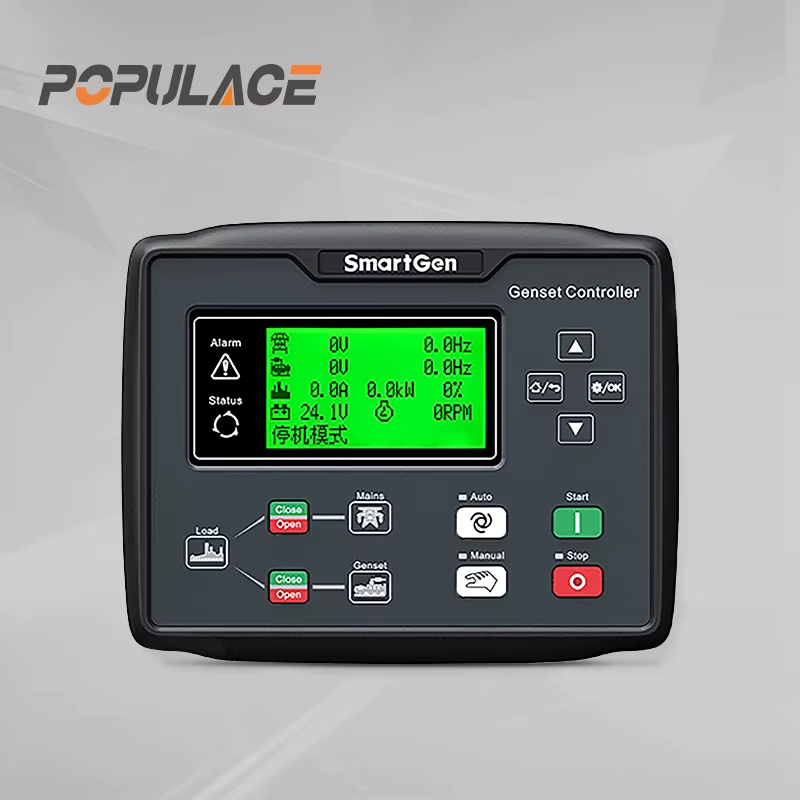
DSE8610 Price: Cost Comparison and Sourcing Guide
When a project team searches for a deep sea 8610 price, the number on a quotation is only the first part of the decision. The DSE8610 MKII sits in the synchronising and load-sharing class of generator controls, so it should not be compared directly with a basic single-set auto-start panel. For an engineer or buyer, the useful comparison is capability, configuration, verification work, and the cost of a correct commissioning—not simply the lowest unit price.
From a procurement perspective, the DSE8610 is specified where multiple generator sets must operate as one system. It is designed for synchronising and load sharing and can be used in systems of up to 32 generators. That scope helps explain why a deep sea 8610 price is normally higher than the amf panel price for a conventional standby set.
What drives the deep sea 8610 price?
A DSE8610 MKII quotation needs a like-for-like check. Market listings can show widely different figures: search results have displayed retail references around US$1,099 and US$2,605, while other listings may be in another currency or include a different version, tax treatment, warranty, or freight. These figures are not a universal selling price. Treat them as evidence that part number, supply channel, and commercial terms must be normalized before comparing offers.
- Controller version and condition: confirm DSE8610 MKII, the exact order code, new-versus-refurbished status, and authenticity documentation.
- System duty: load sharing, synchronising, mains paralleling, base-load control, and the number of generator sets affect the panel design around the controller.
- Included scope: a module-only quote is different from a tested control panel with breakers, CTs, relays, wiring, drawings, and commissioning support.
- Landed cost: compare packing, freight, import charges, lead time, and technical response—not just the unit figure.
Ask every supplier for the same short data pack: controller order code, photos of labels and terminals, firmware/configuration status, quotation validity, warranty terms, and an itemized shipping basis. This makes a deep sea 8610 price comparison usable for approval rather than a collection of unrelated numbers.
Why the DSE8610 class costs more than an AMF controller
Basic AMF control watches the utility supply, starts a generator after a mains failure, and commands a transfer arrangement. In that context, amf panel price is often driven by the ATS rating, enclosure, protection devices, and a simpler controller. The DSE8610 MKII addresses a more demanding job: coordinating generators that must match voltage, frequency, and phase before breakers close, then sharing load after connection.
Its documented feature set includes synchronising and load sharing, built-in governor and AVR control, and automatic start/stop functions. Those functions can reduce the need for separate synchronising hardware, but they also increase the importance of correct field signals and commissioning. A practical budget therefore has two lines: the DSE8610 module and the engineering effort required to make the whole power system behave safely.

DSE8610, SmartGen HGM controls, and SmartGen ATS: compare the application first
It is tempting to compare every controller with a SmartGen HGM series unit or a smartgen ats package. That can be useful only after defining the operating mode. Many SmartGen HGM models are used for single-generator auto-start or AMF applications; a SmartGen ATS is the transfer-switch side of a standby system. Neither label alone proves equivalent synchronising, load-sharing, governor, AVR, communications, or protection capability.
| Selection question | DSE8610 MKII approach | Single-set AMF/ATS approach |
|---|---|---|
| How many sets must run together? | Built for multi-generator synchronising and load sharing. | Usually one set transfers to a load after mains failure. |
| What is being controlled? | Generator breaker, synchronising logic, load sharing, and related control loops. | Start/stop logic and transfer switching, depending on the package. |
| What should the quote include? | Module, interface signals, breaker control, CT scheme, configuration, and commissioning scope. | Controller, ATS/panel rating, utility sensing, and generator start interface. |
| When is a lower-cost option suitable? | Only when the project does not require parallel operation or advanced load management. | When a single standby generator and transfer sequence meet the duty. |
An apm402 controller should be evaluated the same way: use its documented I/O, protection, communications, and intended operating mode—not its name or apparent price—as the comparison basis. The right outcome may be a lower-cost controller, but only if its operating envelope matches the one-line diagram.
Sourcing a DSE8610 MKII with fewer surprises
For a confirmed product route, see the DSE8610 MKII Synchronising Load Sharing Auto Start Control Module DSE8610. The listing establishes that the supplier can discuss this named controller; before issuing a purchase order, request confirmation of stock, order code, images, and the exact commercial scope. For smaller AMF applications, the available DSE4520 MKII Auto Mains Failure Control Module is a useful reminder that a single-set AMF controller is a different product class, not a substitute by default.
For wholesale or project procurement, a supplier that can confirm controller compatibility, provide English technical documentation, and support export packing helps reduce the downstream cost of a wrong module. The most productive enquiry includes the generator ratings, alternator and governor details, system single-line diagram, mains arrangement, breaker coil voltages, and required site standards.
Wiring and configuration checks before commissioning
A controller purchase does not replace engineering verification. Keep control wiring separated from high-energy conductors where practical, use the approved fuse and DC supply arrangement, and verify polarity before energising. Confirm that voltage sensing is matched to the actual system, that CT orientation and ratio are consistent across sets, and that generator breaker auxiliary contacts truthfully report breaker position.
- Record generator, bus, and mains nominal voltage/frequency and phase sequence before configuration.
- Verify governor and AVR interface type, signal scaling, and permissible control direction with the equipment documentation.
- Test emergency stop, low-oil-pressure, overspeed, and breaker-fail paths as a controlled commissioning exercise.
- Prove dead-bus and live-bus closing permissions, synchronising limits, and load-sharing response with qualified personnel.
- Save a labeled configuration backup and panel drawing revision after acceptance testing.
Do not confuse alternator voltage regulation with generator synchronising. A stamford sx440, for example, is an AVR selection topic; its sensing and excitation arrangement must be checked alongside the controller interface, not assumed from a controller quotation. This is where a low deep sea 8610 price can become expensive if the delivered module, wiring plan, and commissioning responsibility do not align.
Buying conclusion
The most defensible deep sea 8610 price is the price of a verified DSE8610 MKII matched to the required parallel-generator duty, with clear documentation and defined supply terms. Compare it with SmartGen, AMF, ATS, or APM alternatives only after mapping functions to the project. If the system only needs automatic mains-failure transfer, a simpler AMF package may be appropriate. If it needs reliable synchronising and load sharing, protect the budget for the controller class, panel interfaces, and competent commissioning that the job requires.





