
 EN
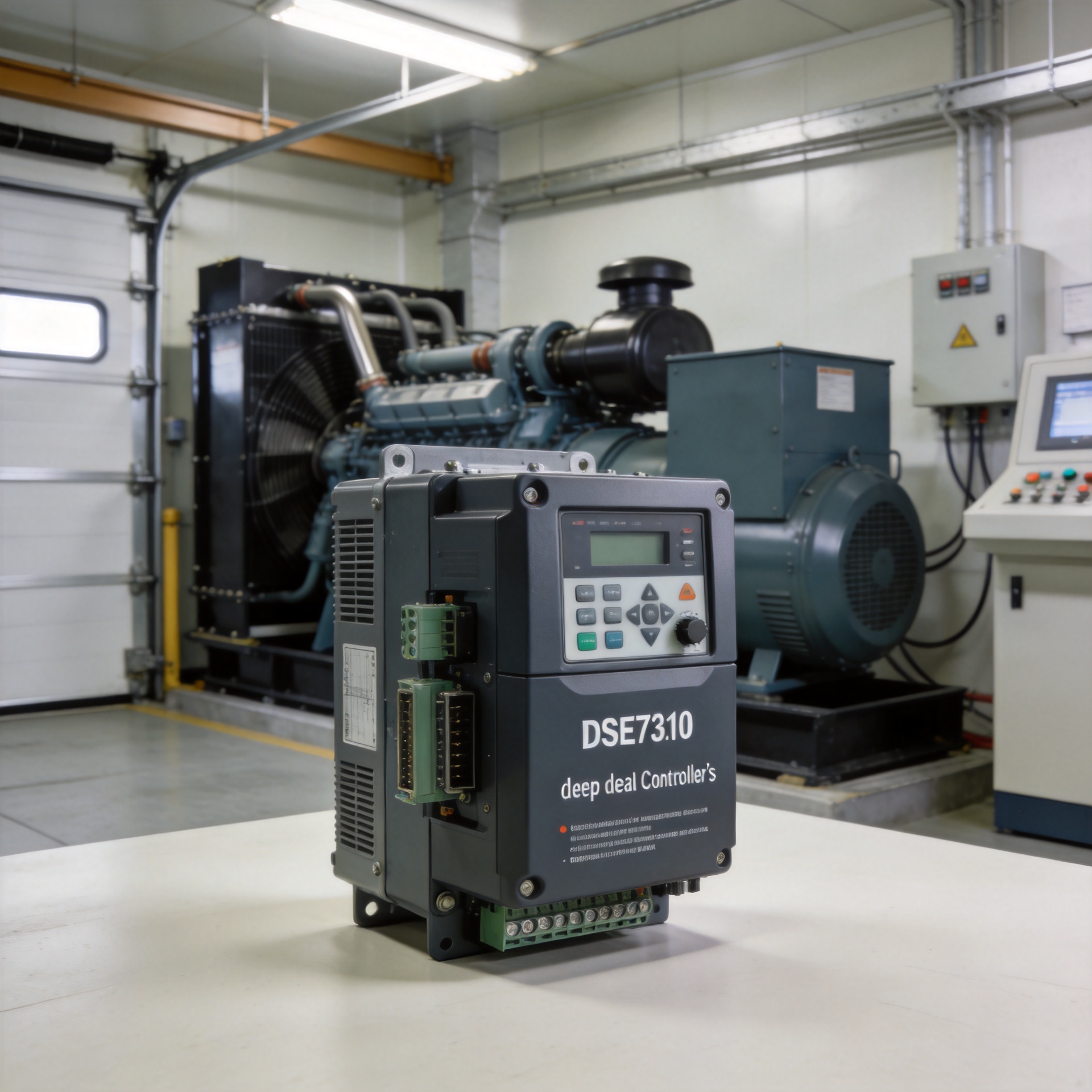
DSE7310 Deep Sea Controller: Configuration Overview
When specifying a generator control module for a mid- to large-scale diesel or gas genset installation, the deep sea controller 7310 remains one of the most referenced options in the industry. Deep Sea Electronics (DSE), headquartered in North Yorkshire, England, has built the 7310 family into a standard reference point for system integrators managing single-genset auto start applications. This overview covers what the module does, how it is configured, how it stacks up against the SmartGen HGM series, and what sourcing options look like for wholesale buyers and installation teams.
What Is the DSE7310 Controller?
The DSE7310 is an auto start control module designed for single diesel or gas generator sets. The current generation — the DSE7310 MKII — retains the original's auto start and engine monitoring capabilities while adding updated communication ports: USB, RS232, and RS485. Panel cutout dimensions are 240 mm × 181 mm, with a module depth of 42 mm, and the DC input accepts a wide supply range of 8–35 Vdc to accommodate both 12V and 24V battery systems.
The module supports manual and automatic start modes, engine monitoring across standard channels (oil pressure, coolant temperature, battery voltage, and frequency), configurable relay outputs for fuel, start, and auxiliary functions, and a front-panel display suitable for most control room environments. An optional heated display variant (DSE7310-34) is available for cold-climate installations.
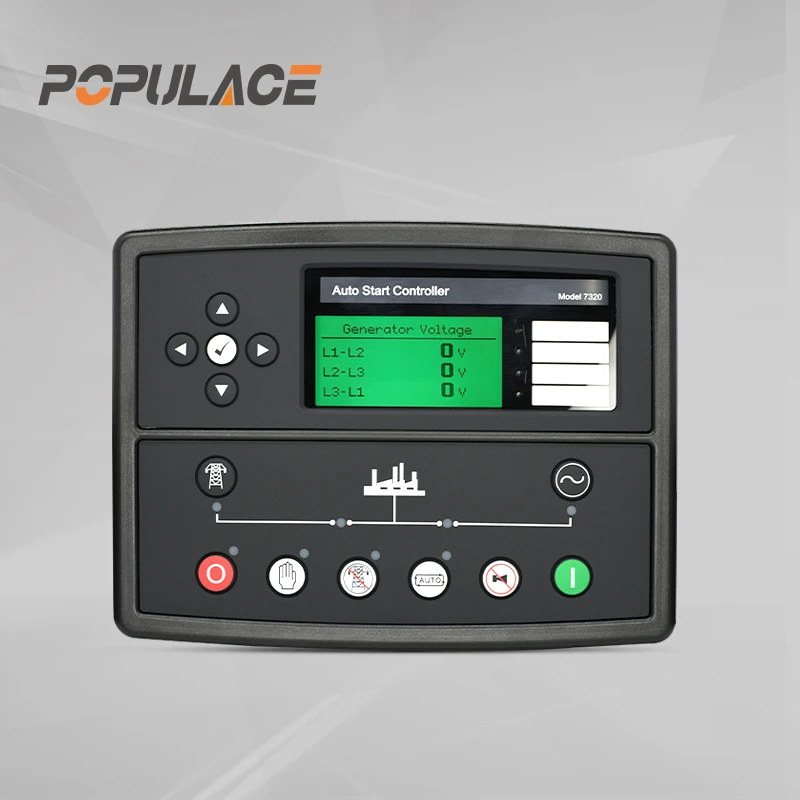
One clarification that comes up in procurement discussions about the deep sea controller 7310: the DSE7310 MKII handles auto start only — it does not independently monitor mains voltage for automatic mains failure response. That function belongs to the DSE7320 MKII, the AMF variant in the same product family. If your project requires true AMF with automatic transfer switch control, the DSE7320 MKII is the appropriate module. Both are configured using the same DSE Configuration Suite PC Software (reference: DSE publication 057-243).
Core Functions and Configuration Points
For system integrators working through a typical installation, the deep sea controller 7310 MKII covers three main functional areas:
- Auto Start/Stop Logic: Responds to an external start input (dry contact or voltage signal), monitors pre-conditions (oil pressure, coolant temp), issues start commands to the engine control relay, and manages cool-down and stop sequences. Timers for start attempts, crank disconnect, warm-up, and cool-down are all configurable via the PC software.
- Engine Protection: Pre-alarm and shutdown thresholds for oil pressure, coolant temperature, over/under-speed, and overvoltage are user-adjustable. The module stores an event log accessible through the front panel or via USB.
- Remote Monitoring and Communications: RS485 supports Modbus RTU for SCADA or BMS integration. The USB port connects directly to the DSE Configuration Suite for parameter upload and event log retrieval. RS232 can be used for legacy monitoring equipment or modem-based remote access.
Configuration is not optional on these modules — the factory defaults are intentionally conservative. An integrator who leaves the default timers and thresholds in place without adjusting them to the specific engine and application is likely to see either nuisance shutdowns or missed fault events. The DSE Configuration Suite is Windows-based and well-documented; plan for a configuration session before commissioning, not on the day of commissioning.
DSE7310 vs SmartGen HGM: A Practical Comparison
Engineers comparing the deep sea controller 7310 against the SmartGen HGM series often find the two platforms functionally similar for standard AMF and auto start requirements. Both offer relay-based engine control, analog monitoring, configurable thresholds, and PC-based configuration tools. The relevant differences tend to show up in application fit and supply chain considerations rather than core feature lists.
| Feature | DSE7310 MKII | SmartGen HGM6120 |
|---|---|---|
| Primary function | Auto start (external trigger) | Auto start with AMF option |
| Communication | USB, RS232, RS485 (Modbus RTU) | RS485 (Modbus RTU), RS232 |
| Display | Front-panel LCD, optional heated | Front-panel LCD |
| Configuration tool | DSE Configuration Suite (PC) | SmartGen PC software |
| Market presence | Strong in Europe, North America | Strong in Asia, growing globally |
| Documentation language | English (primary), multi-language | Chinese primary, English available |
If your project involves European or North American facilities with English-language commissioning documentation as a requirement, the deep sea controller 7310 product line typically has an advantage in documentation depth and installer familiarity. If the generator set is China-manufactured and the supply chain runs through Chinese distributors, SmartGen HGM modules are often a closer fit for the available local support network. Neither platform is categorically superior — the right choice depends on the project context, installer experience, and long-term support availability.
Generator Peak Shaving Applications
The deep sea controller 7310 MKII is well-suited for generator peak shaving deployments, where the genset is started on demand to reduce utility demand charges during peak tariff windows. In a generator peak shaving configuration, the external start input on the controller is triggered by a building management system (BMS) or demand controller when utility kWh draw approaches a set threshold. The DSE7310 manages the start sequence, monitors the engine, and handles the stop command when the demand event ends.
For this application, the configurable timers — particularly the start delay and stop delay parameters — are critical. A start delay that is too short can result in the generator running for short cycles under light load, increasing wear. A stop delay that is too long may negate the demand savings. Work through the configuration parameters with the BMS supplier during integration testing, not after the system goes live.
Scope Note: Engine Size and Controller Selection
The DSE7310 family targets industrial and commercial generator sets typically rated at 50 kVA and above. It is not designed for small-displacement engines with mechanical speed governors, such as those using a 19 hp Kohler Courage engine governor or a 6.5 hp Tecumseh engine governor. Those small residential and light-commercial engines use mechanical centrifugal governors and typically do not require — or accept — panel-mount electronic control modules of the DSE7310 class. Small-engine governor sourcing is a separate procurement category. The DSE7310 is relevant only when you are working with an industrial generator set driven by a full-size diesel or gas engine.
Related Products for AMF and Synchronization
For project specifications that require AMF functionality — where the controller itself monitors mains supply voltage and frequency, then initiates an automatic generator start and ATS command when mains fails — consider the POPULACE DSE7320 MKII AMF Generator Control Module, which is the direct AMF variant of the 7310 family and is stocked for wholesale supply.
Multi-generator installations requiring load sharing and synchronization are handled by the DSE8610 MKII Synchronising Load Sharing Auto Start Control Module, designed for parallel genset configurations where multiple units share a common busbar.
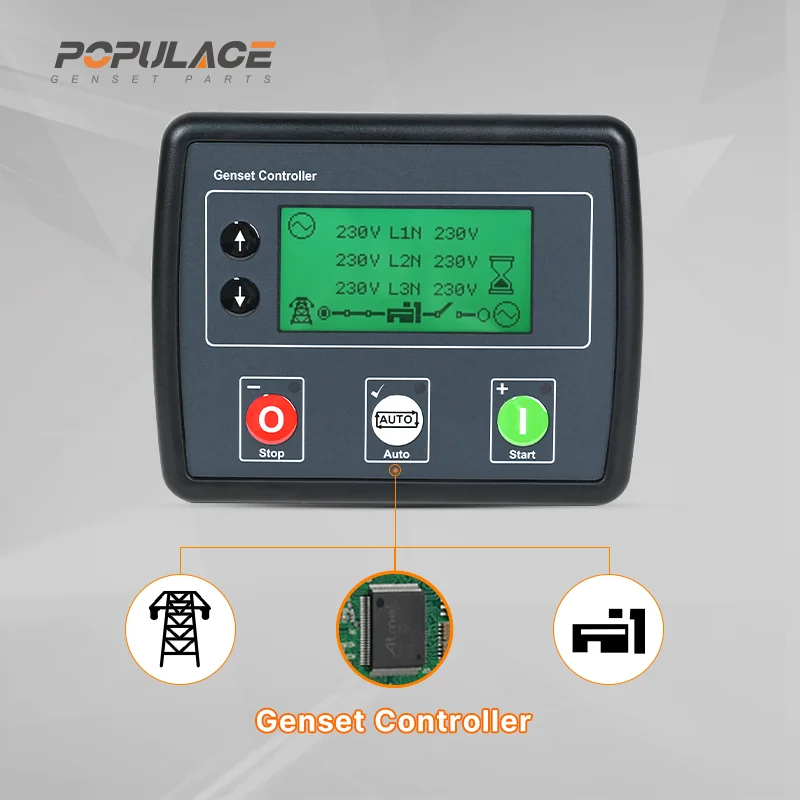
For budget-oriented AMF applications on single gensets, the DSE4520 MKII Auto Mains Failure Control Module provides core AMF and ATS control at a lower cost point within the same Deep Sea product family.
Sourcing and Technical Support
Populace Electronic Co., Ltd. (brand: Populace; online: kygenpower.com) supplies the deep sea controller 7310 family and related Deep Sea modules to wholesale buyers and brand merchants across Asia, Europe, and North America. Pre-sales compatibility queries on module selection, including which variant (DSE7310 MKII or DSE7320 MKII) is appropriate for a given installation, are handled directly. For inquiries, contact Grace at [email protected] or through the Alibaba storefront at populaces.en.alibaba.com.
When placing wholesale orders, request the DSE Configuration Suite reference document alongside the modules. Having the configuration software and documentation available before the modules arrive at the installation site reduces commissioning delays and avoids the common scenario where the installer first encounters the configuration interface on the day of startup.






