
 EN
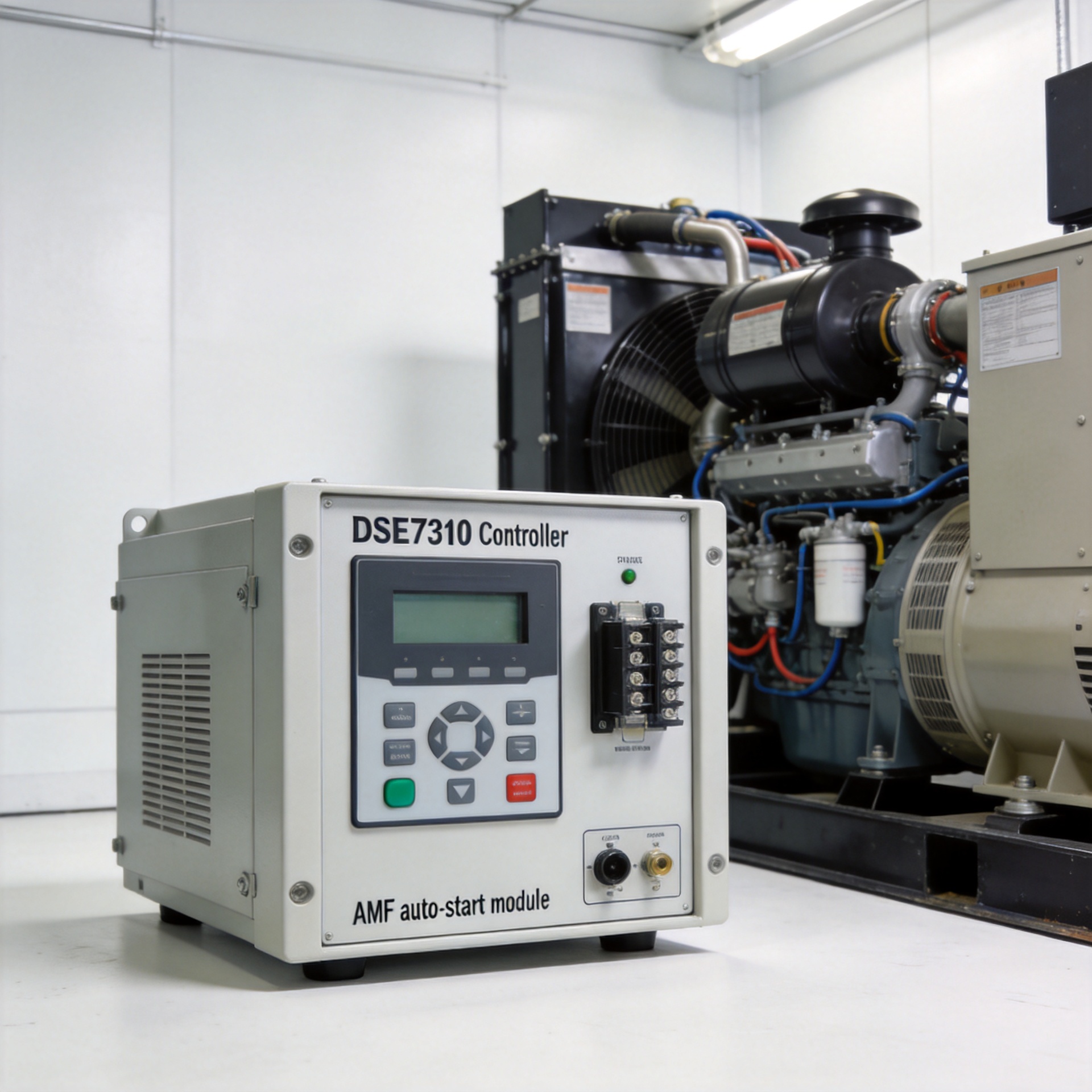
DSE7310 Controller: Deep Sea AMF Module Overview
Are you evaluating which AMF controller is most suitable for your next genset installation — and wondering whether the deep sea 7310 controller delivers what you actually need, or whether a SmartGen HGM alternative might serve your application better? That distinction matters more than most buyers realize, and getting it wrong can mean a failed startup sequence during a real mains outage.
As a technical consultant working with generator control components, the question I see most often is not about price — it is about whether the controller's AMF logic, I/O configuration, and communication interfaces align with site conditions. This article breaks down the deep sea 7310 controller's core capabilities, compares it side by side with the SmartGen HGM series, and covers the wiring and configuration points that system integrators typically encounter in the field.
What Is the Deep Sea 7310 Controller?
The deep sea 7310 controller is an auto start control module from Deep Sea Electronics (DSE), designed for single diesel or gas gen-set applications. In its MKII version, it provides a feature-rich platform covering gen-set control, transfer switch control, metering, monitoring, and protection within a single compact unit.
Key technical specifications of the DSE7310 MKII include:
- Configurable inputs/outputs: 9 inputs, 8 outputs — flexible enough to accommodate most site-specific monitoring and load-switching requirements
- Fuel usage monitoring with low-level alarms — operators can track consumption trends and catch low-fuel conditions before a dry-start event occurs
- 3-phase generator and mains (utility) sensing with protection — a core requirement for AMF applications
- Back-lit LCD display with LED status indicators for local monitoring without additional instrumentation
- Ethernet + Modbus TCP and CAN bus support, enabling integration with SCADA systems and remote monitoring platforms
- Web-based configuration and event-triggered email or SMS alerts — practical for unattended standby installations
The AMF (Automatic Mains Failure) feature set in the deep sea 7310 controller provides automatic gen-set start when utility power fails, ATS (Automatic Transfer Switch) control to transfer load to the generator, and automatic retransfer and gen-set stop when mains supply recovers. If your application runs on a predictable standby profile — single gen-set, straightforward transfer logic — the DSE7310 handles that scenario well. If the load swings frequently or the site requires dual gen-set or load-sharing control, you would want to evaluate more advanced modules in the DSE series.
Deep Sea 7310 Controller vs SmartGen HGM: A Practical Comparison
When selecting between a deep sea 7310 controller and a SmartGen HGM series module, the decision usually comes down to three factors: functional depth, integration ecosystem, and sourcing reliability. Here is how they compare across the criteria that matter most to engineers and procurement teams:
| Criterion | DSE7310 MKII (Deep Sea 7310 Controller) | SmartGen HGM Series |
|---|---|---|
| AMF / Auto-start | Yes — 3-phase mains sensing, ATS control, automatic retransfer | Yes — microprocessor-based AMF with precision parameter measurement |
| I/O Configurability | 9 configurable inputs, 8 configurable outputs | Varies by model; HGM6110/6120 offer similar I/O range |
| Display | Back-lit LCD with tactile keypad and LED indicators | LCD display; menu depth varies by model generation |
| Communication | Ethernet, Modbus TCP, CAN bus, USB | RS485, Modbus RTU; Ethernet optional on higher-end models |
| Remote Monitoring | Web interface, email/SMS alerts, DSEWebNet cloud (optional) | SmartGen Cloud platform; PC software configuration |
| Configuration Tool | DSE Configuration Suite PC software | SmartGen PC tool; straightforward menu setup |
| Market Ecosystem | Global standard in European and export markets; widely documented | Common in Asia-Pacific markets; strong in mid-range applications |
| Documentation Availability | Comprehensive operator manuals and wiring diagrams publicly available | Documentation generally available; translated quality varies |
Over time, most buyers working with generator controllers develop a preference for confirming the communication interface before evaluating price. Whether you are sourcing a deep sea 7310 controller for a European compliance site or comparing dg controller price across multiple vendors, the integration requirements — Modbus TCP versus RS485, web interface versus local HMI — usually narrow the shortlist faster than unit cost comparisons alone.
If your priority is a globally documented, Ethernet-native AMF controller with a large installed base, the deep sea 7310 controller is the stronger fit. If your application is cost-sensitive and your integration environment is primarily RS485-based, an HGM series module may offer adequate functionality at a lower amf controller price point. The same comparison logic applies when you are evaluating comap controller price alongside DSE options — neither product line is universally superior, and the right answer depends on your specific site and communication requirements.
AMF Logic and ATS Control: What to Confirm Before Installation
The compatibility-over-spec mindset applies directly here: the most common field problem with AMF controllers is not component failure — it is a mismatch between the controller's transfer timing parameters and the site's ATS contactor or transfer switch response characteristics.
For the deep sea 7310 controller, the following configuration parameters should be verified and matched to your ATS hardware before commissioning:
- Mains fail delay: The time the controller waits after detecting mains loss before initiating a gen-set start sequence. Set too short, and nuisance starts occur during brief grid dips. Set too long, and load transfer is delayed past acceptable limits.
- Engine warm-up time: The period the gen-set runs unloaded before the ATS transfer command is issued. This must be matched to the engine's thermal stabilization requirement.
- Mains return delay: Time the controller waits after mains voltage recovers before retransferring load back to utility. Rushing retransfer can cause inrush and voltage disturbance.
- Transfer switch interlock: Ensure the DSE7310's output logic is wired to match the contactor's coil voltage and contact configuration — not just the pin assignment in the manual.
Wiring documentation for the deep sea 7310 controller — including wiring diagrams, installation instructions, and compatibility charts — is available through DSE directly and should be confirmed as part of any supply package. Technical documentation provided at point of supply reduces the time your installation team spends sourcing this information independently, which is a practical advantage when commissioning in the field.
Pricing Considerations for AMF and DG Controllers
When evaluating amf controller price or comparing the dg controller price range across different platforms, buyers frequently overlook two cost drivers: the compatibility verification process and the documentation package included with the order. A lower quoted amf controller price from a general electronics distributor may not include wiring diagrams, model-specific configuration guides, or a pre-shipment compatibility check against your gen-set model — costs that shift to your installation team instead.
The same logic applies when assessing comap controller price benchmarks against DSE pricing: catalog unit prices and the total cost of integrating a controller into a specific site are different numbers. For wholesale procurement of DSE series modules, sourcing through a specialized generator parts supplier with direct manufacturer access reduces that gap.
Related DSE Products Available for Sourcing
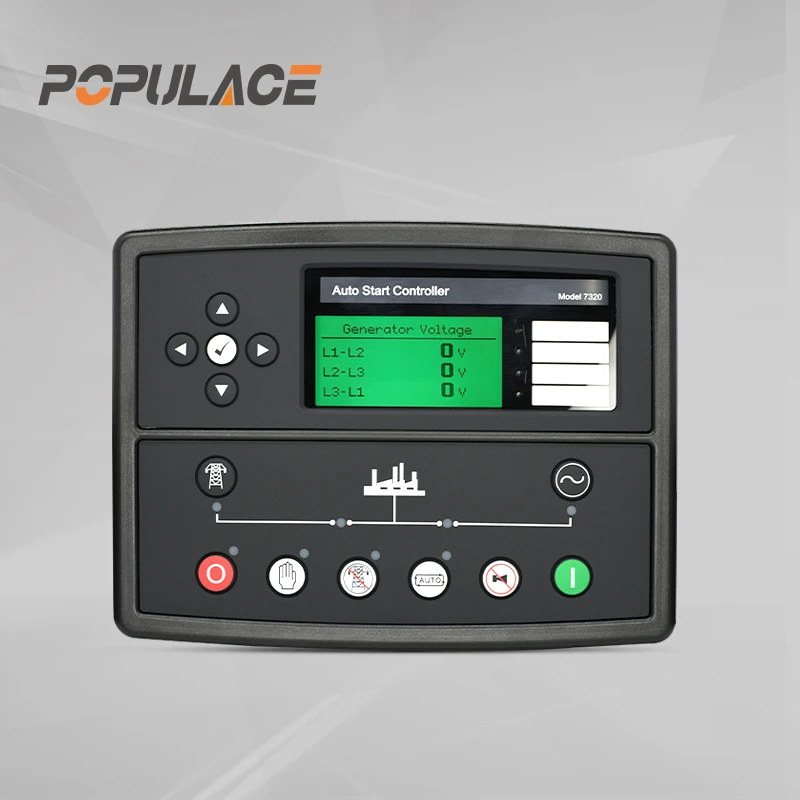
If the deep sea 7310 controller's feature set does not fully match your application — for instance, if you need full AMF with a dedicated mains contactor output, or parallel/synchronizing capability — the following modules in the DSE series extend those capabilities:
- POPULACE DSE7320 MKII AMF Generator Control Module — an AMF-specific controller with mains sensing and ATS logic built in, suitable for applications that require a dedicated Auto Mains Failure configuration beyond the DSE7310's baseline.
- DSE4520 MKII Auto Mains Failure Control Module — a dedicated AMF controller designed for single gen-set AMF applications, with a focused feature set for straightforward utility-backup installations.
- DSE8610 MKII Synchronising Load Sharing Auto Start Control Module — for applications requiring multiple gen-set synchronization and load sharing, this module steps beyond AMF into paralleling control.
Conclusion
The deep sea 7310 controller is a well-established, globally supported auto start and AMF module that covers the majority of single gen-set standby applications. Its strengths are breadth of I/O, Ethernet-native connectivity, and an extensive documentation ecosystem. Its boundaries are single gen-set scope and the need for correct AMF transfer timing configuration at commissioning.
Compared to SmartGen HGM alternatives, the deep sea 7310 controller offers deeper communication integration and a larger global installed base — advantages that matter most in European markets or applications where remote monitoring and SCADA integration are requirements. When comparing dg controller price or evaluating comap controller price in parallel, factor in the total integration cost, not just the module unit cost.
For wholesale procurement or project quantity sourcing of the DSE series — including the DSE7320 MKII and DSE4520 MKII AMF modules — contact Populace Electronic Co., Ltd. at [email protected] or visit our Alibaba store at populaces.en.alibaba.com to confirm model availability and request a compatibility verification before placing your order.






