
 EN
Diesel Generator Governor: Selection and Calibration
A diesel generator governor is the engine-speed control element that helps a genset hold frequency as load changes. For a technical buyer, the useful question is not simply “which governor fits?” It is whether the controller, actuator, fuel system, engine variant, and operating duty work together. A governor that is electrically compatible but poorly tuned can still cause hunting, slow recovery, unstable load sharing, or overspeed trips.
As a generator-parts technical consultant, I start with the operating profile: a fixed industrial set with a steady base load needs a different response from a mobile power unit that sees abrupt motor starts and frequent transport. Price matters, but compatibility and controllability usually decide the real cost of the replacement.
What a diesel generator governor controls
The governor measures actual engine speed, compares it with the selected speed reference, and changes fuel delivery through a mechanical linkage or an electronic actuator. Because alternator frequency follows engine speed for a given pole count, speed stability supports stable output frequency. The diesel generator governor does not replace voltage regulation: the governor manages speed and frequency, while an AVR manages alternator voltage. That distinction is useful when a fault report mentions an sx460 avr manual; follow the applicable manual for voltage adjustments rather than using AVR controls to correct a speed problem.
In a simple feedback loop, a load increase tends to pull engine speed down. The governor senses the error and commands more fuel. When the load falls, it reduces fuel. Response gain, stability compensation, actuator travel, and the engine’s fuel-system condition all influence whether this correction is smooth.
Mechanical or electronic governor?
| Option | Where it fits | Selection considerations |
|---|---|---|
| Mechanical governor | Older or simpler engines, basic duty cycles | Direct and serviceable, but its adjustment range and transient response may be less flexible. |
| Electronic governor | Industrial power generation, variable loads, and parallel-capable sets | Uses a speed pickup, controller, and actuator; verify supply voltage, pickup signal, actuator current range, and control-mode support. |
There is no universal winner. A mechanical governor can be appropriate where the engine and duty are simple. An electronic diesel generator governor is often easier to configure for demanding transient loads or coordinated operation, provided the wiring, actuator, and controller are matched. Do not assume two controllers with a similar connector or case size have interchangeable settings.
Match the governor to the application
Fixed industrial generator sets
For industrial power generation, begin with rated speed, frequency, engine model, actuator type, speed-sensor arrangement, and the largest expected step load. If the set runs alone, frequency holding and recovery after load steps are primary. If it will share a bus, ask how load sharing is handled and whether the governor accepts the needed bias or load-sharing signal.
Mobile and rental power units
Mobile units commonly face rapid changes: pumps, compressors, welders, or mixed site loads may cycle on and off. Here, confirm vibration-resistant installation, supply tolerance, speed-signal integrity, and a tuning range that can settle after a transient without repeated oscillation. A clean fuel system also matters. Before blaming the controller, inspect restrictions and maintenance items such as the generator oil filter, fuel filters, linkages, and actuator movement according to the engine maker’s service schedule.
Isochronous and droop modes: choose the operating objective
In isochronous mode, the governor aims to return engine speed to its setpoint after a load change. This is generally the practical starting point for one generator supplying an isolated load because the set is expected to maintain its selected frequency across its normal load range.
Droop intentionally allows speed reference to decrease as load rises. This controlled slope helps multiple generators share load when their systems are designed for parallel operation. Field references often discuss droop values in the 3–5% range, but that is not a universal commissioning value. The correct setting depends on the controller, engine response, load-sharing method, and commissioning procedure. In a parallel system, one unit may establish bus frequency while other units participate in droop or a coordinated load-sharing scheme; the governing philosophy should come from the system design, not trial and error.
A practical calibration sequence
- Make the system safe. Isolate the set as required, use qualified personnel, and have the engine/controller documentation available. Verify that the speed pickup, actuator wiring, and fuel linkages are intact before changing parameters.
- Record the baseline. Note no-load speed, rated frequency, response to a known load, existing gain/stability/droop settings, alarms, and ambient conditions. This record makes a bad adjustment reversible.
- Set the speed reference. With the correct measurement equipment, set no-load rated speed according to the engine and generator specification. Do not choose a target RPM from a generic online example.
- Check actuator direction and authority. Confirm that a positive control command moves fuel in the expected direction and that the actuator has usable travel without binding. Incorrect direction or inadequate travel can create immediate instability.
- Tune one parameter at a time. Apply controlled load steps. Increase response only until recovery is acceptable; if the engine begins to hunt, back away and review stability compensation, pickup noise, actuator condition, and fuel supply rather than continuing to raise gain.
- Configure the operating mode. Use isochronous control for the approved standalone case, or the specified droop/load-sharing setting for parallel operation. Test synchronization and sharing only under the site’s approved commissioning plan.
- Document acceptance. Save final settings, load-test observations, alarm behavior, and the replacement part number for future service.
Component options and procurement checks
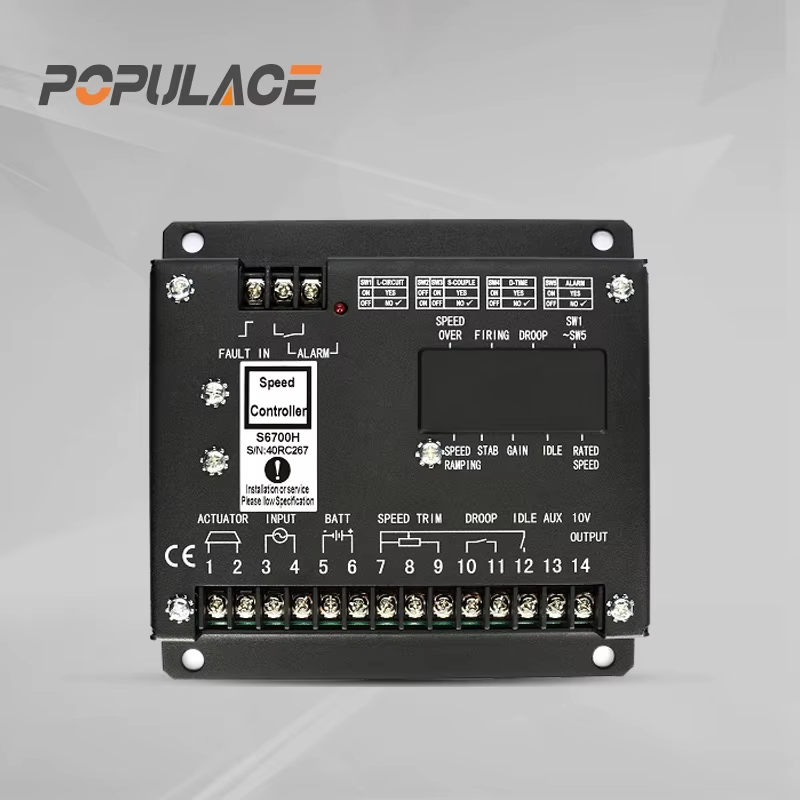
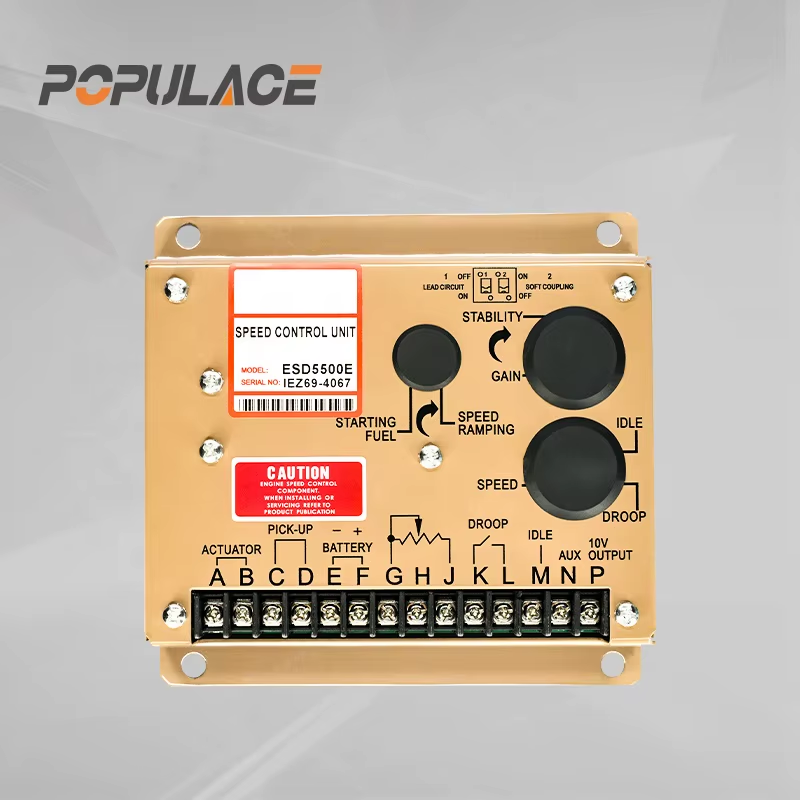
When sourcing a replacement, compare the confirmed engine and actuator interfaces first, then controller supply, pickup input, output type, mounting, and support for the intended control mode. KYGEN Power lists a S6700H Governor Speed Controller Diesel Engine Generator Speed Control Unit and an ESD5500E Speed Governor Generator Speed Control Unit Diesel Engine ESD5500E. These links are useful starting points for a specification review, not proof of suitability for every engine. For actuator-based systems, also verify the matching external actuator for generator speed governor applications.
Request the engine model, rated speed, actuator part number, controller input/output requirements, standalone or parallel duty, and current fault symptoms before placing an order. That short checklist prevents many returns that are wrongly described as controller failures.
Final selection checklist
- Confirm engine model, rated RPM, frequency, and actuator compatibility.
- Choose mechanical simplicity or electronic configurability based on the duty cycle.
- Define standalone versus parallel operation before selecting isochronous or droop behavior.
- Calibrate with measured load steps and documented baseline settings.
- Rule out sensor, wiring, fuel, linkage, and maintenance issues before replacing the diesel generator governor.
A disciplined selection and calibration process turns the diesel generator governor from a generic spare part into a controlled part of reliable generator operation.






