
 EN

DG Set Controller: Auto Start and Protection Module
When a utility power failure hits a critical facility — a hospital, a data center, a manufacturing plant — the speed and reliability of the backup power response depends entirely on how well the dg set controller is configured. This module is not a passive component. It monitors, decides, and acts. For wholesale buyers and brand merchants evaluating genset control inventory, understanding what a dg set controller does, how different operating modes compare, and what distinguishes a capable digital dg set controller from an analog panel is the practical foundation for sourcing or specifying genset control equipment.
Core Functions of a DG Set Controller
At its core, a dg set controller manages three interconnected responsibilities: automatic start and stop sequencing, real-time parameter monitoring, and protective shutdown. Every dg set controller on the market — regardless of brand or complexity — addresses these same functions, though the quality of implementation and configurability varies significantly. These functions operate together. The controller continuously reads engine and alternator data: voltage, frequency, oil pressure, coolant temperature, and load current. When any value drifts outside configured limits, the controller either triggers an alarm or executes a shutdown depending on the severity and the protection settings in place.
Auto start logic is typically the entry point for most buyers evaluating controllers. The controller initiates the start sequence based on a trigger — a mains failure signal, a manual command, or a remote input — and manages the crank cycle, including pre-heat timing, crank duration, and start confirmation. If the engine fails to start within the configured attempts, the controller registers a start failure alarm and stops the sequence. Shutdown sequencing is equally important: most controllers include a configurable cooling run timer that keeps the engine running at no load for a defined period before the stop command executes.
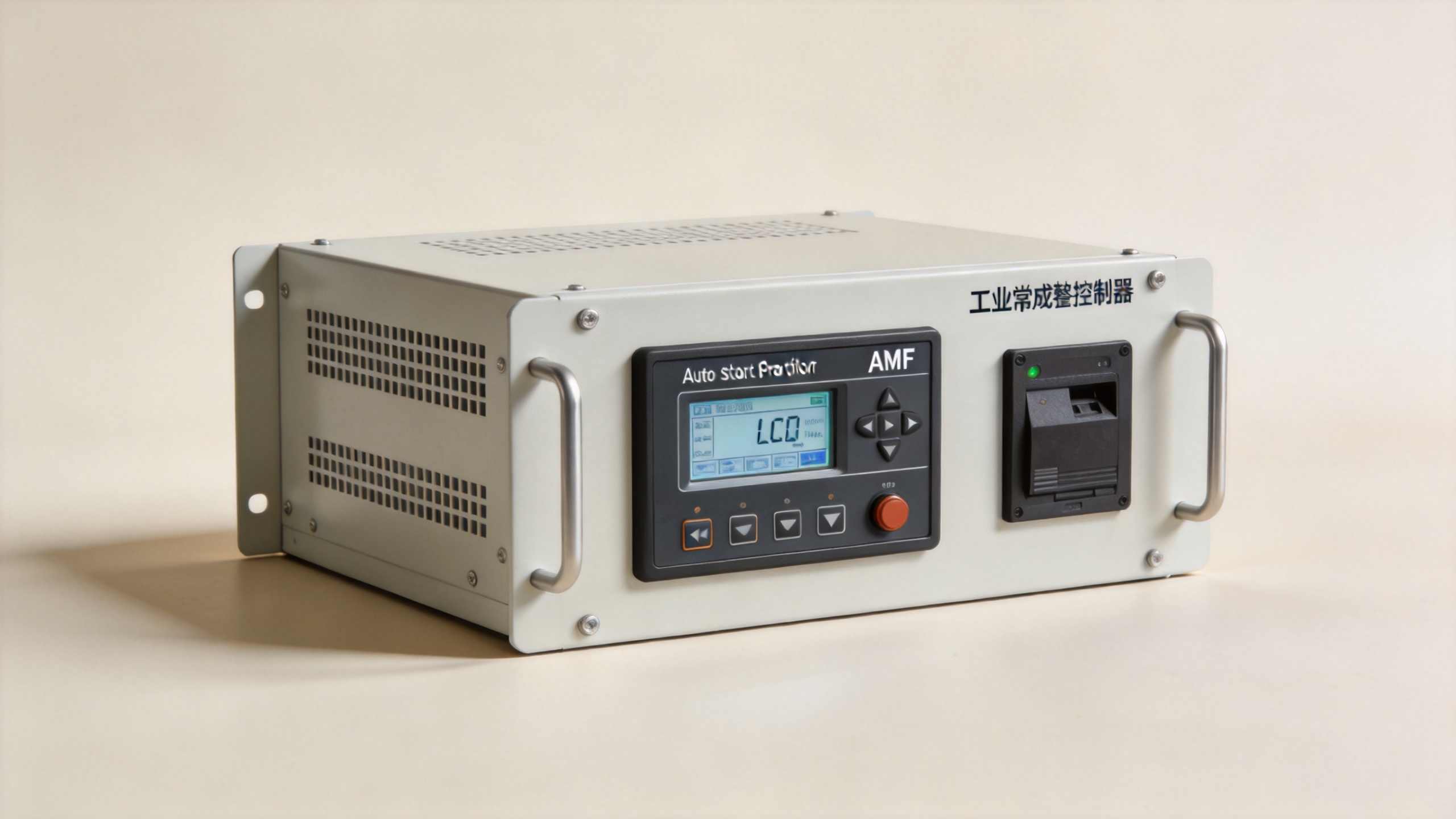
AMF, ATS, and Manual Control: How the Modes Differ
The three primary operating modes — AMF (Auto Mains Failure), ATS (Auto Transfer Switch), and Manual — address different operational requirements and site configurations.
AMF mode is designed for sites that need fully automatic backup power without any human intervention. The controller monitors the mains supply continuously. When utility voltage or frequency falls outside acceptable limits, the AMF sequence initiates: the generator starts, the transfer switch moves the load from mains to generator, and once utility power is restored and stable, the transfer reverses and the generator shuts down after the cooling period. AMF mode is the standard choice for critical power applications where consistent operator availability around the clock is not realistic.
ATS mode adds a layer of control by incorporating a physical transfer switch that the controller operates. Where AMF describes the control logic, ATS describes the electrical switching mechanism. In practice, many AMF controllers include built-in ATS output contacts. Buyers sourcing an AMF controller for a site that uses an external transfer panel — such as a Reliance Protran transfer switch panel or a Reliance 3006HDK automatic transfer switch — need to confirm that the controller's output signal timing and contact ratings are compatible with the transfer switch's input requirements. The controller generates the switch command; the ATS hardware executes the load transfer.
Manual mode removes the automation layer and puts start, stop, and transfer operations under direct operator control. This mode is appropriate for test environments, non-critical standby installations, or sites where a trained operator is on duty during any generator operation. Manual mode reduces the risk of unintended automatic operation during maintenance, but it eliminates the protection that AMF provides during unattended hours.
For wholesale buyers selecting controllers across a range of customer applications, stocking dg set controller models that support all three modes — selectable via panel switch or software configuration — provides the broadest application flexibility without requiring separate SKUs for each mode. A single well-chosen dg set controller platform can cover most site requirements.
Digital Controllers vs. Analog Panels: What Changes
Analog genset control panels have been in use for decades. They work, and for simple applications — a small standby generator, a site where manual operation is acceptable — they continue to be cost-effective. But the limitations of analog panels become apparent once the installation requires configurable protection thresholds, communication with a building management system, event logging, or remote monitoring.
Digital dg set controllers, exemplified by platforms from Deep Sea Electronics, SmartGen, and Datakom, replace fixed hardware settings with configurable parameters accessible through a keypad or PC connection. Protection thresholds — the voltage window that triggers a mains failure call, the low oil pressure level that initiates a shutdown, the overcurrent limit — can be adjusted to match the specific engine, alternator, and site requirements without rewiring. Event logs record start attempts, fault codes, and parameter excursions with timestamps, which simplifies fault diagnosis and provides maintenance records for compliance purposes.
For generators operating in applications that require a cummins voltage regulator interface or other external regulation components, digital controllers support configurable analog outputs and communication protocols (typically RS-485 with Modbus RTU) that allow integration with voltage regulation modules and remote monitoring platforms. This connectivity is not available on analog panels.
Featured Genset Controller Options
For wholesale buyers building out an inventory of genset control equipment, the following options cover the core application requirements from single-set AMF control to DSE-based advanced monitoring.
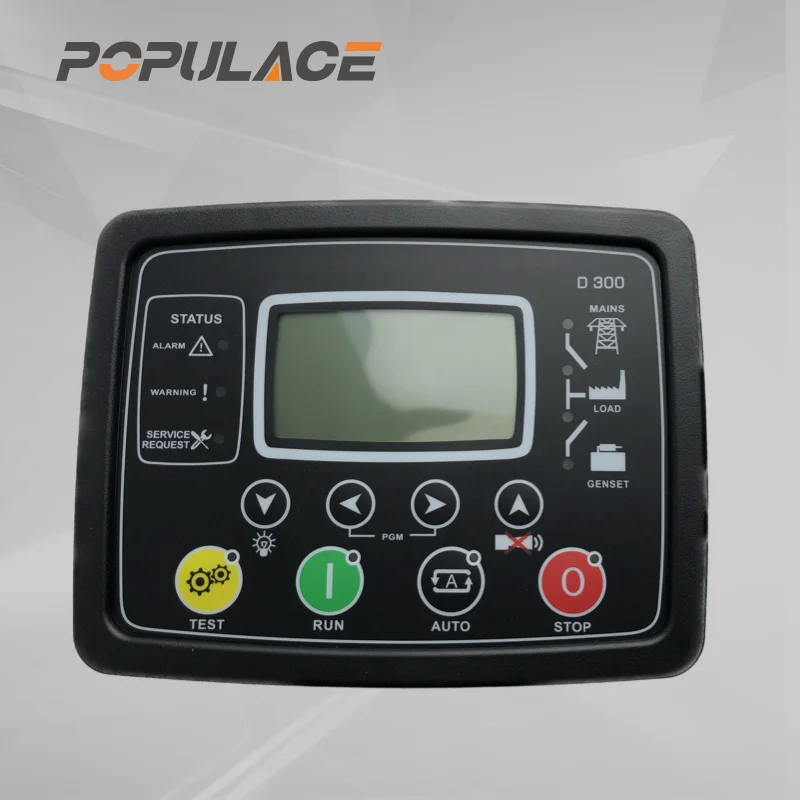
The DATAKOM D-300-MK3 Genset Controller is a full-featured AMF/manual controller module with protection, monitoring, and communication functions covering the core genset control requirements. The D-300-MK3 supports configurable protection parameters, event logging, and communication interfaces, making it suitable for installations where remote monitoring or BMS integration is required.
For sites requiring a dedicated AMF panel solution, the POPULACE AMF Controller DKG307 provides a panel-mounted control solution with AMF functionality, fault indication, and ATS control outputs in a format ready for control panel integration.
The POPULACE DSE5110 Genset Controller is built on the Deep Sea Electronics DSE5110 platform and delivers real-time monitoring of engine and alternator parameters with DSE-standard auto start control and fault protection. The DSE5110 platform is widely recognized in the market, which simplifies customer acceptance and reduces commissioning time for installers familiar with DSE configurations.
Installation and Commissioning Considerations
A dg set controller is only as reliable as its installation. Several practical points affect commissioning outcomes.
- Wiring verification before first start: Confirm polarity on all input signals — mains sensing, start output, stop output, and fault inputs — before applying power. Reverse polarity on mains sensing is a common source of false AMF triggers during initial commissioning.
- Protection threshold calibration: Digital controllers ship with default thresholds that may not match the specific engine and alternator. Low oil pressure, high coolant temperature, and under/overvoltage limits should be reviewed against the engine manufacturer's specifications and adjusted before the generator enters service.
- Cooling run timer: Set the cooling run timer based on the engine manufacturer's recommendation for the specific kVA rating. Insufficient cooling run time accelerates turbocharger wear on turbocharged engines.
- Transfer switch compatibility: When the controller interfaces with an external transfer switch, verify contact ratings, signal timing, and any interlock logic required by the transfer switch manufacturer before live load testing.
For wholesale buyers supplying genset controllers to installation contractors, providing clear product documentation — wiring diagrams, configuration parameter tables, and commissioning checklists — reduces the risk of installation errors and post-installation support requests. Suppliers who include documentation as a standard part of the order package reduce friction across the downstream supply chain.
Sourcing DG Set Controllers: What Wholesale Buyers Should Evaluate
Compatibility is the primary sourcing risk for genset controllers. A controller that does not match the engine's starting requirements, the alternator's sensing voltage range, or the site's transfer switch interface creates installation problems that cost significantly more to resolve than the price difference between controller options. Pre-order specification confirmation — confirming the engine model, alternator type, and transfer switch requirements — is a standard step that credible suppliers include in the quotation process.
Batch consistency matters for distributors who stock controllers for resale or installation contracts. A controller model that performs reliably in the first batch should deliver the same performance in subsequent orders. Suppliers with documented quality control processes for electronic control components — including incoming inspection and functional testing — reduce the risk of inconsistent performance across batches.
For brand owners building a product line around genset control equipment, the availability of OEM packaging and private-label options at reasonable minimum quantities is a practical differentiator. The genset controller market serves a range of customers from single-unit end users to distributors managing fleet maintenance contracts, and sourcing flexibility — trial orders, volume pricing, documentation support — determines which suppliers can support a growing business across its different growth stages.






