
 EN
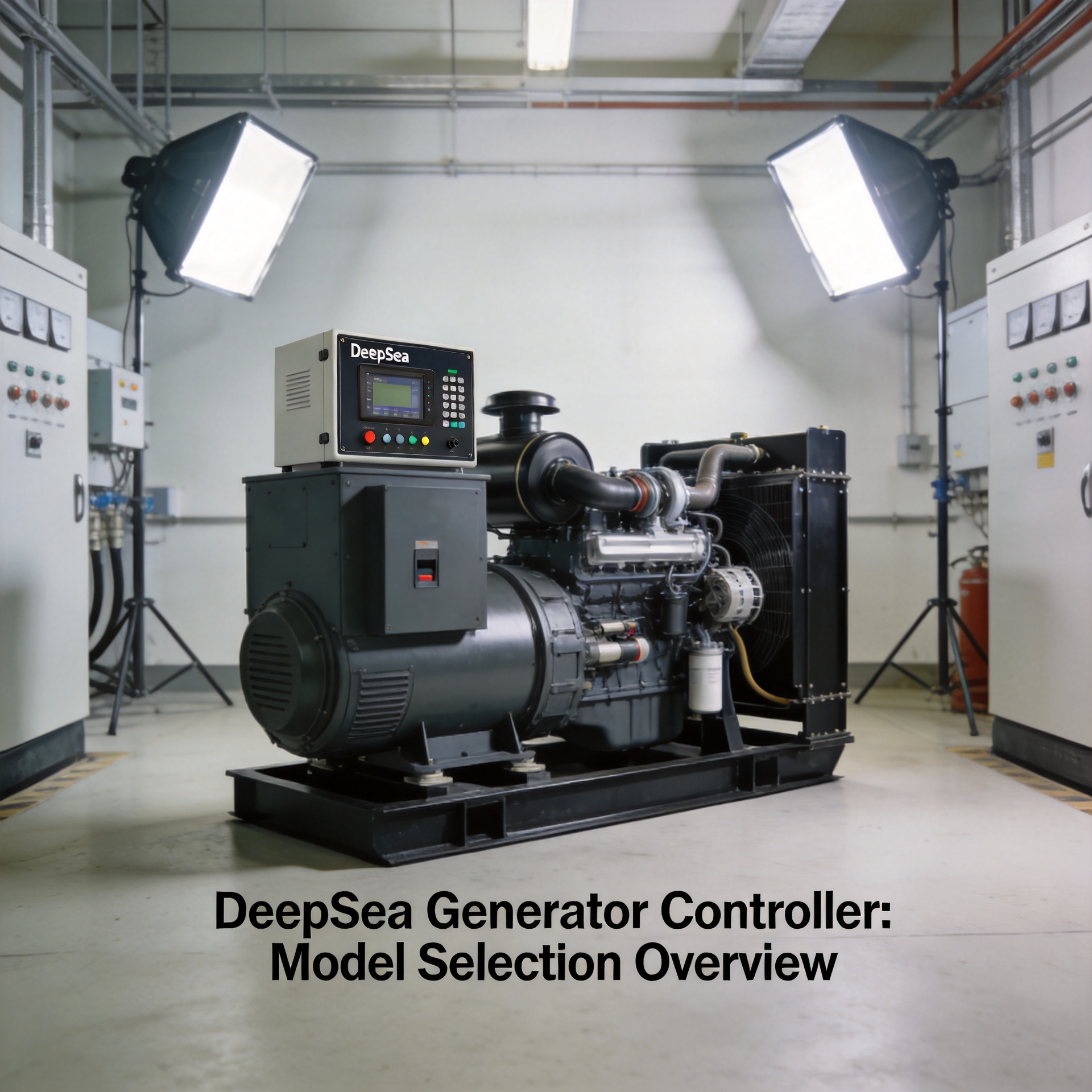
DeepSea Generator Controller: Model Selection Overview
When you work across multiple genset installations, the controller selection often ends up being the decision that determines how much rework you deal with later. The deepsea generator controller range from Deep Sea Electronics (DSE) has built its reputation on a tiered architecture, with each series designed around specific operational scenarios rather than a single controller stretched across all use cases. Whether you are specifying a deepsea generator module for a small commercial standby system or a large multi-generator paralleling installation, understanding which DSE series applies to your site is the starting point.
This overview is written from the perspective of a system integrator who sources and installs deepsea generator controllers across a range of projects. The goal is to give procurement teams and engineering leads enough context to make a sound selection decision without working through the full DSE product catalog.
How the DSE Deepsea Generator Series Is Structured
DSE organizes its deepsea generator controller lineup into three core segments:
- DSE4000 Series — Auto Mains Failure (AMF) and manual/auto start modules for single generator setups. The entry-level AMF segment for deepsea generator control applications.
- DSE7000 Series — Full AMF and ATS (Automatic Transfer Switch) control with advanced engine monitoring, load management, and remote communications capability. The most widely specified deepsea generator controller tier for mid-range projects.
- DSE8000 Series — Advanced synchronising, load sharing, and paralleling controllers for multi-generator applications and complex site configurations. The deepsea generator module of choice when N+1 or multi-unit setups are involved.
For a stable single-generator load profile, the 4000 or 7000 series deepsea generator controller will usually cover the requirement. If the load swings frequently across multiple generators or load sharing is needed, the 8000 series becomes the relevant tier.
Key Deepsea Generator Controller Models: DSE4520, DSE7320, and DSE8610
DSE4520 MKII — Entry AMF for Single-Generator Sites
The DSE4520 MKII Auto Mains Failure Control Module is suited for installations where the core requirement is reliable AMF operation: detecting a mains failure, automatically starting the deepsea generator, then returning to mains when utility power is restored. It covers engine monitoring (oil pressure, coolant temperature, battery voltage), configurable digital inputs and outputs, and an LCD display with event logging. For smaller commercial sites or light industrial applications, the DSE4520 MKII offers a cost-efficient entry into the deepsea generator control ecosystem without the overhead of features the application does not need.
DSE7320 MKII — The Standard Deepsea Generator Controller for AMF Applications
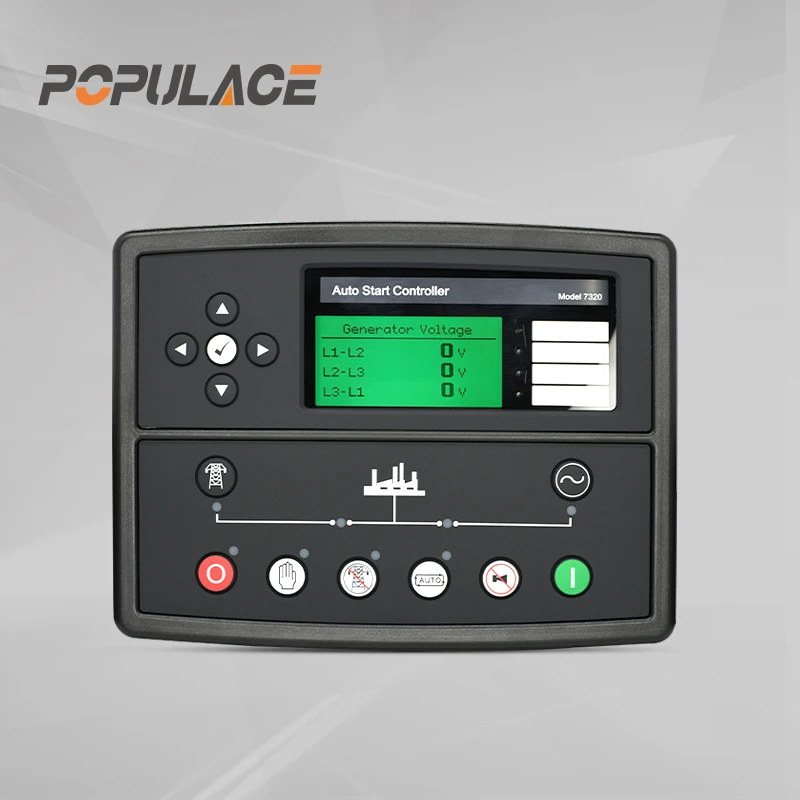
The POPULACE DSE7320 MKII AMF Generator Control Module is the deepsea generator controller most frequently specified in mid-range and larger single-generator projects. Buyers who have dealt with installation failures tend to recognize that documentation quality and configuration depth matter more than unit cost. The DSE7320 addresses this with comprehensive wiring documentation, PC-based configuration via DSE Configuration Suite, and a wider range of configurable protection thresholds. AMF function includes automatic mains failure detection, genset start sequence, load transfer, and return-to-mains with settable time delays. ATS control outputs are integral to the module, which removes the need for a separate switching relay in most deepsea generator setups. The DSE7320 MKII is also the model most commonly referenced in online tutorials, which simplifies onboarding for new installation technicians.
DSE8610 MKII — Paralleling and Load Sharing Deepsea Generator Control
The DSE8610 MKII Synchronising Load Sharing Auto Start Control Module targets applications that require two or more deepsea generator units to operate in parallel. Auto start, synchronisation to bus, load sharing, and selective shutdown on load reduction are the core capabilities. For projects involving a data center, large industrial facility, or a standby system with N+1 redundancy, the DSE8610 MKII provides the control layer needed for synchronised multi-unit deepsea generator operation. Commissioning is more involved than standalone AMF modules: the module requires correct CT ratio configuration, bus voltage sensing, and load control calibration before it operates as designed.
DeepSea Generator Controller vs SmartGen HGM: A Selection Comparison
For procurement teams evaluating both DSE deepsea generator controllers and SmartGen HGM series, the distinction generally comes down to ecosystem familiarity, support infrastructure, and application complexity:
| Criterion | DeepSea Generator DSE Series | SmartGen HGM Series |
|---|---|---|
| AMF Function Coverage | Full AMF/ATS in DSE4520 and DSE7320 | Full AMF/ATS in HGM6120/HGM7110 range |
| Paralleling Capability | Dedicated DSE8000 deepsea generator series | HGM9510/9520 series |
| Configuration Software | DSE Configuration Suite (PC-based) | PC software available, less widely adopted |
| Documentation Quality | Extensive wiring diagrams and installation manuals | Adequate; less community-generated content |
| Market Penetration | Dominant in Europe, strong globally | Strong in Asia-Pacific markets |
| Genset Controller Price | Mid to upper range; DSE7320 MKII is the benchmark | Comparable to slightly lower on equivalent models |
Those are the main deepsea generator controller selection criteria. In practice, for installations in regions where local technicians know DSE wiring conventions, switching to SmartGen can introduce a re-training overhead that offsets the price difference. The reverse also applies: if your supply chain is built around SmartGen spares, moving to a deepsea generator controller platform increases stock complexity. Both platforms deliver reliable AMF/ATS performance; the selection reflects operational context more than absolute technical superiority.
Wiring and Configuration Notes for Deepsea Generator Controller Installation
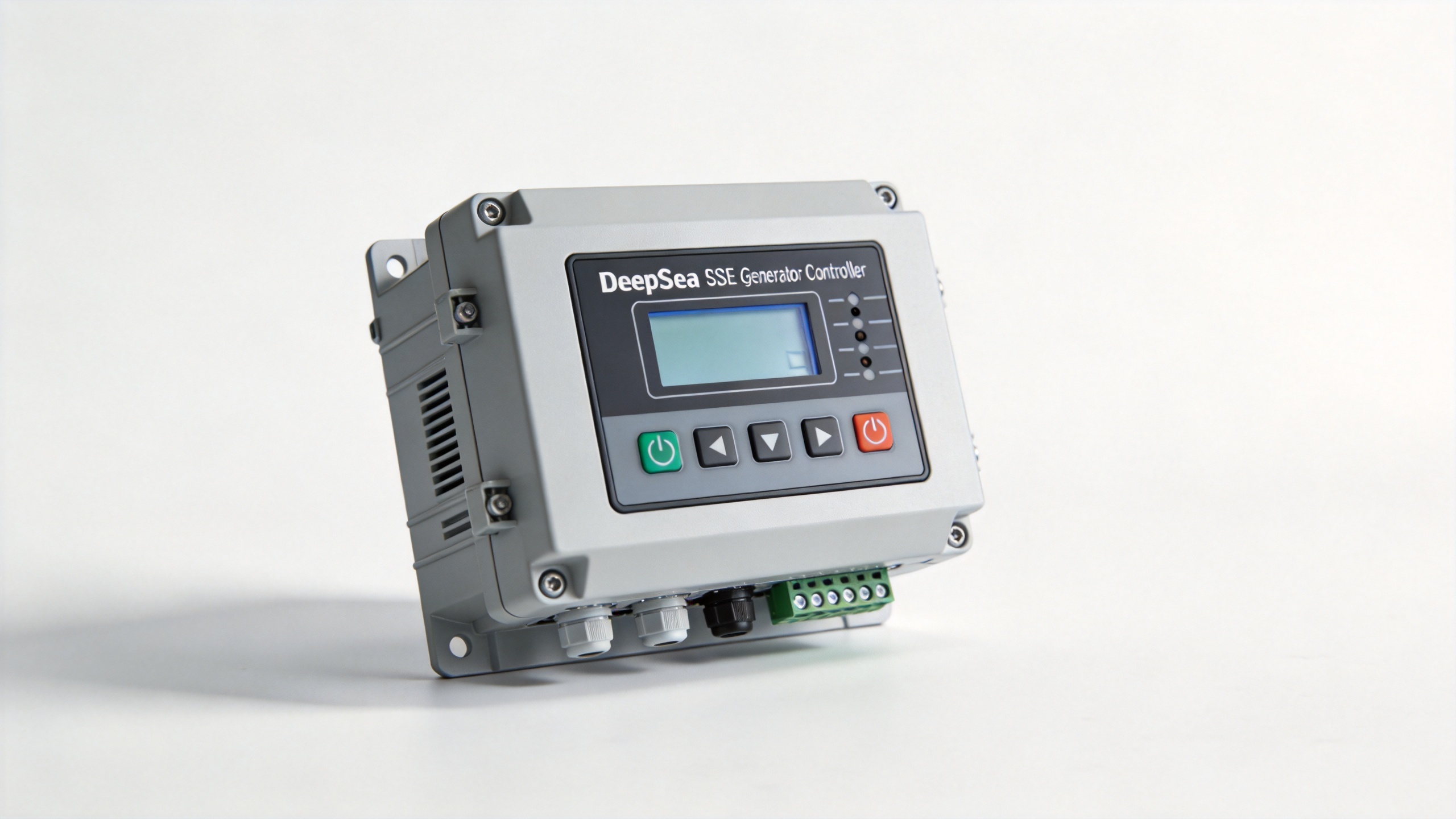
A few practical points when specifying or installing deepsea generator controllers:
- Input/Output mapping: DSE7320 MKII provides configurable digital inputs and outputs via the DSE Configuration Suite. Default configurations cover most standard AMF deepsea generator applications, but sites with custom transfer switching logic or auxiliary alarms will need to remap these before commissioning.
- Engine interface: The deepsea generator module supports J1939 CAN bus for compatible electronic engines, allowing direct parameter reading without individual sensor wiring. Confirm engine ECU compatibility before specifying this path.
- Remote monitoring: DSE7320 supports RS-232 and optional Ethernet or GSM modules for remote visibility. If SCADA integration or remote status monitoring is required, confirm the communications expansion module is in the BOM.
- Voltage regulator integration: For sites where an AVR is separately specified — including setups using an akari automatic voltage regulator or an akari avr 1000w unit for smaller standby generators — the deepsea generator controller handles engine-side start/stop and protection signaling while the AVR manages output voltage stability. These two components operate in parallel from a control logic perspective.
- DSE8610 MKII commissioning: Paralleling setups require careful CT ratio entry and synchronisation window calibration. Allow additional commissioning time compared to single-generator AMF installs.
Sourcing Deepsea Generator Controllers Through KYGEN Power
For buyers evaluating genset controller price alongside supply reliability, KYGEN Power (Fujian Kaiyue Electronics Co., Ltd.) stocks deepsea generator controller modules under the Populace brand, including the DSE7320 MKII, DSE4520 MKII, and DSE8610 MKII. Direct manufacturer supply removes cost layers compared to multi-tier distribution channels, which matters for both single-project procurement and volume orders. Technical documentation packages — wiring diagrams and configuration guides — are included with the deepsea generator modules, which reduces integration risk for engineering teams that have not previously worked with a given model variant.
Whether the current project calls for a straightforward AMF single-generator installation or a multi-unit paralleling setup, confirming the deepsea generator controller series before finalizing the BOM prevents scope changes downstream. The DSE4520 MKII, DSE7320 MKII, and DSE8610 MKII each target distinct application profiles. Matching the right module to the right site is where a clean installation begins.






