
 EN
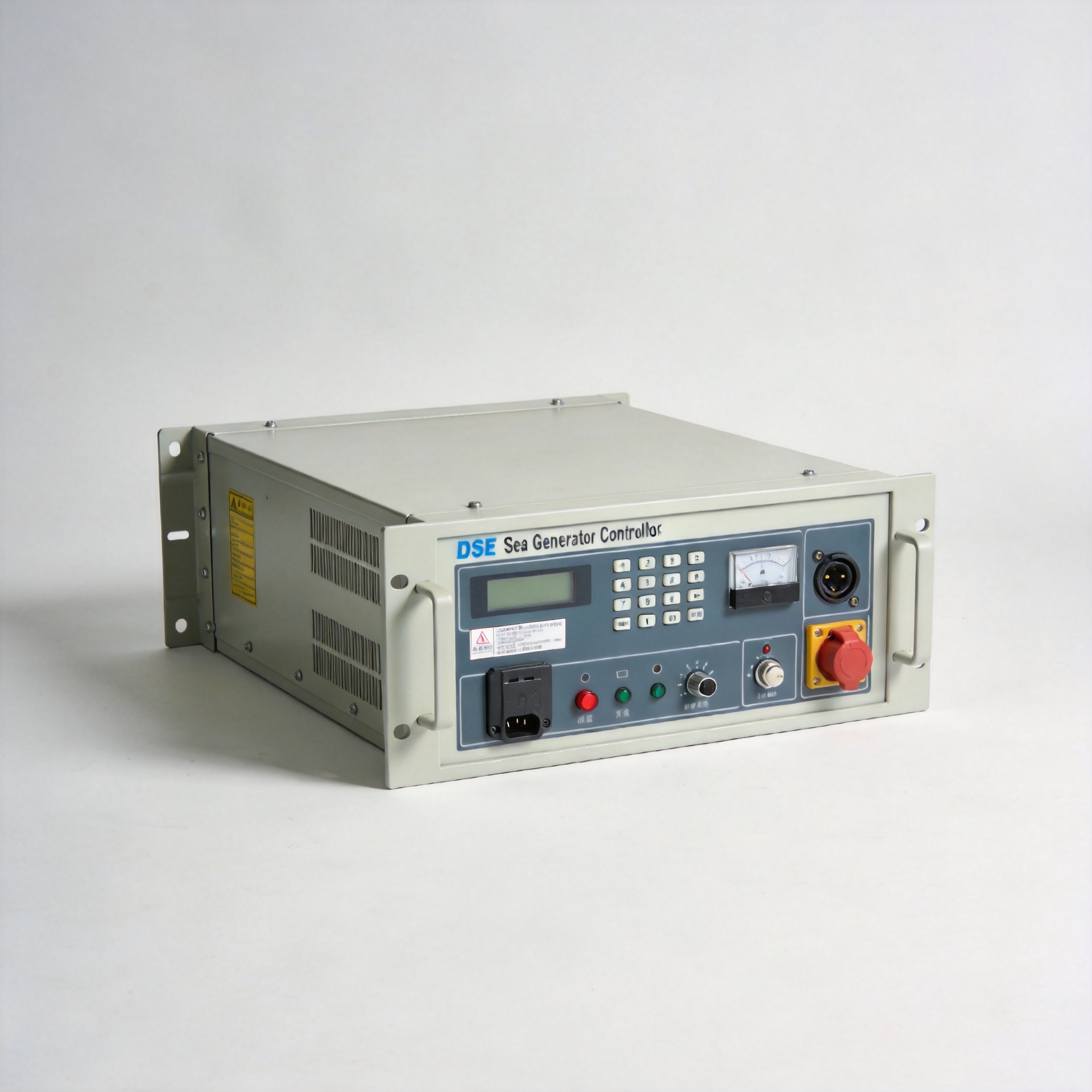
Deep Sea Generator Controller: Model Comparison
As a technical advisor working with generator control systems across standby and prime power installations, one question comes up consistently: which deep sea generator controller fits the application requirements? Whether you are sourcing for a single-site standby system or specifying controllers for a distributed power project, the answer depends less on brand familiarity and more on matching the control module to the actual protection and switching requirements.
Deep Sea Electronics (DSE) has built a dominant position in the generator control market by organizing its product line around application-specific functions — from basic auto start through AMF (Auto Mains Failure) and ATS (Automatic Transfer Switch) control, up to advanced paralleling and load sharing. This article covers the core functions common across the Deep Sea generator controller range, compares three key models in the AMF and synchronizing categories, provides a brief DSE versus SmartGen HGM reference for buyers evaluating both platforms, and closes with wiring and configuration notes for system integrators and installation teams.
Core Functions of a Deep Sea Generator Controller
Every deep sea generator controller in the DSE series is built around a common set of protective and control functions. Understanding these before selecting a model is the more reliable path than choosing on model number alone.
- Auto Start / Auto Stop: The controller monitors engine parameters and executes start or stop sequences based on configurable conditions — load demand, mains failure, remote command, or scheduled exercise runs.
- AMF (Auto Mains Failure) Control: On detecting utility power loss, the controller initiates a start sequence and transfers the load to the generator. On mains restoration, it transfers back and shuts the generator down after a configurable cooling period.
- ATS (Automatic Transfer Switch) Control: Some models include integrated or companion ATS output logic, managing the contactor signals that physically switch the load between mains and generator supplies.
- Engine Protection: Over-speed, under-speed, high coolant temperature, low oil pressure, and battery voltage alarms are standard across most DSE modules. The DSE7xxx and DSE8xxx series add extended protection input banks.
- Remote Monitoring: MODBUS RTU and CAN bus interfaces are present on mid-to-upper tier models, enabling integration with building management systems and remote SCADA platforms.
The shift most experienced engineers make after a few installations is realizing that controller selection is not about brand loyalty — it is about mapping the specific AMF or paralleling function to the correct module tier. A basic auto-start module will not handle mains transfer correctly in a standby application; selecting the wrong tier is a recoverable but costly mistake during commissioning.
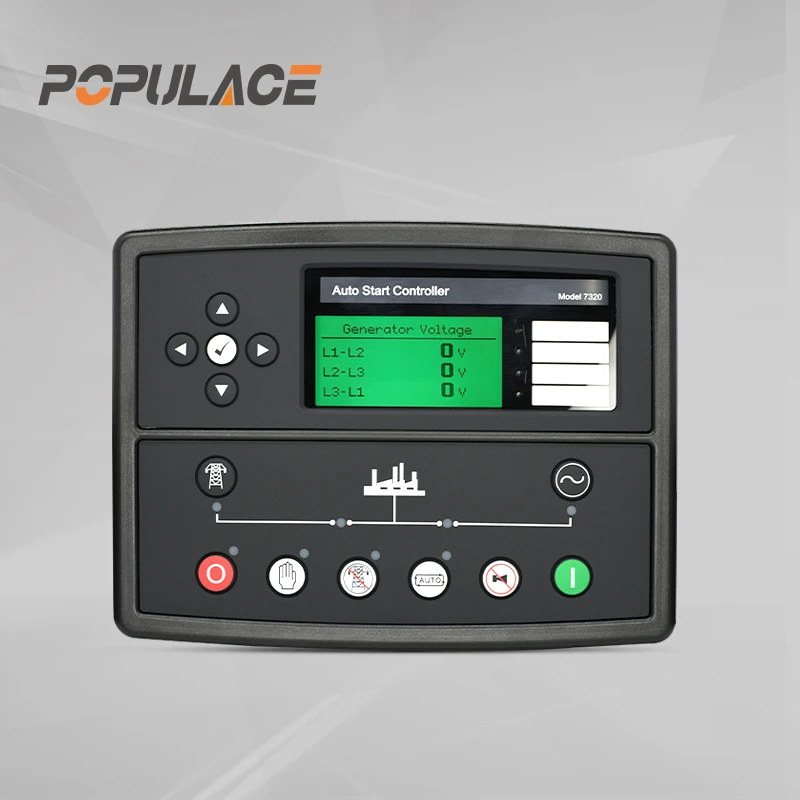
Model Comparison: DSE4520 MKII, DSE7320 MKII, and DSE8610 MKII
The following comparison covers three models widely used in AMF and paralleling projects. Each occupies a different position in the DSE product hierarchy.
| Feature | DSE4520 MKII (AMF) | DSE7320 MKII (AMF Advanced) | DSE8610 MKII (Synchronising) |
|---|---|---|---|
| Primary Function | Auto Mains Failure control | Advanced AMF with extended I/O | Synchronising & Load Sharing Auto Start |
| DC Supply Voltage | 8V–35V DC | 8V–35V DC | 8V–35V DC |
| AC Input Range | 15V–277V (L-N), 50/60Hz | 15V–277V (L-N), 50/60Hz | 15V–277V (L-N), 50/60Hz |
| ATS Output | Integrated | Integrated + configurable | Via companion module |
| Paralleling Support | Not supported | Not supported | Yes — multi-gen synchronisation |
| Remote Comms | RS232 / MODBUS RTU | RS232 / MODBUS RTU / CAN | RS232 / MODBUS RTU / CAN |
| Typical Application | Single-gen standby, commercial AMF | Industrial standby, complex AMF | Multi-gen power plants, load share panels |
If your application is a straightforward single-generator standby installation with mains monitoring and transfer switching, the DSE4520 MKII Auto Mains Failure Control Module covers the functional requirements at a cost-effective specification. For industrial sites requiring more configurable protection inputs, extended relay outputs, and CAN bus connectivity, the POPULACE DSE7320 MKII AMF Generator Control Module adds those capabilities without the complexity of a synchronising platform. Where multiple generators need to parallel and share load, the DSE8610 MKII Synchronising Load Sharing Auto Start Control Module is the appropriate tier.
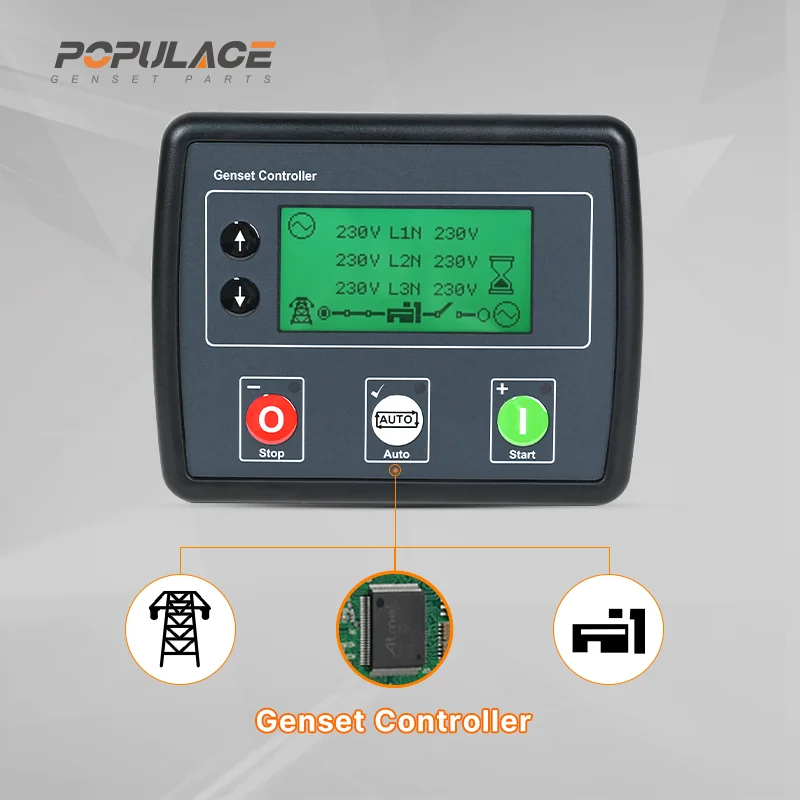
DSE vs SmartGen HGM: Key Selection Considerations
When evaluating the SmartGen HGM series (particularly the HGM6100N and HGM6120 models) offers AMF functionality that overlaps directly with the DSE4xxx range. Both platforms support standard AMF sequencing, relay outputs for ATS contactor control, and RS485/MODBUS communications for integration.
Where the two platforms differ in ways that affect real-world selection:
- Configuration Software: DSE modules use the PC-based DSE Configuration Suite, which has a well-established user base and extensive documentation. SmartGen controllers use their own configuration tools, which are generally straightforward but have a smaller English-language support community in non-Asian markets.
- Wiring Diagram Availability: Both platforms publish detailed wiring diagrams. DSE diagrams are model-specific and available through the DSE website and authorized distributors. SmartGen HGM diagrams are available but sometimes require version verification — the HGM6100N and HGM6120 series have minor connector differences between hardware revisions.
- Aftermarket Availability: DSE controllers have broader aftermarket availability through specialist parts suppliers. For power electronics engineers specifying replacement or retrofit projects, DSE part continuity is generally more predictable.
- Ecosystem Depth: For paralleling and advanced load management, DSE's DSE8xxx and DSE9xxx product tiers have no direct SmartGen equivalent at the same specification level. If a project has potential to scale from single-gen AMF to multi-gen synchronising, standardizing on DSE from the DSE4xxx or DSE7xxx tier preserves that upgrade path.
If your priority is a standard AMF application with the lowest initial module cost, both platforms are technically viable. If your priority is configuration flexibility, long-term part availability, and a clear upgrade path to paralleling, the DSE series has an advantage in ecosystem depth.
Wiring and Configuration Notes for System Integrators
For installation teams and system integrators working with deep sea generator controllers for the first time, a few consistent points come up during commissioning:
- Verify DC supply polarity and fusing before powering the module. DSE modules are polarity-protected in most cases, but incorrect fusing upstream can cause unexplained resets under load cranking conditions.
- Configure mains sensing inputs before testing AMF sequences. Voltage threshold settings (under-voltage and over-voltage limits) need to match the local supply nominal voltage. Default settings are typically calibrated for 230V nominal; 110V or 400V sites require manual adjustment through the configuration software.
- Use the correct start output current rating for the starter solenoid. The DSE4520 MKII and DSE7320 MKII have rated output currents for the crank and fuel outputs; exceeding these ratings through high-inrush solenoids requires an interposing relay.
- CAN bus termination: On DSE7xxx and DSE8xxx installations with CAN bus communication, both ends of the CAN network must have 120-ohm termination resistors installed. Missing termination is a common source of intermittent communication faults.
- Request complete wiring documentation with order. Reputable aftermarket suppliers provide model-specific wiring diagrams and configuration notes with each unit — verify this is included before finalizing an order, particularly for projects where installation teams may not have prior DSE experience.
Procurement and Supply Considerations
For wholesale buyers and procurement teams sourcing DSE controllers for project inventories, availability and lead time consistency are practical factors alongside technical specification. Buyers with project experience in this product category shift their focus from unit price to total project cost — which includes the cost of delays when a replacement module is unavailable at a critical commissioning point.
Populace Electronic Co., Ltd. supplies DSE series controller modules including the DSE4520 MKII, DSE7320 MKII, and DSE8610 MKII, with documentation packages covering wiring diagrams and configuration notes. For project-specific or volume inquiries, technical specification confirmation is available at the quotation stage — which reduces the risk of ordering an incorrect model before equipment arrives on site.
Conclusion
Choosing the right deep sea generator controller comes down to matching the application function — single-gen AMF, industrial AMF with extended I/O, or multi-gen synchronising — to the appropriate DSE model tier. The DSE4520 MKII, DSE7320 MKII, and DSE8610 MKII each serve distinct application profiles. For buyers comparing DSE against SmartGen HGM, the functional overlap at the basic AMF level is real, but DSE offers advantages in configuration software ecosystem, paralleling upgrade paths, and broader aftermarket availability for long-term project support.






