
 EN
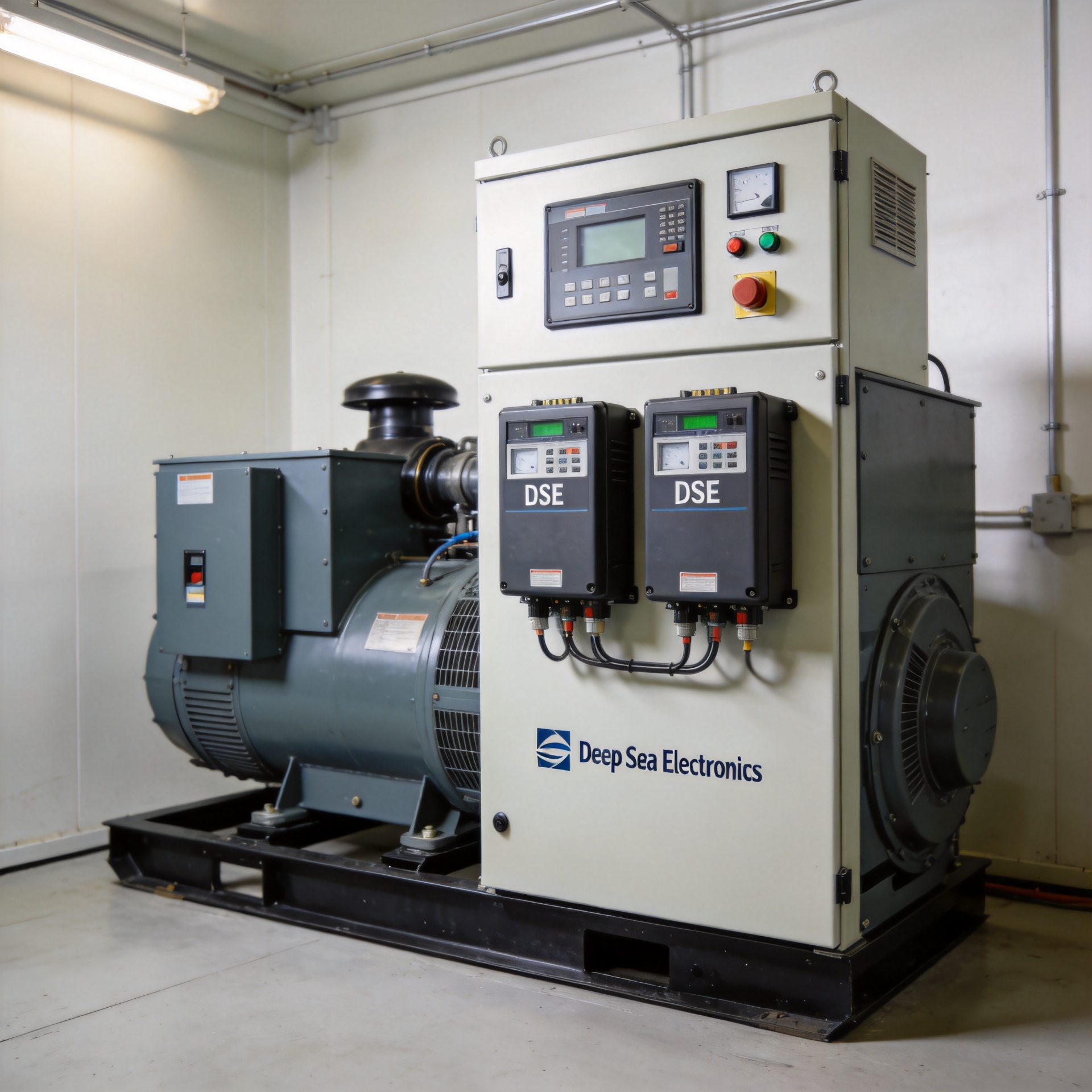
Deep Sea Electronics Control Panel: Model Selection
If you are specifying a generator controller for a standby or prime power installation, the choice of deep sea electronics control panel depends on three practical factors: the protection profile your genset requires, the communication protocols your SCADA or BMS needs, and whether the application is a single-unit or parallel arrangement. Deep Sea Electronics (DSE) offers a structured range of modules covering each scenario — and knowing which model fits where saves real time during commissioning and procurement.
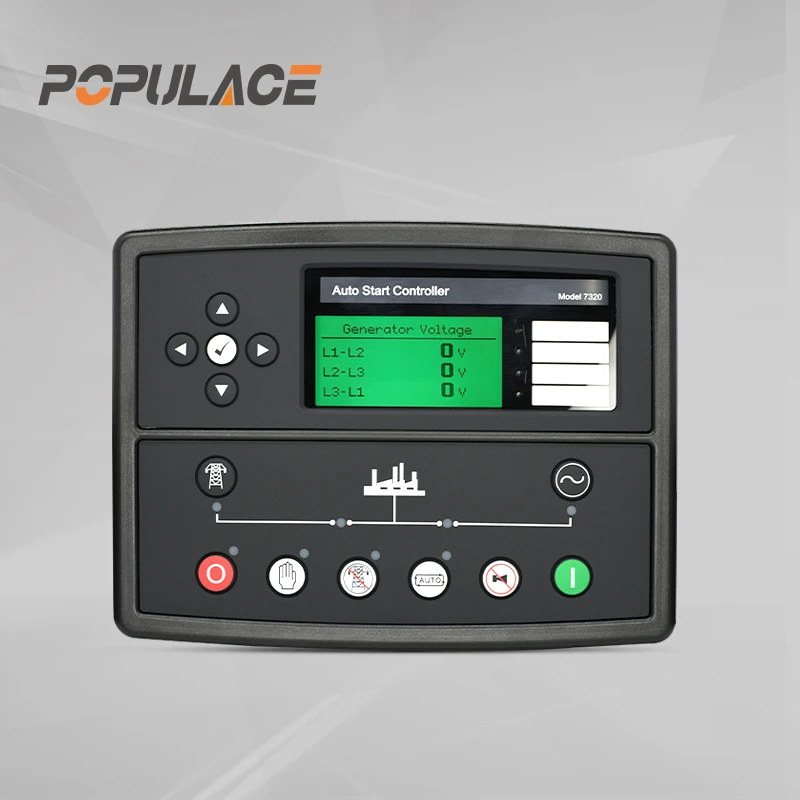
Core Functions of a Deep Sea Electronics Control Panel
Before selecting a specific deep sea electronics control panel, it helps to understand the functional baseline all DSE modules share. Each module continuously monitors generator output — voltage, frequency, and phase angle — along with engine parameters such as oil pressure, coolant temperature, and rotational speed. The distinctions appear in how each model handles the mains interface, how much automation it provides, and what communications it supports.
- Auto Start / Auto Stop: The controller receives a start signal — typically a remote contact closure or an AMF detection event — starts the engine, monitors it through the warmup period, and connects the load. Shutdown mirrors the startup sequence, with cooldown protection before the engine stops.
- AMF (Auto Mains Failure): When mains voltage or frequency falls outside the controller's configured window, the module automatically starts the genset and executes the load transfer. Once mains recovers and stabilizes, the load transfers back and the generator shuts down after a cooldown cycle.
- ATS (Automatic Transfer Switch) Control: The controller manages external switching contacts to execute the transfer sequence safely. The built-in interlocking logic prevents the mains and generator sources from being connected simultaneously.
Deep Sea Electronics Control Panel Models: DSE4520, DSE7320, and DSE8610
Three models from the deep sea electronics control panel range cover most project requirements, from compact single-genset AMF applications through to multi-unit paralleling installations:
| Model | Application Category | Key Features | Typical Project Context |
|---|---|---|---|
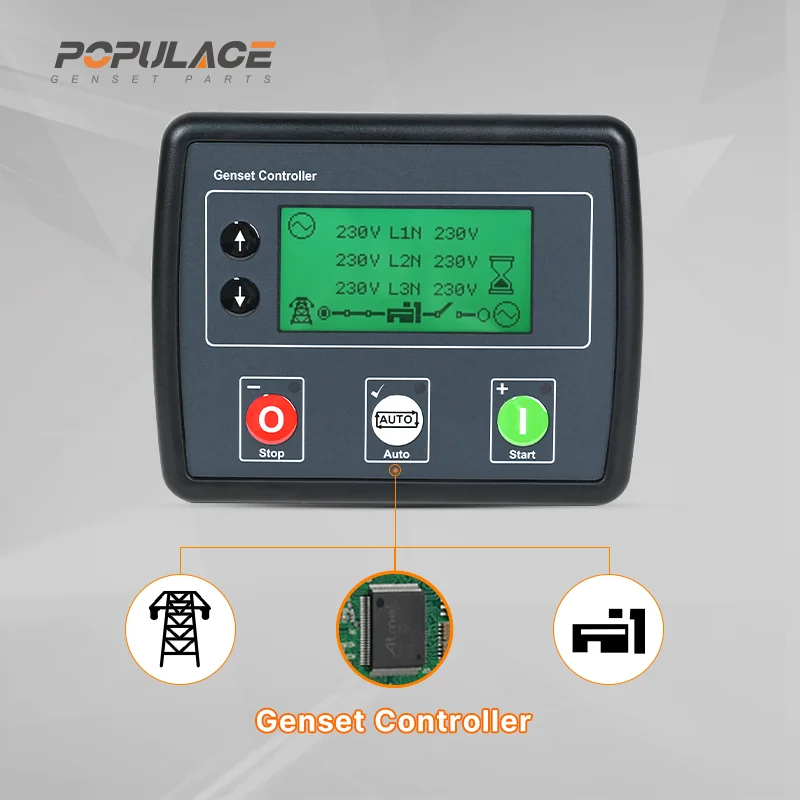
| DSE4520 MKII | Single genset AMF | Compact form factor; large backlit LCD; AMF logic; engine protection monitoring | Small commercial standby installations; panel replacement upgrades where footprint matters |
| DSE7320 MKII | Single genset AMF with communications | 3-phase generator and mains sensing (15–415 V AC phase-to-neutral / 25–720 V AC phase-to-phase); Modbus RTU and TCP; RS485/RS232; USB; dual-core processor; configurable I/O; data logging | Mid-size commercial or industrial standby requiring remote monitoring, SCADA integration, or data logging |
| DSE8610 MKII | Multi-genset synchronising and load sharing | Synchronising and load-sharing control; auto-start with load management; multi-unit communications | Data centers, hospitals, large commercial buildings running two or more parallel gensets |
If the project runs two or more gensets in parallel, the DSE8610 MKII is the correct selection. For single-genset applications where remote monitoring and SCADA integration are part of the scope, the DSE7320 MKII covers most integration scenarios. The DSE4520 MKII is a practical choice when the installation does not require advanced communications and panel space is limited.
DSE vs SmartGen HGM: Comparing Two Established Platforms
Engineers and procurement teams frequently evaluate a deep sea electronics control panel against SmartGen's HGM series. Both platforms cover AMF, load sharing, and paralleling across their respective product lines. The meaningful differences emerge once you move past the feature matrix.
DSE modules have strong adoption in European and North American markets, supported by well-maintained Modbus register documentation and a wide base of integrators experienced with the DSE Configuration Suite. SmartGen HGM controllers are widely specified in Asian market projects — models such as the HGM4010N and HGM9320 map functionally to DSE mid-range and advanced tiers, typically at a lower entry price point.
From a practical selection standpoint: if your team already has DSE Configuration Suite experience and your SCADA platform has a validated Modbus profile for DSE modules, the switching cost to SmartGen is a real factor. Conversely, if your regional service chain is more familiar with SmartGen commissioning, that should factor into your selection. Either platform works for professional installations — the selection should follow project context and integration tooling, not a generic brand ranking.
Wiring and Configuration Notes for System Integrators
When installing a deep sea electronics control panel, a few installation details tend to cause problems if overlooked:
- Sensing input voltage range: The DSE7320 MKII accepts 15–415 V AC (phase to neutral) directly at its generator and mains sensing terminals. If your application operates at higher bus voltages, potential transformers upstream of the module will be required. Confirm this during design, not during site installation.
- Engine interface and governor compatibility: The controller communicates with the engine via a magnetic pickup (W terminal) for speed sensing, plus standard sender inputs for oil pressure and coolant temperature. For gensets using a Briggs and Stratton governor assembly or mechanical governor configuration, confirm that the idle speed is stable before enabling the module's protection thresholds — an unstable governor setup can produce nuisance trips during the startup ramp.
- Electronic governor integration: When the installation includes an electronic speed governor — such as an ESD5500 actuator-based speed control unit — the speed reference output from the DSE module must be scaled correctly to the governor's input voltage range. Incorrect scaling is a frequent source of speed hunting under load transients. Verify the signal range on the bench before energizing the full system.
- Kohler engine commissioning: If you are adjusting governor on Kohler engine installations before connecting the deep sea electronics control panel, establish the no-load base speed at nominal (typically 1500 or 1800 RPM depending on system frequency) before the module's speed monitoring takes effect. Off-spec base speed can trigger false overspeed alarms on initial startup.
- ATS transfer sequence verification: Before applying load, verify the open-transition sequence in both automatic and manual override modes. DSE's I/O mapping is clearly documented, which makes the check straightforward — but it remains the step most commonly compressed under project schedule pressure.
Availability and Sourcing
Populace Electronic Co., Ltd. carries stocked deep sea electronics control panel modules for wholesale and brand buyer orders — including the DSE7320 MKII AMF Generator Control Module, DSE8610 MKII Synchronising Load Sharing Control Module, and DSE4520 MKII Auto Mains Failure Control Module. Because the product range is focused on generator control components — governors, AVRs, and control modules — pre-sales technical support for compatibility confirmation is available before purchase commitment. This is particularly useful for projects where the controller needs to be confirmed against a specific engine configuration or alternator type.
Export fulfillment operates from Xiamen. English-language documentation and direct technical contact are available for international buyers in Asia, Europe, and North America. Product listings and inquiry submission are available at kygenpower.com or through the Alibaba storefront at populaces.en.alibaba.com.
Summary: Matching the Right Model to Your Application
The selection process for a deep sea electronics control panel follows the application scope:
- DSE4520 MKII — Single genset, basic AMF, compact installation, no remote monitoring requirement
- DSE7320 MKII — Single genset AMF with remote monitoring, SCADA integration, or data logging
- DSE8610 MKII — Multi-genset paralleling and load-sharing applications
For teams evaluating DSE against SmartGen HGM alternatives, the functional overlap between both platforms is significant. The selection decision typically comes down to integration toolchain familiarity and regional support availability rather than a clear capability gap between the two. If you have a specific project configuration to evaluate, pre-sales technical consultation is available through Populace Electronic before order placement.






