
 EN
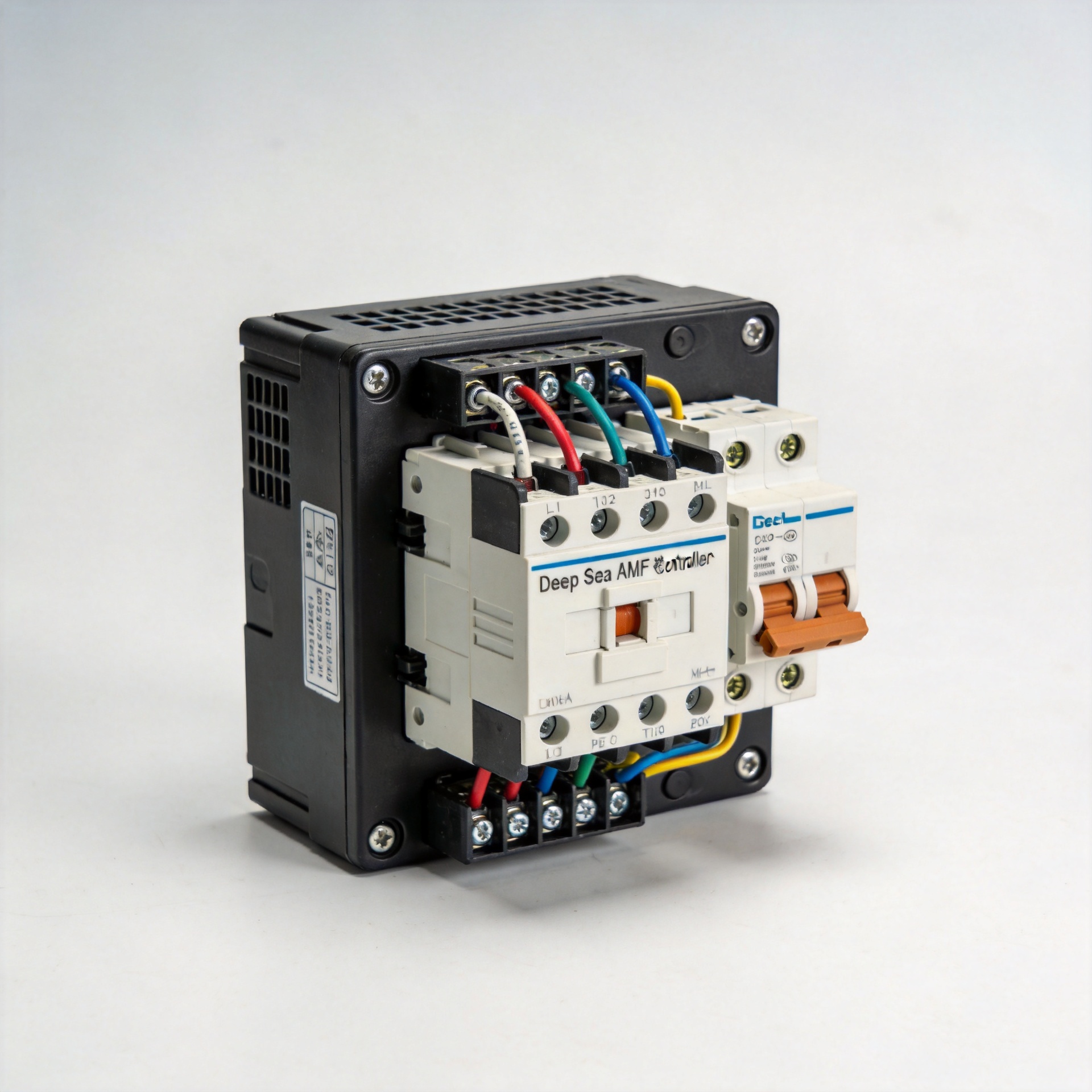
Deep Sea AMF Controller: Mains Failure Logic Explained
When the grid goes down unexpectedly, the sequence that follows in the next few seconds determines whether your facility stays operational or goes dark. At the center of that sequence is the deep sea amf controller — the module responsible for detecting mains failure, initiating automatic generator start, and managing the load transfer that keeps critical systems running. This article walks through how that logic actually works, what differentiates DSE's AMF lineup from competing platforms like SmartGen HGM, and what system integrators should know before wiring one into a new installation.
What Is AMF Logic and Why It Matters
AMF stands for Automatic Mains Failure. A deep sea amf controller continuously monitors the incoming utility supply — measuring voltage levels on each phase and tracking output frequency. When the measured values drift outside pre-configured thresholds, the module declares a mains failure event and triggers the generator start sequence automatically, without manual intervention.
That threshold configuration is where a lot of the nuance lives. The engine governing system as a whole depends on the controller's ability to distinguish a genuine, sustained failure from a momentary voltage dip. If the detection window is too tight, nuisance starts happen. If it's too wide, critical load protection is delayed. A well-configured deep sea amf controller lets integrators define both the detection threshold values and the confirmation delay — the time the out-of-range condition must persist before the controller commits to a start sequence. Getting this right is usually more important than any single hardware spec.
The DSE AMF Mains Failure Sequence
Understanding the full sequence is essential when commissioning, configuring, or troubleshooting a deep sea amf controller installation. Each stage can be independently adjusted using DSE's configuration software:
- Mains Monitoring: The controller continuously measures utility voltage and frequency against the configured window. Typically, this is ±10–15% on voltage and ±5–10% on frequency, though both are adjustable.
- Failure Confirmation: Once the mains moves outside the window, a configurable delay (commonly 1–5 seconds) begins before a failure is confirmed. This prevents nuisance starts from transient dips.
- Crank and Start Sequence: On confirmed failure, the controller signals the generator to crank. Pre-heat delay, crank attempts, and crank rest periods are all configurable parameters. This is where compatibility with specific engine control systems — including setups that reference a cummins electronic governor controller manual for Cummins-based gensets — becomes relevant. The AMF module must interface correctly with the engine's start circuit.
- ATS Transfer: Once the generator reaches stable voltage and frequency, the controller sends a signal to the ATS (Automatic Transfer Switch) to transfer the load from mains to the generator. Transfer delay is separately configurable.
- Mains Return Monitoring: The controller continues to monitor the utility. When mains returns and stabilizes within spec for a configurable return delay (often 30–180 seconds), it initiates the retransfer sequence.
- Cool-Down and Stop: After retransfer, the generator runs unloaded for a cool-down period before the controller sends the stop signal. This protects the engine from thermal shock after heavy-load operation.
All of these timing parameters are configurable via DSE's PC-based software, which connects over USB. Field engineers can adjust site-specific settings on-location without shipping a module back for reconfiguration — which matters when you are working to a commissioning schedule.
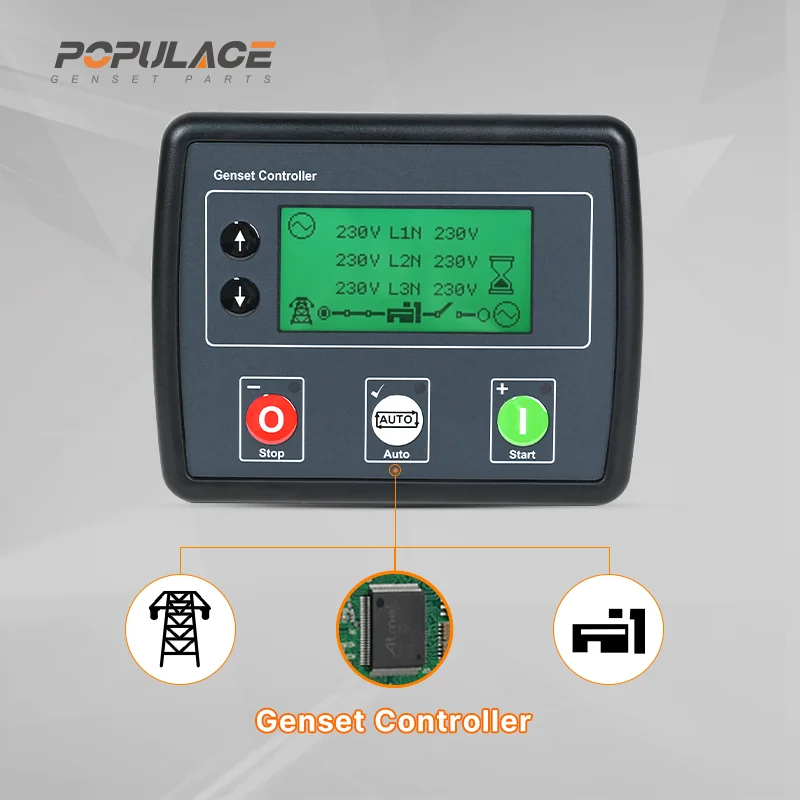
DSE AMF Controller Models: Capability Tiers
Within the DSE range, AMF capability runs across several tiers. The three models that show up most in generator panel builds are:
- DSE4520 MKII — Entry-level AMF controller for single-generator applications. Covers the core AMF sequence, basic fault monitoring, and ATS control. Well-suited for straightforward mains-to-generator transfer in commercial standby installations. The DSE4520 MKII Auto Mains Failure Control Module handles standard AMF panel builds with a clean wiring footprint.
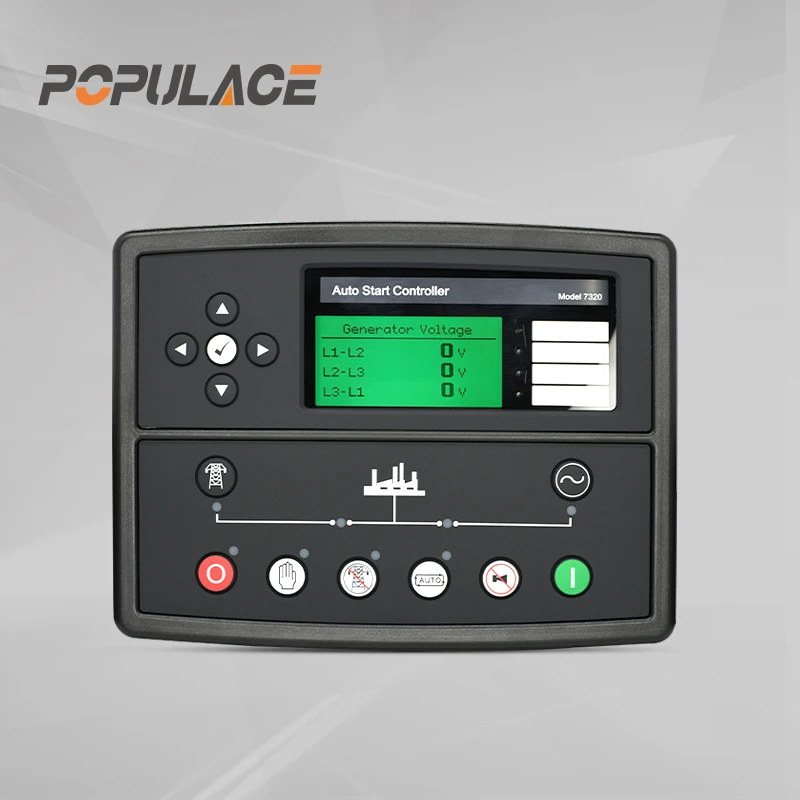
- DSE7320 MKII — Advanced AMF module with extended event logging, real-time clock, configurable I/O, and support for more complex alarm and protection setups. The POPULACE DSE7320 MKII AMF Generator Control Module is the choice for installations where detailed fault history and remote monitoring readiness matter — data centers, healthcare facilities, and critical infrastructure are typical use cases.
- DSE8610 MKII — Adds synchronising and load sharing capability on top of the AMF base. Used when multiple generators must parallel to serve a single bus, with the AMF logic coordinating the overall mains transfer while the synchroniser manages generator-to-generator coordination. The DSE8610 MKII Synchronising Load Sharing Auto Start Control Module is available for parallel power applications.
DSE vs SmartGen HGM: Choosing Between Platforms
For system integrators who work across multiple projects, the decision between a deep sea amf controller and a SmartGen HGM unit is practical rather than brand-loyalty-driven. Both platforms cover the AMF sequence well. The real differences show up in the details.
| Feature Area | Deep Sea AMF (DSE4520/7320) | SmartGen HGM Series |
|---|---|---|
| Configuration Software | DSE PC Software (free download, USB/RS-232) | SmartGen PC Software (free, USB/RS-485) |
| Language Display | Multi-language, configurable | Multi-language, configurable |
| Mains Detection Logic | Per-phase voltage and frequency window, configurable delays | Per-phase voltage and frequency window, configurable delays |
| Event Log Depth | Up to 500 events (DSE7320 MKII) | Varies by HGM model, typically 100–200 events |
| Modbus/Communications | Available on selected models via optional modules | Modbus RTU standard on most HGM models |
| Market Familiarity | Strong in Europe, Middle East, Southeast Asia | Strong in China, Southeast Asia, emerging markets |
One practical note: if a project specifies a gas engine governor or involves natural gas gensets with specific engine control requirements, confirm the AMF controller's interface compatibility with the engine ECU. Both DSE and SmartGen cover diesel-centric applications well, but gas engine governor interface wiring can require additional checking against the engine manufacturer's documentation before finalizing the panel design.
For procurement teams working with mixed fleets, having a supplier who stocks both platforms reduces the lead time risk when one brand faces supply constraints. That is also why sourcing from a supplier with direct access to DSE-compatible modules matters more than some buyers initially expect.
Wiring and Configuration Notes for System Integrators
A few points that come up consistently when wiring a deep sea amf controller into a new panel:
- Mains sensing input wiring: The mains voltage sensing inputs on most DSE AMF controllers accept 240V AC directly via the module's terminal block, but verify the connector specifications against the datasheet — some MKII modules use locking plug connectors rather than bare terminal screws, which affects panel assembly procedure.
- Start relay output: The start output from the AMF controller connects to the engine start circuit. When working with a Cummins genset, the wiring should align with the relevant section of the cummins electronic governor controller manual for that engine series, as Cummins start circuit configurations vary by model and whether the engine uses its own ECM or an external control module.
- ATS control outputs: The mains and generator contactor control outputs on DSE modules are typically volt-free relay contacts. Confirm the coil voltage and current ratings of the ATS contactors against the relay output specs before wiring. Mismatched relay ratings are a common source of latent wiring issues in field installations.
- Configuration parameter backup: After commissioning, export the module configuration to a PC-side file. This is especially important for the DSE7320 MKII and DSE8610 MKII, where extensive custom parameters represent significant engineering time. A saved configuration file makes replacement straightforward if a module fails after several years of operation.
The engine governing system response — from initial crank through to stable load acceptance — depends partly on how well the AMF controller parameters are matched to the specific engine. Getting the crank timing, cool-down duration, and failure confirmation delays right during initial commissioning is considerably easier than diagnosing a mismatch mid-outage.
Sourcing DSE AMF Controllers: What to Confirm Before Ordering
For wholesale buyers and panel builders sourcing a deep sea amf controller, the key pre-order checks are: confirm the specific MKII revision is in stock (older MKI variants are still in circulation), verify that documentation — including the configuration software download and operator manual — is available with the order, and request confirmation of the module's country of origin and batch consistency if you are ordering in volume for multiple panels.
Populace Electronic Co., Ltd. supplies DSE series AMF control modules through its international channel at kygenpower.com, serving wholesale buyers and system integrators across Asia, Europe, and North America. Pre-sales technical support for compatibility and wiring questions is available through the site's inquiry channel.






