
 EN
Deep Sea 6020 AMF: Mains Failure Wiring Explained
If you have worked on generator installations long enough, you already know that the control module is where most commissioning headaches originate. Among the modules that have earned genuine field credibility, the deep sea 6020 amf controller — formally the DSE6020 MKII — remains one of the most widely deployed AMF (Auto Mains Failure) controllers for single diesel and gas gen-set applications worldwide. This article focuses on how the mains failure wiring actually works, what each terminal group does, and where installers most commonly go wrong.
What the DSE6020 MKII Actually Does
The deep sea 6020 amf controller continuously monitors the utility (mains) supply. The moment a mains failure is detected — whether it is a complete blackout, an under-voltage condition, or an over-voltage event beyond your programmed thresholds — the module initiates a timed startup sequence for the standby generator. Once the generator output stabilizes within acceptable voltage and frequency limits, the module signals the ATS (Automatic Transfer Switch) to transfer the load from the dead mains to the running generator.
The reverse process happens when mains supply returns: the controller waits through a configurable return delay, re-verifies that the utility voltage and frequency are stable, then transfers load back and sends the gen-set through a cool-down cycle before shutdown. This closed-loop behavior is what "AMF control" means in practice.
Key electrical specs worth knowing before wiring: the DSE6020 MKII operates on a 8–35Vdc supply, supports a working temperature range of −30°C to +70°C, and provides three configurable output channels alongside four configurable input terminals. Those numbers matter because they define what sensors and actuators you can connect without an external relay buffer.
Mains Failure Wiring: Terminal by Terminal
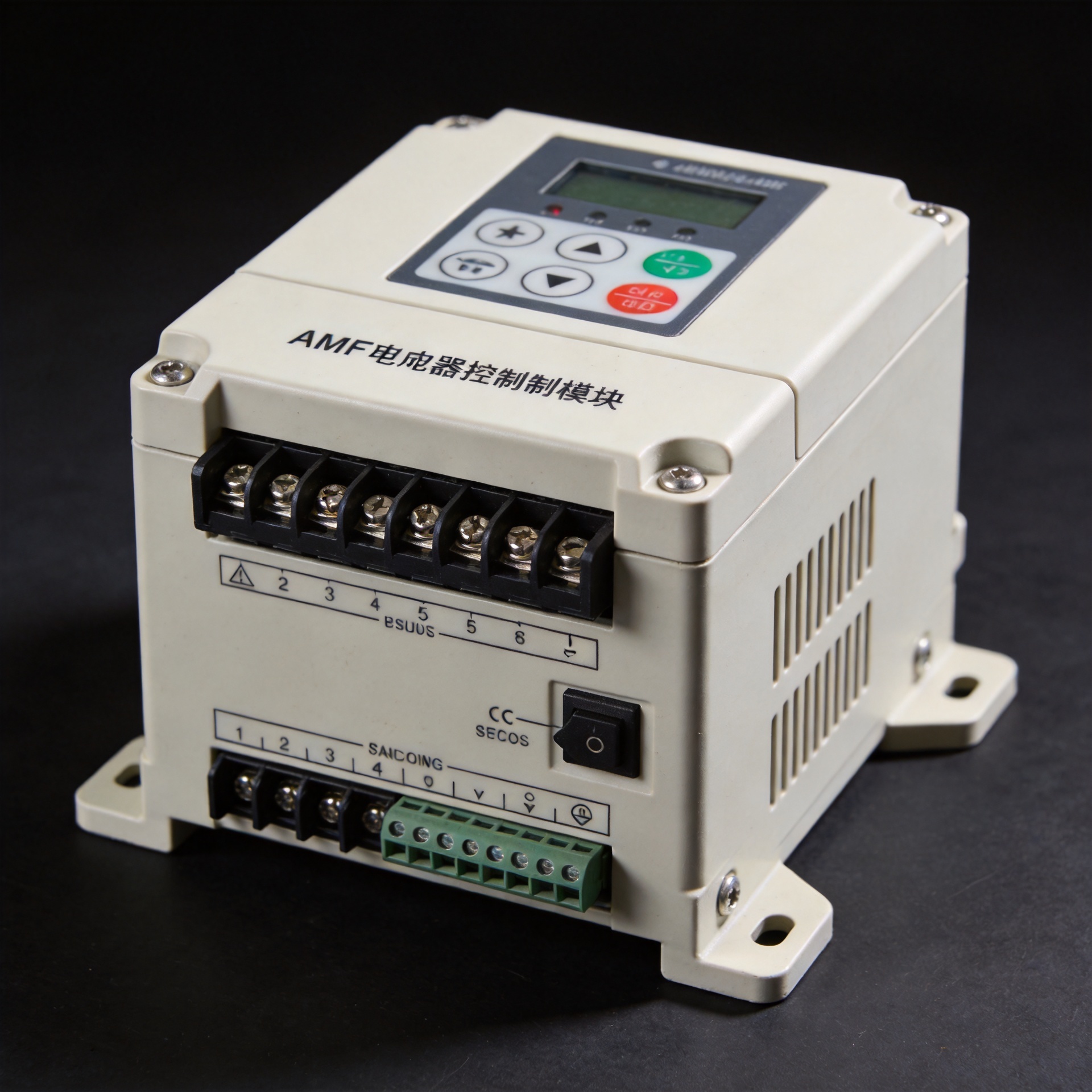
The wiring diagram in the DSE60xx MKII Operators Manual shows a 3-phase 4-wire typical arrangement, but the logic holds for single-phase installations as well. The following breakdown covers each connection group in order:
Mains (Utility) Sensing Input
The controller reads the live mains voltage through its AC sensing terminals. These terminals connect to the utility side of your ATS — before the changeover contacts, not after. A common wiring mistake is connecting the sense leads on the load side of the ATS; the controller then reads generator voltage as mains voltage on return, which disrupts the transfer-back logic. The sensing circuit draws only microamps, so standard 1.5mm² control cable is appropriate here.
Generator Start / Stop Output
The start output is a low-current digital signal (typically a dry contact closure) that connects to your gen-set's remote start terminal. The DSE6020 MKII does not provide cranking current directly — it signals the gen-set's own engine control module or start relay. If you are integrating with a gen-set that uses a crank governor briggs and stratton-style mechanical governing system or an electronic actuator, you will still route through the engine's native start circuit. The controller only triggers the sequence.
ATS Control Outputs
Two outputs handle the ATS changeover: one for the mains contactor (open on mains failure) and one for the generator contactor (close when generator is ready). Interlocking between these two contactors is typically done at the ATS panel level. The deep sea 6020 amf controller provides the logic signals; the physical contactor interlocking must still meet local electrical safety codes.
Configurable Inputs (Fault Monitoring)
The four configurable inputs allow you to wire in remote signals such as low oil pressure shutdown, high coolant temperature, emergency stop, or a remote start override. These can be configured as normally open or normally closed in the DSE Configuration Suite software. Getting the input polarity wrong is one of the most common causes of phantom shutdowns during commissioning — the controller sees an open input as a fault by default unless you invert the logic in the parameters.
Configuration Parameters to Set Before Live Testing
Before energizing the system, these are the parameters that most directly affect mains failure behavior:
- Mains Fail Delay: How long mains must be out before the controller triggers startup. A setting of 3–5 seconds filters out brief transients without delaying backup power unnecessarily.
- Return Delay: How long returned mains must be stable before the controller transfers load back. 30–60 seconds is typical for utility return after an outage.
- Transfer Delay: Time between generator reaching stable output and the ATS changeover command. Set long enough for your gen-set to be fully loaded without voltage sag.
- Crank Disconnect Speed: The RPM threshold (or AC frequency signal) at which the controller knows the engine has fired and releases the starter. Critical for preventing starter motor damage — applies whether your engine uses an electronic governor or an older briggs v twin governor-style flyweight mechanism.
DSE6020 vs SmartGen HGM: Choosing the Right Platform
Engineers sourcing for projects across Asia and Europe regularly compare the deep sea 6020 amf controller against the SmartGen HGM series — both are capable AMF controllers, but they serve somewhat different market segments. The DSE series carries stronger brand recognition in European and international project specifications, and DSE's Configuration Suite software is well-documented. SmartGen HGM controllers offer a cost advantage in Asian markets and carry comparable AMF functionality, but parameter backup and firmware management tools are less standardized across regions.
From a wiring perspective, both platforms follow the same functional terminal groups: mains sensing, generator start, ATS outputs, and configurable I/O. The main practical difference for installers is connector layout and label conventions. If your project specification calls for DSE or you have an existing fleet of DSE-wired ATS panels, maintaining platform consistency has real value in reducing integration errors and simplifying maintenance.
That said, if budget is the primary constraint and the generator uses a briggs stratton v twin governor or a similar small-engine governing arrangement in a light commercial or residential standby application, SmartGen's lower entry price point can make commercial sense. The AMF function itself is equivalent at this power class.
When to Move Up the DSE Range
The DSE6020 MKII covers the majority of single gen-set AMF applications — but it is worth understanding where its ceiling is. If your project requires communication protocols (Modbus, SNMP), advanced metering, or multi-gen-set management, you are looking at a higher-tier module. As a supplier of Deep Sea Electronics modules, Populace Electronic Co., Ltd. also carries the POPULACE DSE7320 MKII AMF Generator Control Module, which adds remote communications capability and a broader I/O count while preserving the same AMF wiring logic — useful when a site's future scope is uncertain at initial commissioning.
For entry-level AMF requirements where a smaller footprint is preferred, the DSE4520 MKII Auto Mains Failure Control Module is a cost-effective alternative with core AMF and ATS control functionality. At the other end — parallel operation and synchronizing applications — the DSE8610 MKII Synchronising Load Sharing Auto Start Control Module handles multi-gen-set coordination where a single DSE6020 is not sufficient.
Practical Wiring Checklist for System Integrators
- Confirm your DC supply voltage is within 8–35Vdc and the supply circuit is fused appropriately for the module's current draw plus output loads.
- Connect mains sensing leads to the utility side (before ATS changeover), not the load side.
- Verify configurable input polarity in the DSE Configuration Suite before live testing — wrong polarity causes false fault shutdowns.
- Set Mains Fail Delay, Return Delay, and Transfer Delay based on your utility quality and gen-set warm-up characteristics.
- Test ATS contactor interlocking independently before integrating the controller — controller logic issues and mechanical interlocking issues are easier to diagnose separately.
- Record all parameter settings after commissioning; DSE's Configuration Suite allows exporting the full configuration file as a backup.
Wiring a deep sea 6020 amf controller is straightforward once you understand which terminals handle which function. The most common errors — reversed mains sensing, wrong input polarity, and missing return delays — all have deterministic causes. Work through terminal groups systematically, confirm parameters before live load testing, and keep a configuration backup on file. That process works regardless of whether the gen-set is governed by a modern electronic actuator or a mechanical system like a crank governor setup.






