
 EN
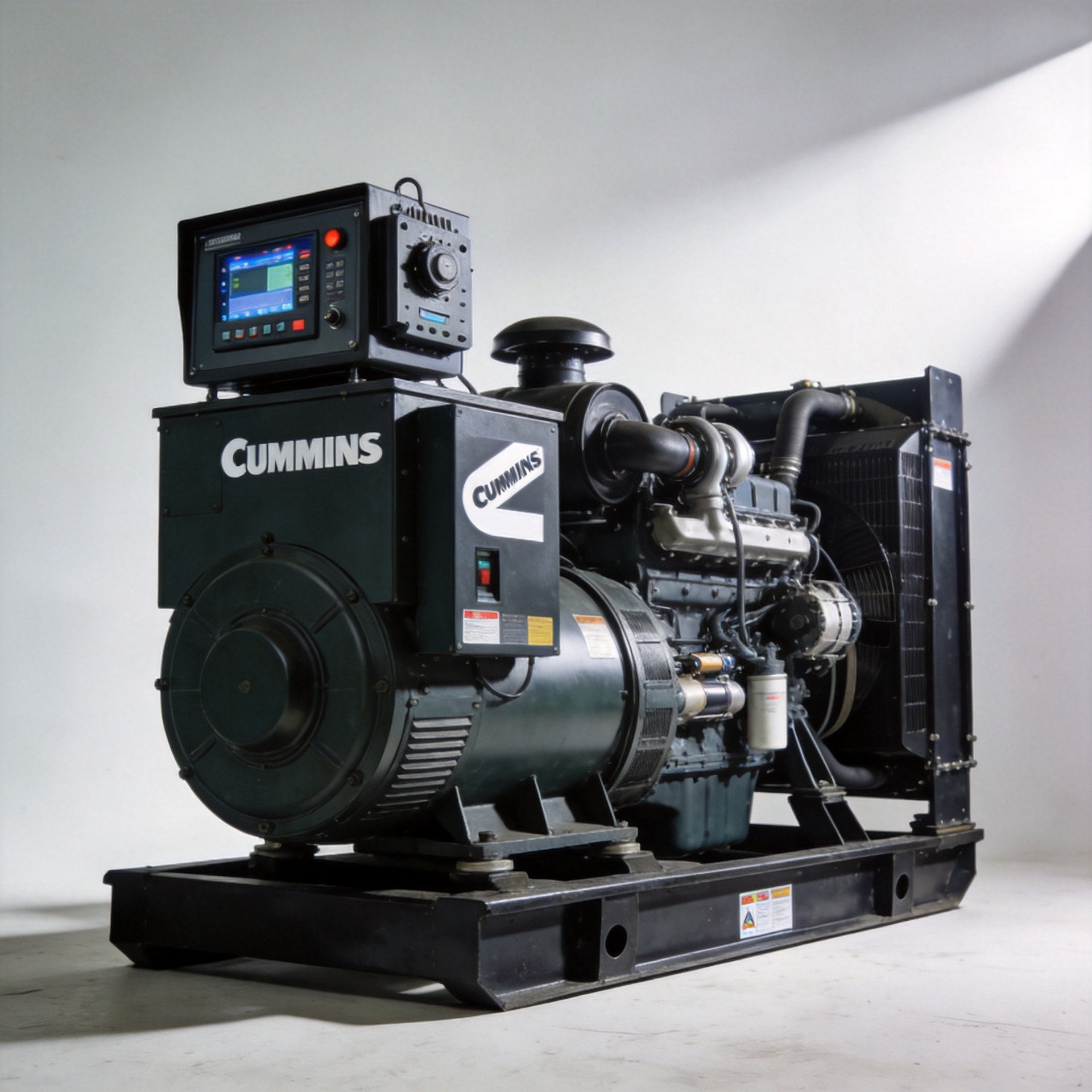
Cummins Standby Genset Governor: Selection Guide
Selecting the right cummins standby genset governor requires more specificity than most buyers expect. Engine model range, application type, and operating configuration all determine compatibility — ordering by brand name alone is one of the most common reasons a replacement arrives with the wrong actuator interface or control signal type. This guide covers governor types, operating modes, key selection criteria, compatible product options, and basic calibration steps.
How a Cummins Standby Genset Governor Controls Engine Speed
A governor regulates diesel engine RPM by continuously adjusting fuel delivery in response to load changes. On a Cummins standby genset, maintaining stable output frequency (typically 50 Hz or 60 Hz) depends directly on holding engine speed within a tight operating band.
A Cummins electric fuel control governor system consists of four core components: a magnetic pickup that senses crankshaft speed, a governor control unit that processes the signal, an actuator that adjusts the fuel rack, and the mounting hardware that interfaces these components with the engine. When any of these components fails or is mismatched to the engine variant, the result is observable: engine hunting, speed surging, or flickering output under load. These are reliable field indicators that the governor system needs attention — not just a governor parameter adjustment.
In larger commercial standby installations, the cummins standby genset governor works alongside protection devices such as a generator differential relay, which provides short-circuit and fault isolation. Understanding which governor you need involves knowing how its output integrates with the rest of the protection and control architecture.
Mechanical vs. Electronic Governors: Which Type Does Your Cummins Need?
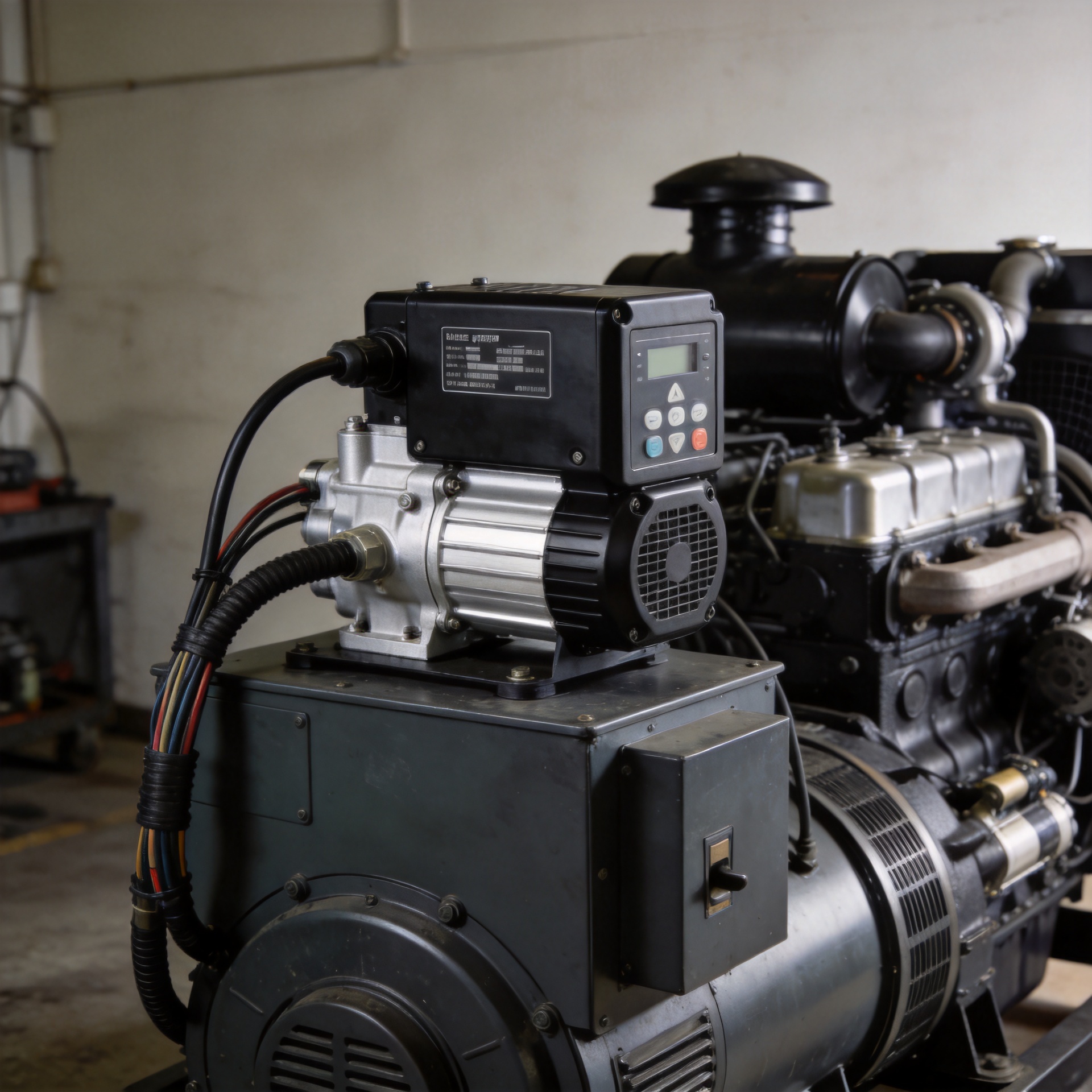
Older Cummins models, particularly B and C series engines used in light and medium-duty standby applications, were originally equipped with mechanical governors. These use centrifugal flyweights and mechanical linkages to regulate fuel supply. They are durable, require no external power source, and are straightforward to service in the field.
Electronic governors use a speed sensor, an electronic control module, and a motorized actuator to achieve faster, more precise speed regulation. The shift most experienced technicians make is recognizing that governor selection is not about which technology is newer. It is about matching the actuator response range and droop setting to the specific engine variant and load profile.
For Cummins QSB and QSC series engines in commercial standby applications, electronic control has become standard. If your unit uses a mechanical governor on predictable, stable loads, a compatible mechanical replacement is practical. For loads with motor start events or significant transient variation, upgrading to an electronic cummins standby genset governor controller is worth evaluating — electronic governing outperforms mechanical in precision and synchronization, particularly with reactive loads.
Isochronous vs. Droop Mode: Matching Governor Settings to Your Application
Governor operating mode determines how the genset responds to load changes. Selecting the wrong mode for your installation type can introduce instability that is difficult to diagnose without understanding the underlying control behavior.
In isochronous mode, the governor continuously adjusts fuel delivery to maintain constant engine speed and output frequency, regardless of load changes. This is the standard configuration for a single Cummins standby genset operating independently. The generator maintains 50 or 60 Hz across the full load range — from light to rated capacity.
Droop mode allows engine speed to decrease proportionally as load increases — typically within a 2–5% speed droop range. This controlled variation is intentional when running multiple generators in parallel. Without droop, two isochronous generators simultaneously attempting to hold the same speed will oscillate in an unstable load-sharing conflict. With droop enabled on each unit, load distributes automatically across the paralleled set in proportion to each generator's rated output.
A cummins standby genset governor running as a single unit should be set to isochronous mode. For parallel installations with multiple standby sets on a common busbar, confirm the governor supports droop adjustment and that droop percentages match across units before commissioning. The generator efficiency curve under partial load also shifts with droop setting — relevant when optimizing fuel consumption in partial-load scenarios.
Key Selection Criteria for Cummins Standby Genset Governors
Working through these criteria before placing an order addresses the majority of compatibility failures:
- Engine model and serial range: Confirm the specific Cummins engine model number — not just the series name. Governor compatibility can vary between production runs within the same engine family. The governor specified for a non-certified 5.9L B engine differs from what later certified variants of the same displacement require. Interface pinout and droop adjustment range can differ between production runs even within closely related Cummins models.
- Actuator interface type: The actuator connects the governor control signal to the fuel system. Interface type — shaft dimensions, connector pinout, and signal protocol: all must match the engine's existing fuel rack linkage. Specifying by engine brand alone without confirming actuator compatibility is one of the most common ordering errors in this category.
- Control signal type: Verify whether the engine uses a magnetic pickup signal (frequency-based PWM) or a direct voltage signal for speed sensing. The governor control unit must accept the signal type the magnetic pickup produces.
- Operating mode requirement: Confirm whether isochronous or droop mode is required, based on single-unit vs. parallel operation. If droop is needed, check that the droop percentage is externally adjustable on the governor being considered.
- Environmental rating: For mobile power stations and generators installed in high-ambient or high-vibration environments, verify that the electronic governor module's thermal rating and vibration tolerance are appropriate for the site conditions. In many field installations, the limiting factor for governor performance is not the part itself — it is installation environment variables that the specification sheet does not capture.
- Related system checks: Inspect the generator oil pressure switch and verify engine protection functions before returning the unit to service after a governor replacement. A correctly calibrated cummins standby genset governor will not compensate for a failed oil pressure shutoff during a lubrication fault.
Compatible Governor Options for Cummins Standby Gensets
Two electronic speed controller options from Populace Electronic cover a range of cummins standby genset governor applications and industrial diesel engines:
The ESD5500E Speed Governor Generator Speed Control Unit supports both isochronous and droop operating modes with externally adjustable droop settings for single-unit or parallel operation. Confirm compatibility against the specific Cummins engine model, actuator type, and magnetic pickup signal specification before ordering.
The S6700H Governor Speed Controller is an alternative electronic speed control unit for industrial genset configurations requiring stable RPM regulation under variable load.
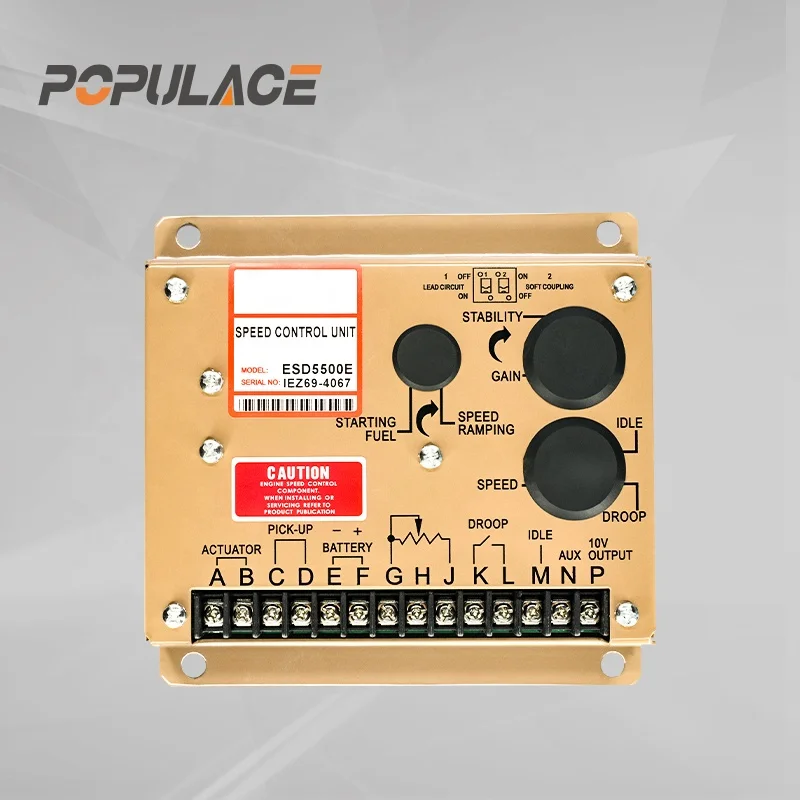
For installations requiring an external actuator, the POPULACE External Actuator (ADC120, ADC175, ADC225) series provides 12V and 24V options across three sizes. Matching the actuator to the engine's fuel rack interface is the critical compatibility step. Populace Electronic also covers buyers sourcing generac generator accessories and multi-brand generator parts — the same compatibility verification approach applies.
When evaluating aftermarket options, assuming that any cummins standby genset governor designed for the same engine series will work across all variants is a reliable way to create a compatibility problem. Control interface pinout and droop adjustment range can differ between production runs within the same Cummins model family.
Governor Adjustment and Calibration After Replacement
A governor replacement on a Cummins standby genset typically requires calibration before the unit returns to service. The basic adjustment sequence covers three parameters:
- Speed reference setting: Set the governor's speed reference potentiometer to achieve the target no-load RPM — 1500 RPM for 50 Hz applications, 1800 RPM for 60 Hz, using a digital tachometer or the generator's output frequency as reference.
- Gain adjustment: Adjust the gain setting to control how aggressively the governor responds to speed deviations. Too high a gain setting produces overshoot and hunting. Too low a gain produces slow load recovery and frequency droop under transient load events. If your application runs at a stable load profile, a moderate gain setting will usually hold. If the load swings frequently — particularly with motor start events — the gain needs to be tuned to accommodate the faster transient.
- Droop setting (if applicable): For parallel operation, set the droop percentage to match the other generators in the installation. Mismatched droop settings across paralleled units cause unequal load distribution and can produce frequency instability under shared load.
Requesting the governor supplier's calibration documentation and wiring diagram before installation prevents most commissioning callbacks. Buyers who have dealt with installation failures consistently identify compatibility documentation as a primary evaluation criterion — not an afterthought — when selecting a governor supplier.
For technical inquiries about governor selection, compatibility verification for specific Cummins models, or sourcing quotations, contact Populace Electronic at [email protected] or visit populaces.en.alibaba.com.






