
 EN

Cummins Genset Speed Control Unit: Features and Selection
If you're sourcing a Cummins genset speed control unit for the first time — or replacing one on an existing installation — the number of model options can make specification matching feel more complicated than it needs to be. From a procurement standpoint, the key is understanding what each unit actually does, which technical parameters matter for your application, and what separates a reliable replacement from a mismatched part that causes ongoing issues.
This guide walks through the core features of Cummins-compatible speed control units, the most common application scenarios in the industrial generator market, and a practical selection checklist designed for wholesale buyers and brand-side procurement teams.
What Is a Genset Speed Control Unit?
A speed control unit, also referred to as a speed governor or electronic fuel control (EFC), is the device responsible for maintaining consistent engine RPM under varying load conditions. On a diesel generator, when the connected load increases, the engine naturally wants to slow down. The speed control unit detects the frequency deviation from a magnetic pickup signal, then adjusts fuel delivery via an actuator to compensate and restore target speed.
Without a functioning speed control unit, the generator will either overspeed (no load) or stall under heavy loads — neither outcome is acceptable for any of the core deployment environments: industrial facilities, commercial buildings, data centers, or mobile power systems.
For Cummins engines specifically — from the NT855 and K19 series through the KTA38, K50, and QSK families — speed governors must be matched to the engine's fuel system interface, actuator type, and speed sensing pickup characteristics. Ordering based on engine brand alone, without confirming the interface type, is one of the most common and avoidable procurement errors in this category.
Core Technical Features to Evaluate
For sourcing decisions, these are the parameters that drive compatibility and performance outcomes in the field. Each one applies directly to a Cummins genset speed control unit selection:
- Operating voltage: Most electronic speed controllers support 12V and 24V DC. Confirm the genset's system voltage before specifying.
- Speed regulation accuracy: Industrial-grade units typically achieve ±0.25% or better steady-state accuracy. For applications with sensitive equipment loads, this tolerance matters.
- Magnetic pickup frequency range: The controller must be compatible with the pickup signal frequency from the engine's flywheel ring gear — typically 1kHz to 7.5kHz for most diesel genset applications.
- PID adjustability: Proportional, Integral, and Derivative parameters should be independently adjustable. This is particularly important if your application involves frequent motor load cycling, where a fixed-gain controller may cause governor hunting or instability.
- Operating temperature range: Industrial deployments in high-ambient environments should verify that the controller's operating range matches site conditions. Units rated to 65°C are more broadly deployable than those rated to 50°C.
- Output current capacity: Rated output to the actuator is typically 10 amps continuous at 25°C. Verify against the actuator being used — undersized output capacity is a common cause of actuator underperformance.
- Operation modes: Isochronous (constant frequency under load), Droop (speed decreases proportionally with load, useful for parallel operation), and Variable modes are standard on quality units.
The shift most experienced procurement teams make is recognizing that speed governor selection is not primarily a price decision — it's a specification matching problem. A unit that doesn't match the actuator interface or pickup signal characteristics won't perform correctly regardless of what it costs.
Application Scenarios
The Cummins genset speed control unit category covers several distinct deployment environments, and the selection criteria differ meaningfully across them:
Industrial and Manufacturing Facilities
These applications typically involve prime power or continuous-duty gensets running under heavy and variable loads. PID adjustability, thermal stability, and sufficient actuator current output are the top priorities. Frequency stability requirements are high because sensitive equipment tolerates only narrow RPM variation.
Commercial and Data Center Backup Power
Standby gensets in this category run infrequently but must start and stabilize within seconds. Cummins generator remote start integration is often a requirement here, making the controller's compatibility with remote start and auto-start modules relevant. Fast response to transient loads — the kind that occurs when large UPS systems transfer to generator — is the primary performance requirement.
Mobile Power Stations and Rental Fleets
Vibration resistance, compact form factor, and broad voltage compatibility are key for mobile applications. Controllers for trailer-mounted or portable gensets also need to handle the wider temperature swings typical of outdoor deployment.
Parallel Generator Systems
Multi-unit parallel operation requires droop mode support. If a speed controller doesn't offer properly adjustable droop, load sharing between paralleled units will be uneven and unstable.
Troubleshooting Signal: Diesel Generator White Smoke
A speed governor issue can sometimes manifest as diesel generator white smoke during startup or under light load. White smoke in this context often indicates incomplete combustion from over-fueling — a symptom that can result from a governor sending excessive fuel signals before the engine has warmed to operating temperature, or from a miscalibrated integral setting causing overshoot on the fuel rack. If white smoke persists after normal warm-up, the speed controller's calibration should be reviewed alongside fuel injector condition.
Comparing Key Models: A Buyer's Reference
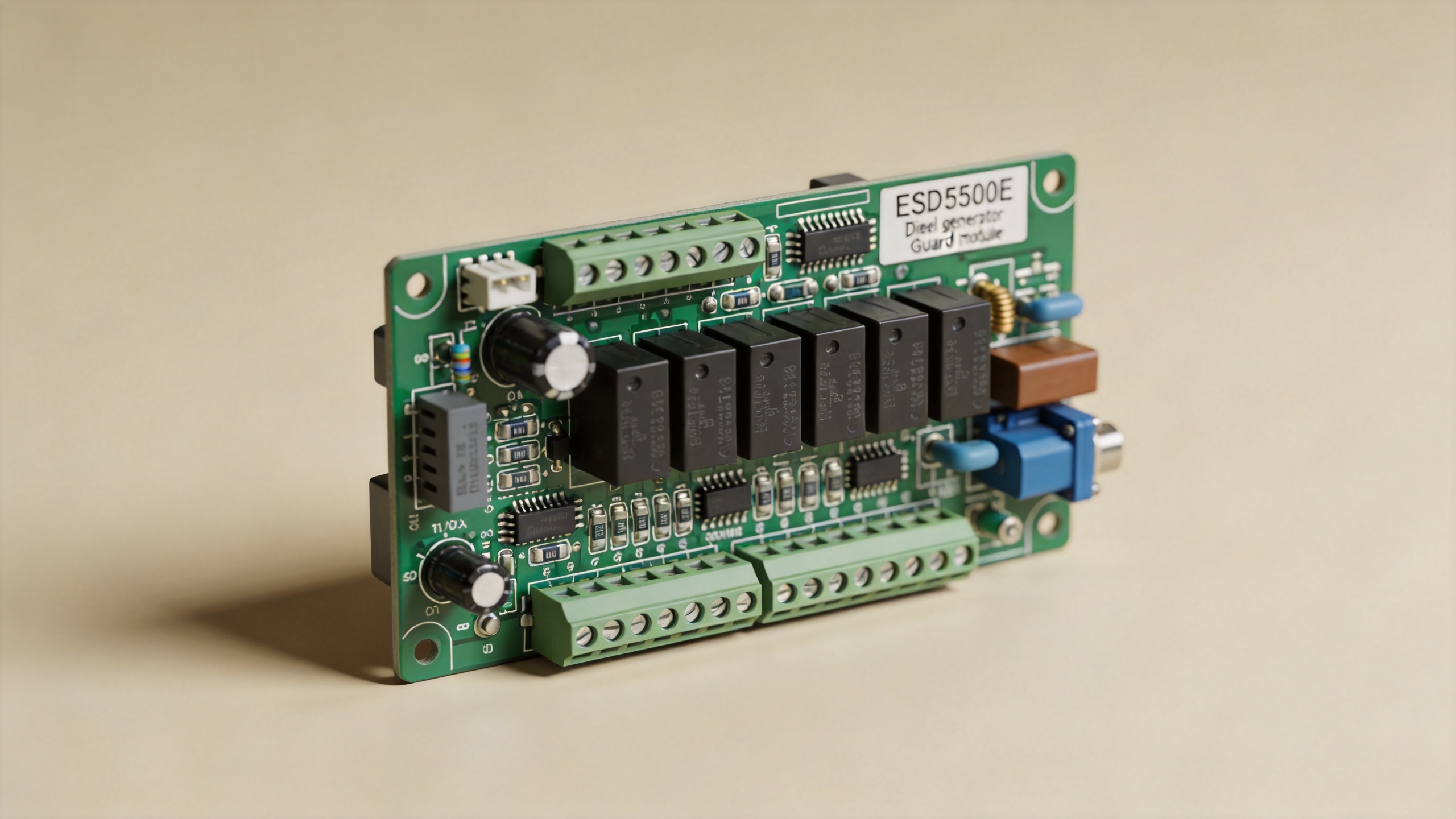
For buyers sourcing Cummins-compatible speed control units, two models that see broad application in the wholesale and replacement market are the ESD5500E and S6700H series. Here's how they compare for common procurement decisions:
| Parameter | ESD5500E | S6700H |
|---|---|---|
| Operating Voltage | 12V / 24V DC | 12V / 24V DC |
| Speed Regulation Accuracy | ±0.25% or better | ±0.25% or better |
| Operation Modes | Isochronous, Droop, Variable | Isochronous, Droop |
| PID Adjustable | Yes | Yes |
| Typical Application | Industrial prime power, backup gensets | Standard genset replacement, Cummins K-series |
The ESD5500E Speed Governor Generator Speed Control Unit is suitable for applications requiring variable mode capability and broader PID tuning range. The S6700H Governor Speed Controller is a widely used replacement unit in standard Cummins genset installations, particularly where procurement teams need a stable, well-documented replacement option.
For applications where the speed control unit must work in combination with an external actuator, the ADC series external actuators (ADC120, ADC175, ADC225) are designed to pair with both ESD5500E and S6700H controllers on Cummins engine installations. Sourcing the speed control unit and actuator together from a single supplier simplifies compatibility verification and reduces the risk of interface mismatches.
Selection Checklist for B2B Buyers
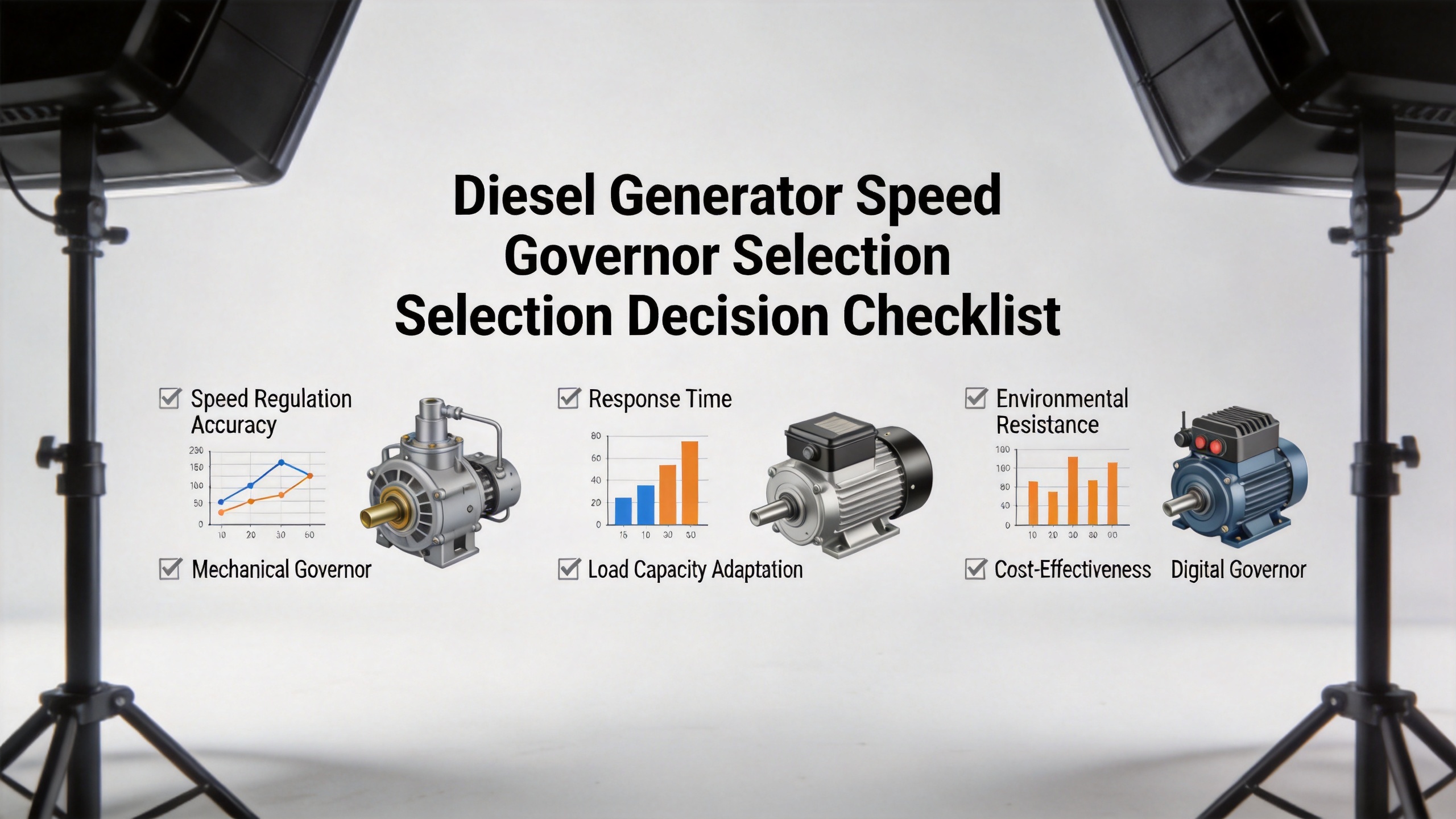
If you're procuring a Cummins genset speed control unit for resale or project use, working through this checklist before placing an order will save time at every stage from sourcing to installation:
- Confirm Cummins engine model and series — not just "Cummins," but the specific variant (e.g., NT855, K19, KTA38, QSK60). The controller interface type depends on it.
- Identify actuator type and model — confirm whether the installation uses a GAC, Barber-Colman, or other actuator, and verify the controller's output matches that actuator's input requirements.
- Check system voltage — 12V or 24V DC; don't assume from application type alone.
- Assess load profile — steady loads allow simpler Isochronous settings; variable or motor loads require well-adjusted PID parameters and potentially variable-mode capability.
- Verify operating environment temperature — for outdoor or high-ambient industrial applications, confirm the controller's rated operating temperature is sufficient.
- Confirm parallel operation requirements — if the genset runs in parallel, droop mode support and adjustable droop percentage are non-negotiable.
- Request technical documentation before ordering — wiring diagrams, installation manuals, and specification sheets should be available from the supplier upfront. Suppliers who can't provide documentation represent a downstream support risk.
Wholesale and Brand Sourcing Considerations
For wholesale buyers and brand merchants sourcing Cummins genset speed control units at volume, the relevant evaluation factors extend beyond unit specification to include supply consistency, documentation availability, and technical pre-sales support.
Specialized suppliers focused on generator control components — governors, actuators, and AVRs — typically offer better model-level compatibility knowledge and more reliable batch consistency. When evaluating suppliers, confirm they can verify compatibility at the engine variant level, not just the brand level, and that English documentation is available for international shipments.
Volume procurement should account for actuator sourcing alongside the speed control unit — these two components function as a matched pair. Sourcing both from a single supplier simplifies procurement and reduces incompatibility risk at installation.
Maintenance Notes
Electronic speed control units require minimal scheduled maintenance but benefit from periodic inspection of the pickup sensor connection, actuator rod linkage, and controller terminal connections. Loose connections at the magnetic pickup are a common cause of erratic speed regulation that can be misdiagnosed as a controller fault. Cleaning and re-torquing terminals at each major service interval is good practice for any installation operating in high-vibration or high-humidity environments.
If a controller shows signs of instability — hunting, overspeed, or failure to maintain set speed — PID recalibration should be attempted before replacement, especially if the issue followed a load profile change or ambient temperature shift.






