
 EN
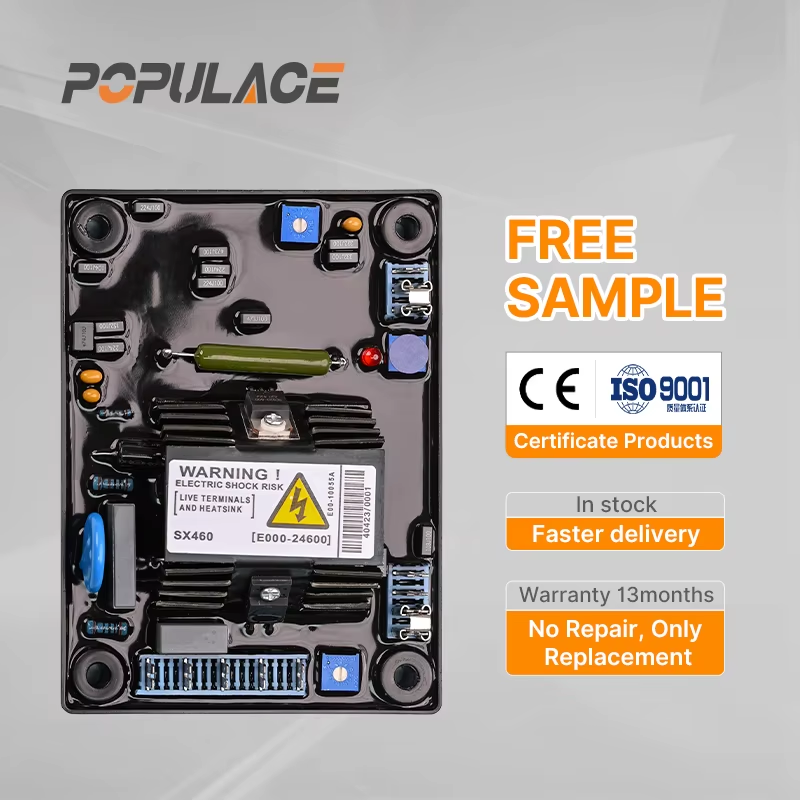
Avr As440: Selection and Setup Guide
For a generator service team, an avr as440 is not simply a board to swap when output voltage becomes erratic. It is part of the alternator excitation system, so the right replacement decision starts with the alternator documentation, the existing terminal arrangement, and the operating duty of the genset. This guide explains what an AVR AS440 does, how to compare it with common alternatives, and how to commission a replacement without turning a wiring issue into a regulator issue.
What an AVR AS440 does
An avr as440 monitors generator output and adjusts excitation so the alternator can hold its intended voltage as the load changes. Search results for the original AS440 describe an analogue, two-phase sensing, self-excited design and a half-wave phase-controlled thyristor regulator used with a brushless generator excitation system. Those descriptions explain the job of the unit; they do not make every AS440-labelled board suitable for every alternator.
In practice, the regulator receives its sensing and supply signals from the alternator, sends controlled field output to the exciter circuit, and reacts to changing voltage conditions. A poor connection, incorrect sensing lead, weak rotating diode assembly, or unstable engine speed can look like an AVR failure. Treat the avr 440 as one part of a system diagnosis rather than the first assumption.
AS440 versus SX440, SX460, R120, and R450
Part numbers are useful starting points, not compatibility certificates. The AS440 and SX440 are often discussed together because documented conversion instructions exist for certain applications. That is evidence that a specific conversion can be engineered; it is not proof that every SX440 installation accepts an AS440 without checking the applicable alternator model, wiring documentation, and conversion instructions.
| Regulator family | Selection question | Practical buying rule |
|---|---|---|
| AS440 | Does the alternator and sensing/excitation arrangement call for this analogue regulator? | Confirm the exact alternator model and connection drawing before purchase. |
| SX440 | Is a documented AS440 conversion applicable to this machine? | Use the model-specific conversion document, not visual similarity or connector count. |
| SX460 | Does the generator require the functions and wiring defined for the SX460 family? | Compare the manufacturer documentation and terminals line by line. |
| R120 | Is the existing genset designed for this regulator family? | Do not substitute it for an AS440 based on price alone. |
| R450 | Are its sensing, supply, and protection requirements aligned with the alternator? | Approve only after a wiring and application review. |
The replacement cost of an avr as440 should therefore include more than the module price. For a B2B buyer, include identification time, controlled installation, commissioning labor, and the cost of an unplanned shutdown if the wrong board is fitted. A lower-cost unit can be sensible when it is verified against the required electrical arrangement; it is not sensible when it creates a trial-and-error service call.
A B2B selection checklist
- Record the alternator make, model, serial information, and existing AVR part number.
- Compare the actual terminal labels and wiring diagram, including sensing, supply, and field connections.
- Check the intended operating mode: standalone duty, load changes, and any parallel operation requirements.
- Inspect the failed board and surrounding wiring for heat, loose terminals, moisture, or damaged insulation before ordering.
- Request the supplier’s product identification and confirm that the offered part is for the documented application.
For a direct sourcing option, review the product identification for the POPULACE AVR AS440 Automatic Voltage Regulator Generator. If the installed machine is documented for another family, do not force an AS440 choice: a separately listed R120 generator AVR illustrates why part-family verification matters.
AS440 wiring and replacement setup
Only qualified personnel should carry out generator electrical work. Isolate the set, prevent unexpected starting, and verify that stored energy and all relevant circuits are safe before removing covers. Photograph and label the original connections before disconnecting anything. A photo is a record, not a substitute for the approved wiring diagram.
- Confirm the old regulator part number and compare each terminal designation with the approved alternator drawing.
- Inspect the harness, terminal tightness, sensing leads, and field wiring. Correct damaged conductors before fitting the new board.
- Mount the replacement securely and reconnect conductors by terminal designation, not by wire color alone.
- Set adjustment controls to the supplier or manufacturer’s documented initial position. Do not copy settings from an unknown failed board.
- Recheck clearances, covers, grounding provisions, and every terminal before energizing.
A 4520 deep sea controller can be part of a genset control package, but its presence does not establish AVR compatibility. Keep controller configuration, speed governing, and alternator regulation as separate checks. The same principle applies to a packaged set such as a pramac p9000: identify the alternator and its original regulator specification rather than selecting by generator brand or kVA label alone.
Commissioning checks after installation
Start with no load under the approved commissioning procedure. Observe output voltage and frequency, then add load in controlled stages while watching for hunting, over-voltage, under-voltage, or unstable recovery. Frequency instability can affect voltage behavior, so verify engine speed before repeatedly adjusting the AVR. If a voltage adjuster is used, make small documented changes and allow the system to stabilize between them.
Record no-load and loaded readings, ambient conditions, the final adjustment position, and any corrective work. This creates a useful baseline for future service and helps procurement teams distinguish a regulator issue from an alternator, engine, or cable problem.
Troubleshooting an unstable AVR AS440 installation
- No voltage or low voltage: verify approved wiring, excitation path, sensing source, and related alternator components before condemning the new board.
- Voltage hunts: inspect connections and engine speed stability; then follow the documented stability adjustment procedure for the exact application.
- Voltage is too high: stop and recheck sensing connections and initial settings. Do not continue operating outside the permitted output range.
- Replacement does not behave like the original: revisit the compatibility review. A physically similar avr 440 may have a different required arrangement.
Make the purchase decision defensible
The right avr as440 purchase is a documented match, not a fast guess. Use the alternator model, approved wiring, application duty, and commissioning record to compare AS440, SX440, SX460, R120, and R450 alternatives. That approach reduces repeat callouts, protects generator availability, and gives a purchasing team a clear technical basis for replacement cost and supplier selection.






