
 EN
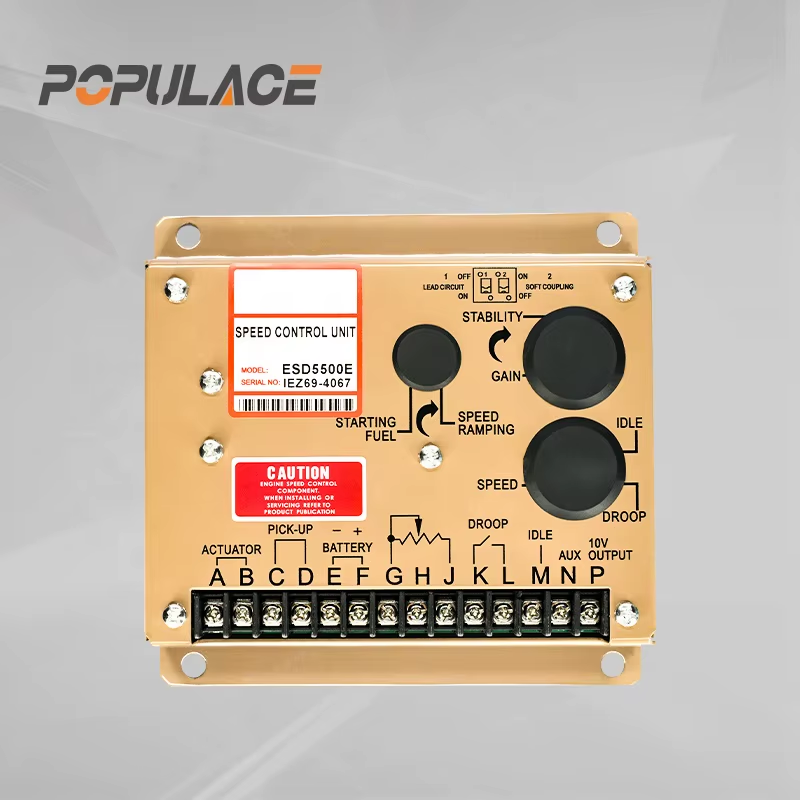
What Is the Role of a Generator Engine Governor in Load Sharing?
When evaluating generator control components for prime power or parallel operation setups, the generator engine governor is one of those parts that receives less attention than it deserves — until something goes wrong. As a technical consultant working with generator control systems, I've found that misunderstanding the governor's role in load sharing is one of the most consistent sources of operational problems in multi-unit installations. So let me explain what the governor actually does, and why it matters specifically in load sharing scenarios.
What Is a Generator Engine Governor?
A generator engine governor is a control device that regulates engine speed — measured in RPM — by adjusting fuel delivery based on the load applied to the generator. In AC power generation, engine speed directly determines output frequency: a generator running at 1500 RPM produces 50 Hz output on a 2-pole machine; at 1800 RPM, it produces 60 Hz. The governor's job is to hold this speed (and therefore frequency) within the acceptable operating band as electrical load varies.
There are two main types of generator engine governor in widespread use: mechanical governors, which use flyweights and spring tension to sense and correct speed deviations, and electronic governors (also called digital or electronic speed governors for generator applications), which use a speed sensor and a programmable controller to precisely regulate fuel actuator position. Both serve the same fundamental purpose, but they differ significantly in response time and control precision — which becomes critical the moment you operate more than one generator in parallel.
How the Governor Enables Load Sharing in Parallel Operation
Load sharing — the ability to distribute electrical load proportionally between two or more generators running in parallel — is directly managed through governor behavior. Understanding this requires understanding droop control.
In a droop-configured governor, the output frequency is intentionally allowed to decline as load increases. A typical droop setting allows a frequency reduction of 3% to 5% from no-load to full-load conditions. At first, this sounds like a flaw — and early in the learning curve, many buyers do react to it that way. The shift most experienced buyers make is realizing that this controlled frequency decline is actually the mechanism that enables proportional load sharing between parallel units.
Take a practical scenario: two generators running in parallel, each with a droop governor set to, say, 4%, and an additional load is applied to the system, both governors detect the frequency drop and respond by increasing fuel to their respective engines. Because both governors are responding to the same system frequency signal and both have the same droop characteristic, they naturally divide the new load proportionally — no high-speed communication link between the units is required. That proportional response is what makes droop control practical for parallel operation — generators can share load without needing precise synchronization of speed or control signals.
In contrast, isochronous governors try to hold frequency exactly at the rated setpoint regardless of load. An isochronous governor works well for a single isolated generator, but — and this is worth pausing on — you cannot simply parallel two isochronous-governed generators without a load-sharing controller to mediate between them. The reason is that two governors trying to hold identical setpoints with any difference in their internal calibration will fight each other, with one unit absorbing all the load and the other running unloaded.
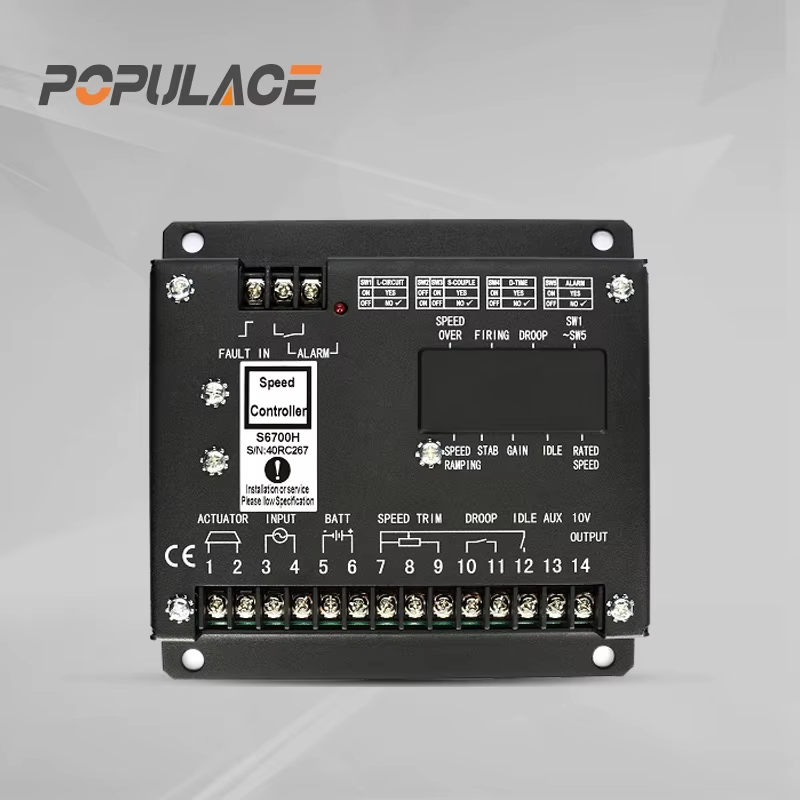
Electronic vs. Mechanical Governor Performance in Load Sharing
The choice between a diesel generator engine governor of mechanical design versus an electronic engine governor for generator applications carries real consequences in load sharing scenarios.
Mechanical governors respond to speed changes through a centrifugal flyweight mechanism. The response is adequate for isolated operation and light load transients, but the mechanical lag — typically measured in hundreds of milliseconds — means that during sudden load application or rejection, there is a brief period where the engine speed deviates before the governor catches up. In a multi-unit parallel system, this lag can create transient load swings between units, which stresses both the mechanical drivetrain and the electrical switchgear.
Electronic governors use a speed sensor (usually a magnetic pickup sensing flywheel gear teeth) feeding a digital controller that calculates fuel actuator position in real time. The response time is significantly faster — some electronic governors can detect and begin correcting a speed deviation within tens of milliseconds. For parallel generator sets carrying variable loads, this faster response translates directly into tighter frequency regulation and smoother load distribution. It also means that the generator governor control parameters — droop percentage, gain, stability — can be adjusted precisely through the controller software, rather than requiring mechanical adjustment of spring pre-load and flyweight geometry.
Electronic governors do introduce their own compatibility requirements, though. The controller output signal type (current loop, voltage, PWM) must match the fuel actuator — and the actuator response curve must be calibrated against the specific engine variant's fuel system. Buyers who have encountered installation failures often recall that compatibility documentation was the critical gap: the governor and actuator may both be rated for the same engine brand, but differences in sensing input range or actuator interface type can prevent proper function. This is why verifying full compatibility at the component level — governor, actuator, and engine variant — matters at the selection stage, not after installation.

Key Considerations When Configuring Generator Governor Control for Load Sharing
When setting up a parallel system, several governor configuration factors directly affect load sharing quality:
- Droop percentage matching: Generators running in parallel should have matching droop settings. A mismatch — say, one unit at 3% and another at 5% — will cause the lower-droop unit to absorb disproportionately more load as frequency declines, potentially overloading it while the other unit runs underloaded.
- No-load frequency setpoints: All parallel units should have the same no-load frequency setpoint. Any offset between units causes one to dominate load sharing from the start.
- Actuator response calibration: The actuator gain and stability settings must be tuned to the specific engine-governor combination. Overly aggressive gain causes speed hunting; insufficient gain causes sluggish response and poor transient load sharing.
- Governor type consistency: Mixing mechanical and electronic governors in a parallel bank is possible but introduces complications, as their response time characteristics differ. Electronic governors generally deliver better load sharing accuracy in mixed-load applications.
Maintenance Signals to Watch For
Excessive droop in operation — where frequency falls more steeply than the configured droop setting would predict — is typically a maintenance signal rather than a configuration issue. On a diesel generator engine governor system, this can indicate wear in the fuel injection components, a sticking actuator linkage, or degradation in the governor's speed sensor signal. Monitoring the actual frequency droop curve against the commissioned setpoint is a useful early-warning indicator before a problem develops into an unplanned outage.
Conclusion
The generator engine governor does more than maintain RPM — it is the primary mechanism through which parallel generators negotiate load division. Whether you are specifying a diesel generator engine governor for a new prime power installation or selecting an electronic engine governor for a generator retrofit, the droop characteristic, response speed, actuator compatibility, and configuration consistency across parallel units are the factors that determine whether the load sharing system performs as designed. Getting the configuration right at commissioning is considerably less expensive than diagnosing and correcting it after the system is in service.





