
 EN
What Is the Role of a Generator AVR in Stabilizing Output Voltage?
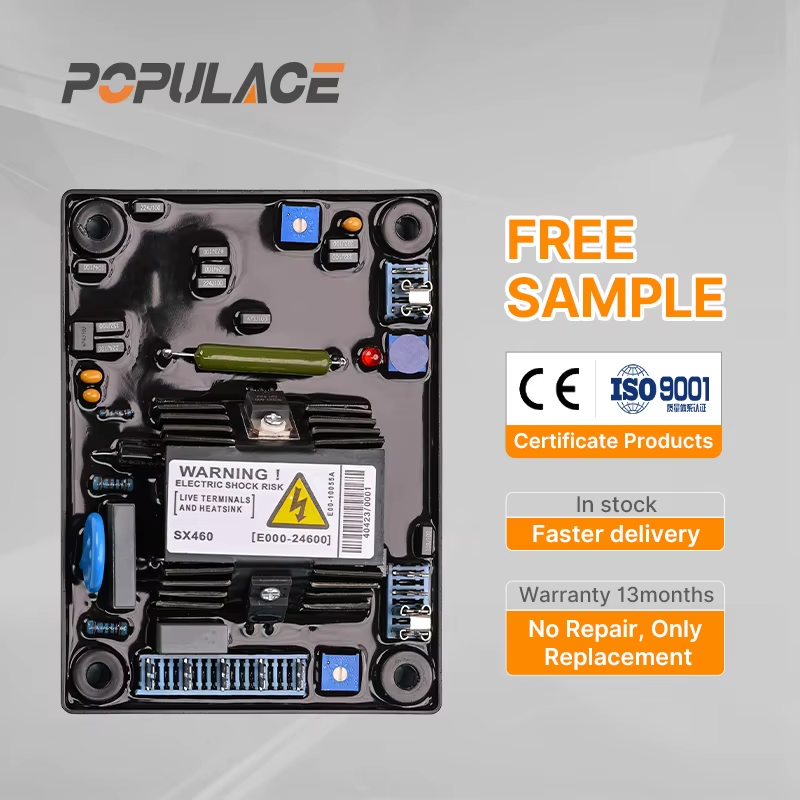
A Generator AVR is the control device that helps an alternator hold its intended output voltage as operating conditions change. In practical maintenance work, it is less useful to think of the AVR as a mysterious black box and more useful to view it as a fast feedback controller. It measures voltage, compares that reading with a target, and changes field excitation to reduce the difference. That process is why a generator can supply a steadier voltage while loads connect, disconnect, or vary.
For buyers, service teams, and distributors, understanding the role of a Generator AVR helps separate a genuine regulation problem from a wiring, sensing, engine-speed, or compatibility problem. A replacement is not automatically a cure just because its connector fits.
How a Generator AVR maintains voltage
An automatic voltage regulator for generator sets up a closed loop around the alternator. First, the Generator AVR receives a sample of output voltage through its sensing circuit. It compares that sample with the preset reference. If output is below target, the controller increases current to the exciter field. More magnetic field generally raises alternator output. If output is above target, it reduces excitation. The cycle repeats continuously, so correction is made before normal variations become a sustained voltage error.
This is the central role of a Generator AVR: it does not create mechanical power, and it cannot compensate for every fault. Instead, it controls the magnetic field that influences electrical output. Because induced voltage depends on magnetic flux and operating conditions, a controlled field gives the alternator a practical way to respond to load changes.
Why voltage changes when the load changes
When a large motor starts, current demand rises quickly. Without a suitable Generator AVR, the alternator may not restore voltage promptly enough after the initial dip. Conversely, a sudden load removal can allow voltage to rise before the control loop settles. The quality of regulation therefore depends on the AVR, alternator design, sensing arrangement, engine speed, and the nature of the load—not on one component alone.
A well-matched automatic voltage regulator for generator balances response and stability. Excessively aggressive adjustment can lead to hunting, where voltage repeatedly overshoots and undershoots. A slow response can leave equipment exposed to longer dips. This is why adjustment should follow the generator documentation and be performed safely by qualified personnel.
What the AVR senses and controls
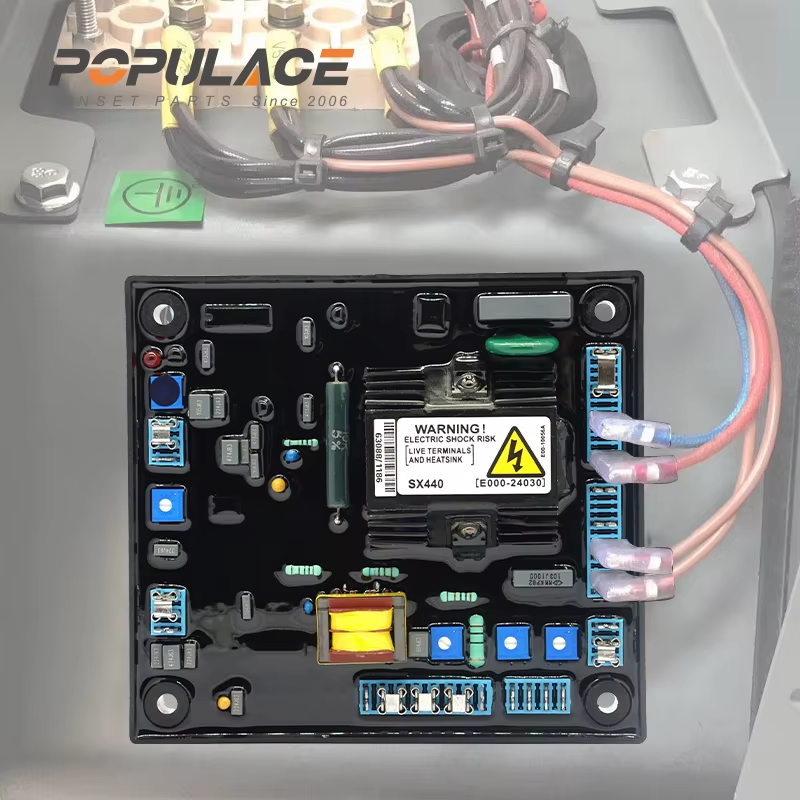
Most systems use voltage sensing leads connected to the alternator output. The Generator AVR uses that signal to decide whether excitation must change. Some designs also include stability, voltage, droop, or under-frequency settings. These controls are not interchangeable: the voltage setting establishes the target, while stability adjustment influences how calmly the regulator reaches that target.
A generator avr circuit diagram is useful because it shows the actual sensing path, power supply, field terminals, and any auxiliary connections. Before replacing a unit, compare terminal labels and connection logic rather than relying on case shape. A generator avr circuit diagram can also reveal a loose sensing lead, reversed field connection, or missing link that makes a healthy regulator appear faulty.
Brushless generator AVR operation
In a brushless generator avr arrangement, the controller typically manages excitation without relying on brushes to deliver current directly to the main rotor. The exact configuration varies by alternator, but the operating principle remains familiar: voltage is sensed, the error is calculated, and excitation is adjusted. A brushless generator avr must still match the alternator’s excitation requirements, sensing voltage, frequency, and wiring layout.
That compatibility check matters. An AVR with an unsuitable field-current range or sensing configuration can produce weak correction, unstable voltage, or no useful regulation. In my experience, “close enough” replacement selection is a common source of repeat service calls. Confirming the alternator model, original AVR part number, terminal map, and rated output is usually faster than troubleshooting an incompatible installation later.
Common signs to investigate
- Output remains consistently too high or too low after engine speed is confirmed.
- Voltage surges or hunts under a steady load.
- Voltage drops sharply when a normal load is applied and does not recover.
- Output changes when sensing leads or connectors are moved.
- A replacement Generator AVR behaves differently despite apparently similar dimensions.
These signs do not prove that the Generator AVR has failed. Start by checking engine RPM and frequency, connections, fuses, sensing leads, field wiring, and signs of heat or moisture damage. Then compare measured values with the correct service information. This sequence avoids replacing a regulator when the underlying issue is a poor connection or alternator fault.
Replacement and wholesale sourcing checklist
For repeat orders and avr replacement parts wholesale purchasing, request the technical identifiers needed for compatibility: generator or alternator model, original part number, input or sensing voltage, field voltage and current range, frequency, terminal configuration, mounting dimensions, and adjustment functions. A supplier quotation that only states “universal AVR” leaves too much unanswered.
Distributors handling avr replacement parts wholesale should keep the Generator AVR selection process traceable. Photograph the original terminals, retain the wiring reference, and record the application. Those details make it easier to review a substitute before shipment and to distinguish a product issue from an installation issue.
Key takeaway
The Generator AVR stabilizes output voltage by continuously sensing alternator voltage and adjusting excitation current. Its effectiveness depends on correct wiring, appropriate settings, healthy generator components, and a compatible replacement. For technical buyers, a sound decision is not simply to choose the lowest-priced Generator AVR; it is to verify that the regulator matches the electrical and mechanical requirements of the specific generator.






