
 EN
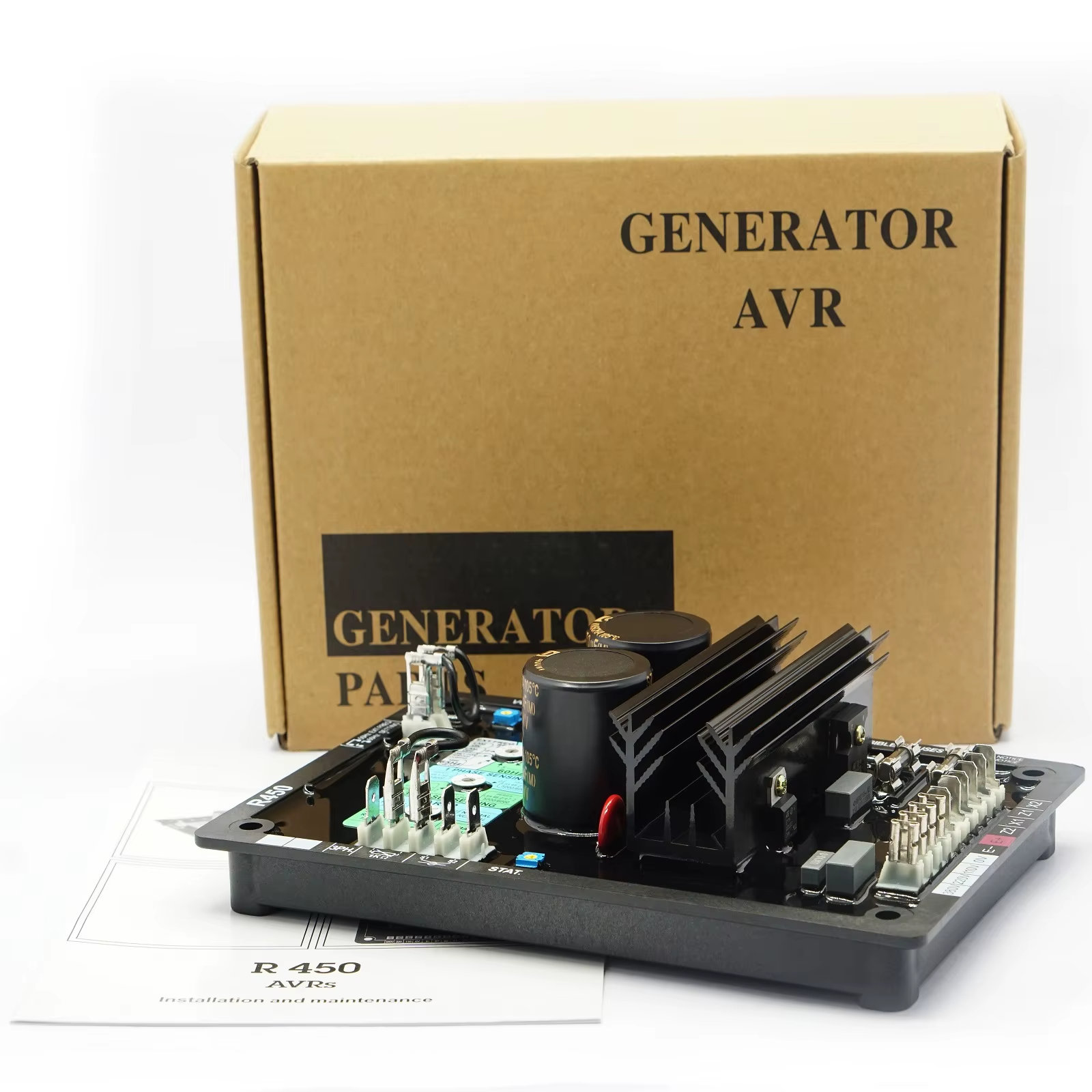
What Is the Difference Between an Automatic Voltage Regulator for Generator and a Transformer?
A generator that produces the right nominal voltage can still create a problem if that voltage drifts as the load changes. That is why an automatic voltage regulator for generator is often confused with the job of a transformer. Both devices relate to voltage, but they solve different electrical problems. An AVR actively controls a generator’s output; a transformer passively transfers AC power between windings at a defined ratio.
For a technical buyer, the distinction matters because fitting a transformer where an AVR fault exists will not restore regulation. Likewise, replacing a transformer will not correct an incompatible AVR sensing or excitation circuit. The useful question is not which device is “better”; it is which function the generator system actually needs.
The short answer: control versus conversion
An automatic voltage regulator for generator is part of the generator control loop. It measures terminal voltage, compares that reading with its setpoint, and changes excitation current to the alternator field. When load demand pulls voltage down, the AVR can increase excitation; when voltage rises, it can reduce excitation. This feedback process is ongoing while the generator operates.
A transformer has no feedback loop and does not control the alternator field. It uses electromagnetic induction between primary and secondary windings. Its turns ratio determines whether the secondary voltage is stepped up, stepped down, or kept approximately the same while providing isolation. With a given input and load, it does not decide that the generator needs more excitation.
| Question | Generator AVR automatic function | Transformer function |
|---|---|---|
| Primary role | Maintain generator terminal voltage | Transfer AC power at a winding ratio |
| How it acts | Adjusts field excitation from sensed voltage | Uses magnetic coupling between windings |
| Responds to load changes? | Yes, through a control loop | No active regulation by itself |
| Can provide isolation? | Usually not its main function | Often, depending on winding arrangement |
| Typical location | Inside the alternator or generator control arrangement | Between an AC source and downstream circuit, or within equipment |
How an AVR regulates a generator
Think of the AVR as the alternator’s voltage manager. It receives a voltage-sensing signal, often from the generator output terminals. It then supplies or modulates DC excitation for the exciter or rotor field, depending on the alternator design. A stronger magnetic field supports a higher generated voltage; a weaker field supports a lower one.
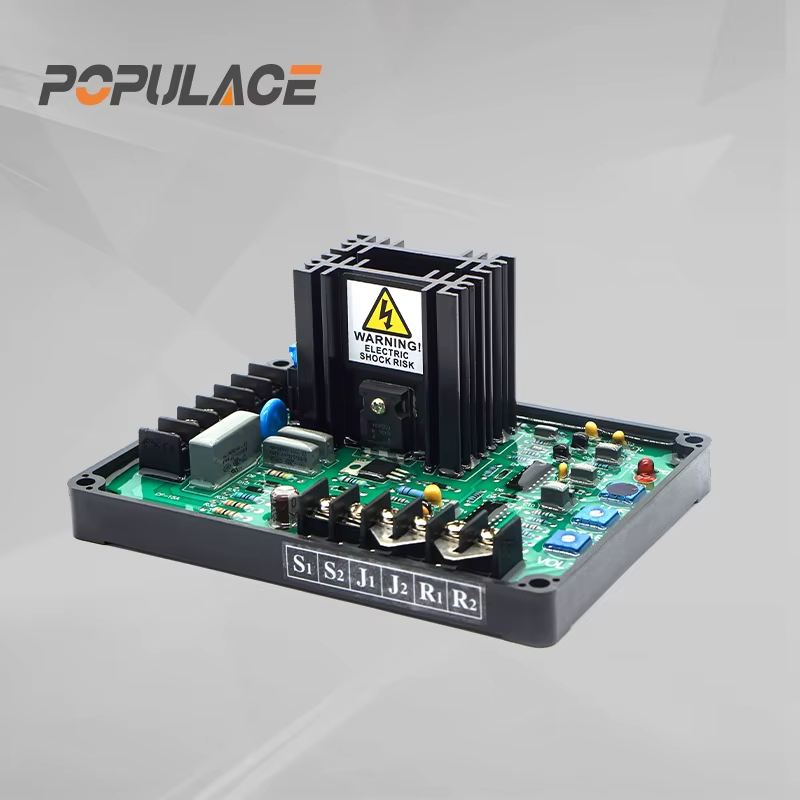
This is why an avr for generator must match more than a voltage label. The sensing arrangement, excitation supply, terminal layout, frequency, alternator type, and adjustment range all affect whether the control loop will operate safely. Early in the sourcing process, buyers often focus on voltage and frequency ratings. After a failed installation, the focus usually shifts to sensing input type, field-current capability, connector pinout, and the alternator model.
A generator avr automatic unit is therefore not simply a voltage converter. It needs a correct feedback signal and a compatible field circuit. If either is wrong, the symptoms can include low voltage, high voltage, hunting, slow recovery after a load step, or no build-up at all. Those symptoms point toward diagnosis and compatibility checks, not automatically toward a transformer replacement.
What a transformer can and cannot do
A transformer changes the relationship between input and output AC voltage according to its winding ratio. For example, it can supply a lower voltage to equipment designed for a different distribution level, or provide galvanic isolation where the design calls for it. It can also be part of instrument sensing circuits and control power supplies.
However, a transformer does not watch generator voltage and trim excitation to hold a setpoint. If generator output falls when a large motor starts, a transformer receives that reduced input; it does not command the alternator to compensate. The output will follow the input according to the transformer’s ratio, subject to normal losses and loading behavior.
This is where the term automatic voltage stabilizer generator can cause confusion. An external stabilizer may be installed downstream of a generator to condition supply for a particular load. That is a separate arrangement from the internal AVR that regulates the alternator. An external device may be useful in a particular installation, but it should not be treated as a substitute for restoring the generator’s own voltage-control system.
Common situations and the correct component to investigate
Voltage changes when generator load changes
Start with the AVR circuit, sensing leads, field wiring, speed stability, and alternator condition. Because frequency and engine speed can influence generator behavior, an AVR diagnosis should also confirm that the prime mover is holding the intended speed. A transformer may be present in the system, but it is rarely the first explanation for a generator that cannot regulate under changing load.
The generator voltage is suitable, but the load needs another voltage
This is a transformer application. Select the appropriate input and output ratings, capacity, connection configuration, insulation requirements, and protection arrangement. The AVR still has its normal job of keeping the generator source stable; the transformer adapts that supply for the downstream equipment.
You need isolation for a sensitive circuit
An isolation transformer can be relevant if the electrical design requires separation between circuits. An AVR does not normally provide that protective separation. The two components can coexist: the generator voltage regulator controls the source, while the transformer addresses voltage adaptation or isolation after the source.
A replacement checklist for an automatic voltage regulator for generator
Before ordering an AVR, collect information from the actual generator and alternator rather than relying on a broad engine brand description. A generator-parts technical review should include:
- Alternator make, model, serial range, and existing AVR part reference where available.
- Generator rated voltage, phase arrangement, frequency, and intended operating mode.
- Sensing input wiring and whether the regulator uses single- or three-phase sensing.
- Field or exciter connection details, expected excitation characteristics, and terminal layout.
- Observed fault behavior: no voltage, unstable voltage, sustained overvoltage, or poor recovery under load.
- Any recent changes to wiring, control panels, batteries, engine speed settings, or loads.
If the application runs at a stable load profile, a compatible regulator setting will often remain steady. If loads swing frequently, especially with cycling motors, verify the AVR response and the generator’s speed regulation together. A transformer rating alone cannot answer that control question.
How to make the choice without mixing the two roles
Choose an AVR when the objective is to regulate the generator alternator’s voltage through excitation control. Choose a transformer when the objective is to convert AC voltage levels, supply a different voltage to a load, or create isolation in an electrical design. Choose an external stabilizer only after defining what it is intended to protect and confirming that the generator itself is already functioning correctly.
For distributors and service teams, the most reliable process is to separate the fault diagnosis from the sourcing decision. First identify whether the issue is source regulation, power transformation, wiring, load behavior, or engine speed. Then compare the exact electrical interfaces and operating conditions. That approach avoids treating every voltage problem as a generic “regulator” problem and makes an automatic voltage regulator for generator selection more defensible.
Conclusion
An AVR and a transformer both appear in voltage-related conversations, but their purposes are fundamentally different. The AVR is an active feedback controller for generator output; the transformer is a passive AC power-transfer device with a fixed winding relationship. Understanding that boundary helps technicians troubleshoot logically and helps buyers request the right component data before a replacement order is placed.






