
 EN
What Is Genset Auto Start and How Does It Enhance Backup Power Reliability?
When the main power supply fails at a data center, hospital, or remote telecom tower, the time it takes to restore power is measured in consequences. Such a system removes human response time from that equation entirely. By detecting a mains failure and starting the backup generator within seconds, genset auto start technology has become a foundational reliability feature in any critical backup power installation.
If your site operates without a dedicated on-site operator, the case for a properly configured auto start for genset is straightforward: the system acts the moment grid power drops, without waiting for anyone to respond. Understanding how it works — and what components make it reliable — is essential for anyone specifying or sourcing backup power systems at a wholesale or OEM level.
What Is Genset Auto Start?
Genset auto start refers to a control mechanism that automatically initiates the startup sequence of a generator set when the primary mains supply fails or drops below acceptable parameters. The system continuously monitors grid voltage and frequency; when a threshold is crossed, it signals the engine to crank, warm up, and accept load without manual intervention.
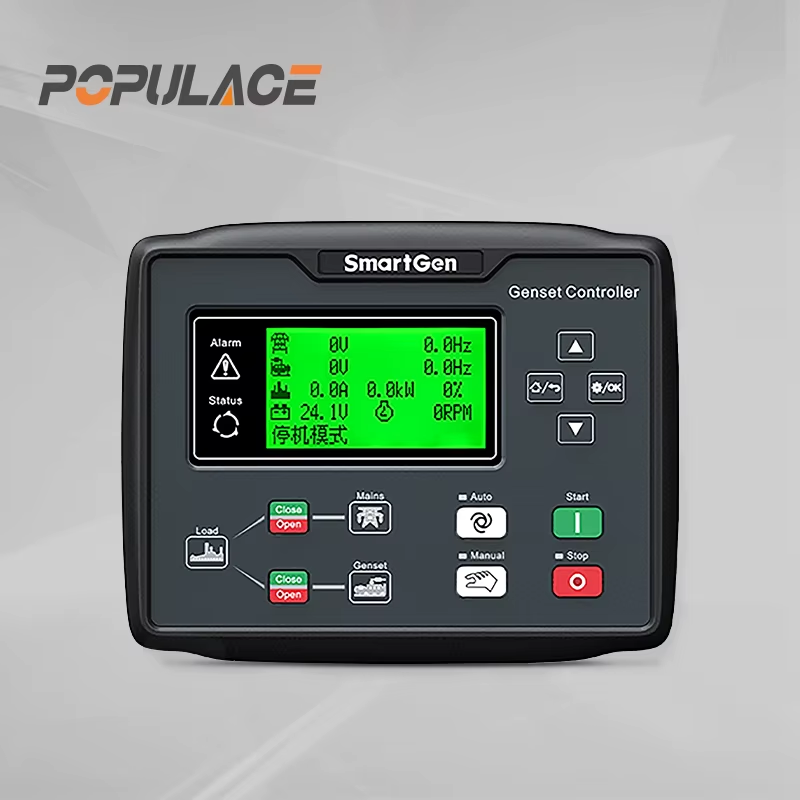
The core technology is the AMF (Automatic Mains Failure) protocol. An AMF-capable auto start controller for genset monitors the incoming mains supply in real time. The moment it detects a voltage drop, frequency deviation, or complete outage, it executes a pre-programmed startup sequence. Controllers from manufacturers such as Deep Sea Electronics (DSE), SmartGen, and ComAp are widely deployed for this function, each offering configurable trigger conditions, protection logic, and event logging within a compact hardware design.
How the Auto Start Sequence Works
The sequence the system follows is precise and repeatable. That consistency is what makes it reliable for unattended backup power operation.
- Mains monitoring: The auto start controller for genset continuously reads grid voltage and frequency on all monitored phases.
- Failure detection: When voltage drops below the set threshold, the controller registers a mains failure. A short configurable delay — typically one to three seconds — filters transient dips before triggering a start.
- Start signal: The controller sends a crank signal to the generator's starting circuit.
- Warm-up period: The engine runs unloaded for a configurable period — typically five to fifteen seconds — before load is accepted.
- Load transfer: Once the generator reaches stable voltage and frequency, the ATS (Automatic Transfer Switch) transfers the facility load from mains to generator output.
- Return transfer and cool-down: When grid power returns and stabilizes, the controller transfers load back to mains and initiates a cool-down run before shutting down the generator.
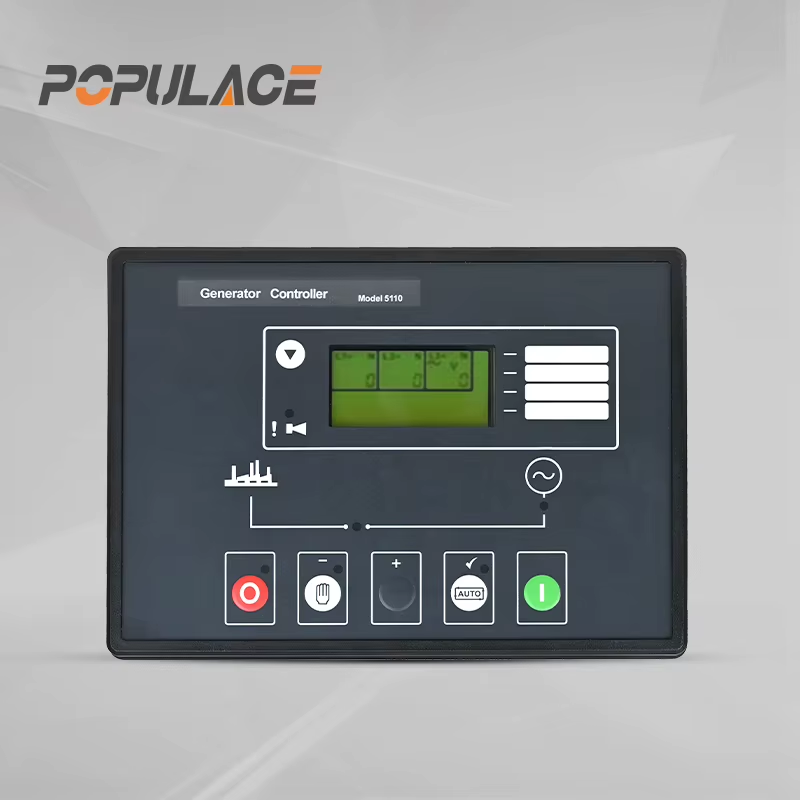
That covers the core sequence. Here is where it gets practically significant: each stage is governed by configurable parameters, and a well-specified auto start panel stores those settings on-board, executes them consistently, and logs every event for maintenance review.
Key Components of an Auto Start System for Gensets
A complete auto start installation is a coordinated system, not a single device. Each component contributes to end-to-end reliability.
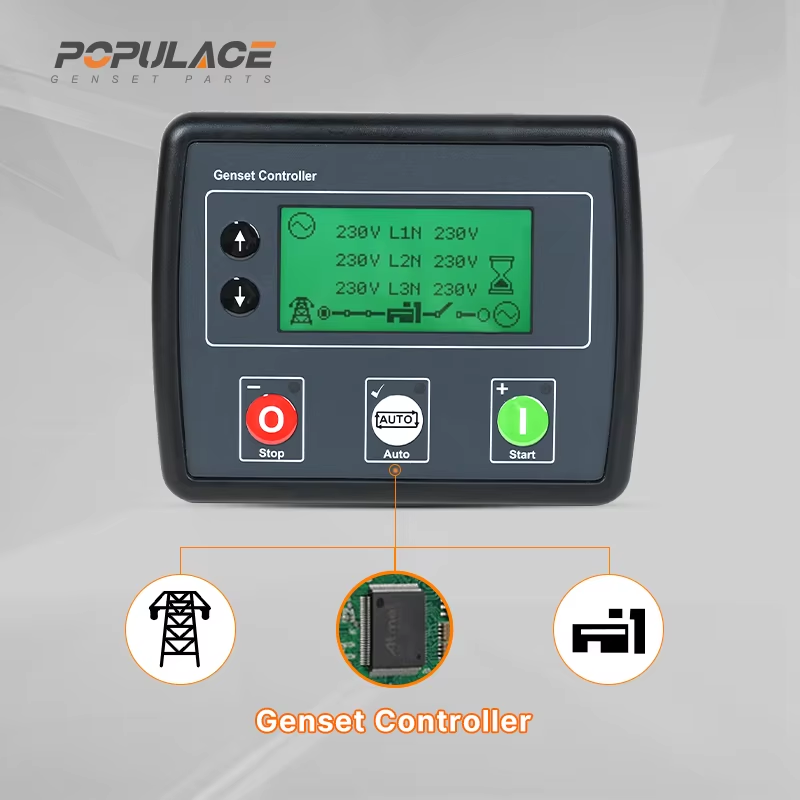
- Auto start controller for genset: The intelligence of the system: reads input signals, executes start and transfer logic, manages protection shutdowns, and communicates status via Modbus or CAN bus interfaces.
- Genset auto start panel: The enclosure housing the controller, contactors, bus connections, and monitoring circuits. A properly built genset auto start panel simplifies field installation and reduces wiring errors that could compromise startup reliability.
- ATS (Automatic Transfer Switch): Performs the electrical switching between mains and generator output, rated for full facility load and synchronized with the controller's transfer signal.
- Battery charger and monitoring circuit: Ensures the starting battery remains charged and ready for use. Many controllers include battery voltage monitoring as a built-in trigger condition; the system cannot perform an unattended start on a depleted battery.
- Sensors: Speed, oil pressure, coolant temperature, and exhaust temperature sensors feed data to the controller, both triggering the auto start sequence and protecting the engine during startup.
How Genset Auto Start Enhances Backup Power Reliability
The reliability benefit this technology delivers addresses three structural weaknesses of manual backup power:
Eliminates operator response time. A generator auto start unit replaces the variable of "how long until a technician arrives" with a deterministic response that begins within milliseconds of detecting a failure event. For facilities running 24/7, that difference can represent hours of restored uptime per incident.
Enforces consistent startup procedure. Human operators under pressure may skip warm-up periods, attempt restarts too quickly, or miss a protection warning. The controller executes the same programmed sequence every cycle. Protection functions halt the start sequence automatically if engine parameters exceed safety limits, protecting the asset while still logging the event.
Supports unattended and multi-site operation. For buyers managing installations across distributed sites — telecom towers, data centers, or industrial facilities — a reliable auto start for genset eliminates the need for on-site personnel to manage power restoration. Remote monitoring interfaces extend this capability to a central control point.
Are you managing a site where any gap in power supply directly affects operations? Proper commissioning and documentation of the controller settings matter significantly. Misconfigurations — incorrect start delay, unlogged threshold changes — are a common root cause of auto start failures in the field. Any auto-start system is as reliable as its initial setup and maintenance records.
Where Are Genset Auto Start Systems Deployed?
These auto start panels are deployed wherever backup power must activate without human presence:
- Data centers: Transfer within five to ten seconds prevents hardware failures and data corruption.
- Hospitals and healthcare facilities: Regulatory standards in most markets require automatic standby power transfer for critical medical equipment, with the generator auto start unit subject to regular performance testing.
- Telecom towers and remote sites: Sites with no permanent staff rely entirely on auto start for genset to maintain network uptime during extended grid outages.
- Industrial plants: Certain production processes cannot tolerate an uncontrolled shutdown; a properly configured auto start controller for genset ensures backup power is available before critical equipment reaches a fault state.
Sourcing Considerations for Wholesale and OEM Buyers
For wholesale buyers and OEM integrators, evaluating a complete auto-start system goes beyond confirming AMF capability. Supply consistency, compatibility coverage, and documentation quality determine whether a controller line can be deployed reliably across a product range or customer base.
Assess controllers for: number of configurable trigger conditions (voltage, frequency, temperature, load, timer); communication interfaces for remote monitoring; protection functions included; and availability of technical documentation and firmware support. A generator auto start unit that is well-documented and widely compatible across genset platforms reduces the inventory and integration burden for distributors managing multiple installation types.
Suppliers specialized in generator control components, as opposed to broad industrial electronics distributors, tend to provide more granular compatibility guidance and application support. For buyers sourcing AMF controllers and auto start panels across multiple project types, working with a specialist supplier reduces technical and logistical risk at each procurement step. Selecting the right auto start controller for genset at the component sourcing stage avoids costly compatibility issues during commissioning and field deployment.






