
 EN
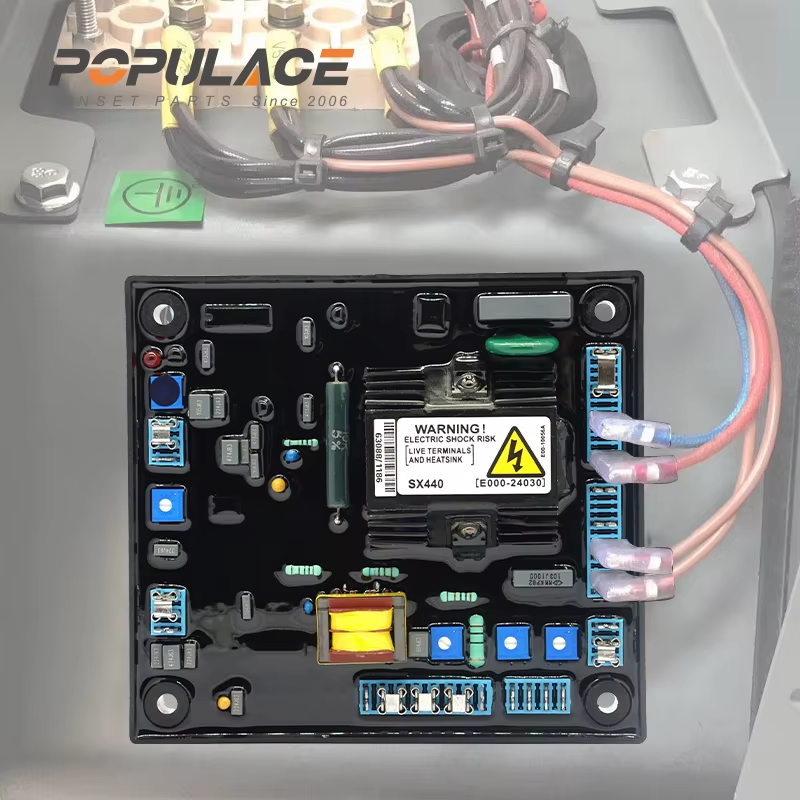
What Is an AVR Electrical Generator and How Does It Regulate Voltage?
The short answer: an AVR electrical generator component — AVR standing for Automatic Voltage Regulator — is the electronic device that keeps a generator's output voltage stable regardless of load changes. Without it, sensitive equipment connected to the generator would face constant voltage swings every time a load is added or removed. That covers the quick definition. Now, here is where it gets more practical: understanding how the AVR achieves this is what determines whether a replacement unit will perform correctly in a specific installation — and that distinction matters as much for wholesale buyers sourcing avr generator spare parts as it does for the technicians installing them.
The Role of an AVR in Electrical Generators
Every electrical generator — whether diesel-powered, gas-fueled, or portable — produces alternating current by rotating a magnetic field through a set of windings. In theory, the output voltage should be constant. In practice, it varies with load. When a high-draw piece of equipment powers on and pulls more current, the generator's rotational energy briefly drops, and so does the voltage. When the load decreases, the voltage rises. An AVR for electric generator applications monitors this output continuously and corrects deviations in real time.
The practical result is tight voltage regulation. Modern generator AVR units maintain output within approximately ±1% of the rated voltage under steady-state conditions — a precision level that matters significantly for sensitive electronics, motor controls, and any connected equipment that specifies a tight voltage tolerance.
How the Feedback Loop Works: Sensing, Comparing, Acting
The AVR voltage regulation process follows a closed-loop feedback cycle. Understanding each stage clarifies why certain technical specifications matter when selecting or replacing an AVR.
- Sensing: The AVR continuously samples the generator's output voltage through a sensing circuit connected to the alternator windings. This is where the sensing input voltage configuration becomes critical — an AVR is designed for a specific input range, typically 120V, 240V, or 480V for 60 Hz applications, and 100V, 200V, or 400V for 50 Hz systems. If the sensing input does not match the winding output, the regulation will be off from the start.
- Comparison: The sensed voltage is compared internally against a reference voltage set point — the target output the generator is supposed to deliver. The difference between the sensed voltage and the reference is called the error signal.
- Actuation: The AVR's power stage — typically using thyristors or silicon-controlled rectifiers (SCRs) — adjusts the excitation current supplied to the generator's field winding based on the error signal. More excitation means more magnetic flux, which raises the output voltage; less excitation reduces it.
- Correction: The adjusted excitation current changes the generator's output voltage. The loop cycles continuously, keeping deviations within the regulation tolerance — typically ±1% to ±2% depending on the design.

Simpler version: the AVR reads the generator's voltage, compares it to where it should be, and turns a dial — the excitation current — up or down to bring it back in line. The loop runs fast enough that most connected equipment does not detect the correction cycle.
Key Components Inside a Generator Voltage Regulator Unit
A generator voltage regulator unit consists of several interdependent circuits, each with a specific function in the feedback loop described above:
- Voltage sensing circuit: Taps into the alternator output at the configured sensing voltage level. The sensing input range is one of the most commonly mismatched specifications when selecting a replacement AVR.
- Reference and error amplifier: The reference voltage is typically set by a potentiometer that allows field adjustment of the output voltage level. The error amplifier computes the difference between sensed and reference values.
- Power control stage (thyristors/SCRs): These solid-state switches control the DC excitation current to the generator field winding. High-efficiency semiconductor construction in modern units reduces heat generation and improves response time.
- Stability and compensation circuits: These prevent the feedback loop from overcorrecting and oscillating. The stability setting is typically adjustable and may need calibration to the specific generator and load profile.
A Compatibility Consideration Most Buyers Overlook
The pitfall that gets overlooked most often with AVRs is not the output voltage spec — it is the sensing input range, which varies across generator winding configurations and is not consistently listed prominently in catalog descriptions. Are you sourcing this part as a direct replacement for a unit already in the field, or as inventory stocked across multiple generator models? That distinction changes which specification deserves the most attention.
Early in the sourcing process, most buyers focus on the output voltage rating. After a failed installation, the focus usually shifts to the sensing input type, the excitation current capacity, and whether the connector layout matches the existing wiring harness. A brushless generator AVR operates through a stationary exciter stator and rotating rectifier assembly — and the sensing input must correspond to what the alternator windings actually deliver, not just the nominal output.
If the generator operates at 50 Hz, the sensing bands typically run at 100V, 200V, or 400V ±10%. For 60 Hz installations, expect 120V, 240V, or 480V bands. Matching the correct band is not optional — it is the primary compatibility check before confirming any AVR order.
Single-Phase vs. Three-Phase Sensing
An additional variable that affects AVR for electric generator selection is whether the unit uses single-phase or three-phase sensing. Single-phase sensing draws from one winding phase; three-phase sensing monitors all three phases and averages or sums the signals. Three-phase sensing provides better overall voltage balance in three-phase generator outputs, particularly when load distribution across phases is uneven. Single-phase sensing is simpler and sufficient for single-phase output generators or three-phase generators with consistently balanced loads.
When sourcing an electrical generator AVR for replacement, confirming the sensing type is especially important if the installed unit's documentation has been lost or the original part number is no longer legible — a situation that occurs more frequently than it should on older generator fleets.
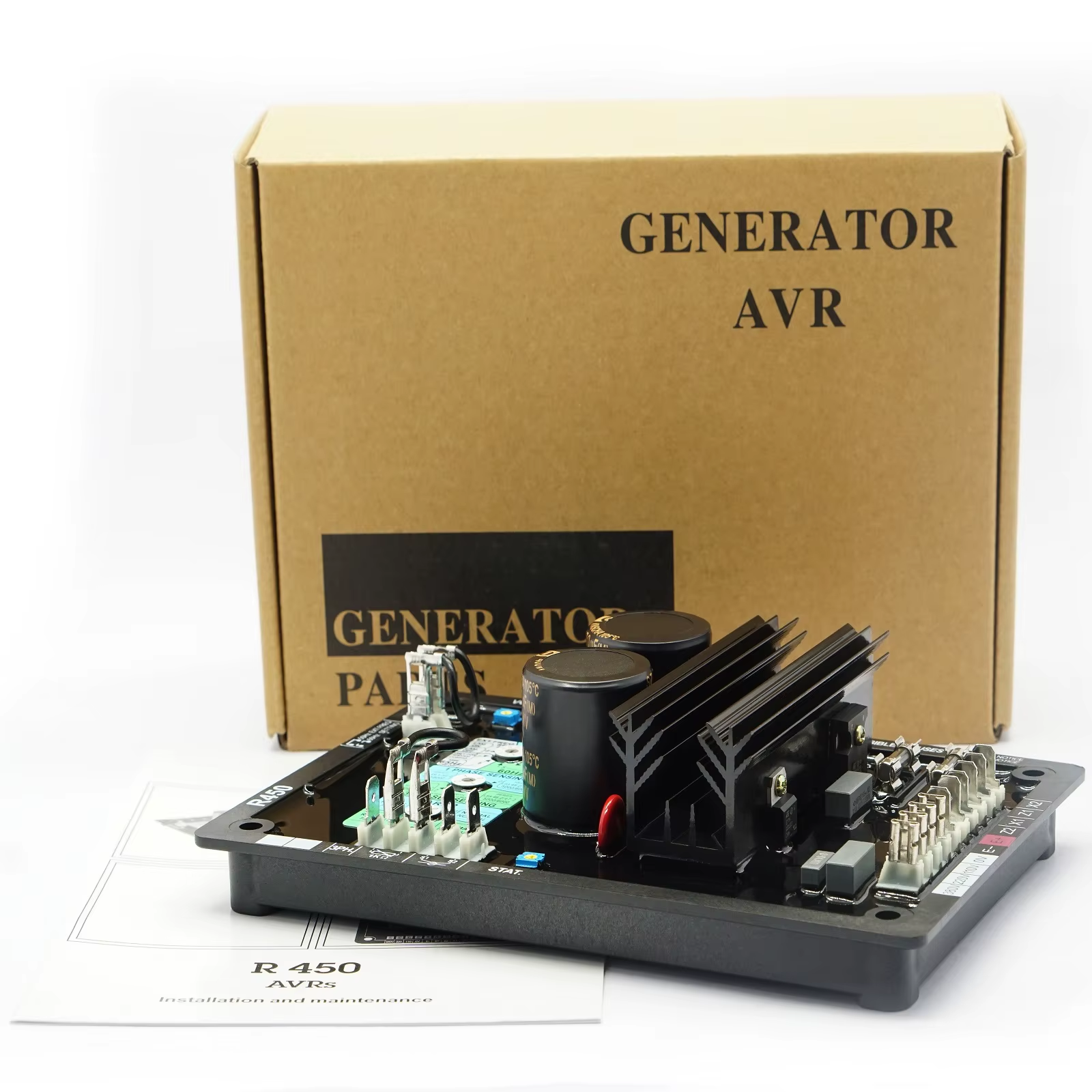
What Wholesale Buyers Should Verify When Sourcing AVR Generator Spare Parts
Generator AVR failure is one of the most common causes of generator voltage instability, which makes AVR replacement a recurring demand category for distributors and wholesale buyers. That frequency creates a practical sourcing pattern: most distributors who work with this product category develop a preference for confirming the excitation current range and sensing input configuration before the price conversation — not because it is required by any formal process, but because it eliminates the rework that follows a mismatched installation.
For wholesale buyers and brand merchants sourcing avr generator spare parts at volume, the verification steps worth completing before order confirmation include:
- Engine model and alternator variant, not just the generator brand
- Sensing input voltage range (50 Hz or 60 Hz band)
- Sensing type: single-phase or three-phase
- Excitation current capacity (rated and maximum)
- Connector interface type and pinout
- Operating temperature range, particularly for tropical or high-ambient installations
The assumption that aftermarket necessarily means lower quality often shifts once buyers examine production consistency and compatibility documentation from manufacturers who specialize specifically in generator control components. A supplier focused exclusively on AVRs, governors, and generator control parts can offer compatibility depth that a general industrial components distributor typically cannot match.
KYGEN Power — operating under the Populace and Doopser brands — supplies generator AVR components wholesale with a product scope that covers both AVR and governor categories from a single source. For wholesale buyers and brand merchants evaluating sourcing options for generator voltage regulator unit replacements, pre-sales compatibility support is available to confirm specification fit before order commitment. Inquiries can be directed to the team at [email protected] or through the Alibaba storefront at populaces.en.alibaba.com.
Summary: Why AVR Specification Accuracy Determines Installation Outcome
An AVR electrical generator component is not interchangeable based on output voltage ratings alone. The sensing input range, sensing type, excitation current capacity, and connector interface are the variables that determine whether a replacement unit will regulate correctly from the moment it is connected. For distributors managing inventory across multiple generator brands, building a specification confirmation step into the procurement workflow — rather than relying on catalog compatibility claims — reduces callback risk and protects the quality reputation that repeat customers depend on.
Generator control parts have relatively long replacement cycles, which means a single specification error has a multi-year operational impact. That is precisely why experienced buyers in this category treat compatibility verification not as additional overhead, but as the step that makes the rest of the sourcing process worthwhile.





