
 EN
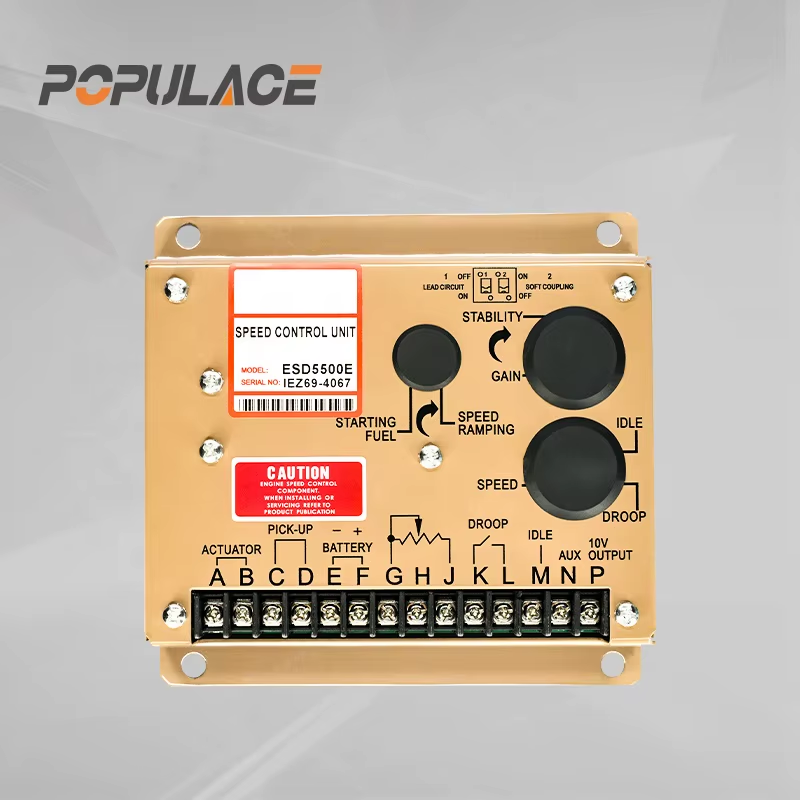
What Is a Speed Governor and How Does It Regulate Engine RPM?
A speed governor is the part of an engine-control system that keeps engine revolutions per minute (RPM) close to a selected target as load changes. In a generator set, that task is more important than simply preventing overspeed. Engine speed affects alternator frequency, so a governor helps the set deliver stable electrical power when equipment starts, stops, or changes demand.
The term is sometimes used for a vehicle road-speed limiter. Here, it means an engine RPM regulator used on generator engines, industrial engines, and similar applications. Understanding the feedback loop makes it much easier to choose, set up, and troubleshoot the right control components.
What a speed governor does
A governor compares actual engine speed with a desired speed, then changes fuel delivery or throttle position to reduce the difference. If a generator suddenly accepts more load, the engine tends to slow down. The speed governor responds by asking for more fuel or opening the throttle. If load is removed, the engine tends to accelerate; the governor reduces the command to bring RPM back toward its setpoint.
This continuous correction is why a governor is not just an on/off protection device. It is a control loop with three practical jobs:
- hold a selected no-load and running speed;
- limit excessive speed during rapid load rejection or abnormal operation; and
- manage the balance between speed stability and fast response as load changes.
Why RPM matters on a generator set
For a fixed-pole alternator, electrical frequency is tied directly to rotational speed: frequency = RPM × number of poles / 120. A common four-pole arrangement therefore operates at 1,500 RPM for 50 Hz or 1,800 RPM for 60 Hz. The exact engine and alternator configuration should be verified, but the relationship explains why governor adjustment affects the output frequency seen by the load.
When governed speed dips under load, frequency may dip with it. When the engine runs too fast, frequency can rise. A well-set speed governor helps reduce these excursions, while the alternator voltage regulator handles voltage control. Those are related functions, but an AVR does not replace a governor.
How the feedback loop regulates RPM
1. A speed reference sets the target
The target may be a mechanical spring setting, a manual speed adjustment, or a programmed setting in an engine speed control unit. This reference represents the desired RPM for the intended frequency and application.
2. The system senses actual speed
Mechanical designs sense speed through rotating weights. Electronic systems commonly use a magnetic pickup or another RPM signal. The controller compares this actual signal with the target. If the two match closely, the actuator command remains nearly steady.
3. The controller calculates a correction
With an electronic speed governor, the controller turns the speed error into an output command. Its response settings influence how quickly it reacts, how much overshoot is allowed, and whether it settles smoothly after a load step. Settings that are too aggressive can cause hunting; settings that are too slow can allow a noticeable frequency dip before recovery.
4. The actuator moves the fuel-control mechanism
A generator speed governor actuator is the output device that physically moves a fuel rack, pump lever, or throttle linkage. More actuator movement generally supports more engine torque; less movement reduces it. The engine speed then changes, the sensor reads the result, and the loop repeats many times each second.
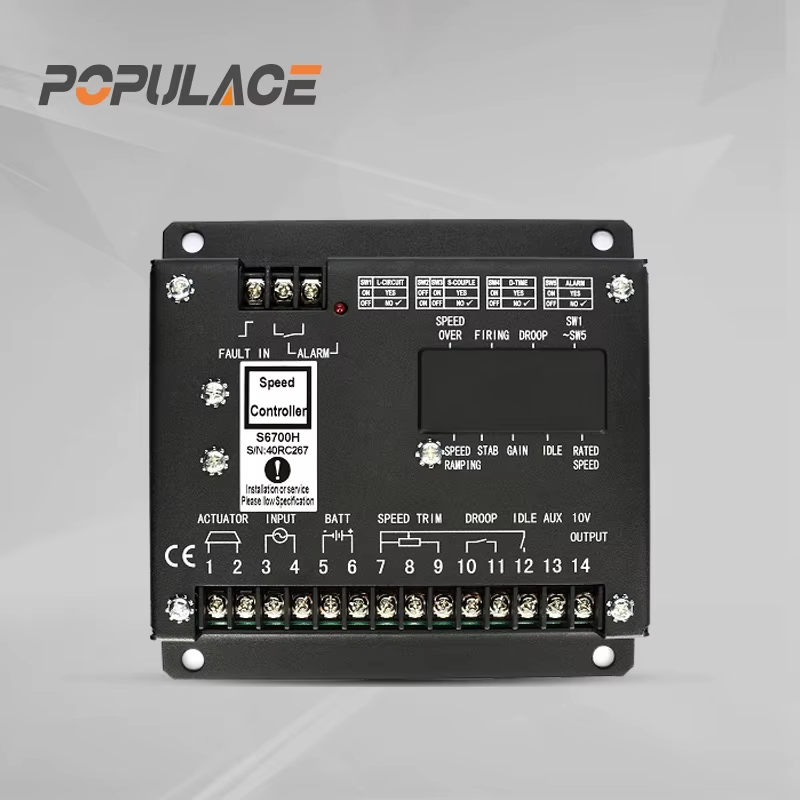
Mechanical and electronic governor systems
A mechanical governor for generator duty is built around centrifugal force. As engine speed rises, flyweights move outward against spring force and shift the fuel-control linkage. These systems are valued for their direct, self-contained design and can be appropriate where simple control is required.
An electronic arrangement separates sensing, decision-making, and actuation. The electronic controller receives an RPM signal, applies its control logic, and drives an actuator. This architecture can provide adjustable gain, stability, droop, idle/rated-speed switching, and interfaces with other generator controls. It also means compatibility matters: the pickup signal, supply voltage, actuator travel, engine linkage, and controller settings must work together.
| Feature | Mechanical governor | Electronic governor system |
|---|---|---|
| Speed sensing | Rotating flyweights | RPM sensor or pickup |
| Control action | Mechanical linkage and spring force | Controller output driving an actuator |
| Adjustment | Physical spring/linkage settings | Setpoints and tuning parameters |
| Integration | Standalone mechanical function | Can coordinate with an engine speed control unit |
Isochronous control and droop: two common behaviors
In isochronous operation, the governor aims to restore engine speed to the selected value after a load change. This is useful where one set is expected to hold frequency closely. Droop control intentionally allows a small speed decrease as load increases. In parallel generator applications, that controlled change can help machines share load more predictably.
Neither mode is universally better. The correct choice depends on the generator arrangement, the load-sharing method, and the control design. Changing speed settings without understanding the intended mode can create unstable operation or poor load sharing.
Common signs of governor-related trouble
- Frequency wanders: inspect RPM sensing, linkage condition, actuator response, and controller tuning.
- Engine hunts: check for overly aggressive gain, loose linkage, weak supply power, or erratic pickup signals.
- Slow recovery after load pickup: confirm actuator travel and fuel-system response before changing control settings.
- Overspeed or poor shutdown behavior: treat it as a safety concern and follow the engine maker's service procedure rather than bypassing protection.
For replacement sourcing, match the control approach first, then confirm the engine model, actuator type, supply requirements, speed-signal format, mounting, linkage travel, and rated operating conditions. A governor and actuator that look similar may not have compatible electrical or mechanical characteristics.
A practical selection and setup checklist
- Identify whether the engine uses mechanical, electronic, or integrated control.
- Confirm the required rated RPM and target frequency for the alternator pole count.
- Record the existing controller, pickup, actuator, and engine linkage details.
- Decide whether isochronous or droop behavior is required by the system design.
- Verify wiring, grounding, supply voltage, and actuator travel before commissioning.
- Make adjustments under controlled conditions and document the final settings.
The takeaway
A speed governor regulates engine RPM by measuring speed, comparing it with a target, and adjusting fuel or throttle through a mechanical linkage or electronic actuator. On a generator set, that RPM control supports frequency stability as load changes. The most reliable result comes from treating the controller, sensor, actuator, engine, and alternator as one matched system—not as independent replacement parts.






