
 EN
What Is a Genset Controller and How Does It Monitor Engine Parameters?
When a generator set fails to deliver stable power, the first question most maintenance engineers ask is not which component failed — it is whether the genset controller had an alert, and whether anyone was watching. That question says a lot about what a genset controller actually does and why it sits at the center of modern generator set management.
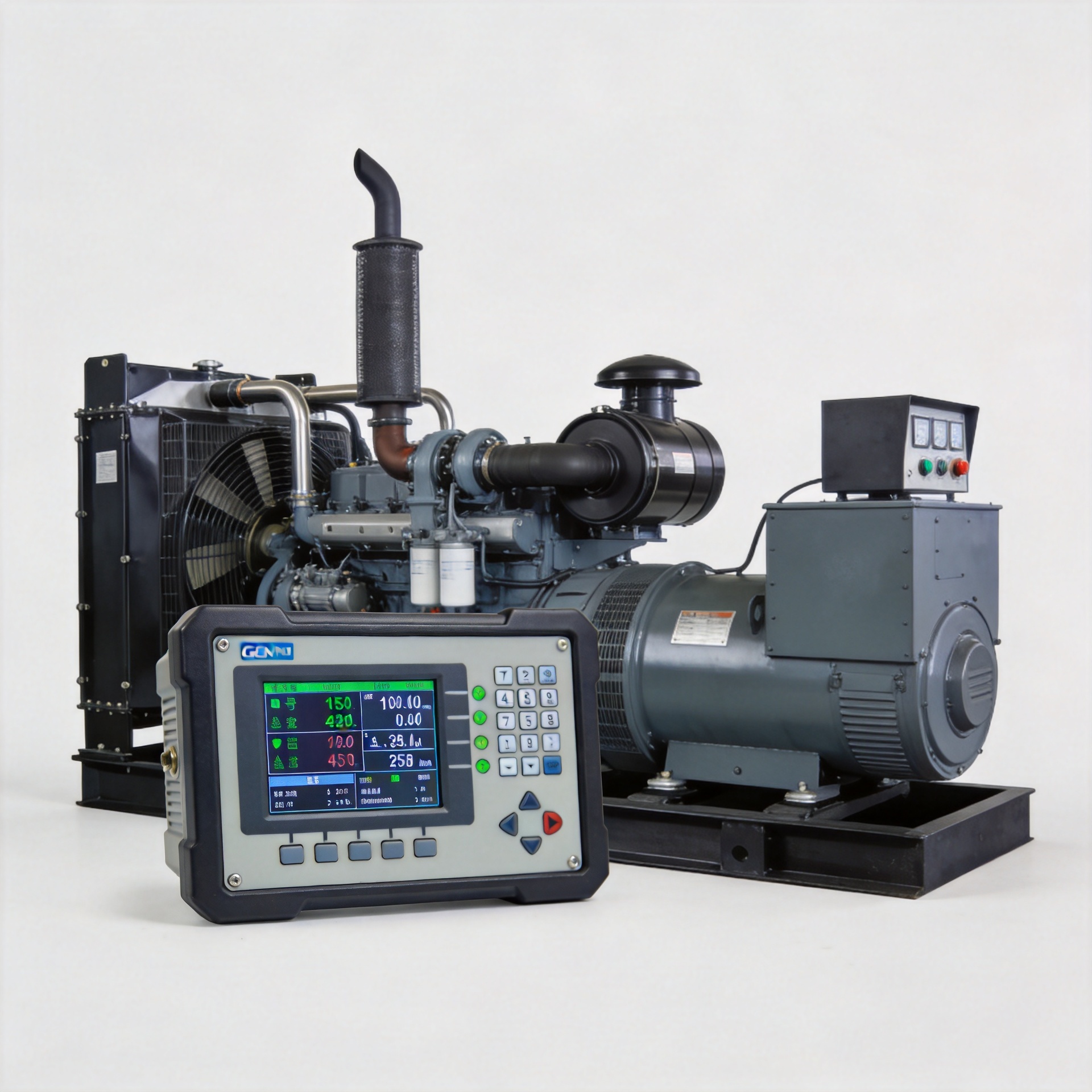
A genset controller is an electronic control module installed in a generator set to automate engine start and stop functions, monitor operating parameters in real time, and trigger alarms or protective shutdowns when measured values fall outside preset thresholds. Whether the application is a diesel genset controller in a standby power system, a prime power installation, or a containerized rental unit, the controller is the component that translates raw sensor data into decisions the system can act on.
What a Genset Controller Actually Does
Think of a generator set controller as the brain of the genset system. It receives input signals from sensors distributed across the engine and alternator, processes those signals against programmed reference values, and either maintains normal operation or triggers a defined response — a warning light, an audible alarm, a load transfer, or a complete shutdown.
At the most basic level, every generator set controller performs three functions: monitoring, control, and protection. Monitoring captures operating conditions continuously. Control manages the start-stop sequence and, in more capable modules, load transfer and paralleling operations. Protection sets the boundary conditions that prevent the engine or alternator from being damaged by operation outside safe limits.
The difference between a basic genset controller module and an advanced digital unit comes down to how many parameters it monitors, how configurable the thresholds are, and what communication interfaces it supports for remote access or integration with building management systems.
Engine Parameters a Genset Controller Monitors
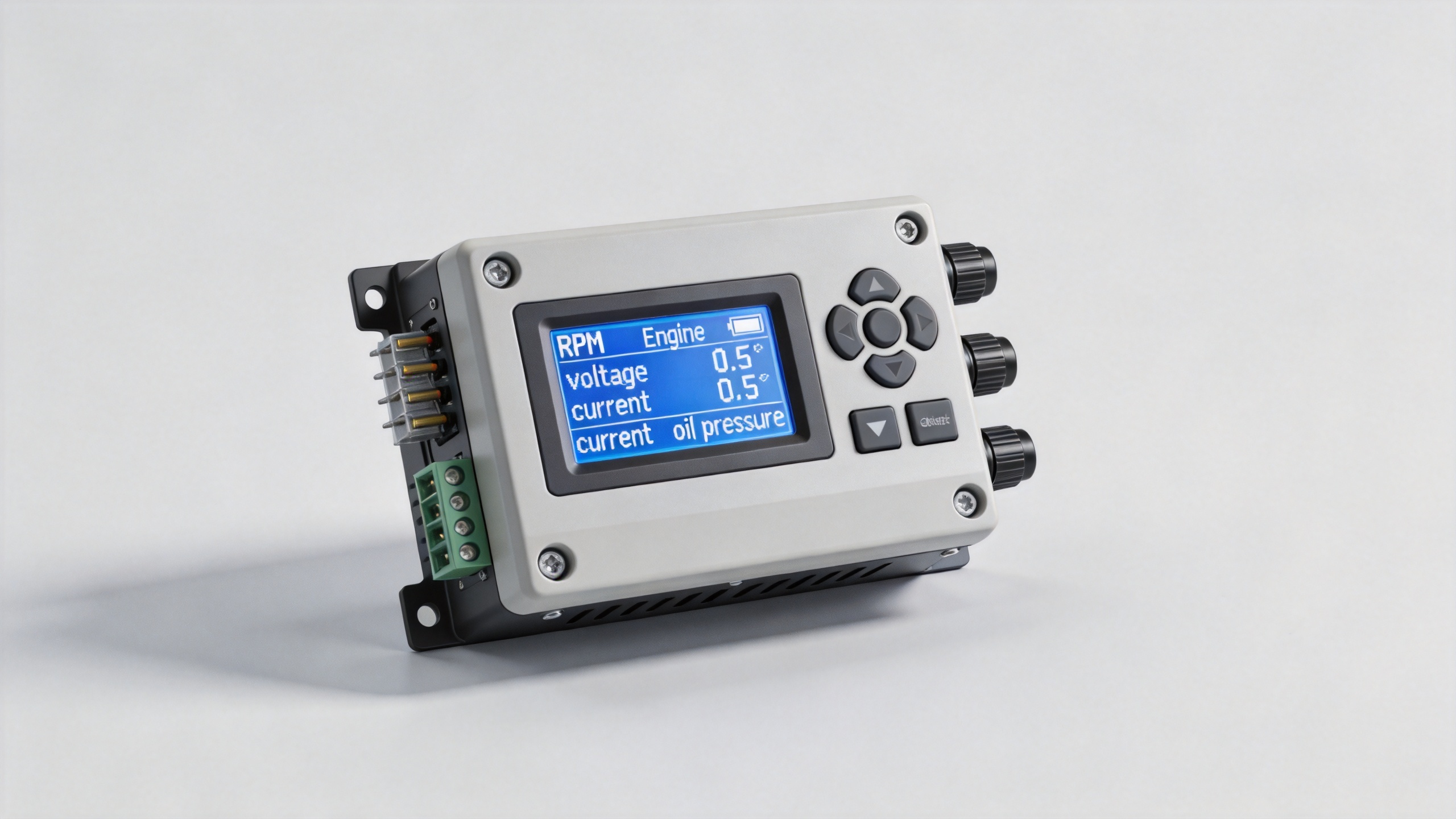
Understanding which parameters a genset controller monitors, and why those parameters matter, is essential for anyone sourcing or specifying controller modules. The parameter list divides naturally into two categories: electrical output parameters and engine operating parameters.
Electrical Output Parameters
On the generator output side, a genset controller typically monitors output voltage (across all three phases in a three-phase system), output current, frequency, and generated power. These values directly reflect whether the alternator is producing power within the specification range for the connected load.
Output voltage is the primary signal for alternator performance. A correctly functioning automatic voltage regulator (AVR) should hold output voltage within a narrow band (typically ±1% to ±2.5% of nominal) under varying load conditions. If the controller detects sustained voltage outside that range, it logs the event and, depending on the severity, can trigger a shutdown.
Frequency corresponds to engine speed. If engine RPM drops under load, frequency drops proportionally. Most genset controller modules display frequency alongside RPM so operators can cross-reference the values — a consistent frequency reading with an unusual RPM can point to a calibration discrepancy rather than an actual engine fault.
Engine Operating Parameters
On the engine side, the parameters that matter most for protection and reliability are engine speed (RPM), coolant temperature, engine oil pressure, battery voltage, and cumulative run hours.
Engine RPM is the most directly controlled parameter. The speed governor holds RPM at the setpoint (typically 1500 rpm for 50 Hz or 1800 rpm for 60 Hz systems) under changing load conditions. The genset controller receives the RPM signal, compares it against the setpoint, and sends a correction signal to the governor actuator when speed deviation exceeds the droop threshold. In actual field operation, RPM hunting (where engine speed oscillates rather than holding steady) is rarely a problem with the controller alone. More often it traces back to a worn fuel rack linkage or an air leak in the inlet manifold, which the controller flags but cannot fix.
Coolant temperature is monitored because sustained overtemperature is one of the primary causes of premature engine wear. The controller reads the coolant temperature sensor and compares it against a programmed high-temperature alarm threshold (typically 95°C–100°C for most diesel engines) and a shutdown threshold above that. Simpler version: if the engine is running too hot, the controller raises an alarm first; if the temperature keeps rising, it shuts the engine down to prevent damage.
Engine oil pressure is a critical protection parameter, particularly during startup. Low oil pressure at startup, before the lubrication circuit has fully primed, is a common source of false shutdowns in poorly configured systems. Most digital genset controllers include a configurable oil pressure bypass timer for the first 5–15 seconds after cranking, which prevents a shutdown event during the normal pre-lube window. After that window closes, any oil pressure reading below the minimum threshold triggers an immediate shutdown.
Battery voltage monitoring ensures the starting battery remains charged between genset exercise cycles. A diesel genset controller typically monitors both the battery voltage at rest and the charge alternator output voltage during operation, providing early warning if the battery is trending toward a condition where a start attempt would fail.
Manual, Automatic, and Remote Monitoring: How Controller Types Differ
For B2B buyers sourcing genset controllers in volume, the most important selection dimension is often not the parameter list — it is the operating mode. Early in the specification process, most buyers focus on the display and alarm features. After a missed transfer or a failed remote start, the focus usually shifts to the start mode configuration and communication interface.
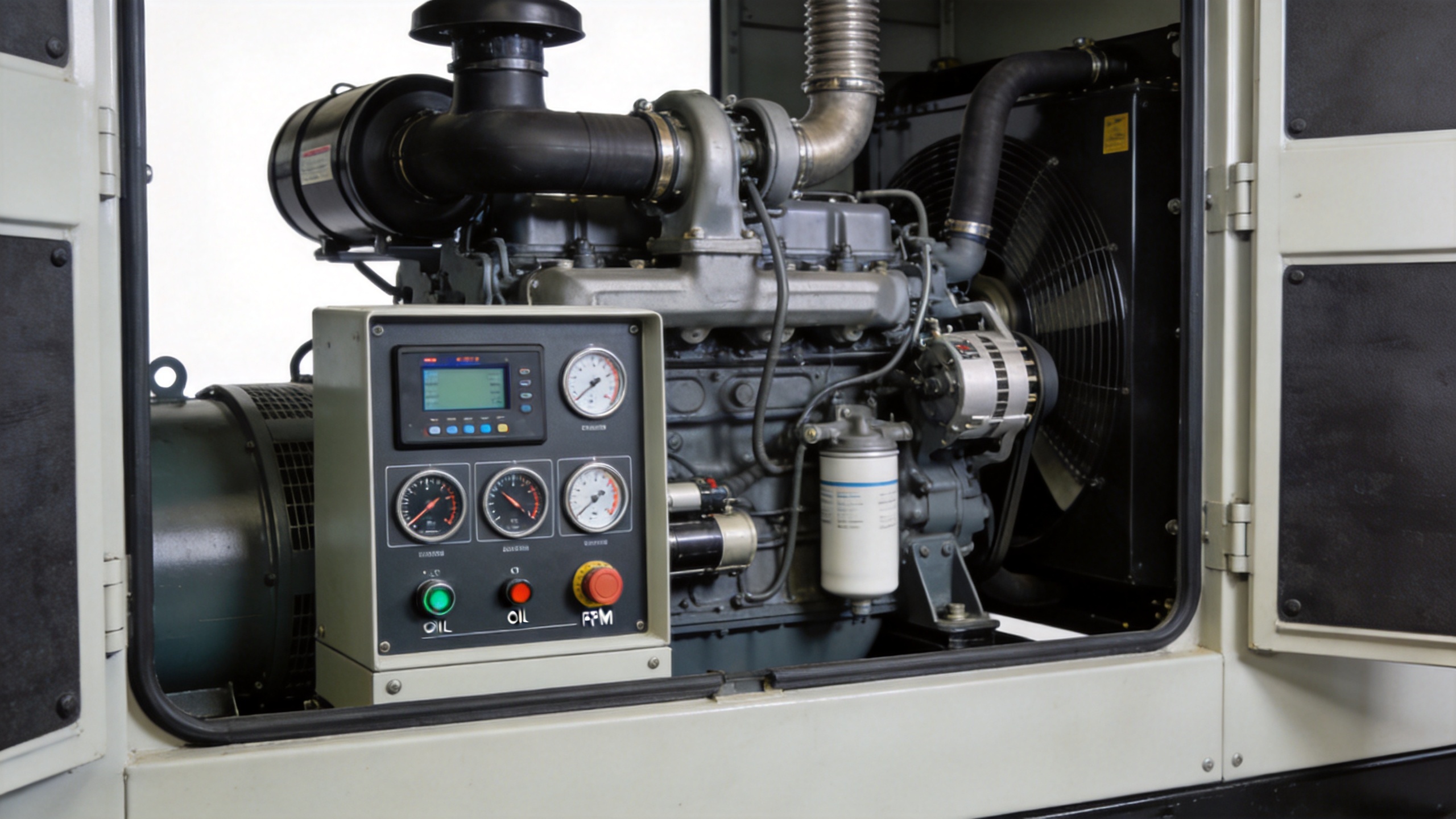
Manual-start genset controllers provide parameter monitoring and protection but require an operator to initiate the start and stop sequence. These are appropriate for applications where the generator is not expected to start unattended — small prime power sites, construction applications, or backup systems where an operator is on-site.
Automatic genset controllers, most commonly modules that include AMF (Auto Mains Failure) functionality, monitor the utility supply and automatically start the generator when mains power fails, transfer the load, and shut down and retransfer when utility power is restored. This is the standard configuration for commercial and industrial standby applications. A digital genset controller in AMF mode also logs the mains failure event, transfer time, and restoration timestamp for reporting and compliance purposes.
Remote monitoring controllers extend the AMF capability with communication interfaces — RS485, Modbus, Ethernet, or cellular — that allow the genset status, alarms, and parameter logs to be accessed from a central system or a mobile device. In applications managing distributed genset fleets across multiple sites, remote access capability is the primary driver of controller selection, often overriding other feature comparisons.
Key Considerations When Selecting a Genset Controller Module
For wholesale buyers and brand merchants evaluating genset controller module options, the selection process benefits from a structured approach across a few consistent dimensions.
Start with the operating mode requirement: manual, AMF, or AMF with remote communication. That single decision filters out a large portion of incompatible options before comparing anything else.
Next, confirm compatibility with the target engine configuration: voltage sensing range, engine speed signal type (magnetic pickup, W-terminal, or frequency input), and the shutdown output wiring requirements. A genset controller that lacks documentation on these interface parameters requires significant integration effort that experienced buyers have learned to avoid.
Display and user interface quality matters more than it appears in a specification sheet. A controller with a clear multi-line display and intuitive navigation reduces commissioning time and operator error in the field — a consideration that often surfaces after the first installation rather than before it.
For buyers sourcing controllers to support a brand program or a distributed product line, compatibility with parallel operation and load sharing applications may be a relevant selection factor. Controllers designed for single-set standby duty may not support the synchronization and load sharing logic needed for multi-generator installations.
Suppliers who provide technical compatibility data upfront — including voltage input range, communication interface specifications, and applicable engine model documentation — reduce the evaluation overhead for qualified buyers. For B2B procurement at volume, that pre-sales technical support is as much a selection criterion as the module's feature set.
Populace Electronic Co., Ltd. (Kygenpower) supplies generator control components including genset controllers, governors, and AVRs to wholesale buyers and brand merchants in Asia, Europe, and North America. Technical inquiries can be directed through the company website at kygenpower.com or via Alibaba at populaces.en.alibaba.com.






